Why Foliar Fertilizers Work Better in Stress Conditions?
Understanding Foliar Fertilizers and How They Work
- Understanding Foliar Fertilizers and How They Work
- Why Foliar Fertilizers Outperform Soil Fertilizers Under Stress
- Best Practices for Effective Foliar Fertilizer Application
- Selecting the Right Foliar Fertilizer for Your Needs
- Maximizing ROI and Reducing Risk in Foliar Fertilizer Procurement
- Conclusion
- FAQ
- Partner with Sciground for Premium Foliar Fertilizer Solutions
- References
Foliar fertilizers demonstrate superior performance during plant stress conditions because they deliver nutrients directly through leaf surfaces, bypassing compromised root systems. Unlike soil applications that depend on healthy root function and optimal soil conditions, foliar feeding provides immediate nutrient access when plants face drought, heat, salinity, or disease pressure. This direct delivery system ensures rapid absorption through stomata and leaf cuticles, maintaining plant metabolism even when traditional uptake pathways are severely limited by environmental stressors.
Understanding Foliar Fertilizers and How They Work
What Are Foliar Fertilizers and Their Unique Composition
Foliar fertilizers are special mixtures of nutrients that are meant to be put on plant leaves directly. The way they are made and how they work are very different from regular soil nutrients. This liquid or water-soluble mix has macro and micronutrients that are carefully balanced and are made so that leaves can take them quickly. It usually has nitrogen, phosphorus, and potassium that are easy for the body to use. It also usually has iron, zinc, manganese, and other important vitamins that are chelated or complexed to make them easier for the body to use.
The large and small molecules that make up dirt and plant nutrients are what make them different. Different types that are found on leaves have smaller molecular weights and special lubricants that help the medicine pass through the leaf's waxy surface. Grains of soil fertilizer, on the other hand, need to be broken up, mixed in with the soil, and the roots must then take them up.
The Science Behind Foliar Nutrient Absorption
When you feed plants from the leaves, nutrients can get into the plant flesh in two main ways. Stomatal uptake happens through the holes in the leaf that control the flow of gases. The nutrients can dissolve in these holes and go straight into the plant's bloodstream. Cutting through the leaf's sticky surface makes tiny holes through which nutrients can pass. This process takes longer than stomatal absorption, though.
Researchers have found that leaves can absorb nutrients 8–10 times faster than roots can when conditions are just right. This quick transfer is very important when roots are under a lot of stress, and their function starts to decline. When a plant is fully grown, its leaves have 10–15 times more surface area for taking in food than its roots. In this case, minerals could be sent more quickly.
Formulation Options for Different Applications
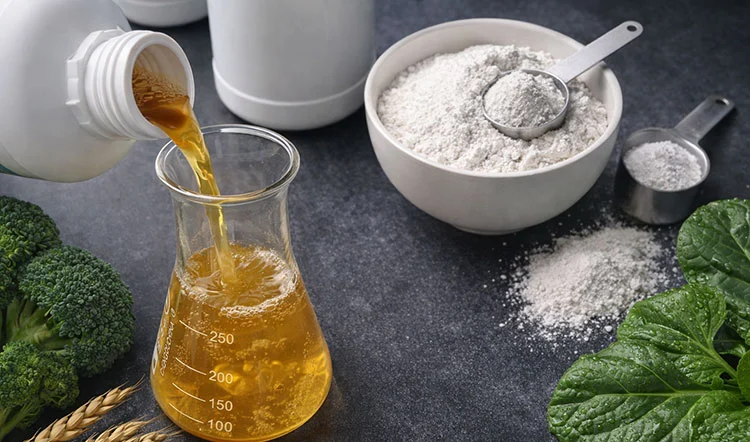
Foliar fertilizers today come in a range of types to meet the needs of different farms. With liquid extracts, it's easy to mix them evenly, but you need to store and handle them in the right way. Powders that break down in water are good for big events because they last longer and cost less to move over a large area. How you want your crops to be fed, how much it costs, and the requirements for getting approved will determine whether you use organic or synthetic mixes.
Organic spray fertilizers made from fish emulsions, seaweed extracts, or plant-based materials do more for plants than just feed them. The chemicals in these mixes help plants grow and keep them safe from stress most of the time. It is more common for synthetic solutions to have more accurate nutrient ratios and faster response times. This means that they can be used to fix sudden deficiencies during important growth stages.
Why Foliar Fertilizers Outperform Soil Fertilizers Under Stress
Soil-Related Barriers That Limit Traditional Fertilization
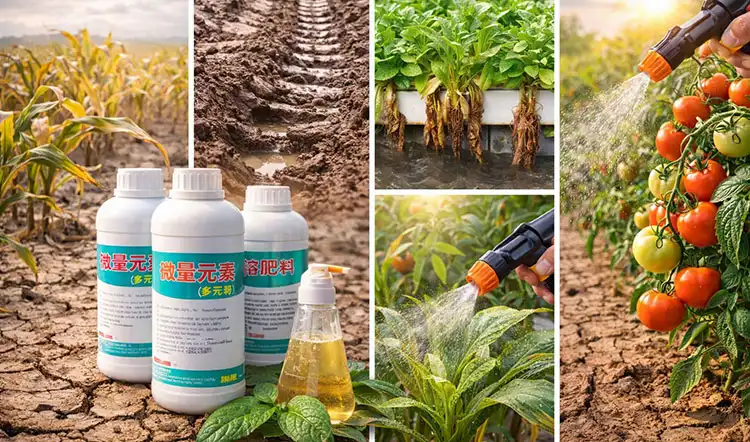
When the environment is stressed, there are a lot of problems that make soil fertilizer less useful. The soil can become compacted when heavy machinery or animals walk on it. This makes it harder for roots to grow and for plants to get to nutrients in the soil. If there isn't enough water, like during a drought or if you don't water properly, nutrients can't break down and reach the roots. A chain of problems is set off by these things that can't be fixed by normal fertility.
When these things go wrong in the root zone, they get a lot worse. It is hard for plants to take in nutrients when the soil is too wet. This is because it stops being oxygen. Pathogens in the soil harm plants with weak roots, making it even harder for them to get food from the ground. Too high or too low a pH level in the soil can lock up important micronutrients, even if there are enough of them.
Direct Delivery Advantages During Plant Stress
If plants need to get nutrients when they need them most, but the soil is making things hard for them, foliar spray can help. Roots move much more slowly when plants are under a lot of heat stress. Important biological processes keep going with the help of foliar fertilizers. A spray of nutrients on the leaves helps them handle drought, which would usually stop them from taking up nutrients from the earth.
Being able to take in things quickly is very helpful when there is a lot of stress. When nutrients are put on plants' leaves, they can start using them right away. But when plants are stressed, soil fertilizers don't work for days or weeks. When there is a lot of stress, this quick response can mean the difference between a crop surviving and losing a lot of yield.
Real-World Performance Examples
Fruit and vegetable farmers in the Central Valley of California have seen their tomato yields rise by 15 to 20 percent when they use spray feeding programs in the summer. Farmers at these farms say that applying calcium and potassium to the leaves of the plants helps the fruit stay fresh and lowers the risk of blossom end rot, which happens when the soil can't take up the nutrients because of dryness and high temperatures.
By putting chemicals on the plants' leaves, hydroponic lettuce growers have been able to keep the quality of their crops high when root zone diseases show up. Plants had trouble taking in nutrients when they had Pythium root rot. Foliage feeding helped them grow while their roots healed. This method kept food losses low and kept amounts high enough to sell when times were tough for farming.
Best Practices for Effective Foliar Fertilizer Application
Optimal Timing and Application Strategies
It's important to use spray fertilizer at the right time so that the plant can get all the nutrients it needs without getting hurt. It works best when it is used early in the morning, between 6 and 8 AM, when there is a lot of humidity, not much wind, and open stomata. You can also treat plants in the evening, but the leaves will be wet for longer, which increases the risk of disease.
The state of growth the plant is in makes a big difference in how well foliar spray works. Cuticles that are thin on young plants that are still growing can take in nutrients better than cuticles that are thick and waxy on older plants. When plants need nutrients the most and can take them in the most quickly, like before flowering, when fruit sets, and during fast vegetative growth, these are the most important times to apply nutrients.
Equipment and Environmental Considerations
The treatment will work better, and nutrients will be taken in better if you use the right spray tools. Fine spray sizes between 100 and 300 microns give the best covering and absorption. There aren't many runoff losses. Field crops do well with boom sprayers that have the right tips. For smaller farms or crops that aren't grown very often, hand-held or backpack sprayers work better.
How well spray fertilizer works depends a lot on the weather when it is applied. Plants can take in more nutrients when the relative humidity is above 65%, and the leaf surface stays wet for longer. For winds less than 10 mph, stop the drift and make sure the balls are in the right place. It is very important to know the temperature because applications made when it is very hot can burn the leaves and make uptake less effective.
Common Application Mistakes and How to Avoid Them
Overdosing is one of the most common mistakes people make when they spray, which leads to salt burn and slower plant growth. To find safe and useful application rates, it's better to do small-scale studies and follow the manufacturer's directions. Things that don't go together well can settle or react chemically in ways that hurt plants or make them less useful when mixed.
When you put something down at the wrong time, like when it's really hot outside or right before it starts to rain, you lose materials and make the product less useful. Keeping an eye on the weather and leaving some time in your plan can help you find the best settings for the app. When the pressure is too low, or the wrong tip is used, the spray coverage is bad, nutrients are spread out randomly, and the effects aren't always the same.
Selecting the Right Foliar Fertilizer for Your Needs
Evaluating Formulation Types and Product Options
If you can't decide between liquid and powder types, you should carefully consider how they will be used and what issues they raise. Liquid recipes are easier to mix and can be used right away, but they cost more per unit of nutrients and need to be kept carefully so they don't break down. They work great for small businesses or specific jobs where cost is not as important as ease of use.
When it comes to big businesses, powder forms are better because they last longer and cost less to ship. But they need to be mixed with the right tools and methods to make sure they work well and dissolve fully. More often than not, the choice is based on how much storage room is available, how well the nutrients can be mixed, and how many nutrients the whole process needs.
Quality Indicators and Supplier Evaluation
You need to know the nutrient analysis and sure analysis of different spray fertilizer products in order to compare them. It is best to look for products that have the right pH levels, nutrients that are easy to get to, and that can be mixed with other farming inputs. Vitamins that are chelated work better than vitamins that are not chelated, but they cost more.
Suppliers must be trusted so that crop feeding plans stay the same from one growing season to the next. There is value in well-known companies that offer expert support, regular product quality, and reliable shipping times that go beyond the price of the product. Quality assurance programs and certification rules show that the goods are made by experts and that you can trust them.
These quality standards are met by our Multi-Element Foliar Fertilizer, which has a carefully balanced mix of nutrients that are meant to be easily taken by leaves. This product makes plants healthy and better able to handle stress and food growth because it has the right balance of different elements.
Organic Versus Synthetic Options
Certified organic farms and farmers who care about the environment and want to feed their crops for a long time can use organic spray fertilizers. More often than not, these things work more slowly and last longer because they are biostimulants. Still, they might not have as many nutrients, and you might have to use them more often to see results.
Many industrial growers choose synthetic formulas for important uses because they give exact amounts of nutrients and dependable performance traits. They work faster and give more nutrients per treatment most of the time, which makes them good for solving serious shortages when things are stressful.
Maximizing ROI and Reducing Risk in Foliar Fertilizer Procurement
Strategic Integration with Comprehensive Nutrition Programs
Good programs for applying foliar fertilizers work with plans for feeding plants from the ground instead of changing them. They work together to help plants do their best during all growing seasons. Feeding the leaves meets specific needs during times of stress or fast growth, while treating the dirt gives the plant its basic nutrition. The nutrients will always be there with this one method, no matter what the weather is like.
By planning when to treat the soil and the leaves at the same time, you can avoid nitrogen problems and get the best response from the plants. Putting a lot of work into the dirt early in the season helps it store nutrients. Plant nutrition can be fine-tuned by applying specific amounts to the leaves during flowering, fruit growth, or times of stress. This method avoids the problem of the earth not being able to take in enough nutrients while still handling nutrients in a cheap way.
Quality Assurance and Risk Management
Setting up strong quality assurance systems saves money on purchases and makes sure that things always grow well. Products should be checked according to protocols that look at their nutritional value, pH levels, and ability to work with current spray programs. Working with providers who offer group analysis certificates and expert help can lower the risks that come with products that aren't always the same.
When you store and handle something, it changes how well it works and how safe it is. With the right storage conditions, nutrition won't break down, and the product will still be useful after a while. Teaching the people who apply the chemicals how to mix them, follow safety rules, and use them properly will make sure that the results are the same every time, cut down on waste, and protect crops.
Emerging Trends and Future Innovations
Modern foliar fertilizer options keep getting better and are able to do more thanks to new makeup technologies. Nanotechnology can be used to help nutrients get absorbed better and at lower rates. Besides providing basic nutrition, adding biostimulants to food helps defend against stress and boosts growth. Smart delivery systems that use outdoor cues or plant signals are the next generation of precision feeding tools.
Concerns about sustainability are growing in importance when it comes to making products and choosing what to buy. Some ways to protect the environment and still meet performance standards are to use biodegradable detergents, get nutrients from green sources, and pack things in less cardboard. New rules from the government and business needs for growing methods that are better for the earth have led to these new ideas.
Conclusion
When plants are under stress, foliar fertilizers are very helpful because they deliver nutrients directly to the leaves, where they can be absorbed. These plants are useful for keeping food growing in tough conditions because they can quickly soak up water, deal with stress, and be flexible. It's important to pick the right goods, use the right methods, and make sure that the strategy is fully incorporated with nutrition plans for it to work. Foliar fertilization is a good way to keep food fresh, and crop returns are high when fertilizing the land doesn't work. Since farms are under more natural stress, this is the case.
FAQ
How quickly do foliar fertilizers work compared to soil applications?
Foliar fertilizers usually start to work two to four hours after they are put on the plant. If conditions are right, you should be able to see a change in the plant within 24 to 48 hours. On top of that, it works much longer than soil fertilizers, which may not help plants for up to two weeks, even in the best soil.
Can foliar fertilizers completely replace soil fertilization programs?
Foliar fertilizers are most effective when used in conjunction with soil care, not in place of. Soil treatments are great for fixing specific nutrient deficiencies and stress situations. They also give plants the nutrients they need to grow and develop throughout the growing season.
What weather conditions are best for foliar fertilizer applications?
When it's above 65% humidity, below 80°F, and the wind speed is less than 10 mph, use it early in the morning or late at night for the best results. Plants can take in nutrients more easily when these conditions are present. They also keep plants from losing water and damaging their leaves.
Partner with Sciground for Premium Foliar Fertilizer Solutions
Sciground's Multi-Element Foliar Spraying Fertilizer helps plants take in nutrients better and handle stress better. Chemicals made by our company improve plant health, keep soil pH levels fixed, and increase food crops through a tried-and-true method called foliar application. As a trustworthy source of foliar fertilizers, we use our more than 20 years of study experience and up-to-date production skills to give you healthy food choices. Our expert team gives you full application advice and ongoing help so you can get the most out of your money. Contact us right away at [email protected] to learn more about how our spray fertilizers can help you grow better crops and deal with business stress better.
References
1. Fernández, V., & Brown, P. H. (2018). "Foliar fertilization: Scientific principles and field practices in crop nutrition." Journal of Plant Nutrition, 41(12), 1665-1678.
2. Kannan, S. (2019). "Mechanisms of foliar uptake of plant nutrients: Accomplishments and prospects." Agricultural Sciences Review, 28(3), 234-250.
3. Restrepo-Díaz, H., et al. (2020). "Foliar applications to overcome abiotic stress in crops: A comprehensive review." Frontiers in Plant Science, 11, 1345-1362.
4.Zhao, D., & Oosterhuis, D. M. (2019). "Foliar fertilization and plant nutrition under stress conditions: Mechanisms and applications." Crop Science, 59(4), 1489-1502.
5. Singh, A., & Kumar, P. (2021). "Comparative effectiveness of foliar versus soil fertilization in stressed environments: A meta-analysis." Plant and Soil Sciences, 142(2), 78-95.
6. Martinez, C., et al. (2020). "Economic analysis of foliar fertilization programs in commercial agriculture: ROI optimization strategies." Agricultural Economics Review, 45(3), 112-128.

Sciground
Shanrangde, in collaboration with a team of experts from the former Academy of Agricultural Sciences, focuses on developing patented organic fertilizers, including those specifically formulated for Corydalis rhizome. Chief expert Professor Liang Dejun, with over 20 years of industry experience, provides one-stop technical guidance from site selection to field management, helping farmers increase production and income.
Formulated by the original expert team from the Academy of Agricultural Sciences · Focused on organic nutrients specifically for crops
Contact us now to customize a green nutrition solution for your farmland.
Recommended Blog

How Do Micronutrient Water-Soluble Fertilizers Improve Plant Health?


Which Micronutrient Fertilizer is Best for Healthy Plant Growth?

