Application Guide for Cordydalis Tuber Organic Fertilizer
Why Does Corydalis Cultivation Need Specialised Fertiliser Management?
- Why Does Corydalis Cultivation Need Specialised Fertiliser Management?
- How Organic Fertiliser Supports Corydalis Tuber Development?
- Recommended Application Methods for Corydalis Organic Fertilizer
- Organic Fertilizer Compared With Conventional Fertilizer Programs
- Why Choose Sciground for Corydalis Fertilizer Solutions?
- Production Quality and Agricultural Support
- How to Select a Reliable Corydalis Organic Fertilizer Supplier?
- Conclusion
- FAQ
- Contact Sciground
- References
Corydalis is a medicinal root crop that needs to be carefully managed for nutrients while it grows. During tuber expansion, balanced nutrition, good soil conditions, and good field practices are very important for keeping the quality of the crop and helping the roots grow. Many farmers have problems, like tubers that don't form evenly, dirt that is less fertile after being planted over and over, and nutrients that aren't always available because of bad fertiliser programmes. Using Cordydalis Tuber-specialised organic fertilisers can help provide targeted nutrients and improve soil conditions during cultivation.
Sciground created Cordydalis Tuber Specialised Organic Fertilisers to give growers of medical crops a more balanced source of nutrients. This fertiliser is made up of organic materials, fermented plant materials, humic substances, and important nutrients. It is meant to help improve the soil, make nutrients work better, and help Corydalis grow better at different times of cultivation.
Why Does Corydalis Cultivation Need Specialised Fertiliser Management?
Corydalis depends a lot on underground tuber development, which is different from many common field crops. The soil's richness, nutrient balance, water management, and farming methods all have a big impact on the quality and size of the root.
If you use too much nitrogen in the later stages of growth, it might cause too many leaves to grow while slowing down the growth of buried biomass. But growing over and over again without taking care of the soil properly can lower the amount of organic matter, lessen the activity of microbes, and make the soil more packed.
Because of these factors, many people who grow medicinal crops are slowly switching from chemical fertiliser programmes that use a lot of inputs to systems that use organic nutrients and focus on long-term soil productivity.
Specialised organic fertilisers made from Corydalis tubers are made with:
-
Materials for organic soil
-
Ingredients made from fermented plants
-
Things that are humic
-
NPK nutrients in balance
-
Trace elements that medicinal root crops need
Not only are nutrients being added, but the goal is also to make the earth better so that steady root growth can happen.
How Organic Fertiliser Supports Corydalis Tuber Development?
Improving Soil Structure and Root-Zone Conditions
Changing the structure of the soil and the conditions for roots
For medicinal plants to grow, the soil needs to be healthy because the growing environment below affects how roots and tubers form.
When used as inputs, organic fertiliser can help improve the following:
-
Soil form and air flow
-
Ability to hold water
-
Access to nutrients
-
Things that microbes do near the roots
It can help poor soils hold on to more of their nutrients after it rains or rains and rains. It may be possible to make the soil drain better and reduce the root stress that comes from too much water if the soil is deeper.
It is especially important to keep the soil naturally active in places where Corydalis plants are put over and over again, since tilling the soil over and over again can make it weaker over time.
Supporting Balanced Nutrition During Growth Stages
Corals need different ways to handle nutrients at different times of their life.
There are enough nutrients for leaves and roots to grow in the early stages of growth. People who grow tubers need to watch out that the plants get the right amount of nutrients and don't get too much nitrogen.
This is what a good fertiliser plan can do for you:
-
Source of nutrients all the time
-
Better utilisation of nutrients
-
More stable plant growth
-
Better conditions for growth so that deep matter can form
Fertiliser programmes only focus on making plants grow quickly, while Cordydalis Tuber's specialised organic fertilisers and other organic options care for crops and soil over the long term.
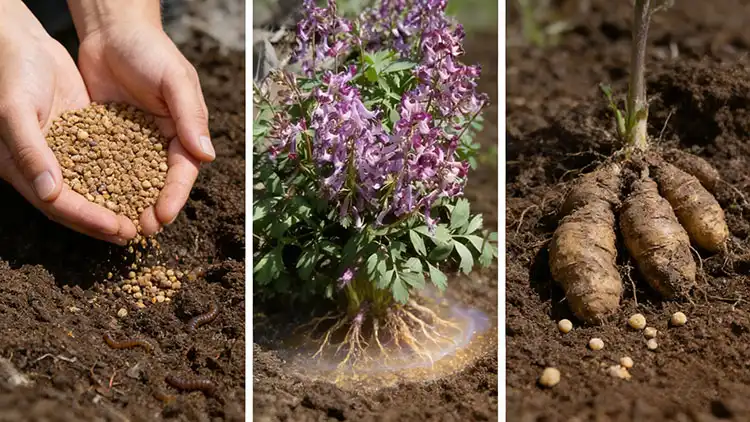
Recommended Application Methods for Corydalis Organic Fertilizer
Base Fertilizer Application Before Planting
Growers can improve the first growing conditions for Corydalis by adding organic fertilizer to the top layer of soil before transplanting the plants.
General application number:
-
1000 to 1200 kg/acre for sandy soil
-
800 to 1000 kg/acre for loam soil
-
Heavy clay soil: Make changes based on how the soil drains and what the conditions are.
The exact rate of applications should be changed because:
-
How fertile the soil is
-
History of previous planting
-
Conditions of the local climate
-
Density of cultivation
Nutrients and organic matter can be spread out better in the root zone when they are properly incorporated.
Nutrient Management During Vegetative Growth
Corydalis needs enough nutrients to make strong plants during the vegetative growth stage.
Using Cordylandia Tuber-Specialized Organic Fertilizers at this stage can help keep the supply of nutrients steady while lowering the risk of too much nitrogen stimulation.
Growers need to keep an eye on:
-
Conditions for leaf growth
-
Water in the soil
-
How fast plants grow
-
State of the root zone
Changing how much fertilizer is used based on how well the crop is doing helps achieve more balanced growth.
Fertilizer and Irrigation Coordination
How well organic fertilizer works depends on how wet the soil is and how active the microbes are. Nutrient release may be slowed down by conditions that are too dry, and nutrient loss may be increased by too much watering.
For better management in the field:
-
Keep the soil's moisture level moderate.
-
Don't let water build up for too long.
-
After applying fertilizer, water the plants properly.
-
Regularly check the soil's condition.
Managing fertilizer and watering plants correctly together helps make the growing environment more stable.
Organic Fertilizer Compared With Conventional Fertilizer Programs
Chemical fertilizers can give plants nutrients quickly and help them grow. Long-term abuse, on the other hand, may lead to problems with soil salt, less organic matter, and less variety of microbes.
Growers often pay more attention to the long-term health of the soil when they are growing medicinal plants like Corydalis. This is because the quality of the cultivation depends on both plant growth and the growth of underground crops.
Programs that use organic fertilizer can help:
-
Long-term soil productivity
-
Higher amounts of organic matter in the soil
-
Better conditions for the root zone
-
More consistent management of crops
This method works especially well for farmers who are growing medicinal plants for markets that care about quality.
Why Choose Sciground for Corydalis Fertilizer Solutions?
Hanzhong Shanrangde Agricultural Technology Co., Ltd. runs Sciground. It is based in Hanzhong, Shaanxi, which is a major area in China for growing medical plants and provides Cordydalis Tuber Specialized Organic Fertilizers.
When it comes to agriculture, the company focuses on making fertilizer for specific uses, such as
-
Growth of Corydalis
-
Making Aconitum carmichaelii
-
Nutritional programs for milk thistle
-
Solutions for fertilizing fruit trees
-
Systems for water-soluble fertilizer
Sciground creates fertilizer products that meet the needs of current growers by combining study experience in agriculture with real-world field use.
Production Quality and Agricultural Support
Standardized Fertilizer Production Process
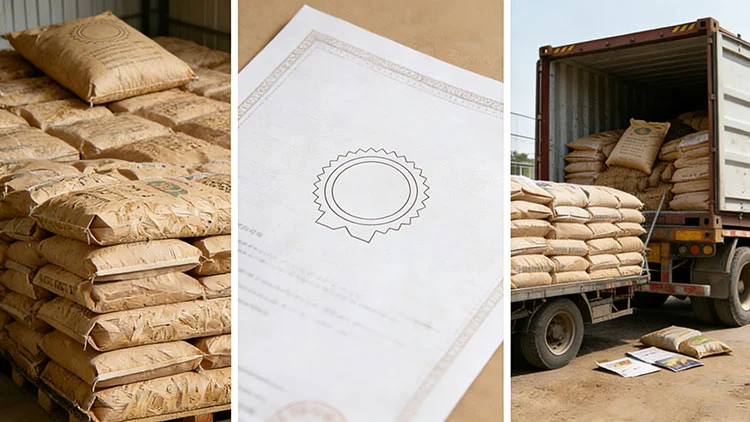
Sciground runs a fertilizer factory in Chenggu District that follows standard procedures for choosing raw materials, processing them, and keeping track of quality.
The steps in the production process are
-
Consistent quality of raw materials
-
Stable mix of nutrients
-
Monitoring how well a product works
-
Supply that you can depend on
Following these steps helps make sure that growers get the same fertilizer products for each season's needs.
Professional Cultivation Guidance
To grow Corydalis successfully, you need to do more than just choose the right fertilizer. Conditions in the field, the history of planting, irrigation methods, and the type of soil all affect how well a crop does.
Sciground gives technical advice about the following:
-
Evaluation of soil condition
-
Planning how to use fertilizer
-
Management of nutrients
-
Coordination of irrigation
-
Continuously making cutting better
This support helps growers come up with better ways to grow plants based on where they are putting them.
How to Select a Reliable Corydalis Organic Fertilizer Supplier?
When buying fertilizer for medical plants, people should think about a few important things:
Raw Material Quality
For fertilizer consistency and nutrient performance to stay the same, the raw materials must be stable and reliable.
Product Testing and Quality Control
Professional suppliers should give the right information about their products, such as
-
Analysis of nutrients
-
Details about the product
-
Records of quality checks
-
Stability in production
Stable production capacity is important for business growers and wholesalers to make sure they have enough during growing seasons.
Production Stability
For commercial growers and distributors, stable production capacity of Cordyline Tuber Specialized Organic Fertilizers is important to ensure timely supply during planting seasons.
Technical Service Capability
More useful advice can be given by a seller who knows how to grow medical plants than by a general fertilizer maker.
Conclusion
Corydalis cultivation requires careful attention to soil fertility, nutrient balance, and tuber development management. Traditional fertilizer programs may provide fast growth, but long-term cultivation success depends on maintaining healthier soil conditions and stable nutrient supply.
Cordydalis Tuber Specialized Organic Fertilizers provide an organic-based solution designed to support Corydalis growers through improved soil management, balanced nutrition, and practical application guidance.
For growers, agricultural organizations, and fertilizer distributors seeking specialized solutions for medicinal crops, Sciground offers fertilizer products combined with technical support to help achieve more consistent cultivation results.
FAQ
1. What makes Corydalis fertilizer different from general organic fertilizer?
General-purpose organic fertilizers are usually formulated for broad agricultural use. Corydalis fertilizer programs focus more on root-zone activity, controlled nitrogen release, and nutrient balance during tuber development.
2. Can organic fertilizer fully replace chemical fertilizer?
This depends on soil condition and production goals. Some growers use fully organic programs, while others combine organic base fertilizer with supplemental mineral nutrition during key growth stages.
3. How soon can soil improvement be observed?
In many cases, soil texture and moisture retention improve gradually after one or two planting cycles, especially in fields with low organic matter content.
Contact Sciground
Sciground supplies specialized fertilizer products for medicinal crop cultivation and supports growers with practical field management recommendations.
For Cordydalis Tuber Specialized Organic Fertilizer specifications, bulk orders, or technical discussions, contact: [email protected].
References
1. Agricultural Research Institute of Northwest China. "Organic Fertilizer Applications in Medicinal Plant Production." Journal of Sustainable Agriculture, 2023.
2. International Society for Horticultural Science. "Nutrient Management in Tuberous Crop Systems." Acta Horticulturae, 2022.
3. Soil Science Society of America. "Organic Matter Effects on Soil Microbial Communities." Soil Science Society Journal, 2023.
4. Chinese Academy of Agricultural Sciences. "Cordydalis Cultivation Technology and Soil Management." Agricultural Technology Bulletin, 2022.
5. Organic Trade Association. "Economic Analysis of Organic Fertilizer Systems in Commercial Agriculture." Organic Agriculture Economics Review, 2023.
6. American Society of Agronomy. "Sustainable Fertilizer Practices for Specialty Crop Production." Agronomy Journal, 2022.

Sciground
Shanrangde, in collaboration with a team of experts from the former Academy of Agricultural Sciences, focuses on developing patented organic fertilizers, including those specifically formulated for Corydalis rhizome. Chief expert Professor Liang Dejun, with over 20 years of industry experience, provides one-stop technical guidance from site selection to field management, helping farmers increase production and income.
Formulated by the original expert team from the Academy of Agricultural Sciences · Focused on organic nutrients specifically for crops
Contact us now to customize a green nutrition solution for your farmland.
Recommended Blog


How Do Organic Fertilizers Benefit Soil Health and Plant Growth?

Why Should You Use Balanced Liquid Fertilizer for Your Plants?
_1767870624598.webp)


How Do Organic Fertilizers Benefit Soil Health and Plant Growth?
Why Should You Use Balanced Liquid Fertilizer for Your Plants?
