Can Micronutrient Fertilizers Correct Hidden Deficiencies?
Understanding Hidden Micronutrient Deficiencies in Crops
- Understanding Hidden Micronutrient Deficiencies in Crops
- How Micronutrient Fertilizers Work to Correct Hidden Deficiencies
- Comparing Micronutrient Fertilizers: Making Informed Procurement Decisions
- Sourcing and Procuring Micronutrient Fertilizers for Bulk B2B Buyers
- Case Studies and Practical Recommendations for Correcting Hidden Deficiencies
- Conclusion
- FAQ
- Partner with Sciground for Premium Micronutrient Solutions
- References
Without a doubt, micronutrient fertilizers can fix crops' secret shortages if they are used and applied correctly. These specific nutrients fix the small but important changes that hurt crop health without showing any obvious signs. Modern water-soluble mixtures with important trace elements like zinc, iron, manganese, and boron work by making soil nutrients more available and making it easier for plants to take them in quickly. To be effective, they need to be applied at the right time, in the right way, and with the right mixture for the crop and land.
Understanding Hidden Micronutrient Deficiencies in Crops
One of the sneakiest problems in farmland is hidden micronutrient deficits. These threats to production that can't be seen hurt plants' physiological processes long before they show any clear symptoms. Micronutrient fertilizers cause minor metabolic errors that slowly lower food quality and yield potential. This is different from nitrogen or phosphorus deficits, which quickly show up as yellowing or stunted growth.
The Science Behind Hidden Hunger
Trace elements are needed by plants, but they need very small amounts—usually less than 100 parts per million in plant tissue. But when they aren't present, Liebig's Law of the Minimum kicks in. This law says that food production is limited by the least available nutrient, even if macronutrients are plentiful. A lack of zinc changes enzyme systems that are important for making proteins and growth hormones. A lack of iron makes it harder for plants to make chlorophyll and use sunlight efficiently. Boron shortage affects the formation of cell walls and the growth of reproductive organs, while manganese insufficiency weakens the body's defenses against disease.
Today's heavy farming often uses up the soil's trace element stores faster than they can be replaced naturally. High-yield types need more nutrients, and systems that grow crops all the time use up all the micronutrients that are available. Also, changes in soil pH, loss of organic matter, and interactions with macronutrients that work against trace elements make them less bioavailable, even when overall soil amounts look fine.
Identifying Deficiency Patterns Across Crop Types
Different types of vegetables have different mineral needs and signs of shortage. Calcium and boron deficits in tomatoes often show up as flower end rot and stems that are hollow. In alkaline soils, leafy greens get iron chlorosis, while root veggies need enough manganese to make sugar properly. Fruit trees have their own problems. For example, citrus trees need iron chelates in alkaline soils, and stone fruits need zinc to set fruit and grow properly.
Patterns on grain crops are very different. Zinc sprays have a big effect on corn, especially in cold, wet soils where roots can't take it in as well. Adding copper and manganese to wheat during the grain filling steps is good for it. Growing rice in flooded areas requires reducing settings that change the supply of iron and manganese, so special application methods are needed.
How Micronutrient Fertilizers Work to Correct Hidden Deficiencies
Trace element fertilizers use complex delivery systems to get around soil fixing and improve plant uptake. When procurement managers understand these processes, they can choose goods that give reliable results in a wide range of growing situations and crop systems.
Bioavailability Enhancement Technologies
Chelation technology is used in modern formulations to keep micronutrients safe from soil reactions that would make them unusable. Chelated types, such as EDTA-zinc and DTPA-iron, stay soluble in acids and bases where regular sulfate salts tend to form crystals. These organic molecules surround metal ions in protective rings. This makes stable complexes that stay available to plants until they are taken up by roots.
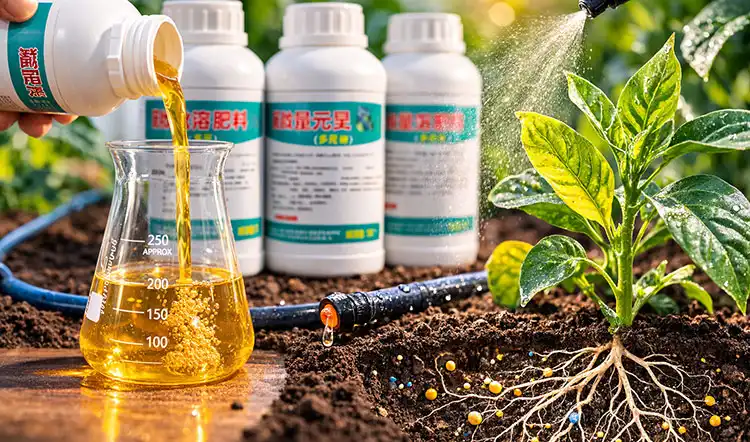
Micronutrient fertilizers in water-soluble forms are the best way to get nutrients to plants. These mixtures dissolve fully in irrigation water, which lets you use fertigation methods to apply them precisely. Even spread and fast plant growth are made possible by this technology, which also keeps soil fixation losses to a minimum. When sprayed as spray solutions, advanced surfactants and penetrating agents improve foliar uptake, going beyond the limits of the soil completely.
Application Methods and Timing Optimization
Foliar application is the most direct way to fix problems that are hidden. Micronutrients are quickly absorbed by plants through their leaves, so this is a great way to make up for severe gaps during important growth stages. This method works especially well in salty soils where roots have trouble taking in nutrients.
Fertigation gives growers of high-value crops and nursery plants more precise control over their crops. Continuous micronutrient input keeps plants at their best throughout the growing season and avoids the ups and downs that come with granular treatments. To keep rain and equipment damage from happening, this method needs careful attention to the quality of the water and how well it works with the system.
Applying micronutrients to the soil is still the best way to set baseline amounts and support plant growth over time. Granular formulations have properties that allow for continuous release, which slowly replenishes soil stores over long periods of time. But when you apply it is very important. For most crops, the best time is in the fall or before they are planted.
Comparing Micronutrient Fertilizers: Making Informed Procurement Decisions
To be good at buying, you need to know the basic differences between vitamins and macronutrient fertilizers. Nitrogen, phosphorus, and potassium are the basic nutrients that plants need. Trace elements, on the other hand, speed up metabolism and help plants use nutrients more efficiently. This difference affects how applicants are chosen, how many applications are received, and how much of an estimated return on investment is calculated.
Synthetic Versus Natural Formulations
Synthetic sources of micronutrients have stable compositions and high levels of elements. Zinc sulfate, iron sulfate, and manganese sulfate are all inexpensive ways to fix basic deficiencies. These things are easy to dissolve in water and work well with current fertilizer systems. But their efficiency changes a lot depending on the pH and amount of organic matter in the soil.
Rock phosphates, kelp meals, and composted products are all natural and biological sources. As microorganisms break down these goods, minerals are slowly released, making them available for a long time. For quality food production, organic approval often requires these sources, even though they are more expensive and have variable nutrient levels.
Chelated goods represent the premium category, combining synthetic precision with enhanced bioavailability. The prices for these formulas are higher, but they work better in tough soil circumstances. For high-value foods where regular nutrition has a direct effect on profits, the investment pays off.
Liquid Versus Granular Trade-offs
When accuracy is needed, liquid formulas work best. These substances break down right away, which lets injection systems and spray tools give exact doses. Temperature control and storage suitability are two things that need to be thought about when storing something. Some benefits of handling include less dust contact and easier mixing steps.
Granular materials are easy to use for both long-term soil building projects and broadcast uses. These things can be stored for a long time if they are dry, and they work perfectly with equipment that is already used to handle dry fertilizer. But breakdown rates change depending on particle size and covering technologies, which change how nutrients are released and when plants take them up.
The choice between liquid and solid forms relies on how they will be used, how they will be stored, and how the crops will be grown. Greenhouses usually choose liquids because they work better with fertigation, while field crop farmers usually choose solid forms because they work better with their tools and are easier to store.
Sourcing and Procuring Micronutrient Fertilizers for Bulk B2B Buyers
A good buying strategy strikes a balance between the standard of the goods, the dependability of the suppliers, and the low cost. There are well-known global companies, specialized trace element makers, and regional providers that serve agricultural communities in the micronutrient fertilizers market.
Supplier Evaluation Criteria
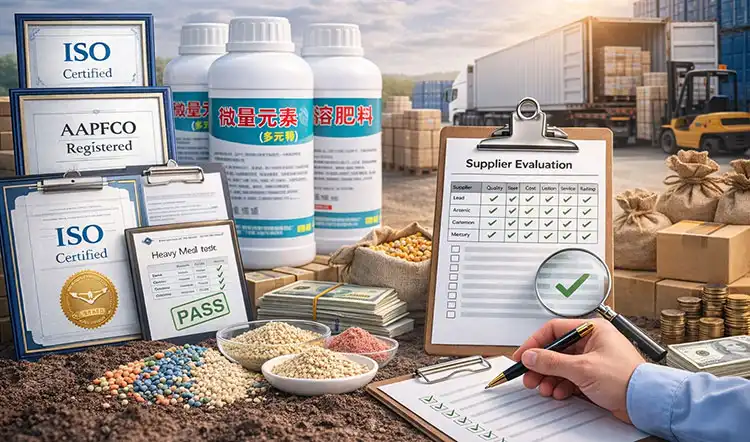
Quality approvals set important minimum standards for the safety and accuracy of a product. ISO approval shows that quality management is being done in a planned way, and AAPFCO registration makes sure that fertilizer rules are being followed. The results of heavy metal tests show that the product is pure and safe for the environment. This is especially important for organic and sustainable farming systems.
Transparency in production lets you choose a source and smartly evaluate the risk. Manufacturers should give a lot of information about where their raw materials come from, how they are processed, and how they check the quality of their products. This openness is especially important when getting chelated goods, because the accuracy of the production process affects the stability and usefulness of the product.
Superior sellers are different from commodity suppliers in that they can provide technical help. Agricultural dealers and wholesalers need to be able to get help with agronomic issues, application advice, and fixing problems. In addition to providing products, suppliers who give field reps, soil testing services, and customized nutrition programs add value.
Procurement Strategy Development
To set a price standard, you need to know how much the whole delivery costs, which includes handling, storage, and shipping costs. Micronutrient fertilizers are often bought in small amounts but at a high price. Freight costs have a big effect on the economics of these purchases. When transportation costs are taken into account, regional providers may offer benefits even if their prices are higher per unit.
Specifications for quality, release dates, and performance guarantees should all be talked about during contract talks. Making promises to buy in bulk may get you better prices, but you need to carefully plan your storage needs and product shelf life. For businesses that only have a few months of cash flow each year, payment terms and loan plans become important.
Diversifying your suppliers and planning your supplies are two risk management strategies. Dependencies on a single source make you vulnerable to problems with quality, quantity, and price changes. Having different ties with qualified suppliers gives you options and bargaining power while also making sure you have a steady supply of goods.
Case Studies and Practical Recommendations for Correcting Hidden Deficiencies
Real-world applications show how targeted nutrition programs can change different types of farming systems. These cases show both interventions that worked and typical mistakes that make programs less effective.
Vegetable Production Success Stories
Integrated micronutrient management was used by a big tomato farm in California to deal with ongoing calcium shortage problems. Because of how pH and salt in the soil affect each other, traditional calcium chloride treatments didn't make much of a difference. Using a calcium chelate program that dissolves in water through the fertigation method gave quick effects. Blossom end rot went down from 15% to less than 2%, and fruit quality and shelf life got a lot better. The program was successful because it was applied at the right time during different stages of fruit growth and worked with current nutrition guidelines.
Leafy green farmers in Arizona were able to deal with iron chlorosis problems in high-pH soils by applying micronutrients directly to the leaves. Normal iron sulfate treatments didn't work because they oxidized too quickly in alkaline circumstances. Using EDDHA-chelated iron as a weekly foliar spray brought back normal chlorophyll growth and improved the quality of the harvest. The treatment raised the usable yield by 20% and lowered crop loss due to quality problems caused by chlorosis.
Fruit Tree Rehabilitation Programs
Florida citrus farmers were able to fix widespread zinc deficiency by implementing complete micronutrient programs. Copper-based fungicides used in the past caused zinc shortage in mature groves, which decreased fruit set and made trees more likely to get citrus canker. Within two growth seasons, a focused program that combined applying zinc sulfate to the soil and zinc chelate to the leaves of the tree recovered its health. Due to stronger trees and better natural disease protection, fruit yields went up by 25%, and canker frequency went down a lot.
These case studies show how important it is to make a correct evaluation, choose the right product, and follow the same set of instructions every time. To be successful, you need to know exactly what is going wrong and choose ways to fix it that deal with the reasons instead of just the symptoms.
Conclusion
When used correctly and in accordance with what the crop and soil need, micronutrient fertilizers can fix hidden shortages. To be successful, you need to correctly identify the problem, choose the right offering, and time your application strategically. Formulations that dissolve in water are better at being bioavailable and can be used in a variety of ways, which makes them perfect for precision farm systems. People who work in procurement have to rate suppliers based on the quality of their products, their expertise, and how reliable their supply chains are. Putting money into good micronutrient programs pays off in many ways, including higher crop yields, better crop quality, and greater disease protection in a wide range of agricultural production methods.
FAQ
How quickly do micronutrient fertilizers fix problems that didn't show up at first?
Response time varies significantly with application method and deficiency severity. Foliar treatments usually work in 7 to 14 days, since plants take in nutrients straight through their leaves. Soil applications take three to six weeks to show results because roots have to take them up and move them around inside the plant. When sprayed through fertigation, water-soluble formulations have reaction times in the range of two to three weeks and are available for a long time.
What application frequency stops deficiencies from happening again?
Most farming methods keep micronutrient levels at a good level by applying soil amendments once a year. During times of high demand, split uses may be needed for high-yield crops and heavy production. Foliar fertilizer every two to three weeks while the plant is actively growing protects against deficits caused by stress. Testing the soil every two to three years helps change the amount and time of applications based on the real state of nutrients.
Can overuse of micronutrients lead to health issues?
Using too many micronutrients can indeed lead to toxic effects and environmental problems. Copper and zinc buildup in soils can stop good microbes from doing their job, which can lead to long-term fertility problems. When applied to the leaves in amounts higher than what is suggested, they often get burned and lose their ability to absorb light. Following the manufacturer's instructions and testing the soil regularly keeps it from building up and keeps the plants' nutrition at its best.
Partner with Sciground for Premium Micronutrient Solutions
Scientists at Sciground have created complete vitamin fertilizer options for businesses that grow crops. Our water-soluble formulas help plants grow well in a wide range of crop systems by absorbing quickly and making them more resistant to damage. We are a trusted company that makes micronutrient fertilizers. To get reliable results, we blend cutting-edge chelate technology with field-tested performance. Our goods make the leaves thicker, help the plant flower and bear fruit, make sure the fruit grows evenly, and give the fruit a longer shelf life. Email our technical team at [email protected] to talk about making feeding plans that are special to your crop's needs and the way it is grown. We offer full agronomic help, from the original soil analysis to harvest optimization, to make sure you get the most out of your fertilizer investment.
References
1. Alloway, B.J. "Micronutrients and Crop Production: An Introduction." Micronutrient Deficiencies in Global Crop Production. Springer Science & Business Media, 2008.
2. Fageria, N.K., Baligar, V.C., and Clark, R.B. "Micronutrients in Crop Production." Advances in Agronomy, Vol. 77. Academic Press, 2002.
3. Mortvedt, J.J. "Micronutrient Fertilizer Technology." Fertilizer Technology and Use, Fourth Edition. Soil Science Society of America, 1999.
4. Shuman, L.M. "Mineral Nutrition." Plant Nutrition in Sustainable Agriculture. CRC Press, 1994.
5. Welch, R.M. and Graham, R.D. "Breeding for Micronutrients in Staple Food Crops from a Human Nutrition Perspective." Journal of Experimental Botany, Volume 55, 2004.
6. Zhang, F., Cui, Z., Chen, X., Ju, X., Shen, J., Chen, Q., Liu, X., Zhang, W., Mi, G., Fan, M., and Jiang, R. "Integrated Nutrient Management for Food Security and Environmental Quality in China." Advances in Agronomy, Volume 116, 2012.

Sciground
Shanrangde, in collaboration with a team of experts from the former Academy of Agricultural Sciences, focuses on developing patented organic fertilizers, including those specifically formulated for Corydalis rhizome. Chief expert Professor Liang Dejun, with over 20 years of industry experience, provides one-stop technical guidance from site selection to field management, helping farmers increase production and income.
Formulated by the original expert team from the Academy of Agricultural Sciences · Focused on organic nutrients specifically for crops
Contact us now to customize a green nutrition solution for your farmland.
Recommended Blog

What Are the Best Micronutrients Water-Soluble Fertilizers for Crops?


Certified Organic Silybum marianum Specialized Fertilizer Solution

Best Silybum marianum Specialized Organic Fertilizer for High Yield

