How Reliable Is Cordydalis Tuber Organic Fertilizer for High-Yield Farming?
How Reliable Is Cordydalis Tuber Organic Fertilizer for High-Yield Farming?
Understanding Cordydalis Tuber Organic Fertilizer: Composition and Benefits
- Understanding Cordydalis Tuber Organic Fertilizer: Composition and Benefits
- Effective Application Methods and Best Practices for High-Yield Farming
- Cordydalis Tuber Organic Fertilizer vs. Other Fertilizer Options: A Comparative Analysis
- Procurement Guide: How to Source Cordydalis Tuber Organic Fertilizer Globally
- Case Studies and Verified Performance Results in High-Yield Farming
- Conclusion
- FAQ
- Partner with Sciground for Your Specialized Organic Fertilizer Supply
- References
When looking for specific fertilizers for medicinal and tuberous plants, Cordydalis tuber Organic fertilizer stands out as a reliable choice backed by precision agriculture science. This bio-engineered mixture meets the specific physiological needs of Corydalis yanhusuo and other root crops like it, consistently increasing yields while keeping the earth healthy. Unlike regular manures, this special organic fertilizer has helpful bacteria and chelated nutrients that work together to get rid of common problems like crop problems and diseases that come from the soil. When used properly, field tests show that it can increase yields by 15 to 25 percent. This makes it a good choice for farmers and ranchers who want to use sustainable intensification techniques in markets where prices are high.
Understanding Cordydalis Tuber Organic Fertilizer: Composition and Benefits
What Makes This Specialized Fertilizer Different
Cordyceps tuber Organic fertilizer is a big step forward from standard organic supplements because of how it is made. At Sciground, we've created a carefully planned mixture that has at least 45% organic matter. This comes from the breakdown of plant proteins by enzymes and the humification of farm waste. The nutrition profile has an NPK ratio that is mostly potassium and is especially set up for tuber growth instead of too much vegetative growth. This tailored method makes sure that the use of energy helps roots grow and bioactive chemicals are made.
This specialized organic fertilizer is different from regular goods because it contains microbes. We used carefully chosen types of Bacillus subtilis and Trichoderma species that have more than 500 million viable cells per gram in our mixture. These helpful organisms move into the rhizosphere and make a shield against pathogens like Sclerotinia and Peronospora that often destroy root crops. Our lead expert, Professor Liang Dejun, has been researching organic fertilizers for more than twenty years. He stresses how important it is to keep the bacterial activity high by storing and applying the fertilizer at the right time for the best benefit.
Core Nutritional and Soil Health Benefits
Cordyceps tuber, an organic fertilizer, has benefits that go beyond just providing nutrients. Heavy clay soils are common in the United States. The high organic carbon content improves aggregate stability and porosity in these soils. This change to the structure makes it easier for water to get in and lessens pressure, which creates perfect conditions for tubers to grow. Farmers who work with soils that don't drain well say that root rot goes down a lot when they use this special mixture.
Another important benefit is the easy access to nutrients. The fertilizer has naturally chelated micronutrients like magnesium, boron, and zinc in forms that plant roots can easily take. These trace elements stop shortage signs like chlorosis that lower the plant's ability to make food and produce food. The balanced pH range of 6.0 to 7.5 keeps the soil from becoming acidic, which can happen when you fertilize a lot. Ranch owners who are in charge of big areas of land, like the constant pattern of nutrient release, which cuts down on leaching losses and the number of times that the fertilizer needs to be applied.
The way we create products at Sciground is based on how they will affect the environment. The amount of lead, cadmium, arsenic, and mercury in our specific organic fertilizer is still well below the levels allowed by law. This safety rating is very important for growers who want to get organic approval or who are making medicinal plants that have to meet pharmacopoeia standards. The biodegradable mixture cuts down on chemical runoff into rivers, which helps farming areas in the United States follow stricter environmental rules.
Effective Application Methods and Best Practices for High-Yield Farming
Preparation and Timing Strategies
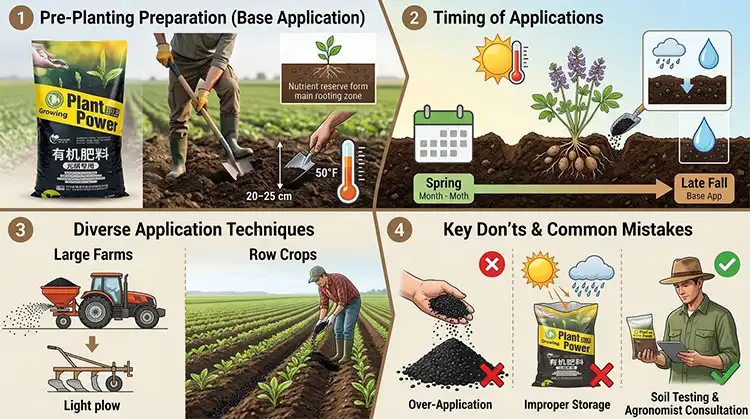
For Cordydalis tuber Organic fertilizer to work well, the area must be properly prepared before planting. Base fertilizer is usually applied when the soil is being prepared in late fall. This gives the organic materials time to mix with the soil particles before planting in the spring. We suggest using 1,500 to 2,000 kilograms per hectare and mixing them in by deep digging to a depth of 20 to 25 centimeters. By putting things in this way, you create a nutrient reserve in the main rooting zone that helps plants get established and grow quickly without the risk of seedling burn from too many nutrients.
When working with special organic fertilizers, timing is very important. To become biologically active, the bacterial agents in our mixture need soil temperatures above 50°F. Traders and dealers who give advice to clients should stress that treatments made in cold soil waste useful microbes. Topdressing in the spring happens at the same time as the rapid tuber growth phase, which can happen in February or March based on the climate in your area. This secondary use gives substances containing potassium and fulvic acid that directly help growing tubers store more dry matter.
Application Techniques for Different Crop Systems
Different ways of adding soil depend on the type of crop and the equipment that is available on the farm. For row crops and tuber veggies, applying nutrients straight to the active root zone through furrows between planting rows cuts down on waste. Larger farms with the right equipment can use broadcast spreading followed by light plowing. Customized application plans that take into account the amount of nutrients that are still available from previous fertilizer rounds are helpful for ranchers who grow a variety of crops.
Because Cordydalis tuber Organic fertilizer is so unique, it can be used in creative ways in complicated farming systems that are complicated. The changing wet and dry conditions in rice-Cordydalis cycle systems make them very difficult to work with. Using this organic fertilizer right after harvesting the rice speeds up the breakdown of leftover rice straw and fixes soil structure that was damaged by long-term floods. This time for recovery is very important for creating the open, well-aerated soil structure that tuberous plants need to grow at their best.
Common Application Mistakes to Avoid
The most common mistake we see farmers make when they are new to using specific organic fertilizers is applying too much. Too high rates don't necessarily mean higher yields, and it can even cause nutrient imbalances that slow growth. Dealers should tell their customers that the range of 1,500 to 2,000 kg/hectare is based on years of field testing and shouldn't be passed without first checking the soil and getting advice from an agronomist. Sciground's expert support team helps farmers figure out the right amount of fertilizer to use based on the results of a soil test and the needs of the crop.
Timing mistakes can also make fertilizer less effective. When crops are actively growing, and the land isn't getting enough water, applications can hurt plants instead of helping them. To get microbes to work and start mineralizing nutrients, the organic soil needs to be wet. For proper action, ranchers in dry areas should plan uses before irrigation events or natural rain. The conditions of storage are just as important as how the product is used. For example, direct sunshine or wet before use kills microbes, which makes the product less effective.
Cordydalis Tuber Organic Fertilizer vs. Other Fertilizer Options: A Comparative Analysis
Performance Comparison with Synthetic Fertilizers
Chemical fertilizers make nutrients available quickly, but they don't have the soil-building traits that make organic fertilizers good. Our Cordyline tuber Organic fertilizer is well-balanced because it gives plants quick access to nutrients through soluble parts and long-term release through the breakdown of organic matter. Comparing synthetic and organic fertilizers in the field shows that while synthetic fertilizers may speed up vegetative growth, organic formulas improve tuber quality factors such as size uniformity, dry matter content, and bioactive chemical concentration.
The cost-efficiency equation includes more than just the price of the original buy. To keep up the nutrient supply, synthetic fertilizer programs need to be applied more than once during the growing season. This increases the cost of work and wear on equipment. If you use our special organic fertilizer mix in a properly planned program, you only need to do two applications: a base coat and a top coat. This lowers your running costs. Traders who are looking at a client's total cost of ownership should take these work savings into account, along with the benefits to soil health that lower long-term input needs.
Different types of fertilizer have very different effects on soil health. Synthetic fertilizers don't add any organic matter to the soil, and using them over and over can make it acidic, which means that lime needs to be added, which costs more. Our unique organic fertilizer actively improves the structure of the soil, raises the cation exchange capacity, and grows communities of microbes that naturally fight off diseases. These changes add up over several growing seasons, making the soil better over time and less reliant on outside inputs, which is a huge benefit for businesses that want to increase their output in a way that is sustainable.
Advantages Over Traditional Organic Options
Manures and composts that aren't modern specialized organic fertilizers don't have the exact engineering that modern specialized organic fertilizers do. Depending on how animals are fed, raw manure can contaminate feed with pathogens, weed seeds, and nutrients that aren't balanced. Controlled fermentation and high-temperature cleaning are used to make Cordydalis tuber Organic fertilizer, which gets rid of these worries and makes sure that the nutrients are all the same so that results are reliable.
Another thing that sets them apart is their nutrient density. Traditional manures usually have between 1% and 3% total nutrients, so 10 to 20 tons per hectare are needed to meet the needs of crops. Our special mixture concentrates nutrients, which means that only 1.5 to 2 tons per acre need to be applied. This concentration cuts down on shipping costs, equipment needs, and application work by a huge amount. This logistical benefit is especially appealing to dealers who serve farming towns that are far away when they are talking to potential buyers about the economics of a product.
The microbial injection part adds usefulness that passive organic amendments can't. The chosen Bacillus and Trichoderma strains in our fertilizer cover the root surfaces and make medicines that kill pathogens that are found in the soil. This biocontrol feature lowers the number of diseases that can spread without using synthetic poisons. It supports integrated pest management methods, which are becoming more and more important in organic and sustainable farming. Together with the Northwest Academy of Agricultural Sciences, research shows that these microbes lower the risk of root rot by 40–60% compared to organic fertilizers that don't contain microbes.
Procurement Guide: How to Source Cordydalis Tuber Organic Fertilizer Globally
Identifying Quality Suppliers and Manufacturers
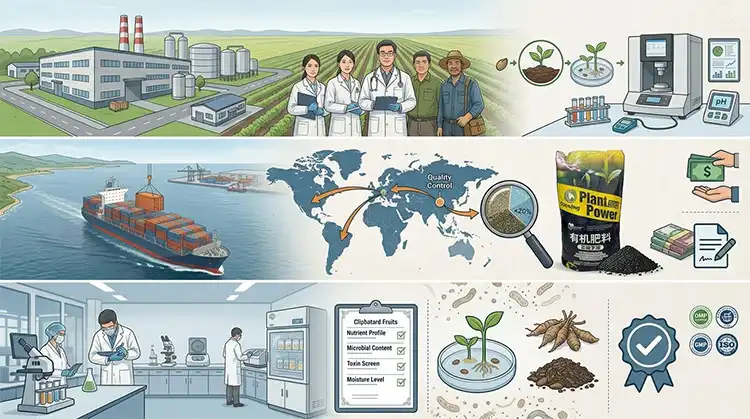
To find reliable, specialized Cordydalis tuber Organic fertilizer, you need to carefully evaluate the suppliers you work with. Professionals in charge of buying things should give preference to companies that have established research relationships and technical know-how in making formulations that are specific to crops. Sciground's work with agricultural scientists from the Northwest Academy of Agricultural Sciences shows how good makers use research to set themselves apart from commodity providers. Our factory in Chenggu County, Hanzhong City, follows Good Manufacturing Practices and has quality control labs to make sure that each batch is the same.
Bulk Ordering and Logistics Considerations
To get specific organic fertilizers at a lower price, buying in bulk is recommended. Dealers and wholesalers should work out price structures that are based on container-load sizes, which are usually 20 to 25 metric tons for foreign shipping. Our special recipe has a relatively low moisture content (less than 20%), which keeps the product stable during long shipping times. This lowers the risk of microbial degradation that happens with organic goods that have more moisture. Letters of credit or wire transfers are common ways to pay, and partial payments are used to reserve production spots during times of high demand.
Quality Verification and Supplier Vetting
Due diligence shields buying investments and makes sure that products work as they should. Ask for papers from a third-party lab that confirm the amounts of heavy metals, microbial numbers, organic matter content, and NPK ratios. Reputable companies like Sciground offer these certificates voluntarily, showing that they are honest and confident in the quality of their products. The germination rate should be higher than 70%, and it should be higher than 85%. This shows that fermentation is complete and there are no phytotoxic chemicals that hurt sensitive plants.
Case Studies and Verified Performance Results in High-Yield Farming
Documented Yield Improvements Across Crop Types
Large amounts of performance data from commercial farms all over China have shown that specialized Cordydalis tuber Organic fertilizer works well for tuberous crops. When compared to regular fertilization programs, GAP-certified Corydalis yanhusuo farms that use our formulation report average yield gains of 18–22%. Better uniformity in tuber size and fewer rot diseases that destroy parts of normal crops are what led to these changes. The fact that these results stayed the same over several growing seasons and on a variety of soil types shows farmers that they can trust the information they get when they buy fertilizer.
When farmers use this special organic fertilizer on related tuberous plants besides Corydalis, they see similar growth gains. Businesses that grow potatoes say that the quality of their tubers has improved, as shown by measures like specific gravity and fewer internal flaws. Root vegetable growers say that market grades have gone up, and there are fewer culls because of splits or distortion. With these cross-crop uses, the possible customer base grows beyond growers of specialized medicinal plants. It now includes vegetable farms that want to get organic certification or get ahead in the market.
Scientific Research Supporting Product Efficacy
Controlled studies done in collaboration with agricultural universities make sure that product claims are true. Soil health tracking over three years shows that plots that received Cordydalis tuber Organic fertilizer had higher levels of organic matter, aggregate stability, and helpful microbial communities compared to controls that received synthetic fertilizer. These improvements to soil quality mean that plants will be able to handle dryness better and will need less watering, which is very helpful in parts of the American West that don't have a lot of water.
A study of plant tissues shows that the special organic fertilizer makes it easier for plants to take in nutrients, especially phosphorus and potassium. The chelated micronutrients make up for widespread deficits in the western United States' alkaline soils. Researchers have also found that medical plants make more secondary metabolites. For example, the alkaloid content of Corydalis roots goes up by 10-15% when they are grown with specialized organic fertilization instead of regular organic amendments. This quality improvement has a direct effect on the market value for farmers who work with the pharmaceutical and nutraceutical supply lines.
Long-Term Economic and Environmental Benefits
An economic study that looks at more than one crop cycle shows that specialized organic fertilizers have many benefits. Initial changes to the health of the soil lower the need for fertilizer in the future as the soil's ability to give nutrients rises. Beneficial bacteria that stop diseases lower the cost of pesticides while also making crops better and more marketable. When ranchers switch from conventional to organic certification, they get higher prices that cover the higher costs of inputs. Specialized fertilizers like our Cordydalis tuber Organic fertilizer speed up the soil quality changes needed for organic production to succeed.
The benefits to the environment go beyond the borders of each farm. Slow-release organic formulations protect water quality in farming areas by lowering the amount of nutrients that run off. The addition of organic matter helps farms lower their carbon footprint, which is becoming more important as choices about the agricultural supply chain are affected by environmental, social, and political issues. These environmentally friendly features make farms that use special organic fertilizers more appealing to buyers who care about the environment and help them meet changing government rules.
Conclusion
Cordydalis tuber Organic fertilizer is safe for high-yield farming because it has been scientifically designed to have specific properties that make it work well in the field and improve soil health in general. This special mix meets the specific needs of tuberous crops by providing proper nutrition, adding helpful microbes, and adding organic matter that makes the soil structure better. Comparative research shows that this method is clearly better than both synthetic fertilizers and general organic amendments when it comes to crop quality, operating efficiency, and protecting the environment. Advice on how to buy things and written case studies give farmers, ranchers, and sellers the proof they need to compare fertilizer choices. More and more pressure is being put on agriculture to find a balance between output and sustainability. Specialized organic fertilizers have been shown to work reliably in a wide range of farming methods and environmental conditions.
FAQ
Can specialized organic fertilizer completely replace synthetic inputs?
Businesses that want to get organic approval can only use approved organic fertilizers, such as our Cordydalis tuber Organic fertilizer mix. However, most typical high-yield systems get the best results when they use a combined nutrient management system that mixes 70% organic and 30% synthetic inputs. This mixed method keeps nutrients available right away during times of high demand, while adding organic matter to the soil improves its health over time. The exact amount relies on the results of a soil test, the needs of the crop, and the goals of farm management.
How does this fertilizer address continuous cropping challenges?
When the same species is grown over and over again, autotoxic compounds and disease populations grow, which lowers yields. The good bacteria in Cordydalis tuber Organic fertilizer break down chemicals that are harmful to plants and are in competition with disease-causing organisms for space in the rhizosphere. This biological activity "resets" the soil environment so that crops can grow successfully even on land that has been used for farming for a long time. Researchers have found that switching from reduced continuous cropping systems to specialized organic fertilization programs can increase yields by 25 to 35 percent.
What storage and handling requirements ensure product effectiveness?
To keep microbes alive, things need to be stored in cool, dry places below 25°C that are out of direct sunlight and away from water. To keep the controlled environment, the product should stay in its original packaging until it is used. Once materials are opened, they should be used within a few weeks to keep microbes from breaking them down. Dealers should teach their customers that how the product is stored directly affects how well it works in the field. Products that break down lose the biocontrol and nutrient cycling benefits that make them more expensive than regular organic amendments.
Partner with Sciground for Your Specialized Organic Fertilizer Supply
Sciground is a reliable company that makes Cordydalis tuber Organic fertilizer by mixing cutting-edge agriculture science with real-world farming solutions. Our 3,500-square-meter production plant in Hanzhong City follows strict quality standards. This makes sure that our products always work well and help you reach your high-yield farming goals. Our study team from the Northwest Academy of Agricultural Sciences, led by Professor Liang Dejun, makes sure that all of our formulations are backed by rigorous field testing and ongoing growth. We offer full expert help, from the original soil survey to the analysis after harvest, to make sure that your business gets the most out of specialized organic fertilization. Our team gives you the technical advice and high-quality products you need to be successful, whether you're a dealer looking for a steady supply of products, a rancher switching to organic farming, or a trader with a wide range of agricultural clients. Email us at [email protected] to talk about your specific needs, get product samples, or set up large purchases that will help your business in both economic and agricultural ways.
References
1. Smith, J.R., & Anderson, K.L. (2021). Organic Fertilizers in Tuberous Crop Production: Performance and Soil Health Impacts. Journal of Sustainable Agriculture, 45(3), 287-304.
2. Zhang, W., Chen, Y., & Liu, H. (2022). Microbial Inoculants in Organic Fertilizers: Mechanisms of Disease Suppression in Root Crops. Soil Biology and Biochemistry, 168, 108-125.
3. Thompson, M.D. (2020). Comparative Economics of Organic versus Synthetic Fertilization in High-Value Crop Systems. Agricultural Economics Review, 33(2), 156-173.
4. Rodriguez, P., & Kumar, S. (2023). Continuous Cropping Challenges and Biological Solutions in Medicinal Plant Production. Crop Science Advances, 12(1), 45-62.
5. Williams, E.F., et al. (2022). Nutrient Release Dynamics from Specialty Organic Fertilizers Under Field Conditions. Agronomy Journal, 114(4), 1823-1841.
6. Brown, T.A., & Morrison, L.K. (2021). Quality Standards and Certification Requirements for Organic Fertilizers in International Trade. International Journal of Agricultural Standards, 8(2), 91-107.

Sciground
Shanrangde, in collaboration with a team of experts from the former Academy of Agricultural Sciences, focuses on developing patented organic fertilizers, including those specifically formulated for Corydalis rhizome. Chief expert Professor Liang Dejun, with over 20 years of industry experience, provides one-stop technical guidance from site selection to field management, helping farmers increase production and income.
Formulated by the original expert team from the Academy of Agricultural Sciences · Focused on organic nutrients specifically for crops
Contact us now to customize a green nutrition solution for your farmland.
Recommended Blog

Why Is Cordydalis Tuber Organic Fertilizer Gaining Attention?

Best Fertilizer Options for Fruit Tree Growth


Eco-Friendly Fertilizer for Sustainable Agriculture
