Organic Fruit Tree Fertilizer for Higher Yield
Understanding Organic Fertilizer for Fruit Trees
- Understanding Organic Fertilizer for Fruit Trees
- How to Use Organic Fertilizer Effectively for Higher Yield
- Comparing Organic vs Chemical Fertilizers for Fruit Trees
- Choosing the Best Organic Fertilizer for Fruit Trees: A B2B Procurement Perspective
- Maximising Procurement Value: Bulk Buying and Logistics of Organic Fertilizers
- Conclusion
- FAQ
- Partner with Sciground for Premium Fruit Tree Organic Fertilizer Solutions
- References
To get better fruit crops, you need to start with good dirt and the right amount of fertiliser. Fruit Tree Organic Fertilizer is a special bacterial fermentation product made to meet the nutritional needs of fruit trees that grow back every year, like peaches, cherries, and citrus trees. Unlike most synthetic fertilisers, this bio-active mixture delivers important nutrients through organic matter. It does this by encouraging strong root growth, making plants more resistant to disease, and improving fruit quality throughout all stages of growth. This makes it an invaluable tool for farmers and ranchers who want to increase their long-term productivity.
Understanding Organic Fertilizer for Fruit Trees
What Makes Organic Fertilization Different?
Organic fertilisers for fruit trees include peat moss, straw powder, plant waste, and cleaned animal dung. Bacillus subtilis and Trichoderma are two good bacteria that stay on these things. Germs are killed by high temperatures and microbial fermentation. With this method, you can make soil that is full of nutrients and produces nitrogen, phosphorus, and potassium slowly through organic mineralisation, while man-made compost breaks down quickly.
The Biological Advantage for Orchard Health
For orchards to grow well, the land needs to be healthy. The amount of organic matter in the soil normally goes up to or above 45% when organic amendments are added. The organisation is better because strong groups are formed. It is now easier for water to get in and for roots to grow because the soil is more open. Organic fertilisers make microbes work harder, which speeds up the cycle of nutrients by turning locked-up nutrients into forms that plants can use. The presence of a wider range of microbes has been linked to fewer root diseases and better nutrient uptake, both of which directly affect tree health and crop output.
Addressing Soil Exhaustion in Intensive Orcharding
When growing food for sale, Soil Exhaustion Syndrome is a regular issue. When crops are grown over and over again, they break down the structure of the earth and remove small elements like zinc, boron, and iron. This doesn't happen with organic fertilisers because they add vitamins and organic carbon to the soil all the time. These trace elements don't stick to forms that trees can't use when humic and fulvic acids are added to high-quality recipes. Because of this, trees get all the food they need at key points in their growth.
How to Use Organic Fertilizer Effectively for Higher Yield
Timing Application with Tree Growth Stages
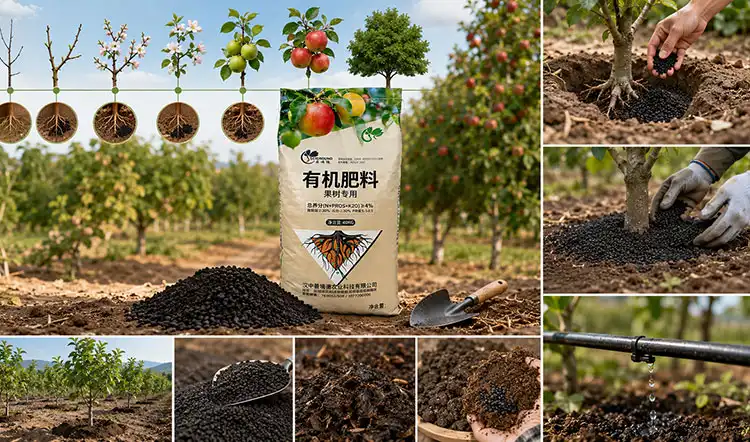
Strategic planning makes Fruit Tree Organic Fertilizer more valuable. Post-harvest application in the autumn is a "restoration phase" that restores energy stocks that were used up while the fruit was being grown. This treatment to the base of the tree gets them ready for breaking dormancy and root flushing in early spring. Applications made before blooming in late winter help buds grow, and applications made during fruit growth make sure there is enough potassium and calcium for size and sweetness.
Application Methods for Different Orchard Conditions
Three main ways work well for a wide range of sizes. To use a radial ditch, you dig holes along the tree's drip line and fill them 30 to 40 cm deep with powdered manure. If the trees are already there, this method will work best. When you top dress, you put things on top of the dirt. This is good for trees that are already there and have deep roots. Drip watering is mixed with liquid organic concentrates during fertilisation to give nutrients right away without upsetting the soil. This is great for tech companies that have to deal with water that is dry or stressed.
Dosage Guidelines and Soil Blending Strategies
Based on their size and crop load, young trees need between 2 and 5 kg per tree per year, and grown trees need between 10 and 20 kg. You can get more out of organic fertilisers and spend less when you mix them with dirt or biochar. Biochar adds more organic matter and helps plants hold on to water. Compost adds more organic matter. The carbon-to-nitrogen ratio should be between 15:1 and 20:1 so that nitrogen isn't stolen and plants get nitrogen right away.
Comparing Organic vs Chemical Fertilizers for Fruit Trees
Nutrient Release and Long-Term Soil Impact
Through salts that dissolve in water, chemical fertilisers quickly give plants the nutrients they need. Plants grow quickly, but nutrients might be washed away when it rains. The nutrients in organic fertilisers are released slowly into the soil by microbes. This is more in line with how fast trees take them up and reduces waste. Organic fertilisers raise the amount of organic matter in the soil over several growth seasons. This helps it hold on to water and exchange cations better than chemical fertilisers, which they can't do. The trees get stronger every year because the land is better, which gives them an advantage that grows over time.
Environmental and Safety Considerations
Synthetic nitrogen fertilisers add nitrates to rivers that make them dirty and release greenhouse gases into the air. Organic choices are better for the earth because they harm species in the land less and reduce trash pollution. Also, organic materials are safer for workers because they are not as acidic as pure chemical salts. It means that you can now handle and spread fertiliser without getting burnt.
Cost-Benefit Analysis for B2B Buyers
Most of the time, organic fertilisers pay for themselves faster than chemical ones, even though they cost more per unit at first. You don't need to use as many fungicides and soil amendments when the soil is healthy. Prices are even less different when you buy in bulk. You can often get prices that are the same as expensive fake mixes when you order more than one tonne. When you look at the total cost of ownership, which includes things like less sickness and better food that sells for more money, organic solutions usually win out.
Choosing the Best Organic Fertilizer for Fruit Trees: A B2B Procurement Perspective
Certifications and Product Formulation
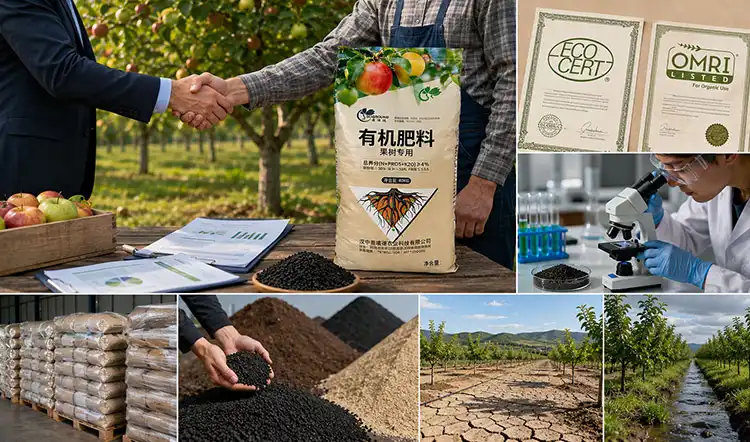
Reliable sellers of Fruit Tree Organic Fertilizer have certifications from groups like ECOCERT and OMRI (Organic Materials Review Institute) that show they follow organic standards. Product recipes should be based on what your crop needs. For example, balanced NPK ratios (5-5-5) are good for general care, while high-potassium mixes (4-3-8) help with fruit filling. A moisture level below 20% stops caking and bacterial growth while the product is being stored.
Evaluating Supplier Capabilities
You should not only look at the quality of the products, but also how trustworthy the seller is. Can they handle big sales all the time? Are there mixes that are made to fit the results of a soil test? Manufacturers that have been around for a while and have farming experts on staff can help with things other than the product itself. Ask, for example orders to see how well the product works before you sign a big contract. You can also look at references from other farms that work in the same way as yours.
Climate Compatibility and Regional Considerations
For each area, the formulas need to be different. In dry places, formulas that use clay or humates to hold on to water work best. However, things that improve flow better and stop root rot work best in wet places. Since they've worked in your area before, suppliers who know these details can help you choose the right goods, saving you money from having to try a lot of different ones.
Maximising Procurement Value: Bulk Buying and Logistics of Organic Fertilizers
Sourcing Strategies: Local vs International Suppliers
When you need something quickly, it's very helpful to have local providers because they cut down on shipping costs and arrival times. When you buy a lot from an international company, you might be able to get special recipes or better prices. Take a look at both options and think about how much it will cost to land, taking into account taxes, freight, and payment terms. If you use more than one service, you lower your risk if one of them has supply problems.
Negotiating Volume Discounts and Contracts
When you sign an annual deal with a volume promise for Fruit Tree Organic Fertilizer, you can often get 10–20% off spot sales. To avoid storage problems, talk to suppliers about open shipping times that work with your application plan. Payment terms are also important. When you buy something months before you use it, paying net 30 or 60 days is better for your cash flow than paying all at once.
Logistics: Storage and Handling Best Practices
If you store organic fertilisers the right way, they will stay stable. Keep things away from strong sunlight and high temperatures, and make sure they are dry and covered. Granular goods that are kept in bags that keep out moisture will keep their quality for 12 to 18 months. Liquid powders need to be kept away from frost and kept in containers that can't leak so they don't evaporate. From the building to the field, proper treatment keeps the nutrients and living microbes intact.
Conclusion
Organic fertilisers for fruit trees are an investment in the long-term health and output of the garden. By knowing how biological processes work behind organic fertilisation, applying it at the right time, and choosing approved sources that can meet large needs, farmers and ranchers can get big increases in yields while also making soil ecosystems stronger. As the seasons change, input costs stay the same, and expensive markets credit food that is grown in a way that doesn't harm the environment, the cost-benefit analysis shifts more toward organic options. When you compare providers based on their licenses, recipe fit, and logistical skills, you can be sure that the choices you make will meet both your business needs and your environmental responsibility goals.
FAQ
Can organic fertilizers completely replace chemical options?
Organic fertilisers can meet all the nutritional needs of fruit trees when applied correctly. Transitioning orchards may require 2-3 seasons for soil biology to fully establish, during which supplemental inputs might be necessary. Once microbial populations stabilise, organic programs sustain yields comparable to chemical programs while improving soil health.
How quickly can I expect yield improvements?
Realistic timelines vary by orchard condition. Healthy soils show measurable improvements within one growing season—increased fruit size and sugar content are common first-year benefits. Degraded soils require 2-3 years of consistent organic management to rebuild structure and biology, after which yields typically increase 15-25% compared to chemically managed baselines.
Are organic fertilizers safe for young trees and seedlings?
Properly composted organic fertilisers are safe for all tree ages. The slow-release nature prevents the root burn common with high-salt synthetic fertilisers. When establishing new orchards, mixing organic matter into planting holes stimulates root development and improves transplant survival rates, giving young trees a strong start.
Partner with Sciground for Premium Fruit Tree Organic Fertilizer Solutions
Sciground, operated by Hanzhong Shanrangde Agricultural Technology Co., Ltd., brings over 20 years of organic fertiliser research expertise led by Professor Liang Dejun and a dedicated team from the Northwest Academy of Agricultural Sciences. Our specialised microbial fermentation fertiliser for fruit trees delivers comprehensive organic nutrition, enhances disease resistance, and improves soil aggregate structure while remaining eco-friendly. As a trusted fruit tree organic fertilizer manufacturer, we offer bulk supply capabilities, customised formulations based on your soil analysis, and complete technical support from site preparation through harvest.
Contact our expert team at [email protected] to request bulk quotations, explore our certified product catalogue, and discuss how our scientifically formulated solutions can optimise your orchard's productivity sustainably. Whether managing hundreds of acres or exploring organic transition strategies, Sciground provides reliable supply chains and agronomic guidance tailored to your operational requirements.
References
1. Chen, J. (2019). "Microbial Dynamics in Organic Fruit Production Systems." Journal of Sustainable Agriculture, 43(2), 145-162.
2. Martinez, L. & Thompson, R. (2020). "Comparative Analysis of Nutrient Release Patterns in Organic versus Synthetic Fertilizers for Perennial Crops." Soil Science Society of America Journal, 84(4), 1203-1218.
3. Williams, D. (2021). "Economic Evaluation of Organic Fertilizer Programs in Commercial Orchards." Agricultural Economics Review, 22(1), 67-84.
4. National Organic Standards Board. (2022). "Guidance on Organic Soil Amendments and Fertility Management." United States Department of Agriculture.
5. Peterson, K. & Liu, H. (2020). "Soil Health Indicators in Long-Term Organic Fruit Production." HortScience, 55(3), 312-327.
6. Rodriguez, M. (2023). "Trace Element Availability in Organic Farming Systems: Mechanisms and Management Strategies." Advances in Agronomy, 178, 89-134.

Sciground
Shanrangde, in collaboration with a team of experts from the former Academy of Agricultural Sciences, focuses on developing patented organic fertilizers, including those specifically formulated for Corydalis rhizome. Chief expert Professor Liang Dejun, with over 20 years of industry experience, provides one-stop technical guidance from site selection to field management, helping farmers increase production and income.
Formulated by the original expert team from the Academy of Agricultural Sciences · Focused on organic nutrients specifically for crops
Contact us now to customize a green nutrition solution for your farmland.
Recommended Blog


Why Is Cordydalis Tuber Organic Fertilizer Gaining Attention?

Best Fertilizer Options for Fruit Tree Growth


