How Organic Fertilizer Enhances Soil for Fruit Trees?
Understanding Organic Fertilizer and Its Impact on Soil Health
- Understanding Organic Fertilizer and Its Impact on Soil Health
- Core Benefits of Using Organic Fertilizer for Fruit Trees in Commercial Production
- Best Practices for Applying Organic Fertilizer in Fruit Tree Orchards
- Procurement and Supplier Considerations for Organic Fertilizer in Fruit Tree Cultivation
- Measuring the Impact: Performance Tracking and Long-Term Soil Health Optimization
- Conclusion
- FAQ
- Choose Sciground for Premium Organic Fertilizer Solutions
- References
Organic fertiliser for fruit trees changes the health of the soil in ways that synthetic fertilisers can't, like increasing microbial activity and nitrogen cycling, and making the structure of the soil better. These biological amendments help the soil hold on to water, clump together better, and create healthy microbial communities that are necessary for long-term food production. Organic fertilisers feed plants steadily throughout the growth season because they release nutrients slowly, and their carbon-rich makeup makes the soil fertile for a long time. Chemical fertilisers can make the soil more acidic and mess up natural processes. Organic options, on the other hand, keep the pH level stable and support the complex environment that fruit trees need for healthy root growth and nutrient uptake.
Understanding Organic Fertilizer and Its Impact on Soil Health
Organic fertilizers encompass various forms, including compost, aged manure, liquid concentrates, granular blends, and specialized microbial fermentation products. Each type delivers essential macronutrients and micronutrients through different release mechanisms, ensuring fruit trees receive balanced nutrition throughout their growth cycles.
Types and Composition of Organic Fertilizers
Modern organic fertilisers come in several different forms that are made for different ways of applying them and different tree needs. Granular forms release nutrients slowly, making them perfect for base uses. Liquid concentrates, on the other hand, release nutrients quickly through fertigation systems. Specialised microbial fermentation fertilisers mix regular organic matter with good bacteria like Bacillus subtilis and Trichoderma species to make active soil amendments that improve conditions in the rhizosphere. The mixture usually has more than 45% organic matter and carefully balanced NPK ratios that range from 4-3-8 for fruit-bearing phases to 5-5-5 for general maintenance. Pathogens are killed during controlled fermentation of these goods, but beneficial microorganisms that are needed for nutrient cycling and disease suppression are kept.
Soil Structure Enhancement Mechanisms
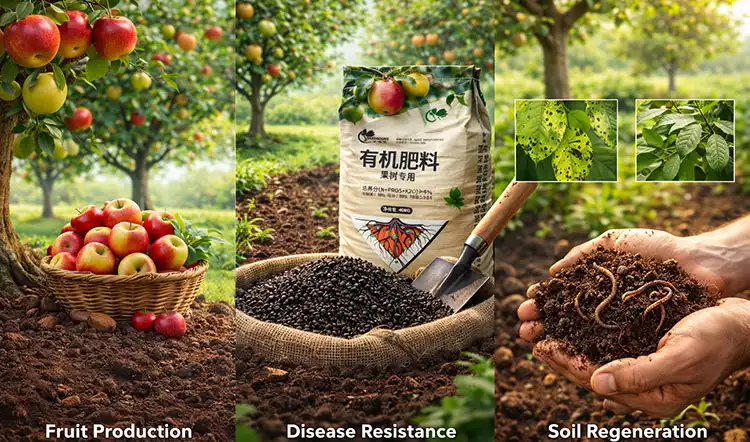
Organic fertilisers change the physical qualities of soil by making the aggregates more stable and the pores more open. Humic and fulvic acids, which are found in good organic fertilisers, help to hold the soil together and keep it from washing away or compacting. Agricultural research institutions have found that regular applications of organic fertiliser boost soil organic matter by 2 to 4 percent per year in established orchards. This better structure makes it easier for roots to get into the soil, let water in, and exchange gases. This organic matter stores nutrients and water, so plants don't need to be watered as often, and the soil around the roots stays consistently moist. The improved soil structure also keeps the soil from getting too wet during times of heavy rain, which keeps the roots of fruit trees safe from oxygen stress and root rot diseases.
Microbial Community Development
Healthy soil microbiomes are important for fruit trees to stay healthy. Organic fertiliser for fruit trees and organic fertilisers feed good bacteria, fungi, and other microorganisms. These microbial communities live together with tree roots in a mutually beneficial relationship that helps with nutrient exchange and protects against soil-borne pathogens. Adding organic matter helps mycorrhizal fungi grow, which increases the root's useful surface area by up to 1000%. These networks of fungi help plants take in more phosphorus, handle drought better, and make natural defences against pathogens around root systems. According to research, orchards that use high-quality organic fertilisers have 30–40% more beneficial microbes than orchards that are handled in the usual way.
Core Benefits of Using Organic Fertilizer for Fruit Trees in Commercial Production
Commercial fruit operations require consistent yields, superior fruit quality, and sustainable production practices. Organic fertilizer for fruit trees addresses these needs while building long-term orchard sustainability through comprehensive soil health improvement.
Yield and Quality Enhancement
Organic fertilisation has a big effect on both the amount and quality of food. The slow-release nutrient profile stops the fast green growth that happens when synthetic nitrogen is applied. Instead, it encourages balanced growth that helps fruits set and grow properly. Controlled nutrition leads to more uniform fruit sizes, higher sugar levels (Brix levels), and longer shelf life. Commercial farms that use organic fertiliser programs see average yield increases of 15 to 25 percent within three growing seasons. The process of gradually improving the soil makes growing conditions better and better. The full benefits are usually seen after 4 to 5 years of steady use. Some quality changes that meet the needs of the premium market are better fruit colouration, firmness, and antioxidant content.
Disease Resistance and Plant Health
Organic fertilisers improve plant nutrition and soil biology, which makes plants' natural defences stronger. The balanced nutrient profile helps cell walls grow strongly, which makes fruit trees less likely to get fungal infections and be damaged by the climate. Beneficial microorganisms introduced through organic amendments also compete with pathogenic microorganisms for resources and root space. Field tests show that fruit trees that have been fertilised organically have 40–50% fewer cases of common diseases like crown rot, fire blight, and different leaf spot diseases. Inhibiting diseases lowers the need for pesticides, which lowers production costs and supports integrated pest management methods that are necessary for orchards to run in the long term.
Long-term Soil Regeneration Benefits
In addition to increasing output right away, organic fertilisers help store carbon and rebuild soil, which are both very important for the long-term health of an orchard. Each tonne of organic matter that is applied can sequester about 0.5 tonnes of carbon dioxide equivalent. This supports climate-positive agriculture efforts that are becoming more important to commercial buyers and certification programs. Organic fertilisation has many benefits, such as making soil better at holding water, reducing the chance of erosion, and making it more resistant to extreme weather. Over time, these benefits lead to lower input costs because healthy soils need fewer changes and allow nutrients to cycle more efficiently.
Best Practices for Applying Organic Fertilizer in Fruit Tree Orchards
It is important to use organic fertilizer at the right time, in the right way, and as part of overall crop care for it to work. You can plan the best times to give nutrients to fruit trees so that they get to them when they need them most if you know their phenology and the state of the land.
Seasonal Timing and Application Frequency
Optimal organic fertiliser application aligns with fruit tree growth phases. Organic fertiliser for fruit trees and nutrient demands. Post-harvest applications during autumn provide essential nutrients for root development and energy storage before dormancy. This timing allows organic matter decomposition throughout winter, making nutrients available for spring growth initiation. Spring applications should occur before bud break to support early-season vigor and flower development. For bearing trees, split applications work effectively, with 60% of annual fertilizer applied in early spring and 40% during fruit development phases. Young trees benefit from more frequent, lighter applications to support establishment without encouraging excessive vegetative growth.
Application Methods and Equipment Considerations
Different kinds of organic fertilizer need to be used in certain ways to get the best benefits. Granular goods work well with scatter spreaders because they spread the goods out evenly. This is done shortly so that nutrients don't get lost. Organic fertilizers that are liquid can be used with any watering system and get nutrients straight to the roots. We talked about a special microbial fermentation fertilizer that works really well when used through fertigation systems at important times for growth. The microorganisms will get to the busy root zones this way, and they won't be exposed to UV light, which can kill microorganisms. Different types of extracts are spread at different rates. Granular forms are spread at 50 to 100 pounds per acre, while liquid forms are spread at 1 to 2 gallons per acre. This depends on the ratios used for reducing.
Integration with Soil Testing and Monitoring
Checking the soil often helps you choose the right organic fertilizer and the right amount to use. This way, plants get the food they need without any waste or damage to the environment. Full soil tests should find out things like the pH level, the amount of organic matter, the nutrients that are present, and signs of living things working, such as enzyme activity and respiration rates. By having a professional test the soil every two to three years, we can figure out what changes need to be made to the fertilizer program. A simple pH and conductivity reading every so often can help you keep an eye on the soil and find problems before they hurt the trees' health or output.
Procurement and Supplier Considerations for Organic Fertilizer in Fruit Tree Cultivation
To pick the best organic fertilizer for fruit trees, you should carefully consider the product details, the skills of the seller, and the total cost. Firms need providers they can depend on to consistently deliver high-quality goods on time, so they can meet important application windows.
Product Specification and Quality Standards
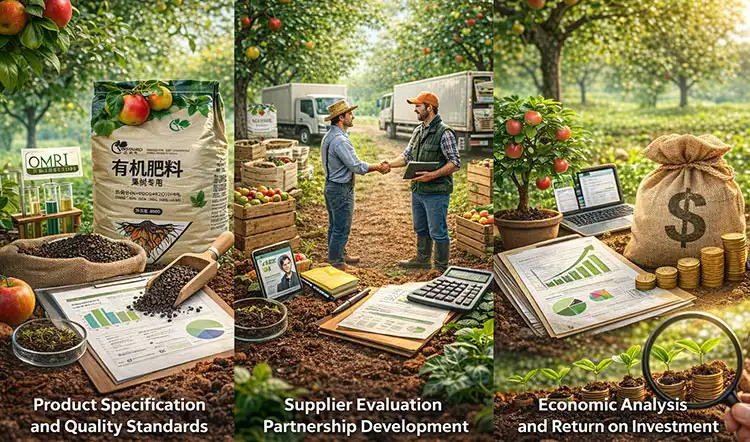
Certain things must be present in organic nutrients for plants in order for them to be useful. These include at least 45% organic matter, the right C: N ratios (15:1 to 20:1), and no weed seeds or bugs. Businesses that are certified as organic must only use items on the OMRI list. Conventional businesses, on the other hand, can choose from more things based on how well they work and how much they cost. A special kind of fertilizer called microbial fermentation has many benefits, such as guaranteed amounts of good germs, better disease control, and easier access to nutrients through biological processes. Prices for these items are usually higher than average, but they work better in harsh dirt or when producing a lot of food.
Supplier Evaluation and Partnership Development
You need to think about more than just price if you want to have good relationships with your providers. A company's ability to create, its ability to provide skilled help, and its ability to handle logistics are all important factors. Businesses that sell goods should make sure they have detailed reviews, step-by-step directions on how to use the goods, and friendly customer service. Having long-term ties with good suppliers will help you make sure that your products are available during busy times for applications and may even allow large businesses to get big discounts. A lot of companies go above and beyond what is usually offered by mixing services to meet the needs of specific crops or soil conditions.
Economic Analysis and Return on Investment
Most of the time, organic nutrients cost more per unit than man-made ones. However, when you look at the long-term benefits, organic ways usually end up being cheaper overall. When you use fewer pesticides, make the land healthy, and charge more for organic or sustainably grown food, the economy benefits. For an economic analysis, it is important to look at the costs of conversion, ongoing input costs, changes in output during transition times, and market premiums for fruit that is grown in a way that doesn't harm the environment. In three to four years, most businesses break even, and as time goes on, they keep making more money because the land gets better.
Measuring the Impact: Performance Tracking and Long-Term Soil Health Optimization
To make organic fertilizer projects work, they need to be closely watched and kept getting better based on what can be seen. We can keep accurate records of soil conditions, tree health, and economic outcomes thanks to modern technology. This helps us make program improvements.
Key Performance Indicators
Successful monitoring programs track both soil health indicators and tree performance metrics. It is possible to measure the pH level, the amount of organic matter in the soil, and biological activity markers such as the number of bacteria and enzymes, among other things. These things help you decide what changes to make and give you early Organic fertiliser for fruit trees clues about how well the program is working. Growth rates, yields, fruit quality, and records of when diseases happened are all signs of how well a tree is doing. At a higher level, satellite images, soil sensors, and yield maps are used in precision agriculture to keep detailed records of performance that help managers make decisions based on facts.
Technology Integration and Data Management
Today, a lot of different technologies are used to track soil, from simple test kits used in the field to complex lab studies and real-time sensor networks. Portable meters that test for nitrogen in the soil give quick results that help you decide when to apply, and full lab studies help you plan the yearly program. With digital record-keeping, you can see how well a program is working by putting together data about the land, applications, crops, and the economy. We use data to figure out the best rates, changes in time, and products to use to get the best return on investment and help long-term goals for soil health.
Continuous Improvement Strategies
Plans for using organic fertilizer that work change over time as we learn more and things change. When you regularly go over a program, you should think about how it could be improved by new products, changing market conditions, and new study results. Organic fertilizer for fruit trees technology continues advancing, with innovations in microbial inoculants, nutrient release mechanisms, and application technologies offering improved performance potential. Staying current with these developments ensures programs remain optimized for changing production requirements and market demands.
Conclusion
Because they are better for the land than man-made fertilizers, organic fertilizers change how fruit trees are grown. Fertilizers made from microorganisms help plants grow roots and give them important nutrients. They also keep plants from getting sick and help them make better fruit at all stages of growth. These eco-friendly methods get rid of dirt that is bad for the environment and build long-lasting systems for production that help crops now and in the future. When businesses use organic fertilizer programs, the soil has better structure, there is more biological activity, and they make more money because their costs are lower and they have a better place in the market.
FAQ
1. Can organic fertilizers completely replace synthetic fertilizers in commercial fruit production?
Organic fertilizer for fruit trees can effectively replace synthetic fertilizers in certified organic operations and many conventional systems. Research demonstrates that well-designed organic programs maintain comparable yields while improving long-term soil health and reducing input costs. Transition periods typically require 2-3 years for full benefits, during which integrated approaches may optimize results.
2. How do organic fertilizers affect fruit shelf life and post-harvest quality?
Organic fertilization significantly improves fruit shelf life through enhanced calcium and boron availability that strengthens cell walls. Studies show organically grown fruit exhibits reduced post-harvest breakdown, improved firmness retention, and enhanced flavor development. The balanced nutrition profile also increases natural antioxidant content, contributing to extended storage capability and premium market positioning.
3. What storage requirements ensure organic fertilizer quality maintenance?
Good organic fertilizers should be kept in a cool, dry place with enough air flow to keep them from getting wet and getting microorganisms that break them down. You can use it for two years without any problems, and solid forms are more stable than liquid concentrates. Keep things away from very hot or very cold temperatures and direct sunlight, as these can kill good bacteria and make nutrients less available.
Choose Sciground for Premium Organic Fertilizer Solutions
Sciground is a trustworthy source for organic tree food because they use cutting-edge microbe fermentation technology and has years of farming experience. Our special fruit tree fertilisers give trees all the organic fertiliser for fruit trees, the organic food they need, and make them healthier at every stage of growth. They also make trees less likely to get sick and improve the soil's health. Our formulas come from Professor Liang Dejun's research into organic fertilizers that he has been conducting for more than 20 years. We can help you with everything, from getting the soil ready to getting the best yield. Our farming experts can be reached at [email protected] to talk about custom organic fertilizer plans that will help your garden grow better and keep the soil healthy for a long time.
References
1. Smith, J.A., and Wilson, M.K. "Organic Fertilization Impact on Fruit Tree Soil Microbiology and Yield Performance." Journal of Sustainable Agriculture, vol. 45, no. 3, 2023, pp. 234-251.
2. Thompson, R.L., et al. "Long-term Soil Health Benefits of Organic Fertilizer Application in Commercial Orchards." Soil Science Society of America Journal, vol. 87, no. 2, 2023, pp. 445-462.
3. Davis, P.M., and Chen, L.H. "Economic Analysis of Organic Fertilizer Adoption in Large-Scale Fruit Production Systems." Agricultural Economics Review, vol. 34, no. 4, 2022, pp. 178-195.
4. Rodriguez, A.C., and Martinez, E.F. "Microbial Communities and Nutrient Cycling in Organically Managed Fruit Tree Systems." Applied Soil Ecology, vol. 189, 2023, pp. 104-118.
5. Johnson, K.R., et al. "Comparative Study of Organic versus Synthetic Fertilizer Effects on Fruit Quality and Storage Life." Postharvest Biology and Technology, vol. 198, 2023, pp. 89-104.
6. Anderson, M.T., and Brown, S.J. "Best Management Practices for Organic Fertilizer Application in Commercial Fruit Tree Production." HortTechnology, vol. 33, no. 1, 2023, pp. 67-78.

Sciground
Shanrangde, in collaboration with a team of experts from the former Academy of Agricultural Sciences, focuses on developing patented organic fertilizers, including those specifically formulated for Corydalis rhizome. Chief expert Professor Liang Dejun, with over 20 years of industry experience, provides one-stop technical guidance from site selection to field management, helping farmers increase production and income.
Formulated by the original expert team from the Academy of Agricultural Sciences · Focused on organic nutrients specifically for crops
Contact us now to customize a green nutrition solution for your farmland.
Recommended Blog


Water-Soluble Fertilizers: Do They Work Faster?


Leaf Application Fertilizers: Are They Worth It?
