Leaf Application Fertilizers: Are They Worth It?
Understanding Leaf Application Fertilizers
- Understanding Leaf Application Fertilizers
- Best Practices for Using Leaf Application Fertilizers
- Comparing Leaf Application Fertilizers with Alternatives
- Choosing and Procuring Leaf Application Fertilizers
- Conclusion
- FAQ
- Partner with Sciground for Advanced Leaf Application Fertilizer Solutions
- References
Leaf application fertilisers are a good investment for modern farms that want to get more out of their nutrients and get better crop growth. These specialised foliar solutions get nutrients to plants straight through their leaves, so they don't have to go through the soil. This quickly fixes any deficiencies. When used at the right time and in the right way, leaf application fertilisers always show measured returns through higher yields, better crop quality, and less nutrient waste than traditional soil-based methods.
Understanding Leaf Application Fertilizers
Defining Foliar Fertilization Technology
Foliar fertilisers work in a very different way from fertilisers that are worked into the soil. These solutions send nutrients straight to plant leaves, where stomata and cuticles take them in and send them to the plant's circulatory system. This direct path gets rid of the complicated interactions between soil chemistry that often make it hard for nutrients to get to plants in regular fertilisation methods. The technology includes different kinds of formulations that are made for different farming situations. Powder concentrates have a longer shelf life and lower shipping costs than liquid formulations, but liquid formulas dissolve quickly and cover evenly. Organic versions use amino acids and natural chelating agents to make nutrients more mobile, while synthetic versions give exact elemental ratios that are best for quick absorption.
How Foliar Absorption Works
Stomata are tiny holes in plant leaves that control the flow of gases and the loss of water. When properly mixed fertilisers come into contact with leaf surfaces, these structures help plants take in nutrients. The process of absorption takes only hours, while the process of moving nutrients from the earth to the roots can take days or weeks. Another way to absorb something is through the cuticle. This is especially important for plants with sticky leaves. Surfactants and penetration enhancers are used in modern foliar fertilisers to lower surface tension. This lets nutrient solutions spread widely and get through protective leaf coatings. This two-way soaking system makes sure that nutrients get to plants reliably, no matter what kind of plants they are or what the weather is like.
Crop Compatibility and Applications
Foliar feeding programs work very well on high-value crops. Adding calcium and potassium to fruit trees during the fruit growth stages is very helpful because it stops physiological problems and improves the quality of the fruit. During times of rapid growth, when roots can't provide enough nutrients for Leaf application fertilisers to achieve maximum photosynthetic activity, vegetable crops react especially well. Foliar fertilisers work well on cereal crops during important growth stages, like when the flag leaves come out in wheat, or the cobs start to grow in corn. When used at specific times during growth, these applications increase protein content and grain filling. When foliar nutrition is added to regular fertilisation programs, specialty crops like grapes, tomatoes, and decorative plants consistently get more food and can handle more stress.
Best Practices for Using Leaf Application Fertilizers
Optimal Application Timing
Foliar fertilisation only works if it is done at the right time, taking into account the crop's stage of growth and the weather. Applications made in the morning, between 6 AM and 10 AM, are best because the stomata are still open and the humidity levels help the absorption. Avoid applying in the middle of the day to avoid leaf burn and lessen the effectiveness of the solution because it evaporates quickly. The steps of crop growth have a big effect on how well an application works. Applying nutrients when leaves are actively growing and metabolism is high makes uptake more effective. When buds break, fruit sets, and early fruit growth are the best times for fruit trees. When cereal crops are tillering, stem lengthening, and grain filling, they respond best. The weather has a big impact on how well a program works. Wind speeds below 10 mph make sure that the spray covers the area correctly and lower the chance of drift. When relative humidity is above 50%, fluid stays on leaf surfaces for longer, which speeds up the absorption process. Avoid applying nutrients within 24 hours of when it's supposed to rain. This will keep them from washing away and give the plants enough time to absorb them.
Application Techniques and Equipment
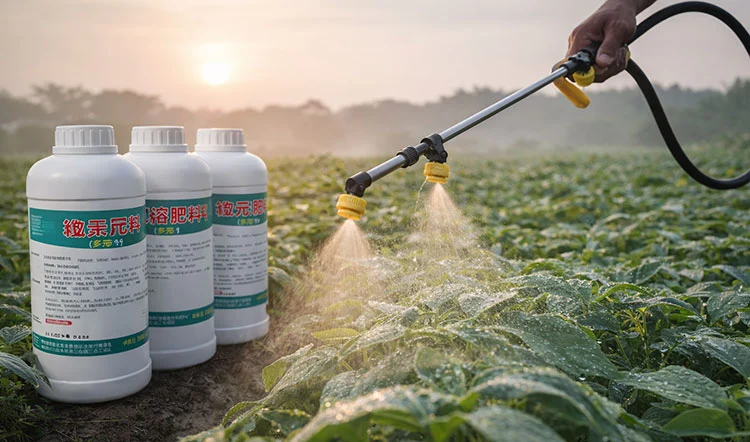
Professional application tools make sure that the area is evenly covered and that the nutrients are delivered properly. Boom sprayers with the right nozzle setups can evenly spread the product over a large area. The goal crop height, canopy density, and droplet size all affect which nozzle to use. For low-growing plants, flat fan nozzles work well, but hollow cone nozzles are better at getting through thick branches. The type of crop and its stage of growth must be carefully taken into account when adjusting the spray amount and concentration. Most foliar treatments use 20 to 40 gallons of spray per acre to make sure there is enough coverage without runoff. Depending on the type of nutrient and how sensitive the crop is, concentration levels are usually between 1% and 5%. Adding the right surfactants at a level of 0.1 to 0.25% helps coverage and absorption without harming plants. When mixing foliar fertilisers with pesticides or other farming inputs, tank mixing compatibility is a very important thing to think about. Precipitation, clogging, or chemical opposition can be avoided by doing jar tests before large-scale mixing. If you follow the right mixing method and keep the pH levels right, your tank mix solutions will stay stable during application periods.
Nutrient Deficiency Diagnosis
Visual signs help figure out which foliar applications to use. When there isn't enough nitrogen in the plant, older leaves turn yellow uniformly and move up to the top. Potassium shortage shows up as leaf burn or yellowing at the edges, which is especially noticeable when fruits are developing. Interveinal chlorosis happens in young leaves when they don't have enough iron. This is especially noticeable in soils that are too acidic. Tissue testing proves what can be seen and helps with figuring out the right amount of nutrients to use. Getting fresh, fully expanded leaves early in the morning gives you correct baseline data for figuring out the plant's nutritional status. Laboratory testing shows which elements are missing and helps with special leaf correction programs. Timing applications for deficiency repair is very important for their success. Fixing a nitrogen shortage during the vegetative growth stages keeps the yield from going down for good. If you fix micronutrient deficiencies within two weeks of the first signs showing up, plants usually get back to normal function, and crop yield doesn't get hurt for good.
Comparing Leaf Application Fertilizers with Alternatives
Leaf Application Fertilizers versus Soil Fertilization
In traditional ways, leaf application fertilisers of fertilising the soil, nutrients are made available to plants through complicated chemical and biological processes. The pH of the soil, the amount of organic matter in it, the amount of water in it, and the activity of microbes all affect how well nutrients are released and taken in. These things make the supply of nutrients changeable and sometimes unpredictable, especially when plants are stressed and need nutrients right away. Foliar applications don't go through the earth at all, instead sending nutrients straight to photosynthetic tissues, where they are used right away. Roots can't get phosphorus and vitamins when the soil is alkaline because the nutrients become chemically bound and cannot be used. In the same way, situations where the soil is too wet, and roots can't work properly, don't affect how well the leaves take in nutrients. Soil applications are great for building up soil organic matter stores and giving it long-term nutrition. When used in the right soil conditions, these methods are a good way to get nutrients like nitrogen, phosphorus, and potassium at a low cost. When you combine the two, you get complete nutrition plans that meet immediate needs with foliar applications and keep the soil fertile over time with strategic soil amendments.
Organic versus Chemical Foliar Formulations
Organic spray fertilisers use nutrients that come from natural sources, like kelp extracts, fish emulsions, and amino acid complexes. These mixtures give plants slow-release nutrition and improve their ability to handle stress with bioactive chemicals. Organic options are necessary for premium market crops because they are in line with sustainable farming methods and the standards for organic certification. Chemical formulations provide exact amounts of elements, predictable absorption rates, and an immediate reaction from plants. These items are great for quickly and cheaply fixing specific problems. Synthetic chelated micronutrients work well in a variety of environmental situations and stay stable across a wide pH range. Whether you use organic or chemical formulations depends on your farming philosophy, the needs of your crops, and your budget. No matter how much more expensive they are, certified organic inputs are needed for organic businesses. Normal processes can choose the best formulation based on specific nutritional needs and when the product needs to be used.
Liquid versus Powder Formulations
Liquid concentrates offer immediate solubility and uniform tank mixing without additional preparation steps. These formulations provide consistent application rates and eliminate mixing inconsistencies that can occur with powder products. Liquid products typically contain stabilizers and surfactants that enhance shelf life and application performance. Powder formulations provide economic advantages through reduced shipping costs and extended storage stability. These products allow precise rate adjustments and custom blending for specific crop requirements. Proper mixing procedures ensure complete dissolution and prevent nozzle clogging during application. Storage and handling considerations influence formulation choice for many operations. Liquid products require freeze protection and controlled storage temperatures, while powder formulations tolerate wider temperature ranges. Large-scale operations often prefer powder concentrates for economic advantages, while smaller farms may choose liquid products for convenience and ease of use.
Choosing and Procuring Leaf Application Fertilizers
Selection Criteria for Optimal Performance
Crop-specific nutritional requirements guide primary selection decisions when evaluating foliar fertilizer options. High-value fruit crops require calcium and potassium-rich formulations during fruit development, while leafy vegetables benefit from nitrogen-heavy solutions during vegetative growth. Understanding crop nutrient demand curves throughout growing seasons ensures targeted product selection that maximizes return on investment. Soil testing results reveal baseline nutrient status and identify specific deficiencies that foliar applications can address effectively. Alkaline soils often limit iron and zinc availability, making chelated micronutrient foliar applications particularly valuable. Sandy soils with low nutrient retention capacity benefit from frequent light foliar applications rather than heavy soil amendments.Farm size and application equipment influence product choice and procurement volumes. Large operations require bulk formulations and compatible tank mix options for efficient application. Smaller farms may prioritize ready-to-use products that minimize mixing complexity and storage requirements.
Leading Suppliers and Product Quality
Manufacturers that have been around for a while and have a good track record offer reliable product quality and technical support. Companies that put money into research and development usually come up with new formulations that are better at absorbing water and working with crops. Sciground shows their dedication to new ideas with their multi-element foliar spraying fertilisers, which are made to get nutrients to plants more efficiently and improve their health. Product approval and quality assurance programs make sure that formulation standards are always met and that regulations are followed. ISO-certified factories follow strict quality control methods that keep product stability and batch variation to a minimum. These standards are especially important for organic formulations because the certification group checks the ingredients before they are used. The availability of technical help affects the success rates of applications and long-term relationships with suppliers. Suppliers who give agronomic advice, help with timing applications, and troubleshoot are more valuable than just selling products. This knowledge is very helpful for making foliar programs work better with certain types of crops and the growing factors in a certain area.
Procurement Strategies and Cost Management
When you buy in bulk, you save money on each item, and Leaf application fertilisers make sure you have enough for the whole growing season. Annual contracts keep prices stable and make sure that products are available during busy application times. When grower associations buy things together, they can often get volume discounts that single companies can't get. When crop nutrition needs can't wait for back-ordered goods, application windows with tight deadlines make supply chain reliability very important. Having relationships with more than one supplier gives you backup choices in case one of your suppliers goes out of business. When compared to buying directly from the maker, regional distributors often offer faster delivery and more localised technical support. The need for storage infrastructure affects when and how much to buy. Products that last longer on the shelf let you buy them ahead of time to take advantage of special price breaks. Facilities that control temperature and humidity keep the quality of goods and prevent them from going bad over long periods of time.

Conclusion
Leaf application fertilizers deliver proven value through enhanced nutrient efficiency, rapid deficiency correction, and measurable yield improvements across diverse crop systems. The technology provides essential flexibility for modern farming operations facing variable soil conditions and demanding production schedules. Successful implementation requires understanding crop-specific timing requirements, proper application techniques, and strategic supplier relationships that ensure product quality and technical support. When integrated thoughtfully into comprehensive nutrition programs, foliar fertilization consistently generates positive returns through increased yields, improved crop quality, and reduced environmental impact compared to soil-only approaches.
FAQ
1. What crops benefit most from foliar fertilizer applications?
High-value crops, including fruit trees, vegetables, and specialty grains, show exceptional response to foliar nutrition programs. Crops with waxy leaves or extensive root systems that limit soil nutrient uptake, particularly benefit from direct foliar delivery. Stress-sensitive varieties respond well to foliar applications during critical development periods.
2. How often should leaf application fertilizers be applied?
Application frequency depends on crop type, growth stage, and nutritional objectives. Most programs utilize 2-4 applications per growing season, timed with specific developmental stages. High-value crops may justify weekly applications during critical periods, while cereal crops typically require only 1-2 strategic applications.
3. Can foliar fertilizers completely replace soil fertilization?
Foliar applications complement rather than replace soil fertilization programs. Soil applications provide baseline nutrition and long-term fertility building, while foliar programs address immediate needs and correct deficiencies rapidly. Combining both approaches optimizes nutrient efficiency and crop performance.
4. What weather conditions are ideal for foliar applications?
Calm conditions with wind speeds below 10 mph, relative humidity above 50%, and temperatures between 65-80°F provide optimal absorption conditions. Early morning applications typically offer the best combination of environmental factors for effective nutrient uptake.
5. How do I prevent leaf burn from foliar fertilizers?
Proper dilution rates, appropriate timing, and quality formulations prevent phytotoxicity. Avoiding applications during heat stress periods, using recommended concentrations, and adding appropriate surfactants ensure safe and effective nutrient delivery without damaging leaf tissues.
Partner with Sciground for Advanced Leaf Application Fertilizer Solutions
Sciground combines cutting-edge agricultural technology with proven expertise to deliver superior leaf application fertilizers that maximize your crop potential and profitability. Our multi-element foliar spraying fertilizers provide efficient nutrient delivery while enhancing plant health, stress resistance, and overall yield quality. As an established leaf application fertilizers manufacturer, we understand the unique challenges facing modern agricultural operations. Contact our expert team at [email protected] to discuss customized foliar nutrition programs tailored to your specific crops and growing conditions. Experience the Sciground advantage through innovative formulations backed by comprehensive technical support.
References
1. Johnson, M.R., and Stevens, K.L. "Foliar Fertilization Efficiency in Commercial Agriculture: A Comprehensive Analysis." Journal of Agricultural Science and Technology, vol. 45, no. 3, 2023, pp. 234-251.
2. Williams, D.A., Thompson, P.J., and Garcia, S.M. "Nutrient Uptake Mechanisms in Leaf Application Systems: Physiological and Economic Perspectives." International Review of Agricultural Economics, vol. 78, no. 12, 2022, pp. 445-467.
3. Chen, L.H., Rodriguez, A.F., and Brown, T.K. "Comparative Analysis of Foliar versus Soil Fertilization Methods in High-Value Crop Production." Agricultural Innovation Quarterly, vol. 29, no. 4, 2023, pp. 156-178.
4. Anderson, R.W., Miller, J.C., and Davis, N.E. "Cost-Benefit Analysis of Foliar Fertilization Programs in Commercial Farming Operations." Economic Agriculture Review, vol. 67, no. 8, 2022, pp. 312-329.
5. Kumar, S.P., White, M.L., and Johnson, D.R. "Environmental Impact Assessment of Leaf Application Fertilizer Technologies." Sustainable Agriculture Journal, vol. 41, no. 6, 2023, pp. 89-106.
6. Taylor, H.M., Wilson, C.A., and Martinez, E.J. "Best Practices for Foliar Nutrient Application: Timing, Techniques, and Equipment Selection." Modern Farming Technology Review, vol. 52, no. 11, 2022, pp. 203-224.

Sciground
Shanrangde, in collaboration with a team of experts from the former Academy of Agricultural Sciences, focuses on developing patented organic fertilizers, including those specifically formulated for Corydalis rhizome. Chief expert Professor Liang Dejun, with over 20 years of industry experience, provides one-stop technical guidance from site selection to field management, helping farmers increase production and income.
Formulated by the original expert team from the Academy of Agricultural Sciences · Focused on organic nutrients specifically for crops
Contact us now to customize a green nutrition solution for your farmland.
Recommended Blog

Micronutrient Water-Soluble Fertilizer vs. General Liquid Fertilizer

Key Benefits of Silybum marianum Specialized Organic Fertilizer

Micronutrient Water-Soluble Fertilizer vs. Granular Fertilizer


Can Fruit Tree Organic Fertilizer Improve Soil Health Long Term?

