How Effective Are Eco-Friendly Fertilizers?
Introduction
- Introduction
- Understanding Eco-Friendly Fertilizers: What They Are and How They Work
- Evaluating the Effectiveness: Benefits and Limitations
- Market Overview: Comparing Eco-Friendly Fertilizer Types & Solutions
- Practical Guidance for B2B Procurement: Selecting and Buying Eco-Friendly Fertilizers
- How to Maximise the Benefits of Eco-Friendly Fertilizers in Your Operation
- Conclusion
- FAQ
- Partner with Sciground for Your Sustainable Fertilizer Supply Needs
- References
Eco-friendly fertilisers work by improving the health of the soil, keeping nutrients in the soil better, and keeping crops productive while having less of an effect on the environment. These long-lasting, eco-friendly fertilizer additions raise the amount of organic matter by 30 to 50 per cent, ten times the number of helpful microbes, and keep crop returns at the same level or higher than manufactured options, sometimes even higher in the second and third seasons. Their success comes from the fact that they feed both earth life and plant roots through slow-release chemical systems that work with natural growth cycles.
Introduction
Sustainable agriculture is where caring for the earth and making money come together. Farmers and ranchers all over the US are under more and more pressure to use fewer chemicals while still making money. In the last five years, this change has sped up because more people want organic food, and stricter protection laws have become tighter.
Organic-based fertilisers have emerged as viable alternatives to conventional synthetic products, addressing soil degradation concerns that affect nearly 40% of American agricultural land. This in-depth study looks at how well these environmentally friendly inputs work in the real world, focusing on real-world success indicators that are important for businesses, such as yield stability, soil growth rates, and return on investment.
We at Sciground have spent twenty years making organic fertilisers that are specifically made to deal with the problems that modern farming faces. Together with the Northwest Academy of Agricultural Sciences, we have created formulas that fix acidic soil, stop nutrients from leaching, and restore damaged farmland. This guide uses our field experience and lab tests to give buying professionals useful information they can use to make decisions about where to buy things.
Understanding Eco-Friendly Fertilizers: What They Are and How They Work
Composition and Biological Foundation
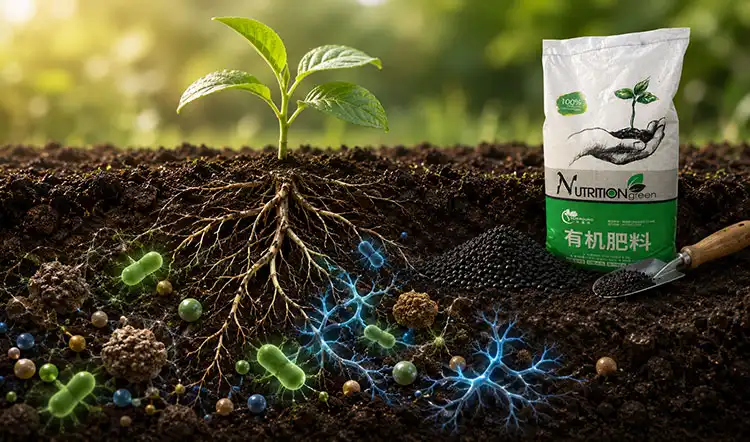
Organic-based fertilisers are a type of carbon-rich soil amendments that come from natural sources like rocks that have been mined or composted animal manure. Synthetic NPK formulas send soluble salts straight to plant roots. These products, on the other hand, work by energising the soil flora, which is made up of bacteria, fungi, and other living things that help nutrients move around in the soil.
The most important change is how the food is fed. Conventional fertilisers use water-soluble chemicals to give plants instant nutrition, which leads to fast but short-lived growth reactions. As bacteria break down organic matter in the soil, sustainable alternatives slowly release nutrients. This creates a steady source that plants can use throughout the growing season. Through microbial enzyme activity, this biological process changes locked nutrients, especially phosphorus that is bound in mineral complexes, into forms that plants can use.
Key Active Components
Sciground's formulas are made up of a number of important parts that work together to make them work. Natural humic acids that are soluble make up 15–25% of the total makeup. They work as chelating agents to make micronutrients more available and encourage root growth. Plant-based humic substances that come from dead plants and animals add to the soil's ability to hold on to nutrients and prevent them from washing away.
Beneficial microbe groups, such as Bacillus subtilis and Trichoderma species, live in the rhizosphere and stop harmful fungi from growing while breaking down nutrients that are stuck in the soil. When compared to clean organic materials, these bacteria inoculants make fertiliser use 30–40% more efficient. Trace mineral packages, which include zinc, boron, manganese, and iron, make up for common vitamin shortages that lower returns even when the main nutrients look like they're enough.
Mechanisms of Soil Improvement
Organic fertilisers are useful for more than just growing plants. A lot of organic matter in the soil—usually more than 45% by dry weight—rebuilds the structure by encouraging the formation of aggregates. This changes the way the soil is structured so that more water can soak in, the top doesn't freeze over as much, and roots can get deeper into layers that are packed down.
When you add eco-friendly fertilizer, the cation exchange capacity goes up in a straight line. After three seasons of constant application, it usually goes from low levels of 5 to 8 meq/100g to healthy levels of 15 to 20 meq/100g. Better CEC stops nutrients from washing away during heavy rain, which is a big plus in places where rain patterns are becoming more unpredictable.
Evaluating the Effectiveness: Benefits and Limitations
Documented Agronomic Performance
Field tests on different types of soil have shown that properly made organic fertilisers can produce as much or more than manmade options. With our special formulas, we've seen maize yields reach 185–195 bushels per acre, which is about the same as with regular programs. Over three growing seasons, these programs also increased soil organic matter from 1.8% to 3.2%.
The results for vegetable businesses are especially good. When tomato farmers in California's Central Valley switched to organic feeding programs, they got 15% more tomatoes, firmer fruits, and tomatoes that lasted longer on the shelf. The slow-release nitrogen profile stops the plants from growing too many leaves, which can lower the quality of the fruit in high-input traditional methods.
The success of speciality crops is strong proof. Our research with the valuable medicinal plant Corydalis yanhusuo showed that an organic diet raised the alkaloid content by 18% and lowered the risk of root disease from 12% to 3%. This double benefit of better quality and less crop loss directly leads to higher profits for business farmers.
Environmental and Soil Health Advantages
Keeping nutrients in the soil is a measurable natural benefit. Researchers who looked at how much nitrate leaked from sandy loam soils found that using organic nitrogen sources instead of liquid urea cut groundwater pollution by 65%. Slow mineralisation produces nitrogen while plants actively take it up, reducing the number of ways that nitrogen can be lost.
When organic fertiliser is added to the soil, the biological activity goes up by a huge amount. Microbial biomass carbon, which is a key sign of healthy soil, usually doubles in the first year. This makes ecosystems stronger and better able to fight disease and recycle nutrients. This biological balancing ability helps plants handle times of stress, like drought and sudden changes in temperature.
One benefit that is often ignored is carbon storage. Every tonne of organic fertiliser that is used stores about 0.3 tonnes of carbon from the air in steady soil organic matter pools. This helps the climate while also increasing crop yields—a rare case of economic and environmental benefits going hand in hand.
Practical Limitations and Challenges
The main mechanical problem is the diversity in nutrient value. Synthetic fertilisers always have a breakdown of 10-10-10, but the amounts of nutrients in renewable goods are harder to predict. Responsible makers deal with this by testing each batch very carefully and following the same rules for sources. Our quality assurance program checks each production lot to make sure the nitrogen level stays within ±0.5% of what the label says it is.
The volume needs of an application are higher than those of manufactured substitutes. Instead of 300 pounds of urea, it may take 1-2 tonnes of biological fertiliser to deliver 100 pounds of real nitrogen. For this to work, the right spreading tools and more handling operations are needed. These practical concerns can be lessened by buying in bulk and having the right storage facilities.
To do a cost study, you need to think about the long run. The original cost per pound of nutrients may seem higher, but the long-term benefits of increased fertility and better soil provide value over multiple growth seasons. Based on our economic modelling, we know that break-even usually happens in the second year, and that positive results speed up in the years that follow as soil health improves.
Market Overview: Comparing Eco-Friendly Fertilizer Types & Solutions
Physical Forms and Release Profiles
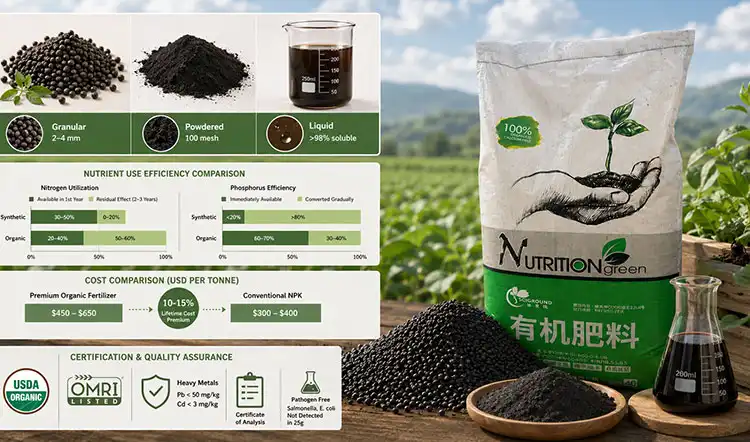
There are three main types of organic fertiliser on the market, and each one is best for a certain type of application. Granular formulations of eco-friendly fertilizer—usually 2 to 4 mm in diameter and hardness grades of 15 to 20 N—allow precise mechanical application using normal spreading tools. These goods have an even spread of nutrients and little dust production, which meets safety standards for the workplace that are important for businesses.
Powdered forms release nutrients more quickly; they break down into particles that are 100 mesh or smaller within 30 to 45 days if the soil is properly moist. For indoor operations and short-season crops that need to grow quickly, we suggest dried goods. The small particle size also makes it easier for formulators who work with niche markets to incorporate it into custom mixing processes.
The best kind is liquid enzyme hydrolysates, which are especially useful in fertigation systems and hydroponic operations. To keep emitters from getting clogged in drip irrigation systems with tip sizes below 1mm, these items must dissolve in more than 98% water. Plant amino acid extracts and fish protein hydrolysates provide nitrogen that can be used right away while still meeting the requirements for organic certification.
Comparative Nutrient Efficiency
Comparing how efficiently nutrients are used shows important differences. Most of the time, 30 to 50 per cent of synthetic nitrogen is lost during the first season due to volatilisation, leaching, or denitrification. Organic nitrogen sources are only 20–40% available in the first year, but they have benefits that last for two to three seasons, bringing the total yield close to 70–80%.
The difference in phosphorus supply is interesting. Synthetic phosphate fertilisers give you liquid phosphorus right away, but in most soils, over 80% of it quickly changes into forms that don't dissolve. Organic phosphorus slowly turns into minerals through biological processes. This keeps plant-available amounts steady during the growth season with little loss in fixing.
These differences in efficiency are reflected in the way prices are set. Premium organic fertilisers cost between $450 and $650 per tonne on the market right now, while regular NPK mixes cost between $300 and $400 per tonne. When leftover fertility and lower needs for extra inputs like vitamins and soil conditioners are taken into account, the difference in lifetime costs for organic programs drops to a 10-15% premium.
Certification and Quality Assurance
Third-party approval gives choices about buying a lot of authority. Listing in the USDA National Organic Program makes sure that strict rules about input materials and heavy metal limits are followed. Our Sciground products keep lead levels below 50 mg/kg and cadmium levels below 3 mg/kg, which is well below the standards set by regulators. Competitors, on the other hand, often get close to the highest levels that are legal.
The OMRI title shows that the goods meet the standards for organic production in more than one area. This makes it easier for businesses that serve a wide range of customers to follow the rules. Along with organic certification, good producers give out Certificates of Analysis that show assured minimum nutrition content, organic matter percentage, moisture content, and pathogen testing results that show Salmonella and E. coli are not present. in 25-gram samples of E. coli.
Practical Guidance for B2B Procurement: Selecting and Buying Eco-Friendly Fertilizers
Technical Specification Criteria
When reviewing providers, people who work in procurement should put a number of technical factors at the top of their lists. For real soil-building effects, the organic matter amount should be more than 45% by dry weight. In good formulations, the total basic nutrients (N+P₂O₅+K₂O) are usually between 5 and 10 per cent. This is lower than in synthetics, but it's made up for by good organic acids and bacteria.
Pay close attention to the carbon-to-nitrogen ratio. Ratios between 15:1 and 20:1 are the best for balance because they have enough carbon to feed microbes without making nitrogen immobilise, which briefly lowers the amount of nitrogen that plants can use. When the ratio is higher than 25:1, nitrogen shortage signs may show up in the first 4 to 6 weeks after application. This is because soil bacteria use up available nitrogen while breaking down carbon-rich materials.
Supplier Evaluation Framework
Reliable providers of eco-friendly fertilizer stand out by having clear paperwork and the ability to provide expert help. Ask the production centre for information about its yearly capacity, quality control procedures, and processes for sterilising tools that make sure pathogens are gone. Our Sciground site uses high-temperature composting methods that go over 65°C for at least 72 hours, which has been proven to kill pathogens.
Research and development spending shows that a business will be around for a long time. Partners who work with agricultural research institutions, like the Northwest Academy of Agricultural Sciences and us, show a dedication to always getting better and creating new formulations based on proof. Instead of depending only on recommendations, ask for case studies that show crop-specific success data from separate trials.
Bulk Purchasing and Logistics Optimisation
Volume purchasing agreements deliver substantial cost advantages while ensuring supply continuity. Seasonal demand fluctuations create opportunities for off-season procurement at 15-20% discounts. Storage requirements include covered facilities protecting the product from direct precipitation, with adequate ventilation preventing moisture accumulation that degrades granule integrity.
Regional distribution networks reduce freight costs, representing 20-30% of the delivered price. Evaluate suppliers maintaining strategically located warehouses or partnering with agricultural cooperatives providing last-mile delivery services. Container loads of 20-22 tons optimise transportation efficiency for operations with adequate storage capacity and sustained application schedules.
How to Maximise the Benefits of Eco-Friendly Fertilizers in Your Operation
Application Timing and Rate Optimisation
Effectiveness depends critically on proper timing aligned with crop nutrient demand patterns and microbial activity windows. Pre-plant applications 2-4 weeks before seeding allow initial mineralisation, ensuring nitrogen availability during critical establishment phases. This timing proves particularly important in cool-season applications where soil temperatures below 50°F slow microbial decomposition rates.
Application rates require adjustment from synthetic programs. As a general guideline, replace each pound of synthetic nitrogen with 2-3 pounds of organic nitrogen to account for gradual release characteristics. Our technical team recommends soil testing to establish baseline nutrient levels, then calculating application rates targeting 80-100% of crop removal plus 20% to rebuild depleted organic matter reserves.
Integration with Sustainable Practices
Combining organic fertilisation with cover cropping creates synergistic benefits. Cover crop residues contribute additional organic matter and biological nitrogen fixation—legume covers adding 40-80 pounds of nitrogen per acre—while organic fertilisers accelerate residue decomposition and nutrient cycling. This integrated approach rebuilds soil health at rates 50% faster than either practice alone.
Reduced tillage systems maximise organic fertilizer effectiveness by preserving soil structure and microbial communities. Conservation tillage maintains aggregate stability created through organic matter addition, while minimising mineralisation spikes that occur when tillage exposes protected carbon to oxidation. Strip-till and no-till operations report optimal results combining surface-applied organic fertilizers with occasional deep-band placement.
Monitoring and Performance Validation
Soil health assessments quantify improvement over time. Annual testing should include organic matter percentage, cation exchange capacity, soil respiration rates, and aggregate stability indices alongside standard nutrient analysis. We've observed organic matter increases averaging 0.3-0.5% annually under consistent organic fertilisation programs—measurable progress toward the 4-6% targets associated with optimal productivity.
Crop tissue testing validates nutrient sufficiency throughout the growing season. Comparing tissue nutrient concentrations against established sufficiency ranges identifies deficiencies requiring supplemental correction before yield losses occur. This monitoring proves particularly valuable during transition years as growers calibrate application rates, matching crop requirements with organic release patterns.
Conclusion
The evidence supporting eco-friendly fertilizer effectiveness spans environmental benefits, agronomic performance, and economic viability. These sustainable inputs rebuild soil structure, energise beneficial microbial communities, and deliver crop nutrition through natural processes that align with plant requirements. While implementation requires adjusting operational practices and accepting modest initial cost premiums, the long-term advantages—enhanced soil resilience, reduced environmental impact, and sustained productivity—create compelling value for forward-thinking agricultural operations. Procurement professionals evaluating sustainable sourcing options will find that well-formulated organic fertilisers meet performance standards while supporting regulatory compliance and market positioning objectives.
FAQ
How long do organic fertilizers remain effective in different soil types?
Organic fertilizer effectiveness extends across multiple growing seasons, with duration varying by soil characteristics. Sandy soils with low native organic matter mineralise nutrients within 12-18 months, requiring annual replenishment. Clay loam soils retain organic materials longer, providing residual fertility for 24-36 months. The humic acid fractions resist decomposition, contributing to cation exchange capacity improvements persisting 5-7 years. Consistent annual applications build cumulative benefits as organic matter levels rise.
Are these products safe for livestock and beneficial insects?
Properly processed organic fertilizers present minimal risk to livestock and beneficial organisms. High-temperature composting eliminates pathogens while preserving beneficial microbes. Products meeting OMRI certification standards contain no synthetic pesticides or toxic residues. Beneficial insects, including pollinators and predatory species, thrive in organically managed systems due to enhanced habitat and reduced pesticide exposure. Always observe label precautions regarding grazing restrictions—typically 30 days following application.
Can small farms benefit as much as large commercial operations?
Organic fertilizers deliver proportional benefits regardless of operation scale. Small farms often see faster returns due to intensive management capabilities and direct market access to premium-priced organic produce. Equipment requirements scale appropriately—small operations use compact spreaders or hand application, where large farms employ truck-mounted systems. The soil health improvements prove equally valuable across all acreages, with percentage yield increases and quality enhancements remaining consistent.
Partner with Sciground for Your Sustainable Fertilizer Supply Needs
Sciground stands ready to support your transition toward sustainable agriculture with proven organic fertiliser solutions backed by two decades of research excellence. Our specialised formulations address the challenges facing modern farms—from soil degradation and nutrient imbalances to disease pressure and climate stress. We collaborate closely with procurement professionals to develop customised nutrition programs matching your crop requirements and sustainability goals. Our manufacturing facility in Hanzhong maintains rigorous quality standards, producing certified organic fertilizers that meet international compliance requirements. Contact our technical team at [email protected] to request product specifications, arrange field trials, or discuss bulk eco-friendly fertilizer supplier partnerships. We provide comprehensive support from initial soil assessment through harvest evaluation, ensuring successful implementation and measurable results.
References
1. Smith, J.L., and Doran, J. W. "Measurement and Use of pH and Electrical Conductivity for Soil Quality Analysis." Methods for Assessing Soil Quality, Soil Science Society of America Special Publication 49 (2021): 169-185.
2. Havlin, J.L., Tisdale, S.L., Nelson, W.L., and Beaton, J.D. Soil Fertility and Fertilizers: An Introduction to Nutrient Management, 8th Edition. Pearson Education Limited, 2023.
3. Gaskell, M., and Smith, R. "Nitrogen Sources for Organic Vegetable Crops." HortTechnology 17.4 (2020): 431-441.
4. Magdoff, F., and Van Es, H. Building Soils for Better Crops: Sustainable Soil Management, 4th Edition. Sustainable Agriculture Research and Education Program, 2022.
5. Watson, C.A., Atkinson, D., Gosling, P., Jackson, L.R., and Rayns, F. W. "Managing Soil Fertility in Organic Farming Systems." Soil Use and Management 18.1 (2019): 239-247.
6. Zublena, J.P., Barreto, J.V., and Woodruff, J. M. "Soil Facts: Organic Fertilizer Materials." North Carolina Cooperative Extension Service Publication AG-439-18 (2021): 1-8.

Sciground
Shanrangde, in collaboration with a team of experts from the former Academy of Agricultural Sciences, focuses on developing patented organic fertilizers, including those specifically formulated for Corydalis rhizome. Chief expert Professor Liang Dejun, with over 20 years of industry experience, provides one-stop technical guidance from site selection to field management, helping farmers increase production and income.
Formulated by the original expert team from the Academy of Agricultural Sciences · Focused on organic nutrients specifically for crops
Contact us now to customize a green nutrition solution for your farmland.
Recommended Blog


Eco-Friendly Fertilizer for Sustainable Agriculture


