How Do Water-Soluble Fertilizers Enhance Nutrient Uptake?
Understanding Water-Soluble Fertilizers and Their Role in Nutrient Uptake
- Understanding Water-Soluble Fertilizers and Their Role in Nutrient Uptake
- Core Factors That Improve Nutrient Uptake Using Water-Soluble Fertilizers
- How to Choose and Procure Water-Soluble Fertilizers for Your Business Needs
- Case Studies: Successful Adoption of Water-Soluble Fertilizers in B2B Settings
- Best Practices and Safety Tips for Using Water-Soluble Fertilizers
- Conclusion
- FAQ
- Sciground's Advanced Multi-Element Solutions for Professional Growers
- References
Water-soluble fertilizers improve nutrient uptake by dissolving fully in irrigation water. This lets plants quickly take in nutrients through their leaves and roots. Granular fertilizers need microbes to break them down and soil wetness to release the nutrients slowly. These formulations, on the other hand, send the nutrients straight to plant tissues. The full solubility—often hitting 99% to 100%—gets rid of the problems that regular nutrients have, like soil fixation and precipitation. When applied through fertigation or spray ways, Water-soluble fertilizers get around the limitations of the soil's chemistry. This makes sure that the nutrients are available right away during key growth stages and greatly increases the plant's ability to use nutrients efficiently.
Understanding Water-Soluble Fertilizers and Their Role in Nutrient Uptake
Composition and Formulation Fundamentals
Modern nutrient formulas that are made to dissolve completely in water are a big step forward from traditional farming inputs. To achieve total solubility without leaving leftovers, these specialized goods use high-purity raw materials such as potassium nitrate, monoammonium phosphate, and chelated micronutrients. Inert fillers and binders that are often found in granular goods are taken out during the production process. This means that every molecule has a nutritional purpose. This purity solves a major problem in modern farming: inefficient use of nutrients.
Using traditional broadcasting ways only gets 30–40% of the nutrients used, but fertigation with fully soluble nutrients can get over 80–90% of the nutrients used. It usually has secondary elements like calcium and magnesium along with main macronutrients like nitrogen, phosphorus, and potassium. Adding chelated micronutrients like iron, zinc, manganese, copper, boron, and molybdenum to luxury formulas makes them stand out. Chelation technology joins metal ions with organic molecules like EDTA or DTPA. This keeps these important trace elements from sticking to alkaline soils and precipitating out. This defense is especially useful in places with hard water or limestone soils, because nutrient lockout often stops crops from doing well and causes what farmers call "hidden hunger."
Superior Uptake Mechanisms in Different Growing Systems
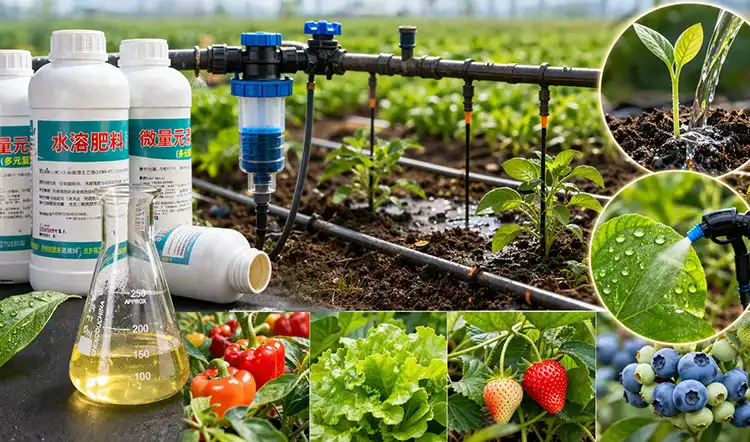
When you look at how nutrients are taken in by plants grown in different ways, you can see the benefit of fully soluble formulations. In soil-based systems, these goods work perfectly with drip watering systems, sending nutrients straight to the root zone, where they are actively absorbed. The wetted soil volume gets the same amount of nutrients everywhere, which gets rid of the problems with spatial diversity that come up with broadcast treatments. When nutrients are dissolved, they hit root hairs right away.
This sets off active transport processes that move ions across cell walls without the delay needed for mineralization. Dissolved nutrients are the only way that hydroponic and controlled climate farming can work. Soilless media like rockwool, coco coir, or perlite support the structure but don't offer any nutrition. This is why pharmaceutical-grade soluble forms are so important. For these systems to work, electrical conductivity and pH levels need to be precisely controlled. Fully soluble goods make this possible because they dissolve consistently. Premium versions don't have any sodium or chloride in them, so they don't build up salt, which would hurt roots that are sensitive and lower their osmotic potential. Another way that solubility directly affects uptake rate is through foliar spray.
Spraying liquid nutrients on the surfaces of leaves lets them absorb them through the stomata and cuticles, so they don't have to go through the root zone at all. This method works especially well for fixing vitamin deficits during the reproductive stages or times of stress, when root function may be affected. By adding surfactants to specific foliar mixtures, surface tension is lowered. This makes it easier for nutrients to reach biologically active cells through stomata.
Core Factors That Improve Nutrient Uptake Using Water-Soluble Fertilizers
Application Methods and Timing Strategies
Operations that are successful are able to give nutrients precisely, while those that are having trouble with uneven yields and quality problems are not. Drip systems are the most Water-soluble fertilizers because they let workers add nutrients during watering cycles, when the soil is moist enough for roots to grow. Concentrated solutions are pumped into mainlines by venturi injectors or electric dosing pumps. This makes sure that the solution is spread evenly across the whole field or garden blocks. These treatments are timed to coincide with the different stages of a crop's life cycle.
Higher nitrogen ratios are needed for vegetative growth, while higher phosphorus and potassium levels help blooming and fruit development during reproductive phases. Soil drench applications work well for growing plants in containers and in nurseries where each plant can be managed individually. By pouring dissolving nutrients right into the root ball, you make sure they are available right away and get rid of any salts that have built up in the growth medium. This method fixes problems in specific areas without affecting nearby plants, which makes mixed-species farming more flexible. How often depends on the type of substrate and the needs of the crop. For example, fast-draining media may need to be applied twice a week, while heavier mixes keep nutrients in for longer.
Foliar sprays quickly fix problems when visual signs point to specific problems. When chelated iron is applied to leaves of plants with iron chlorosis in high-pH soils, the plants' metabolic ability is restored within days. When plants don't have enough zinc during fruit set, focused foliar feeding can help because it avoids reactions with phosphorus in the soil that are harmful. When you spray is very important. Spraying in the early morning or late evening stops most of the solution from evaporating and lowers the risk of leaf burn from concentrated solutions in direct sunlight. In order to keep leaf cells from being stressed by osmotic stress, concentration rates are usually between 0.2% and 0.5%.
Customizing Nutrient Profiles for Crop-Specific Demands
Different plants have different nutritional needs that change as they grow, so customization is necessary to get the most out of uptake. Fruiting veggies like peppers and tomatoes do better with formulations that have higher potassium levels during the reproductive stages. This helps the fruits get bigger, change color, and develop taste compounds. Being able to change the NPK ratios week by week lets growers control the growth of leaves and stems, keeping the fruit load and canopy development in balance. This accuracy stops plants from growing too many leaves, which slows maturity, or not enough leaves, which lowers the plant's ability to make food through photosynthesis.
Herbs and leafy greens need a steady supply of nitrogen to keep their leaves growing quickly and maintain the bright green color that people associate with freshness. Formulations that focus on nitrate nitrogen over ammonium forms lower the risk of tip burn in lettuce and keep the tissue pH at the right level. Adding micronutrients becomes important for specialty crops; for example, boron affects apple cell wall formation and calcium translocation, which stops diseases like bitter pit. Molybdenum helps legumes fix nitrogen, even when they are grown in systems without soil, and symbiotic bacteria have to establish themselves on manmade surfaces. Solving problems with soil chemistry requires choosing the right formulations in a smart way.
Soils with a high pH level lock up iron, manganese, and zinc through oxidation and precipitation, so chelated types are very important. EDDHA-chelated iron stays steady at pH levels as high as 9.0, so it can be used in alkaline desert soils where other iron sources don't work well. On the other hand, aluminum or manganese can be harmful in acidic soils, so recipes need to have enough calcium and magnesium to balance out these opposite effects. Electrical conductivity tracking stops salt from building up; fully soluble products allow accurate EC control by figuring out the right dilution rates.
How to Choose and Procure Water-Soluble Fertilizers for Your Business Needs
Quality Indicators and Certification Standards
When purchasing, professionals look at sellers' goods; they need to make sure that the products meet strict physical and chemical standards. Specifications for solubility should show less than 0.5% water-insoluble matter. This keeps micro-irrigation systems from getting clogged emitters, which can stop whole blocks from working. Independent laboratory documents that prove the accuracy of nutrient content keep buyers from getting low-quality goods whose stated percentages don't match their real make-up. Changes in the quality of the mixture have a direct effect on how well crops grow. Plants that are under-dosed become starved during important growth times, and plants that are over-dosed experience salt stress and nutrient antagonism. Premium micronutrient goods are different from basic mixes because they use chelation technology.
EDTA chelates work well in neutral to slightly acidic soils, but they lose their stability above pH 6.5. When the pH level is fairly high, DTPA makes things more stable, and when the pH level is very high, EDDHA keeps nutrients available. Knowing the chelating agent that is used for each vitamin lets you match goods to the soil and irrigation water quality that is best for you. Products that don't have chelation information or that use poor organic acids instead of real chelates are bad purchases that don't work in tough field circumstances. Throughout the supply chain, the quality of the packaging affects how well the product works. When exposed to air, hygroscopic fertilizers quickly soak up water, making hard clumps that won't dissolve properly.
Good providers use plastic bags with multiple layers, moisture shields, and strong heat seals. For big operations, bulk bins should have lids that can be resealed and food-grade liners that keep out dirt and moisture. Storage instructions on labels show how to handle the product correctly. For example, goods that need to be stored in a climate-controlled environment show that they have complex formulas that make the higher price worth it because they work better in the field.
Supplier Evaluation and Procurement Channels
To build trusting relationships with suppliers, you need to look at both their expert help and the quality of their products. Water-soluble fertilizers are a key example where agronomic advice from suppliers helps customers get the best results from application methods for different crops and growth systems. Beyond the actual product itself, having access to application rate tools, compatibility charts for tank mixing, and troubleshooting resources makes it more valuable. Companies that have agronomists on staff or work with study institutions show that they care about their customers' success, not just getting their products to them.
Buyers are protected from legal and operational risks by regulatory compliance verification. Labeling rules set by state fertilizer control officials say that products sold in the US must show sure analysis, derived ingredients, and application directions on the labels. Businesses that want to sell to organic consumers need to get certified organic by OMRI or a similar organization. Products with synthetic chelates can't be certified organic, so they need to use amino acid-based or organically produced options. When you buy something from another country, you have to pay attention to phytosanitary certificates and trade rules that are different in each country. Logistics issues affect the total cost of ownership, especially for big jobs that need to load containers. Suppliers who offer combined shipping lower the cost of freight per unit and make it easier to clear customs.
The time it takes to get an order to a customer affects how much inventory you keep on hand. For example, local sellers may ship within days, but foreign orders can take up to eight weeks. Minimum order quantities affect buying choices. Businesses that grow a variety of crops that need different recipes may prefer sellers with smaller pack sizes. On the other hand, monoculture farms that buy by the truckload can arrange bulk discounts that lower input costs per acre by a large amount.
Case Studies: Successful Adoption of Water-Soluble Fertilizers in B2B Settings
Vegetable Production: Achieving Yield and Quality Gains
A large tomato farm in California's Central Valley switched from using regular granular fertilizers to fertigation with fully soluble formulas and saw improvements in a number of performance measures. The 50-acre farm had problems with uneven fruit sizes, and more than 15% of the blocks had flower end rot. Soil testing showed signs of calcium shortage, even though the total amount of calcium was fine. This suggests that there are problems with availability because the pH of the soil changes, and potassium from spread applications reacts negatively with calcium.
These problems were fixed by using the existing drip system to run a program for Water-soluble fertilizers like soluble calcium nitrate and potassium sulfate. Weekly fertigation plans matched nitrogen supply to crop demand curves; higher rates were used for vegetative establishment, and potassium-dominant formulas were used for fruit development. Micronutrient mixtures with chelated iron, manganese, and zinc were used in the process. This stopped the deficiency signs that needed multiple corrective foliar sprays before. Within two growth seasons, the number of cases of blossom-end rot dropped below 3%, and the average weight of the fruit rose by 12%. The uniform sizing increased the percentage of luxury grades that were packed out, which directly increased income per acre while lowering the cost of labor needed to sort and throw away fruit that was too small or had flaws.
The financial study showed that even though the cost of fertilizer per acre went up by about 18%, the investment paid off in a big way. More fruit that could be sold and higher prices for uniform, high-quality fruit brought in more than $3,200 extra per acre. Precise fertigation scheduling—using nutrients only when irrigation happens—cut down on water use, lowered pumping costs, and helped the business get sustainability approvals. The case showed that investing up front in high-quality Water-soluble fertilizers pays off in the form of better crop performance and better use of resources.
Hydroponic Lettuce Operation Optimizing Nutrient Efficiency
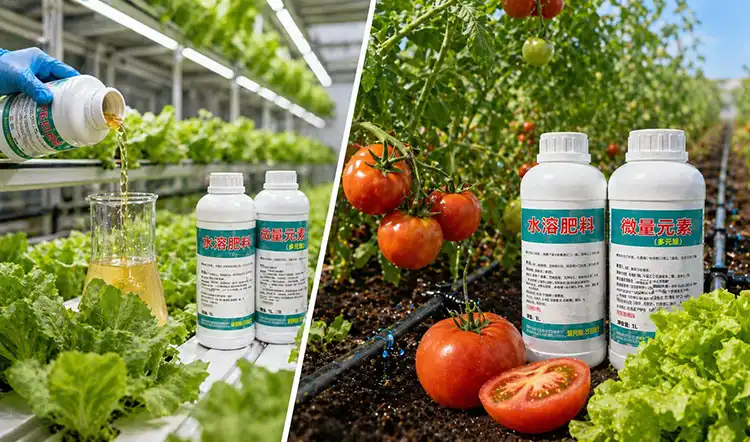
An indoor vertical farm that grew fresh greens in a controlled setting had trouble making sure that all of the production towers had the same growth rates. When general hydroponic fertilizers were first used, they caused nutrient mismatches. For example, too much ammonium nitrogen caused lettuce tips to burn, and not enough micronutrients made leaves look pale, which was not appealing to consumers. Pharmaceutical-grade Water-soluble fertilizers with exact nutrition ratios and no salt or chloride content were needed for the job.
These products had to build up in systems that kept running. These quality problems were fixed by switching to mixtures made specifically for nutrient film method systems. The new program mostly used nitrate-based nitrogen to keep the pH of the tissue at the right level and reduce the number of tip burns. The slightly acidic nutrient solution still had chelated vitamins available, which stopped the precipitation that had happened with unchelated goods in the past. The business set up a batch analysis routine. Every four hours, they checked the pH and electrical conductivity and made small changes with concentrated stock solutions to keep things stable. Within six weeks, production numbers got a lot better.
Due to faster growth rates and better nutrition, harvest cycles were cut by an average of three days. This increased yearly production capacity by about 18% without the need for building expansion. The number of tip burns dropped from 22% to less than 5%, which cut down on crop loss and the cost of labor needed to clean damaged leaves. The consistent deep green color made the food look better on shelves and kept it fresh longer after harvest, which helped build ties with store buyers who want stable quality. The case showed how expensive Water-soluble fertilizers and precise nutrition help controlled environment agriculture reach the level of regularity and efficiency needed to make a profit.
Best Practices and Safety Tips for Using Water-Soluble Fertilizers
Equipment Calibration and Application Accuracy
To get the best results with Water-soluble fertilizers, you need to pay close attention to how the equipment works and how to calibrate it. To make sure correct metering at different flow rates, injection systems need to be checked on a frequent basis. Venturi injectors depend on the difference in pressure that happens when water flows through a narrow opening. If the stream pressure isn't high enough or the screens get clogged, the injection rates slow down, which means crops don't get enough nutrients during important growth times.
Electric dosing pumps are more accurate, but they need to be calibrated against graduated cylinders on a regular basis to make sure the delivery amounts match the settings on the controller. A lot of businesses set up monthly calibration plans where they change the length of the pump strokes or the length of the injections to keep the target fertilizer amounts. Particulate matter can clog drip emitters and spray tubes, but filtration keeps them clear. Screens with 120–200 mesh rates get rid of impurities in concentrated fertilizer solutions before they are injected. For high-flow uses, disk filters have a bigger surface area and can clean themselves. For micro-irrigation systems that are very sensitive and even small bits can cause problems, media filters with sand or crushed glass work best.
Backflushing or replacing cartridges on a regular basis keeps flow rates steady and stops pressure buildup, which is a sign that filters are getting clogged. How the products are mixed affects how well they work and how long the systems last. When mixed with phosphate or sulfate-based fertilizers, high bicarbonate or hardness levels cause precipitation, so concentrated stock solutions should be made in clean containers with good water. Insoluble precipitates can't form if calcium sources aren't mixed directly with phosphate or sulfate products. Two-tank injection systems separate nutrients that don't mix, and they only mix them again after they've been diluted in mainlines, where the risk of precipitation is lower. Adding acids before bases and letting one product dissolve fully before adding the next is the right way to mix multiple products so that the chemicals stay stable and the products work well.
Safety Protocols and Storage Management
When working with concentrated fertilizer products, you need to wear the right safety gear and be aware of the chemical risks. When opening bags or measuring powder mixtures, dust masks or respirators keep you from breathing in fine particles. When something is dissolving, especially when it's acidic or generates heat when mixed, safety glasses protect your eyes from splashes. Nitrile or neoprene gloves are better at keeping chemicals out of your hands than rubber gloves because they don't let chemicals through. Operations should keep eyewash stations and safety showers in places where chemicals are mixed so that they can be used right away if contact happens.
How the goods are stored has a direct effect on their quality and on the safety of the workers. Facilities that keep temperatures between 50°F and 80°F and relative humidity below 60% stop caking and moisture absorption. Printed stacking height limits on boxes keep bags from getting damaged by too much weight. Fire risks can be eliminated by keeping burning agents like nitrate-based goods away from organic materials and fuels. Using first-in, first-out inventory movement makes sure that older stock is used up before it goes bad, which keeps the accuracy of the nutrients and the way the food dissolves. Procedures for dealing with spills should be written down and practiced often. Small spills can be cleaned up and put back in their original cases if they are not contaminated. This cuts down on product loss.
Large spills need to be contained with absorbent materials and disposed of in a way that follows the rules for the environment in that area. Nutrient pollution can be avoided by keeping fertilizers from getting into storm drains or streams after they have been spilled. Keeping spill kits stocked with the right tools, like absorbent pads, containment berms, and personal safety equipment, lets you move quickly, which reduces damage to the environment and legal problems.
Conclusion
In conclusion, Water-soluble fertilizers change the way farming is done by getting important nutrients straight to plant cells more efficiently than ever before. Complete breakdown gets rid of trash, has less of an effect on the environment, and has absorption rates that are much higher than those of regular fertilizers. To make adoption go smoothly, you need to know about application methods, timing strategies, and equipment calibration. You should also choose sellers who offer consistent quality and expert support. Case studies in both veggie production and controlled environment agriculture show that investments pay off in the form of higher numbers, better quality, and more efficient operations. By using the best methods for handling, storing, and applying nutrients, businesses can get the most out of them while still meeting safety and environmental standards.
FAQ
How often should water-soluble fertilizers be applied to maximize nutrient uptake?
How often you apply it relies on the type of food, its growth stage, and the features of its growing system. Recirculating solutions and refreshing reservoirs once a week or twice a week, based on electrical conductivity tracking, are common ways for hydroponic businesses to make sure that nutrients are always available. Soil-based fertigation plans range from once a week for heavy clay loams that can hold more nutrients to twice weekly for sandy soils that drain quickly. Constant liquid feed plans are often used in container production. These use weak solutions with every irrigation to keep the supply of nutrients steady. It's important to think about the stage of growth. Plants in the growing phase may need more nitrogen treatments, while plants in the reproductive stage can benefit from changing the ratios so that phosphorus and potassium are more important. Laboratory study of tissue nutrient levels gives reliable information that can be used to fine-tune application frequencies.
What distinguishes water-soluble fertilizers from standard liquid fertilizers?
What makes them different is their solubility and quantity. Products that are fully Water-soluble fertilizers dissolve completely in water, leaving no waste behind. Liquid formulas, on the other hand, may have particles in them that need to be stirred up. Concentration varies a lot. Soluble powders or crystals have 40–60% active nutrients by weight and need to be diluted before use, while ready-to-use liquids usually only have 3–10% nutrients. Because they are easier to store and move, concentrated liquid goods that are diluted on-site are more popular. For small-scale uses, liquid versions are convenient, but they become more expensive for large-scale processes. Chemical stability also varies. Some liquid products lose nutrients or separate while being kept, while good soluble powders keep their makeup stable when stored correctly.
Are fully soluble formulations safe for hydroponic systems?
Premium Water-soluble fertilizers made just for hydroponics meet the strict cleanliness standards needed for growing plants without dirt. These goods don't have any sodium or chloride in them, so they don't build up salt, which hurts roots in recycling systems. Since there are no neutral fillers, the product dissolves completely without forming sediment that blocks pumps and drip emitters. Pharmaceutical-grade vitamins that are chelated with EDTA or DTPA stay stable across the pH ranges that are common in nutrient solutions. Products that don't meet these requirements might have contaminants or unstable nutrients that settle to the bottom and cause shortages and upkeep issues with the system. Before buying hydroponics, you should always check its fit by reading the technical specs.
Sciground's Advanced Multi-Element Solutions for Professional Growers
Sciground makes high-quality Water-soluble fertilizers that are designed to meet the needs of professional farming businesses that need consistent quality and measured performance. Our multi-element formulas have chelated micronutrients like iron, zinc, manganese, copper, boron, and molybdenum that make plants healthier and less likely to get diseases. These micronutrients work for a wide range of crop types. These products dissolve completely, so they don't get clogged up in complex fertigation systems and make sure that plants quickly absorb them through their root zones and leaf surfaces. As a solid provider with more than 20 years of study experience from the Northwest Academy of Agricultural Sciences, we know the technical problems that procurement managers face when they need to find good inputs. Professor Liang Dejun, who is our top expert, has spent his whole career coming up with formulas that make leaves bigger and thicker, encourage flowers and fruiting, and improve the quality of fruit by making it more colorful and keeping it fresh longer. Get in touch with our technical support team at [email protected] to talk about making nutrient plans that are specific to your crops and growing situations.
References
1. Marschner, H. (2012). Mineral Nutrition of Higher Plants (3rd ed.). Academic Press, London, UK.
2. Jones, J.B. (2016). Hydroponics: A Practical Guide for the Soilless Grower (2nd ed.). CRC Press, Boca Raton, Florida.
3. Havlin, J.L., Tisdale, S.L., Nelson, W.L., & Beaton, J.D. (2014). Soil Fertility and Fertilizers: An Introduction to Nutrient Management (8th ed.). Pearson Education, Upper Saddle River, New Jersey.
4. Bar-Yosef, B. (1999). Advances in Fertigation. Advances in Agronomy, 65, 1-77.
5. Fageria, N.K., Baligar, V.C., & Jones, C.A. (2011). Growth and Mineral Nutrition of Field Crops (3rd ed.). CRC Press, Boca Raton, Florida.
6. Sonneveld, C., & Voogt, W. (2009). Plant Nutrition of Greenhouse Crops. Springer, Dordrecht, Netherlands.

Sciground
Shanrangde, in collaboration with a team of experts from the former Academy of Agricultural Sciences, focuses on developing patented organic fertilizers, including those specifically formulated for Corydalis rhizome. Chief expert Professor Liang Dejun, with over 20 years of industry experience, provides one-stop technical guidance from site selection to field management, helping farmers increase production and income.
Formulated by the original expert team from the Academy of Agricultural Sciences · Focused on organic nutrients specifically for crops
Contact us now to customize a green nutrition solution for your farmland.
Recommended Blog

Can Multi Element Foliar Fertilizers Improve Nutrient Uptake Rates?


Can Fruit Tree Fertilizer Improve Fruit Size and Taste?

Fruit Tree Fertilizer Ideas to Boost Orchard Profitability


Foliar Fertilizers vs Soil Feeding: Key Differences
