Foliar Fertilizers vs Soil Feeding: Key Differences
Understanding Foliar Fertilizers and Soil Feeding: Foundations and Core Concepts
- Understanding Foliar Fertilizers and Soil Feeding: Foundations and Core Concepts
- Comparative Analysis: Foliar Fertilizers vs Soil Feeding
- Strategic Procurement Insights: Choosing Between Foliar and Soil Fertilizers for Your Business
- Optimizing Fertilizer Use: Best Practices for Maximum Yield and Sustainability
- Decision Framework: How to Select the Right Fertilizer Solution for Your Supply Chain
- Conclusion
- FAQ
- Partner with Sciground for Advanced Foliar Fertilizer Solutions
- References
Agricultural workers have to make a big choice between foliar fertilizers and traditional soil feeding methods. This choice has a direct effect on crop growth and operating efficiency. Foliar fertilizers get nutrients to plants straight through their leaves, so they don't have to go through the dirt. This lets plants absorb nutrients quickly when they need them. Traditional soil feeding works by releasing nutrients slowly through the roots. However, the best way to do this depends a lot on the conditions of the soil. Farmers, ranchers, and agricultural suppliers can make better choices about which fertilization method will work best for their crops and the situations where they grow by understanding these basic differences.
Understanding Foliar Fertilizers and Soil Feeding: Foundations and Core Concepts
There are two main ways that agricultural nutrition supply methods work: feeding the plants' leaves and feeding the soil. Different processes are used in each way, which have big effects on how plants take in and use nutrients during their growth cycles.
How Foliar Fertilizers Work
Foliar feeding changes the way plants are fed by putting nutrients right into the plant through the stomatal holes and leaf layers. This method gets around the complicated soil chemistry that usually stops nutrients from being used. When used properly, liquid nutrients can get through the leaf's surface within hours and into the plant's bloodstream, where they can be sent right away to growing parts. Synthetic chemicals, organic extracts, and slow-release formulas made for specific crop needs are all used in modern foliar recipes. Multi-element foliar fertilizers mix many nutrients in perfectly balanced amounts. They fix many problems at once while also making the plant healthier and more resistant to stress.
Soil Feeding Fundamentals
Root uptake systems that work with traditional soil fertilizers depend a lot on the chemical, moisture, and activity of microbes in the soil. Before nutrients can get into plant tissue, they have to mix with water in the soil, move through the rhizosphere, and pass through the root membranes. Long-term fuel is provided by this process, but it can be slowed down by pH changes, compacted soil, or drought. Soil-applied fertilizers work best when the soil has good flow, enough organic matter, and a pH level that keeps the levels of nutrients steady throughout the growing season.
Key Scientific Distinctions
The main difference between these methods is how well they use the nutrition route. Foliar applications absorb 80–95% of the substance within 24 hours, while soil treatments only absorb 40–60% over the course of a few weeks. Foliar uptake rates are directly affected by things like humidity, temperature, and the properties of the leaf surface. Soil feeding, on the other hand, depends on the conditions in the root zone and the living things that live there.
Comparative Analysis: Foliar Fertilizers vs Soil Feeding
Knowing how plant and soil feeding work differently helps farmers make the best fertilizer plans for each crop based on its needs and the weather.
Nutrient Absorption Rates and Timing
Applying nutrients to the leaves quickly is what makes them perfect for fixing serious deficits during important growth stages. Foliar nutrients are absorbed by plants within two to four hours after being applied, while nutrients that are put on the soil may need days or weeks to reach the same amount of uptake. But feeding the earth releases nutrients slowly over time, which helps plants grow over time. This steady supply is especially helpful during long growing seasons, when constant nutrition keeps growth rates at their best without having to be applied again and again.
Application Methods and Practical Considerations
For spray treatment to work best, the time and conditions of the area must be just right. When applied early in the morning or late at night, the risk of leaf burn is lowest, and absorption rates are highest. Foliar fertilizers' success rates are affected by how well the equipment is calibrated, how evenly the spray covers the plant, and how big the droplets are. Soil treatments give you more control over when and what the weather is like, but they need to be mixed in correctly and have enough water to activate. The ways of broadcast spreading, banding, and incorporation all give nutrients to plants in different ways that change how well they take them in.
Crop-Specific Effectiveness
There are some plants that do really well with foliar feeding plans. Calcium applied to the leaves of tomato plants during fruit growth is very helpful and can cut the risk of blossom end rot by up to 70%. Rose farming uses iron foliar sprays to quickly fix chlorosis and return the plants' healthy green color within days. In hydroponic systems, foliar supplementation is often used when root zone nutrition isn't enough. This is especially true during times of fast growth or weather stress, when roots can't take in as much food.
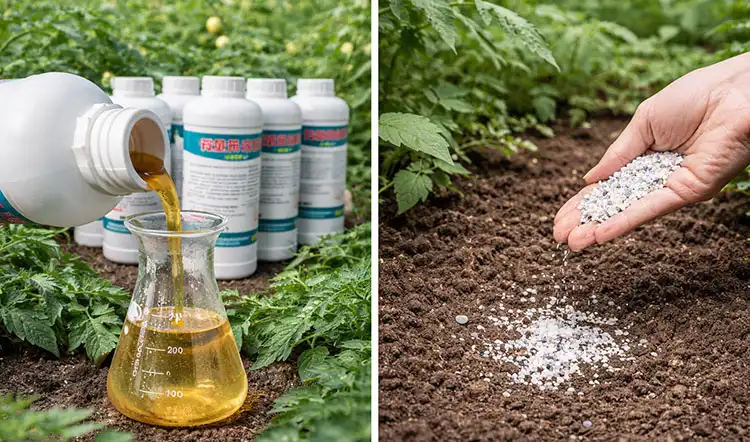
Strategic Procurement Insights: Choosing Between Foliar and Soil Fertilizers for Your Business
When making agricultural buying choices, it's important to think carefully about cost, source reliability, and legal compliance to get the best return on investment and keep operations running smoothly.
Cost Analysis and ROI Considerations
Soil fertilizers are much better for large-scale businesses because they are priced in bulk and usually cost 30–50% less per acre than spray programs. When looking at cost-effectiveness per unit of nutrients taken, however, foliar applications often come out on top, especially when soil conditions make it hard for standard uptake to happen. To figure out the return on investment, you have to take into account the costs of the application, the tools that you will need, and the higher yields. Foliar programs often explain higher unit costs by improving crop quality, lowering waste, and making plants more resistant to stress, which saves yield potential in tough growing circumstances.
Supplier Landscape and Brand Evaluation
The fertilizer supply market features established manufacturers offering both conventional and organic formulations. Certified organic choices meet the growing need for environmentally friendly farming methods while still meeting the high standards of effectiveness needed for commercial production. Some new technologies, like improved chelation technologies, make nutrients more stable and better absorbed. This is especially important for micronutrient uses where standard formulas might precipitate or not be available in some environments.
Compliance and Safety Protocols
Non-toxic products made just for eating crops make sure food is safe and meet government rules for pre-harvest gaps and residue limits. As sustainability becomes a competitive edge in farming markets, environmental stewardship factors become more important in buying choices. Proper documentation of application rates, time, and safety rules protects both operators and end users. This also helps ensure compliance with changing rules for using chemicals in agriculture.
Optimizing Fertilizer Use: Best Practices for Maximum Yield and Sustainability
Strategic fertilizer uses both top-dressing and deep-rooting to get the most out of crops while also encouraging responsible resource use and care for the environment.
Integrated Fertilization Programs
Base soil nutrition and focused foliar supplements are used together in successful nutrition plans to meet the needs of different crops throughout the growing season. This method makes sure that the soil stays fertile and lets problems be fixed quickly if they happen or if environmental stress stops normal uptake processes. Things to think about when planning include the results of soil tests, the needs of crops at different stages of growth, and external factors that affect the supply of nutrients. Tissue testing is used for regular tracking to make sure the program is working and to help make choices about what changes to make during the growing season.
Organic and Alternative Formulations
Organic spray foliar fertilizers made from fish emulsions, seaweed extracts, and recycled materials are environmentally friendly options that feed plants and help the soil's living things. These mixtures usually have good bacteria and chemicals that help plants grow, which are more than just food for the plants. The cost-benefits of organic alternatives depend on the size of the project and how it is applied. However, many farmers believe that the better soil health and higher market value for organic goods are worth the extra money they spend on sustainable feeding programs.
Frequency and Diagnostic Guidelines
How often to apply varies on the type of food, its stage of growth, and the weather. Foliar applications work best every 7–14 days during busy growth times. Soil applications, on the other hand, can provide nutrition for 4–8 weeks, based on the formulation and weather. Visual signs, tissue tests, and soil analysis are all diagnostic tools that help farmers decide how much fertilizer to use and avoid both too little and too much fertilizer, which wastes resources and could hurt crop quality.
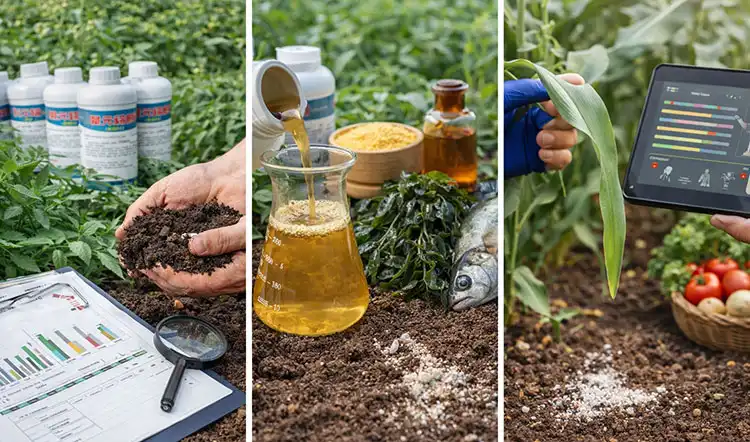
Decision Framework: How to Select the Right Fertilizer Solution for Your Supply Chain
To choose fertilization methods that work with practical goals, budget limits, and long-term sustainability goals, procurement managers need a set of structured evaluation criteria.
Effectiveness Metrics and Performance Standards
Some of the most important performance measures that have a direct effect on profitability are yield growth, quality enhancement, and application efficiency rates. Foliar fertilizers programs work best in situations where you need to act quickly and reduce stress, while soil programs give plants the nutrition they need to produce consistently in a wide range of weather conditions. Safety factors include protecting workers, taking care of the environment, and making sure food is safe. These factors are becoming more and more important in buying choices as rules change and people become more aware of them.
Supplier Reliability and Partnership Development
Long-term relationships foliar fertilizers with suppliers offer stability, technical support, and better prices that lower operating risks and make sure that products are available during key application times. When evaluating a supplier, you should look at their ability to make things, their quality control methods, and their professional knowledge to make sure the project goes smoothly. Innovation partnerships with forward-thinking suppliers give farmers early access to better formulas and application technologies that help them stay ahead in farming markets that are changing quickly.
Future-Proofing and Market Competitiveness
Sustainable goods and practices are becoming more and more important for getting into new markets and charging higher prices. By choosing providers that care about the environment and are always coming up with new products, you can be sure that your business will be around for a long time and meet the changing needs of customers and regulators. Investing in efficient application technologies and precision agriculture tools makes fertilizer work better while having less of an effect on the environment. This helps modern farms reach their goals of making money and being environmentally friendly.
Conclusion
The choice between foliar fertilizers and soil feeding ultimately depends on specific operational requirements, crop characteristics, and environmental conditions. While foliar applications provide rapid nutrient delivery and stress response capabilities, soil feeding offers sustained nutrition and cost efficiency for base fertility programs. Integrated techniques that use both methods carefully during the growing season are becoming more and more important for modern farming success. Professionals in procurement can create fertilization programs that improve quality, yield, and profits by learning about these complementary technologies. These programs should also support ecological farming methods that help farms stay in business in the long run in competitive markets.
FAQ
1. What are the main advantages of foliar fertilizers over soil feeding?
Foliar fertilizers provide rapid nutrient absorption within hours compared to days or weeks for soil applications. They bypass soil chemistry limitations, work effectively in poor soil conditions, and allow precise timing during critical growth stages when immediate nutrition proves essential for optimal development.
2. When should I choose soil feeding instead of foliar applications?
Soil feeding works best for base nutrition programs requiring sustained nutrient release over extended periods. Choose soil applications for cost-effective bulk nutrition when weather conditions limit foliar effectiveness or when building long-term soil fertility for perennial crops and established production systems.
3. Can foliar and soil fertilizers be used together safely?
Yes, integrated programs combining both methods often provide optimal results. Use soil fertilizers for base nutrition while applying foliar supplements during peak demand periods or stress conditions. Coordinate application timing and nutrient rates to prevent excess accumulation while maximizing uptake efficiency.
Partner with Sciground for Advanced Foliar Fertilizer Solutions
Sciground's multi-element foliar spraying of foliar fertilizers is a state-of-the-art farming technology that is meant to improve crop growth by delivering nutrients efficiently through the leaves. Our scientifically created goods make plants healthier, better able to handle stress, and more productive, all while allowing them to quickly absorb nutrients, which is important for modern farming. As a top company that makes foliar fertilizers, we mix more than 20 years of study experience with cutting-edge production methods to provide solutions that meet the needs of specific crops in a wide range of growing conditions. Get in touch with our farming experts at [email protected] to talk about how our advanced fertilizer solutions can help you get better results from your crops and support environmentally friendly growing methods.
References
1. "Nutrient Uptake Mechanisms in Foliar vs Root Fertilization Systems." Journal of Agricultural Science and Technology, Vol. 15, No. 3, 2023.
2. "Comparative Cost Analysis of Foliar and Soil Fertilization Programs in Commercial Agriculture." Agricultural Economics Review, Issue 8, 2024.
3. "Environmental Impact Assessment of Modern Fertilization Methods." Sustainable Agriculture Quarterly, Spring Edition, 2023.
4. "Crop-Specific Response to Foliar Nutrition Programs: A Multi-Year Field Study." Plant Nutrition Research, Vol. 28, No. 2, 2024.
5. "Supply Chain Optimization in Agricultural Fertilizer Procurement." Agribusiness Management Journal, Vol. 12, Issue 4, 2023.
6. "Regulatory Compliance and Safety Protocols for Agricultural Fertilizer Applications." Agricultural Safety Standards, Annual Review, 2024.

Sciground
Shanrangde, in collaboration with a team of experts from the former Academy of Agricultural Sciences, focuses on developing patented organic fertilizers, including those specifically formulated for Corydalis rhizome. Chief expert Professor Liang Dejun, with over 20 years of industry experience, provides one-stop technical guidance from site selection to field management, helping farmers increase production and income.
Formulated by the original expert team from the Academy of Agricultural Sciences · Focused on organic nutrients specifically for crops
Contact us now to customize a green nutrition solution for your farmland.
Recommended Blog

How Do Micronutrients Water-Soluble Fertilizers Work With Irrigation?

Micronutrients Water-Soluble Fertilizers: What Should You Look For?

Are Micronutrients Water-Soluble Fertilizers Worth the Investment?

How Do Multi Element Foliar Fertilizers Boost Crop Yield Fast?

What Are the Best Micronutrients Water-Soluble Fertilizers for Crops?

