Can Micronutrient Fertilizers Improve Soil Fertility?
Understanding Micronutrient Fertilizers and Soil Fertility
- Understanding Micronutrient Fertilizers and Soil Fertility
- Identifying and Addressing Micronutrient Deficiencies in Crops
- Types and Effectiveness of Micronutrient Fertilizers: Choosing the Right Solution
- Micronutrient Fertilizer Suppliers and Procurement Strategies for B2B Clients
- Real-World Benefits and Case Studies of Using Micronutrient Fertilizers to Improve Soil Fertility
- Conclusion
- FAQ
- Partner with Sciground for Superior Micronutrient Fertilizer Solutions
- References
Micronutrient fertilizers can make the soil much better for growing plants if they are used the right way. With these special mixes, you can get trace elements like zinc, iron, manganese, copper, and boron. These parts make enzymes work better, bacteria communities grow, and nutrients move around in the soil more easily. In much smaller amounts than nitrogen, phosphorus, and potassium, these micronutrients are needed by plants. However, they help plants deal with "hidden hunger," which happens when soils don't have enough trace elements to support root growth and plant processes. Micronutrient fertilizers make up for these deficiencies by stabilizing the soil, breaking down organic matter faster, and creating a better space for plants to grow.
Understanding Micronutrient Fertilizers and Soil Fertility
What Are Micronutrient Fertilizers and Why Do They Matter?
Most of the time, less than 100 milligrams per kilogram of dry plant matter is all that micronutrient fertilizers give plants of the trace elements they need. These elements are not macronutrients like nitrogen and phosphorus. Instead, they help enzymes do their job and build plant cells. During photosynthesis, iron moves electrons around and helps chlorophyll do its job. Enzymes that zinc sets off start both the making of proteins and the release of growth hormone. Copper helps make lignin, and manganese helps split water as part of photosynthesis. Iron helps keep pollen living. Boron strengthens plant cell walls and makes it easier for sugar to move through them. Molybdenum helps beans fix nitrogen. The metabolisms of plants get stuck if the earth doesn't have enough of these minor elements. This stops growth no matter how much nitrogen or phosphorus you add. This means that the vitamin that is hardest to get is stopping your food from growing. It's known as Liebig's Law of the Minimum. Soil that is missing nutrients can be fixed with micronutrient fertilizers. These make sure that all the nutrients are in the right place and fill in the gaps.
How Micronutrients Influence Soil Microbial Activity
Trace elements not only feed plants, but they also have huge effects on the soil's life. Micronutrients are needed for the growth of bacteria, fungi, and actinomycetes, which are good for the environment. Microbes can breathe with the help of iron and manganese, and bacteria in root nodules can fix nitrogen with molybdenum. Microbial groups get bigger and more numerous when the soil has more vitamins. So, the organic matter breaks down faster, and plants can get the nutrients it needs. As the bacteria get stronger, they make more humus. This humus improves the structure of the soil, its ability to hold water, and its ability to trade cations, all of which make the soil more productive.
Complementary Role Alongside Macronutrients
Micronutrients don't need to be used instead of regular NPK programs; they work well with them. When the earth is too acidic, phosphorus can stick to calcium, but zinc makes it easy for plants to take in phosphorus. Plants can use nitrogen more effectively when they have access to iron. This means that less nitrogen is lost to leaching or volatilization. Farmers and people who work in getting things who use both trace element supplements and protein programs do better than those who only use regular fertilizers. All of this works together to get the most out of your fertilizer purchases and keep the soil healthy for many growing seasons.
Identifying and Addressing Micronutrient Deficiencies in Crops
Recognizing Deficiency Symptoms in the Field
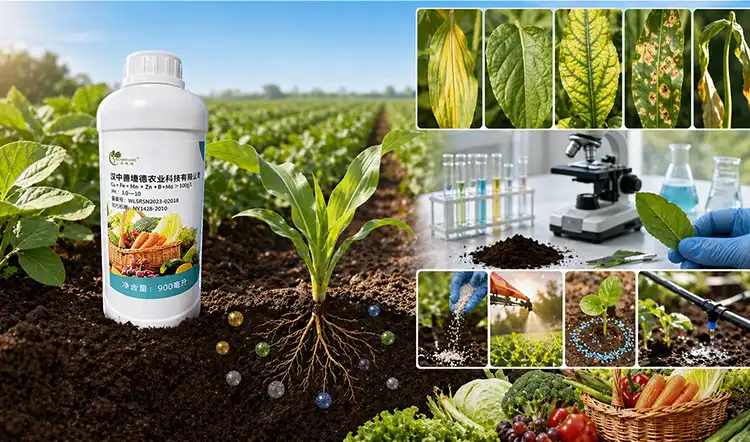
If you find trace element shortages early on, you can avoid costly production losses. If there isn't enough zinc in the soil, plants like corn and beans will not grow properly and will turn green between their leaves. When beans are grown in dirt with a high pH, the leaves are often bright yellow with green lines that show they have an iron deficiency. When there isn't enough manganese in the soil, grains and vegetables get spots of light green or yellow between their lines. Plants show signs of boron deficiency, and their roots become hollow. Their flowers also break, and the tree crops can't get enough food. Plants that don't have enough copper, such as those with copper-deficient wilt, have their shoot tips die back, and they take longer to grow. Problems can be fixed quickly before they have a big effect on the quality and amount of the harvest if these signs are seen.
Soil and Tissue Testing Best Practices
Lab study gives you the details, while visual review gives you the big picture. Soil testing research tells you how many micronutrients are in the soil and which ones plants can use. You can use this knowledge to make simple fertilizer suggestions. Every year, take samples from different areas at the same time of year and at the same level to see how things change over time. Soil tests are helpful, but plant tissue analysis shows how nutrients are really being taken in during key stages of growth. You can tell if your fertilizer plan is working for your plants by taking samples of their leaves when they are just starting to grow or when the fruit starts to form. If you use both ways of trying together, you can make smart buying decisions that help you get the right goods in the right amounts.
Application Methods and Timing Strategies
Micronutrient fertilizers can reach plants in a number of different ways. When you prepare the seedbed by adding dirt, it stays there all season, which is great for slow-release recipes. Foliar sprays fast fix weaknesses that show up in the middle of the season, skipping issues with fixing things in the soil when it's wet or has a high pH. Trace elements that are soluble in water are added to valuable crops like trees and vegetables during fertilization. This lets the right amount of medicine be given to each person. You put concentrated vitamins on seeds when you cover or prime them. To help plants grow in cold or bad soil, this creates a ring of nutrients around them. Time is very important. Before you plant corn, put zinc on the roots to help them grow quickly. Iron chelates should work on plants that have constantly growing leaves, which means they are growing quickly. It helps the flowers bloom and the fruit set when boron is added right before they bloom. The best way to get nutrients into plants and keep waste to a minimum is to apply them at the right time and in the right way for the crop's growth stage and soil circumstances.
Types and Effectiveness of Micronutrient Fertilizers: Choosing the Right Solution
Chelated Versus Inorganic Formulations
When you know how a thing works scientifically, you can choose ways that work. Inorganic salts, such as zinc sulfate, manganese sulfate, and copper sulfate, are cheap and easy to dissolve. This means they can be used for fertigation and spraying on leaves in neutral to acidic soils. But when the pH level is high, these salts settle or decompose, which makes plants less useful. When EDTA, DTPA, or EDDHA are added to micronutrients, they "chelate micronutrients" and protect metal ions from processes in the soil. While iron-EDDHA is steady up to pH 11, it works well with limestone soils that are typical in dry places. Chelates cost more, but they work better in places where the soil's structure stops mineral forms from moving around. Micronutrients can be found naturally and organically in kelp products, soil that has been composted, and mixes of amino acids. These give you trace elements in forms that are naturally stored and let the elements out slowly as living things break down. Microbes in the soil become more active when organic chemicals are added. This makes the soil more productive over time. Businesses that want to get sustainable approval or green agriculture goals will be interested in them because of this.
Slow-Release Versus Quick-Release Products
If you put quick-release formulations on the leaves or water them, they work right away to fix severe shortages, and you can see effects within days. People who grow a lot of crops in short periods of time or who are stressed out in the middle of the growing season will find these things useful. Slow-release technologies that release trace elements slowly, such as polymer coats, sulfur-coated pellets, or chemically complexed forms, do so over the course of weeks or months. For long-term crops like tree fruits or yearly forages, this method makes sure that nutrients are always available and cuts down on the number of times that nutrients are applied. It also keeps losses to a minimum. The most efficient use of water is to match the flow rate to the needs of the crop. Products that work quickly help vegetables grow during times when they need to grow quickly. Slow-release versions, on the other hand, keep trees healthy in farms and wineries during dormancy and during more than one growing season.
Cost-Benefit Analysis for Bulk Procurement
It's not always about how much a product costs. Sometimes it's about how well it works and how easy it is to use. Micronutrient fertilizers in chelated forms cost more at first, but plants can use them better and need to be sprayed less often. This means that the total return on investment per unit of nutrition plants used goes down. If you buy fake salts in bulk, you can save money, but you might have to use them more often and at higher rates to keep the soil from sticking to them. You don't need to hire more people to mix water-soluble mixtures with existing fertigation systems. You also don't need to do as much work to mix solid goods into bulk fertilizer. To figure out the return on investment, you need to compare the cost of fertilizer to the benefits of bigger yields, better quality, and lower input costs. Premium chelated goods are often the best choice when there are major deficiencies or when growing high-value foods. Large grain farms, on the other hand, may choose artificial salts that are less expensive and are carefully spread out after a soil test.
Micronutrient Fertilizer Suppliers and Procurement Strategies for B2B Clients
Evaluating Trusted Manufacturers and Brands
You can be sure of the quality of the goods and a steady supply if you choose reliable micronutrient fertilizer suppliers. Companies that have a good name will give you all the information you need about their products, like the heavy metal content, pH stable ranges, and sure analysis. A company has a quality management system in place if it has a certification like ISO 9001. If a business has an OMRI or ECOCERT organic certification, it means that they follow the rules for organic growing. There is solid proof of success in the form of reviews of the product and data from field tests carried out by separate agricultural institutions. Being clear about the supply line and where the raw materials come from keeps things clean and ensures the rules are followed by everyone. People believe suppliers more if they tell the truth about how they make their things, how they check for quality, and the tests that were done by someone else.
Sourcing Channels for Efficient Bulk Purchasing
You can save time and money by getting things the right way. Businesses can talk to each other directly on business-to-business (B2B) websites. This gets rid of the broker and makes it simpler to see how prices vary between stores. Regional suppliers have more relevant goods for the area, faster shipping times, and more personalized tech support, all of which can help you meet seasonal needs quickly. Many people buy from wholesale sellers, and they can negotiate big discounts that separate businesses can't get on their own. If you work with the same companies over time, you can be sure that their needs will be met first when demand is high. Because of this, you can also make your own mixtures that are best for your crops or land. Agribusinesses and unions can put their logos on goods made by many manufacturers who offer OEM choices. This lets them take advantage of economies of scale and well-established production skills.
Custom Solutions and Technical Support
Certain farming problems need certain answers. If a seller has its own research and development team, it can make mixes that target specific patterns of deficiencies or pressure from outside sources. When vitamin kits are made just for a crop, like cotton, citrus, or corydalis, they take into account the needs of that type of plant and the soil in the area. This makes the treatments work better. There's more value in technical help from companies than just getting the things to you. They help buyers understand soil tests, figure out how much fertilizer to use, and fix issues caused by a lack of signs. This way, buyers get the most out of the fertilizer they buy. Best practices can be used safely by farm and ranch managers thanks to training programs and teaching tools.
Real-World Benefits and Case Studies of Using Micronutrient Fertilizers to Improve Soil Fertility
Measurable Yield Improvements in Commercial Vegetable Operations
Vegetable farmers who use customized trace element tools say they get a lot more done. A tissue study led a California lettuce farm to start using a chelated iron and zinc fertigation program. The lettuce was going yellow and not growing properly before. This was done in just three weeks, and in blocks that weren't treated, average head weights went up by 18% compared to blocks that were treated. After the harvest, biological tests on the soil showed that there were 35% more helpful bacteria. This means that the soil will be better in the long term and grow more food right away. Planters of tomatoes in places with high pH often have trouble with iron chlorosis, which makes the fruits smaller and lowers the amount of sugar they contain. Deficits were fixed by putting iron-EDDHA on the leaves and zinc sulfate on the dirt. Prices went up because the fruit was better colored and would last longer, and output went up by 22%. These results show that keeping vitamins under tight control is good for the economy.
Enhanced Orchard Health and Soil Restoration
Adding micronutrients over a long period of time is best for fruit farms because their production cycles are so long. In a Washington apple farm, a lack of boron caused cork spot and bad fruit set, so slow-release boron grains were added to the trees' drip lines. Over three seasons, the fruit got a lot better, and the number of bad fruits dropped from 28% to less than 8%. There was more organic matter in the soil over time as tree roots got stronger and could support more microbes. This made it easier for the plants to take in water and nutrients. Regular use of iron-EDDHA to combat iron chlorosis in Florida citrus groves led to better leaf color and fruit yield. There was also a slow drop in pH levels in the root zones as more microbes acted as a buffer for soil reactions that were too acidic. It is clear from these long-term changes that controlling trace elements in a steady way can permanently make land fertile again.
Practical Guidelines for Risk Mitigation
This is a great way to learn many of the best ways to do things. You should do full tests on the soil and tissue before starting micronutrient fertilizer programs, so you don't waste money on things you don't need. Start with small amounts and see how the plants react before making any changes. This will keep the chemical from getting too strong and dangerous. If you want to get the most out of the benefits of working together, use trace elements along with other things like cover crops and organic amendments that are meant to improve the health of the soil. Once a year, check the soil for micronutrients to see how much is there. This will help you make better fertilizer plans over time. These steps make buying things safer and help people trust certain goods and sellers more.
Conclusion
Micronutrient fertilizers are very important for making soil healthier because they make up for trace element deficiencies, increase the activity of microbes, and improve the way nutrients move through the soil. Their planned use goes after the hidden hunger that makes crops produce less, even when enough macronutrients are present. Over time, farmers and people who work in buying can improve crop yields and soil health by carefully picking products with the right mix of chelated and artificial forms, as well as slow-release and quick-release types, and by applying them in the right way. Businesses have shown that good trace element programs pay off in a big way by increasing output, improving food quality, and restoring land for a long time.
FAQ
Can You Overapply Micronutrients and Damage Soil?
Micronutrients can hurt plants and the dirt if they are used in large amounts. Copper, zinc, boron, and other minor elements can become harmful when they are present in large amounts. They hurt plant roots, burn leaves, and stop growth. When there is too much of one element in the soil, it stops other elements from being taken up. This can throw off the balance of soil bacteria and nitrogen ratios. You should test the soil often and use the right amount of fertilizer to keep it safe and healthy.
How Long Until You Notice Changes in How Fertile the Land is?
How you use it and how dirty it is will determine when to do it. Foliar sprays quickly fix major issues, as you can see by the leaves' better color and faster growth. Putting things on the dirt can have a big impact in just one growing season, making plants and crops grow better and bigger. When vitamin control is a regular part of full fertility programs, the soil's fertility changes in ways that last, like adding more bacteria and organic matter over several growing seasons.
Are Organic Micronutrient Fertilizers as Effective as Synthetic?
These two types of micronutrient fertilizers work well to make up for deficiencies when mixed with the right micronutrients for the earth and food. Synthetic chelates are easy to get and give in the right amount, making them perfect for systems with a lot of users or serious shortages. Organic sources add nutrients to the soil slowly, which feeds soil life and helps it get stronger over time. What the farmer decides depends on how they feel, whether they need to be certified, how the land is, and how much it costs. The best results happen most of the time when both methods are used together.
Partner with Sciground for Superior Micronutrient Fertilizer Solutions
To keep the soil healthy and boost food production, you need to work with a reputable micronutrient fertilizers company that knows how to fix your farming issues. At Sciground, we combine over 20 years of research expertise from the Northwest Academy of Agricultural Sciences with cutting-edge preparation technology to deliver water-soluble fertilizers that provide essential trace elements in highly bioavailable forms. Our grow aids for plants do more than one thing. It makes the plant healthier and stronger, and it also takes in more nutrients faster. Your plants will get the nutrients they need at the exact time they need them to grow. Our specialized products increase leaf size and thickness, promote flowering and fruiting, enhance fruit enlargement and coloration, and deliver uniform fruit size with smooth surfaces, high quality, and extended shelf life. Backed by rigorous scientific research and field-proven results, Sciground offers custom formulations tailored to specific crops and soil conditions, supported by comprehensive technical guidance throughout the growing season. Whether you manage commercial vegetable operations, orchards, or specialty crops, our team provides one-stop support from soil testing to post-application management. Contact us at [email protected] to explore tailored micronutrient solutions and request samples for your upcoming season.
References
1. Alloway, B.J. (2008). Micronutrient Deficiencies in Global Crop Production. Springer, Dordrecht.
2. Fageria, N.K., Baligar, V.C., and Clark, R.B. (2002). Micronutrients in crop production. Advances in Agronomy, 77, 185-268.
3. Marschner, P. (2012). Marschner's Mineral Nutrition of Higher Plants (3rd ed.). Academic Press, London.
4. Rehm, G. and Schmitt, M. (2002). Zinc for Crop Production. University of Minnesota Extension Service Publication.
6. Shuman, L.M. (1998). Micronutrient fertilizers. Journal of Crop Production, 1(2), 165-195.
7. Welch, R.M. and Graham, R.D. (2004). Breeding for micronutrients in staple food crops from a human nutrition perspective. Journal of Experimental Botany, 55(396), 353-364.

Sciground
Shanrangde, in collaboration with a team of experts from the former Academy of Agricultural Sciences, focuses on developing patented organic fertilizers, including those specifically formulated for Corydalis rhizome. Chief expert Professor Liang Dejun, with over 20 years of industry experience, provides one-stop technical guidance from site selection to field management, helping farmers increase production and income.
Formulated by the original expert team from the Academy of Agricultural Sciences · Focused on organic nutrients specifically for crops
Contact us now to customize a green nutrition solution for your farmland.
Recommended Blog


Key Benefits of Cordydalis Tuber Specialized Organic Fertilizer


What Is the Best Fruit Tree Organic Fertilizer for High Yields?

