Can a Fruit Tree Organic Fertilizer Manufacturer Customize Formulas?
Understanding Fruit Tree Organic Fertilizer and Customization Needs
- Understanding Fruit Tree Organic Fertilizer and Customization Needs
- How Fruit Tree Organic Fertilizer Manufacturers Customize Formulas
- Comparing Customized vs Standard Fruit Tree Organic Fertilizer Products
- Selecting a Trusted Fruit Tree Organic Fertilizer Manufacturer for Custom Formulas
- Streamlining Procurement: How to Order Customized Fruit Tree Organic Fertilizer
- Conclusion
- FAQ
- Partner with Sciground for Superior Customized Organic Fertilizer Solutions
- References
If you need a Fruit Tree Organic Fertilizer Manufacturer, they can change recipes to fit your needs. When there are problems like dirt pollution, a lack of trace elements, or nutrient needs that are unique to the area, this customization helps. Sciground makes organic soil products just for a lot of different kinds of fruit trees, like citrus, stone fruits, and tropical species. This way, we can be sure that the nutrients we use work with the way each tree grows and its growth cycle.
Understanding Fruit Tree Organic Fertilizer and Customization Needs
To take good care of fruit trees, you need to do a lot of things that regular fertilizers can't do. Trees grown for business all over the United States are affected by different types of dirt. The soils in the Central Valley of California are alkaline, while the soils in the peach areas of Georgia are acidic. Nutrient control is important in every setting to keep trees healthy and get the most fruit.
Why Customization Matters for Fruit Tree Production
Most organic fertilizers don't always take into account how the pH levels, nutrients, and dirt are spread out in different places. Specialized fruit tree organic fertilizer fills in these gaps by focusing on certain issues. It's called Soil Exhaustion Syndrome when important minor elements like iron, zinc, and boron are used up by growing a lot of trees. Plants don't grow as much, don't make as many flowers, and are more likely to get sick if they don't get the right care. Customization is especially important when taking care of annual plants that bear fruit. Unlike yearly crops, fruit trees need regular nutrition during many phenological stages, such as when they wake up from dormancy, when buds grow, when flowers bloom, when fruit grows, and when they heal after being picked. Nutrients are given at the right time for each stage of growth with a customized method. This way, too much isn't lost, and specific deficiencies are fixed at the right time.
Meeting Scale-Specific Requirements
Commercial farmers, ranchers, and people who sell agricultural products know that options that work for everyone hurt their ability to make money. Large companies need quality that stays the same over hundreds of acres, while specialty fruit growers need recipes that make things like sugar level and shelf life better. A Fruit Tree Organic Fertilizer Manufacturer provides customized fruit tree organic fertilizer mixes with specific amounts of nutrients that meet market needs and output goals. These can be adjusted 5-5-5 profiles for general care or high-potassium types like 4-3-8 for the stages when the fruit is filling out.
How Fruit Tree Organic Fertilizer Manufacturers Customize Formulas
Farm sellers and people in charge of buying things can tell how good a maker is at their job by looking at how customization works. A lot of hard science and real-life field experience are used in our work at Sciground.
Systematic Data Collection and Analysis
The tailoring process starts with a full look at the land and crops. Some of the things we find out are the structure of the soil, its pH level, how many chemicals it already has, and how well it has grown in the past. This information shows problems and gaps that are unique. If you use manufactured nitrogen for a long time, for example, it can change the pH balance and hurt the soil's structure. It needs recipes that are high in humified organic matter to fix this so that the soil has the right amount of aggregates and holes.
For more than 20 years, Professor Liang Dejun has led our group as we study and make organic nutrients. They compare these things to the nutrients that different kinds of veggies need. Trace elements are important for citrus plants but not for stone fruits. Tropical fruits need different mixes of bio-stimulants to grow well in some microclimates.
Component Selection and Nutrient Profiling
We picked out the biological parts that were just what was needed after looking at the data. There are a lot of different things in our recipes that work together to get rid of tough dirt problems. At least 45% of the mix is usually a base made of high-quality organic matter like peat moss, composting animal dung, and plant waste. The Cation Exchange Capacity goes up because of this biological matter. This makes it easier for the Earth to hold on to minerals and move them around.
To make the rhizosphere a better place for plants, kill bacteria that cause root rot, and make nutrients easier to get, we use helpful microbe groups such as Bacillus subtilis and Trichoderma species. When there is 10% or more humic acid in the body, it links to heavy metals and helps cells take in nutrients. Even better intake is made by fulvic acid, especially during key times of fruit growth.
Getting more trace elements can help with some health issues. You can keep apples from getting sour pits by taking boron supplements, pears from getting cork spot, and stone fruits from rosetting by taking zinc supplements. To get the best Carbon-to-Nitrogen ratios, which are between 15:1 and 20:1, each part is carefully tweaked. This makes sure there is nitrogen without taking it away, which would stop the breakdown process.
Real-World Performance Validation
It's possible to measure how much better our unique recipes make business apps. The Brix level of the fruit goes up when farms use our unique solutions. This is a key sign of quality, and the fruit stays fresh longer. When trees eat better, their immune systems get stronger. This means they don't need as many chemical treatments to stay healthy. Restoration treatments done after harvest help trees quickly fill up their energy stores again. This gets them ready for strong growth in the spring and steady production year after year.
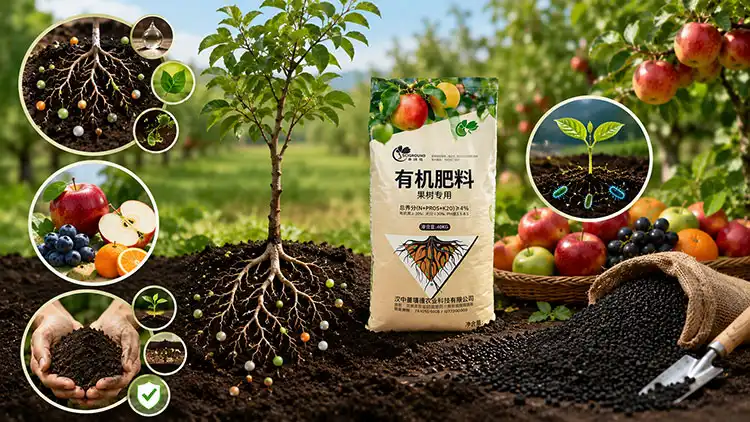
Comparing Customized vs Standard Fruit Tree Organic Fertilizer Products
Often, people who sell and buy agricultural goods have to choose between the benefits of customizing products and how easy it is to use standard products. You can make smart choices that help your business reach its goals if you know about these trade-offs.
Advantages of Customized Solutions
Regular organic fertilizers can't handle minerals as well as customized fruit tree organic fertilizer can. For better uptake and less waste, these treatments fix specific soil deficiencies and time the release of nutrients to match the tree's growing season. Gardeners save money this way because they only use what the trees need, when they need it, and not too much, which can be pricey.
Green bonuses add to the benefits for business. Customized recipes keep nutrients from leaking out and running off, which keeps groundwater clean and stops eutrophication. Synthetic choices with lower salt levels protect root systems from damage caused by fire. This is very important in places where the dirt is salty and alkaline. Plants need less water and can handle drought better when the soil structure is good. This is because better soil structure keeps water in the soil and lets air flow through it.
When quality gets better, choices for higher prices become available. Customized diets help the production of secondary metabolites. Chemistries like these give fruit its color, smell, and taste. These signs of quality cause market prices to rise, which helps growers make more money and gives wholesalers who serve quality-conscious customers an edge over their competitors.
Considerations and Trade-offs
Customization changes how people plan to buy things because it includes real problems. Lead times are longer than normal because manufacturers need to study, make samples, and wait for tests to prove what they have found. If the minimum order amount is too high for a small business, it may need to carefully manage its stock or make deals with other businesses to buy things.
The prices are higher at first because of the costs of research and development, and making only a few at a time. Most of the time, though, these beginning purchases save money in the long run because they lead to higher returns, better efficiency, and fewer needs. Seeing the total cost of ownership instead of the price per unit helps you understand money better.
It's even more important to choose the right source when things change. The amount of manufacturing understanding, quality control rigor, and professional assistance skills at each company is very different. Working with a Fruit Tree Organic Fertilizer Manufacturer who has strong research and development (R&D) systems and flexible production systems will ensure that your products always work the way they should and that you can quickly make changes to the recipes as your needs change.
Selecting a Trusted Fruit Tree Organic Fertilizer Manufacturer for Custom Formulas
Customization works best when the right company is picked to do the work. Several important things set capable providers apart from those who are not.
Essential Certification and Compliance
A strict approval process shows that the product is safe and that the way it was made is good. Check to see if the mix has an organic approval that says the ingredients meet the rules for organic production. ISO approval helps with systematic quality management, and GMP compliance makes sure that the way products are made doesn't change the specs. These licenses make sure that goods follow the rules in different markets. This saves the supply chain and makes it easier to buy goods.
All of the things we sell at Sciground are carefully checked to make sure they work and meet national standards. We can now deal with other countries because of this. Our plant in Hanzhong City follows strict quality rules all the way through the production process, from getting the raw materials to putting them up.
Research and Development Capabilities
The R&D system needs to be strong for customization to work well. A Fruit Tree Organic Fertilizer Manufacturer that has their own research labs and teams can study the dirt in great detail, make accurate nutrition profiles, and use controlled tests to show that their goods work. We work with experts from the Northwest Academy of Farming Sciences to blend academic study with use in farming.
Leading makers can come up with new ideas, which sets them apart from people who just sell goods. To keep adding value, you can use new bio-stimulant technologies, make better microbe consortia, and get better at nutrient binding. This is good for relationships that last a long time.
Production Flexibility and Support Services
You have the freedom to make changes to the code and handle different order amounts. With scalable production capacity, suppliers can make the small amounts needed for tests and then switch to bigger amounts as business relationships grow. It's responsive customer service that adds a lot of value on top of product supply. Examples include giving tips on farming, helping with software, and fixing things in the field.
Here at Sciground, we provide full expert help, from the first site visit to tracking after the application. To make sure that customers get the most out of our products, our team runs training classes and field demos on a regular basis. These help customers use the right techniques for applying our products and taking care of their crops as a whole.
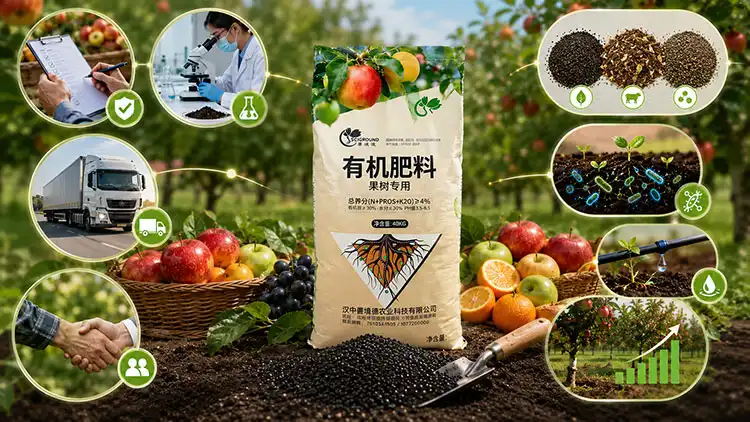
Streamlining Procurement: How to Order Customized Fruit Tree Organic Fertilizer
Buyers can set goals, keep their expectations in check, and arrange better terms when they know how the buying process works.
Initial Consultation and Data Gathering
A full talk is the first step in customization. For example, a Fruit Tree Organic Fertilizer Manufacturer needs the results of soil tests, information about the crops grown, information about ongoing fertility programs, and information about how much they need to make. Giving correct and full information speeds up the process of making formulas and ensures that the final products meet real needs instead of guesses.
Talk about specific issues at the meeting, such as how to handle salty soils, how to avoid issues with rotating crops, or how to boost the quality of high-end goods. If the people who make things know what the goals are, they can choose the right parts for the answer and offer the best ways to use them.
Sample Formulation and Testing Protocol
Makers look at the data and then come up with simple methods that will be tried in the real world. Sample batches let you try the plants out in real-life growing conditions before you buy enough for your business. Test protocols generally look at one growth season and compare the starting performance to changes in tree response, yield, and quality.
Keep track of the results of tests by writing down the number of attempts, the time of day, the weather, and any results that can be seen. This information proves that the method works and helps make things better if changes need to be made. Testing a product well makes us more likely to believe it in the real world and gives us a way to track its success over time.
Production, Packaging, and Logistics
As soon as the recipe is accepted, it can be used in factories. It's helpful to know wait times, which can be anywhere from three to eight weeks, depending on how complicated the order is and how much of it there is. This helps you plan your supplies well. Talk about the various types of packing that can be used with tools for moving and storing things. Mixes that come in 40-pound bags work best with automatic spreaders. On the other hand, fertigation systems work best with liquid concentrates that come in big containers.
For foreign shipping, you need to keep track of records, copies of certificates, and customs rules. Good manufacturers help with export paperwork, which speeds up the process and makes sure that goods arrive on time. You can avoid transit risks by making sure the shipping terms are clear (FOB, CIF, etc.) and that the goods are insured.
Pricing Structures and Contract Negotiation
Prices change based on the type of design, the number of sales, and the length of the deal. Larger promises save money on volume, and contracts that last more than one year protect prices from changes in the cost of raw materials. When you talk to the buyer about payment terms, keep your cash flow needs and the seller's risk in mind. Letters of credit are one tool that you might want to look into for deals with other countries.
Price breaks that are easy to see help people know how much something is worth. Find out what makes prices change. Some of the things that affect the final price are the quality of the organic matter, the addition of trace elements, the use of bacteria, and the cost of getting approval. The best way to compare competition is to look at the total delivery cost, which includes both shipping and service.
Conclusion
If you want your fruit trees to grow really well, custom organic fertilizer choices are a good idea. A Fruit Tree Organic Fertilizer Manufacturer who is good at what they do can make recipes that work with your soil, temperature, and food needs. This keeps the farm going longer and keeps the trees and crops healthy. When you customize, you have to think about minimum amounts and wait times. However, the benefits—better food quality, better use of nutrients, and less damage to the environment—usually make up for these needs. Selecting manufacturers with proven R&D capabilities, flexible production systems, and comprehensive support services ensures successful partnerships that adapt to evolving agricultural needs and market demands.
FAQ
Can all organic fertilizer manufacturers provide customized formulas?
Not every service company knows how to make sewing work well. To really make formula customization work, there needs to be dedicated study rooms, agronomists with a lot of knowledge, and manufacturing systems that are simple to change. Many suppliers don't let you fully customize your order based on a full study of the land and crops. Instead, they only give you a few options for blending. When you compare different companies, find out what their R&D team can do, what their lab can do, and what customization projects they've done in the past. You can use this to check whether they can do what they say they can do.
What are typical minimum order quantities for customized fruit tree fertilizers?
There is no set minimum order size. It depends on how much tailoring is needed and how skilled the maker is. Standard changes, like changing the NPK ratios within the limits of how the crop is currently made, could require at least 5 to 10 tons. For setup costs to be worth it, complicated recipes that need 20 tons or more of trace elements or bio-stimulants are common. Early on in the advice process, talking about how much you need helps you find good makers and makes it easier to plan your purchases.
How long does custom formula development typically take?
Making something takes time based on how hard it is and how many tests need to be run. Building the first model from data that is already available takes about two to four and a half weeks. Field tests to prove performance can take an extra three to six months, depending on how fast the food grows. When companies have a lot of information and a library of current formulas, they can often speed up development by making small changes to tried-and-true formulas instead of making brand-new ones.
Partner with Sciground for Superior Customized Organic Fertilizer Solutions
A customized diet can help your garden grow as big as it can be. For more than twenty years, Sciground has been studying and making organic fertilizers. They bring this knowledge to every relationship. Professor Liang Dejun leads our team of experts from the Northwest Academy of Agricultural Sciences. They make scientifically proven recipes that are specific to your land and crops. In Hanzhong City, our 6,000-square-meter plant makes organic fertilizers that are approved and meet world standards. The plant has to meet strict quality standards. Soil health, higher yields, and better fruit quality are all things that our custom solutions will help you get. This is true whether you run business farms, sell farming supplies, or deal in unique crops. Get in touch with us at [email protected] to talk to one of our experts about your needs and learn how tailored organic fertilizer from a trusted Fruit Tree Organic Fertilizer Manufacturer can transform your operation's productivity and profitability.
References
1. Chen, J.H. (2021). Organic Fertilizer Quality and Nutrient Management in Intensive Fruit Production Systems. Agricultural Sciences Press.
2. Martinez, R.L., & Thompson, D.K. (2020). Customized Nutrient Programs for Perennial Crops: Economic and Environmental Analysis. Journal of Sustainable Agriculture, 44(3), 287-304.
3. National Organic Standards Board. (2022). Organic Fertilizer Certification Standards and Manufacturing Compliance Guidelines. USDA Agricultural Marketing Service.
4. Singh, P., Kumar, A., & Zhao, M. (2023). Bio-stimulants and Microbial Consortia in Fruit Tree Nutrition: Recent Advances and Field Applications. International Journal of Horticultural Science, 29(1), 45-62.
5. Wallace, T.M. (2019). Soil Health Management in Commercial Orchards: Integrated Approaches to Sustainable Production. Fruit Growers Association.
6. Zhang, W., Liu, F., & Anderson, S.H. (2022). Customization Strategies in Organic Fertilizer Manufacturing: Technical Requirements and Quality Control. Applied Soil Ecology, 178, 104-118.

Sciground
Shanrangde, in collaboration with a team of experts from the former Academy of Agricultural Sciences, focuses on developing patented organic fertilizers, including those specifically formulated for Corydalis rhizome. Chief expert Professor Liang Dejun, with over 20 years of industry experience, provides one-stop technical guidance from site selection to field management, helping farmers increase production and income.
Formulated by the original expert team from the Academy of Agricultural Sciences · Focused on organic nutrients specifically for crops
Contact us now to customize a green nutrition solution for your farmland.
Recommended Blog


Eco-Friendly Fertilizer for Sustainable Agriculture


