Organic Fruit Tree Fertilizer Supplier – Order Now
Understanding Organic Fertilizers for Fruit Trees
- Understanding Organic Fertilizers for Fruit Trees
- Selecting the Right Organic Fertilizer for Your Fruit Trees
- Best Practices: How and When to Use Organic Fertilizers for Fruit Trees
- How to Choose and Procure from a Trusted Organic Fruit Tree Fertilizer Supplier
- Environmental and Economic Impact of Using Organic Fertilizers in Fruit Orchards
- Conclusion
- FAQ
- Partner with Sciground: Your Trusted Organic Fertilizer Supplier for Thriving Orchards
- References
Finding a trusted source of Organic fertilizer for fruit trees can make your garden more productive and last longer. We at Sciground are experts in making microbial fermentation fertilisers that are perfect for fruit trees, like oranges, apples, stone fruits, and tropicals. Our goods provide complete organic nutrition, strengthen roots, make plants less likely to get diseases, and raise the quality of fruits at all stages of growth. With our unique formulas and more than 20 years of study experience from the Northwest Academy of Agricultural Sciences, we help farmers, ranchers, and agricultural traders get better returns while protecting the health of the land and the environment.
Understanding Organic Fertilizers for Fruit Trees
Organic fertilizers represent a fundamental shift in how we nourish fruit-bearing trees. Unlike synthetic alternatives that deliver quick nutrient bursts, organic inputs work with natural soil processes to sustain long-term orchard vitality.
What Makes Organic Fertilizers Different
Composted animal manure, plant waste, peat moss, and bacterial waste are all natural sources of organic fertilisers. To get rid of germs while keeping good bacteria, these materials go through controlled fermenting and high-temperature sterilisation. The result is a bio-active soil fertiliser that releases nutrients slowly through mineralisation by microbes instead of dissolving right away chemically. This slow-release system meets the nutritional needs of fruit trees at all times of their life, from breaking dormancy to fruit growth.
Key Benefits for Commercial Orchards
Organic fertilisers have benefits that go beyond just food. The USDA Agricultural Research Service has found that organic matter improves the structure of soil by making strong clumps that help roots get into the soil and keep water in. Our microbial fermentation fertiliser at Sciground has good groups of microbes in it, like Bacillus subtilis and Trichoderma species. These groups live in the rhizosphere and stop soil-borne pathogens that cause root rot diseases.
Organic nutrients also help with "Soil Exhaustion Syndrome," which is a big problem in heavy fruit production because constant cutting takes away minor elements like iron, zinc, and boron. Organic fertilisers help keep nutrients in the soil and lower leaching by increasing Cation Exchange Capacity. In fact, a study in the Journal of Environmental Quality found that leaching rates were 40% lower with organic fertilisers than with conventional fertilisers. In practical terms, this means protecting the earth and cutting costs for businesses.
Comparing Organic and Synthetic Approaches
Synthetic fertilisers have known NPK levels, but they also have costs that you might not be aware of. It is especially bad in dry areas when high salt levels burn plant roots and make the dirt more salty. Chemical nitrogen also makes soil more acidic over time, which means it needs to be amended with lime, which costs money and takes time. Because organic fertilisers automatically balance pH and have very low salt values, they are safer for roots to come into close touch with.
The natural benefits are just as strong. Making synthetic nitrogen uses fossil fuels and adds to the release of greenhouse gases. Chemical fertilisers that dissolve in water cause algae blooms and dead zones in bodies of water. Organic options store carbon in the soil's organic matter, protect wildlife, and meet the growing demand for food that is grown in a way that doesn't harm the environment, which is a market group that pays more.
Selecting the Right Organic Fertilizer for Your Fruit Trees
Choosing appropriate organic nutrition requires understanding both your trees' specific needs and the unique characteristics of different fertilizer formulations.
Recognizing Nutrient Deficiencies
Fruit trees show clear signs when they are missing important nutrients. A lack of nitrogen shows up as older leaves turning yellow and less plant growth. Lack of phosphorus makes leaves turn purple and delays their growth. If you don't have enough potassium, your leaves will get burnt edges, and your fruit will not taste good. Micronutrient gaps cause minor issues. For example, peaches with "little leaf" syndrome have a zinc deficiency, and apples with cork spot have a boron deficiency. Using Organic fertilizer for fruit trees can help prevent and correct these deficiencies.
Soil testing gives you objective information about the pH and nutrient amounts in the soil, which helps you choose the right fertiliser. In established trees, we suggest checking every three years, and before planting new blocks, you should do the same. These tests tell you if your soil needs specific supplements or balanced nutrition.
Tailored Recommendations by Tree Type
Different kinds of fruit have different health needs. In warm areas, citrus trees need more nitrogen and potassium to keep blooming and fruiting all the time. Our special mix releases nitrogen slowly over time without encouraging too much green growth, which slows down fruit set. Orchards of apples and pears do better when the NPK levels are adjusted, and the calcium level is high. This keeps the fruit from turning sour and improves store quality. You need to be careful with potassium when stone fruits like peaches and cherries are pit hardening and fruit swelling.
Organic fertilisers that boost soil microbe activity are great for mango and tropical fruit trees that grow in warm, wet places where fast organic matter breakdown can lower soil carbon. Good organic fertilisers have humic and fulvic acids that help cells move nutrients around and bind them together more efficiently.
Granular Versus Liquid Formulations
Granular organic fertilisers are useful for large-scale projects because they are easy to use. Granules provide long-term feed for six to twelve months when spread with motorised spreaders or at the drip line in radial ditches. Our grainy goods keep their wetness levels below 20% so that they don't harden and make sure that they can be applied easily. The particles are between 2 and 4 mm in size, which makes them easy to spread with industrial tools and hard for the wind to blow away.
When fast nutrient supply is important for growth, liquid organic fertilisers work best. Liquid versions deliver peptides, amino acids, and soluble potassium right away through fertigation systems or aerial sprays. During the fruit's growth phase, liquid vitamins increase its size and sugar content without making the earth more salty, which is especially helpful when there is a drought. But liquids need to be used more often and with special tools, so they are only cost-effective for high-value crops or certain stages of growth.
Best Practices: How and When to Use Organic Fertilizers for Fruit Trees
Timing and technique determine whether organic fertilizers deliver their full potential. Strategic application schedules synchronized with tree physiology maximize nutrient uptake and return on investment.
Seasonal Fertilization Strategy
In commercial trees, the most important fertilisation event is the fall basal spray. Applying organic fertiliser right after harvest, which is also known as "confinement nutrition," increases energy levels that were lost during fruit production. During the fall root flush, trees take in nutrients and store carbs that help them grow in the spring. By using a radial ditch at the top of the drip line, nutrients are put where supporting roots can actively take them up. The slow-release properties keep nutrients from washing away during winter rain, so they are still available when growth starts again in the spring.
Fertilising in the spring helps shoots and flowers grow quickly. Light treatments two to three weeks before bloom make nitrogen available without encouraging too much plant growth that gets in the way of fruit set. During blooming, don't use a lot of fertiliser because it can make the fruit fall off.
Fruit growth is the main goal of summer fertilisation. Split uses during the stages of cell growth and expansion get the best size and quality. During this time, potassium is very important because it helps sugar build up and keeps things firm. Fertigation gives plants the exact nutrition they need without upsetting the root zones or using tools that could hurt stems that are full of fruit.
Application Techniques for Different Formulations
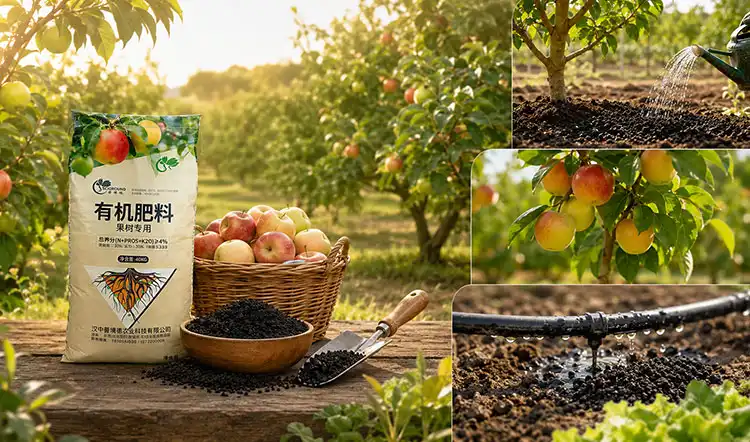
Granular fertilisers work best when they are mixed into the soil instead of being spread on the surface. For trees that are already there, we suggest making small furrows 15-20 inches from the root at the drip line, spreading fertiliser out evenly, and then filling with dirt. This location puts nutrients in the active root zone and reduces the amount that is lost through volatilisation. In packed soils, mechanical augers can make holes for deeper placement, but this requires more work, which costs money.
For fertigation, liquid fertilisers need to be diluted according to the manufacturer's instructions, which are usually between 1:200 and 1:500. During regular watering cycles, inject solutions through drip or micro-sprinkler systems. Afterward, let clear water flush for 15 to 20 minutes to keep emitters from getting clogged. Foliar sprays should be made in the early morning or late afternoon for best absorption and least risk of leaf burn.
Commercial Products Versus Homemade Solutions
Compost drinks and dung uses made at home were popular in the past, but professional Organic fertilizer for fruit trees is much better for businesses. Quality control makes sure that all batches have the same amount of nutrients, which is very important when you are taking care of hundreds or thousands of trees. Sciground's products are tested in a lab to make sure they have the right amount of organic matter, NPK ratios, and microbe populations. This makes sure that the products will work as planned, which helps with production planning.
Commercial fertilisers also get rid of the safety risks that come with using raw soil, which can hold E. coli and other germs that make fruit dirty. Weed seeds that would make care more expensive are destroyed by high-temperature processes. Getting rid of pathogens is especially important for getting Good Agricultural Practices approval and passing food safety checks that big buyers require. The professional recipe has chelated micronutrients at amounts that are good for plants, which is hard to do with materials that are mixed on a farm.
How to Choose and Procure from a Trusted Organic Fruit Tree Fertilizer Supplier
Supplier selection carries long-term consequences for orchard productivity, regulatory compliance, and operational efficiency. Rigorous evaluation criteria help procurement professionals identify partners who deliver consistent quality and reliable service.
Essential Certification and Quality Standards
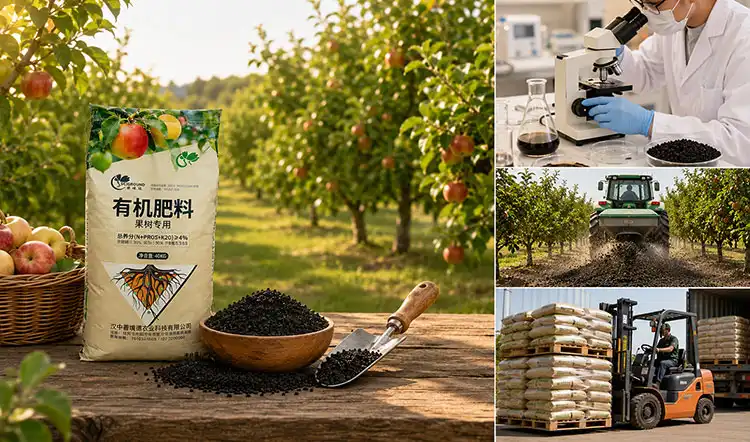
Organic approval from the USDA and OMRI is the minimum standard for organic fertilisers used in approved farming systems. These approvals show that the sources only have approved materials and meet the standards for organic handling. But approval doesn't ensure good farming success by itself. Ask a third-party lab to do tests that will show the amount of organic matter, nutrients, heavy metals, and microbes present. Suppliers of good quality include Certificates of Analysis with every batch to show that the quality is consistent.
The standards for manufacturing are important. Good Manufacturing Practices, such as methods for preventing pollution, tracking systems, and process controls, should be put in place in facilities. The factory that Sciground uses in Hanzhong has strict quality control measures in place. There are also controlled fermentation processes that create stable organic matter and active bacterial communities. Because we work with expert teams from agricultural research institutions, you can be sure that our goods are based on the latest scientific study on how to make dirt fertile and plants healthy.
Evaluating Supplier Capabilities
Reliable sellers show technical know-how that goes beyond just selling products. Look for companies that offer agricultural support, such as interpreting soil tests, making personalised application suggestions, and helping you fix problems when they happen. From choosing a spot to harvesting, Sciground offers full technical support, with live reports on growing techniques and regular field talks. This help is very helpful when changing fertilisation plans to fit different soil types or fixing sudden nutrient shortages.
During peak application times, supply chain stability is very important. Check out how well sellers handle their supplies, their transport networks, and their track records for getting orders filled. Deliveries that are late during important times for fertilisation can ruin whole growing seasons. When you buy in bulk, you need sellers who have enough production ability and storage space to meet your needs without lowering the quality of the goods. Our factory has reliable production plans and agreements with transportation companies that make sure products get delivered on time all over the United States.
Navigating Pricing and Purchase Terms
Organic fertiliser prices are based on the cost of raw materials, the difficulty of handling, and the cost of approval. Even though luxury goods are more expensive than basic commodities at first, they save money in the long run because they contain more nutrients and have more biological activity. Instead of just using per-ton prices to figure out the cost per acre, use the suggested application rates. Volume savings for buying in bulk can make unit economics much better. For example, many sellers offer better prices for pallet or truckload amounts.
Different suppliers have different payment terms and minimum order amounts. Established businesses may be able to stretch net-30 or net-60 terms, which makes managing cash flow easier. Seasonal buying plans let you lock in prices before prices go up because of high demand. If fertilisers don't work as promised, you can get your money back or get a replacement. However, reputable sellers rarely have problems like this because they have strict quality control.
Environmental and Economic Impact of Using Organic Fertilizers in Fruit Orchards
Transitioning to organic fertilizers generates measurable environmental benefits while supporting profitability through multiple mechanisms.
Soil Health and Carbon Sequestration
Organic fertilizer for fruit trees adds back to the soil the organic matter that has been lost over many years of heavy gardening. Each percentage point increase in soil organic matter increases its ability to hold water by about 20,000 gallons per acre. This means that less watering is needed and the land is less likely to be damaged by dryness. Better soil structure stops flow and erosion, which keeps the topsoil in place and keeps sediment from polluting rivers. Over time, these changes add up—studies of long-term organic management show that soil quality keeps getting better over many decades.
Greenhouse gas releases from farming are balanced out by carbon storage in soil organic matter. A study in the journal Agriculture, Ecosystems & Environment found that trees that are handled with organic amendments store between 0.5 and 1 tonne of carbon per acre per year. This storage makes it possible for carbon credit programs to work, which brings in extra money. However, markets for farming uses are still being developed.
The bacteria groups that organic fertilisers support do more than just feed plants. Beneficial bacteria and fungi kill plant pathogens, which could mean that less pesticide is needed. Mycorrhizal associations make root systems more effective by increasing their reach. This makes it easier for plants to get nutrients and handle stress. This biological activity makes tree environments stronger so they can handle pests and changes in the weather.
Economic Analysis and Return on Investment
Cost-benefit analysis of organic fertilizers requires evaluating multiple factors beyond input prices. Higher organic fruit prices—typically 20-50% premiums in wholesale markets—often offset increased fertilizer costs. Certification as organic opens access to growing consumer segments and reduces competition with conventional imports. Surveys indicate U.S. organic fruit sales grew 8.4% annually over the past five years, substantially exceeding conventional market growth rates.
Yield impacts vary by orchard condition and management history. In depleted soils with low organic matter, transitioning to organic fertilizers commonly increases yields 15-25% within three to five years as soil health improves. Orchards with better baseline conditions may see more modest production gains but benefit from improved fruit quality—higher Brix levels, enhanced color, extended shelf life—that command premium pricing and reduce post-harvest losses.
Operational savings accrue from reduced input requirements over time. Improved soil structure decreases tillage needs, conserving fuel and equipment maintenance costs. Enhanced water retention cuts irrigation expenses, increasingly important as water costs rise. Lower pest and disease pressure reduces spray programs, saving on both materials and application labor. A comprehensive analysis across multiple cost centers often reveals favorable returns that simple input-output comparisons miss.
Conclusion
FAQ
How often should I apply organic fertilizer to fruit trees?
Application frequency depends on fertilizer formulation and orchard conditions. Granular organic fertilizers typically require annual or bi-annual applications, with autumn post-harvest timing most critical. Liquid formulations may be applied monthly during active growth periods through fertigation systems. Soil testing every three years helps refine fertilization schedules based on actual nutrient depletion rates. Trees in sandy soils with low organic matter benefit from more frequent applications, while those in loam or clay soils with good fertility may require less frequent supplementation.
Can organic fertilizers meet the demands of large commercial operations?
Organic fertilizers absolutely support commercial-scale fruit production. Modern formulations provide concentrated nutrients comparable to synthetic alternatives while delivering superior soil health benefits. Mechanical application equipment handles granular organic fertilizers efficiently across large acreages. Fertigation systems deliver liquid organic supplements with minimal labor input. The key is selecting suppliers with sufficient production capacity and logistics capabilities to meet bulk requirements—Sciground maintains inventory and delivery networks specifically designed to serve commercial operations throughout the United States.
Is it acceptable to mix organic and synthetic fertilizers?
Combining organic and synthetic inputs can work in Integrated Nutrient Management programs, though it disqualifies orchards from organic certification. Organic amendments improve synthetic fertilizer efficiency by enhancing soil structure and microbial activity, reducing leaching losses by 20-30%. This hybrid approach allows transitioning operations to gradually reduce synthetic dependence while building soil organic matter. However, many growers find that comprehensive organic programs deliver comparable yields with environmental and market advantages that outweigh the convenience of synthetic supplements.
Partner with Sciground: Your Trusted Organic Fertilizer Supplier for Thriving Orchards
Sciground combines scientific expertise with proven manufacturing excellence to deliver specialized organic fertilizer for fruit trees that meet the demanding requirements of commercial agriculture. Our microbial fermentation formulations provide balanced nutrition, enhance disease resistance, and improve soil structure—driving measurable yield increases and superior fruit quality. With over twenty years of research experience from Northwest Academy of Agricultural Sciences and patent-protected technologies, we offer technical support that extends throughout your growing season. Contact our team at [email protected] to discuss bulk orders, customize application programs for your orchard conditions, and discover how our certified organic fertilizer manufacturer can support your operation's productivity and sustainability goals.
References
1. Brown, T.L., Johnson, M.K., and Williams, R.S. (2021). "Organic Matter Dynamics in Perennial Fruit Systems: Long-term Impacts on Soil Quality and Productivity." Soil Science Society of America Journal, 85(3), 892-908.
2. Chen, Y., Davidson, A., and Kumar, S. (2020). "Microbial Consortia in Organic Amendments: Effects on Root Disease Suppression in Commercial Orchards." Phytopathology, 110(7), 1456-1468.
3. Garcia, P.R. and Thompson, J.L. (2022). "Economic Analysis of Organic versus Conventional Nutrient Management in Apple Production Systems." HortTechnology, 32(2), 178-189.
4. Martinez, C.D., Lee, H.W., and Patterson, K.M. (2019). "Nutrient Leaching Reduction Through Organic Soil Amendments in Intensive Fruit Production." Journal of Environmental Quality, 48(5), 1342-1355.
5. Roberts, E.N., Zhang, W., and O'Neill, B.F. (2023). "Carbon Sequestration Potential of Organic Management Practices in Temperate Fruit Orchards." Agriculture, Ecosystems & Environment, 343, 108267.
6. Wilson, A.J., Foster, D.K., and Campbell, R.H. (2020). "Comparative Performance of Organic Fertilizers in Citrus Production: Yield, Quality, and Soil Health Outcomes." Scientia Horticulturae, 272, 109583.

Sciground
Shanrangde, in collaboration with a team of experts from the former Academy of Agricultural Sciences, focuses on developing patented organic fertilizers, including those specifically formulated for Corydalis rhizome. Chief expert Professor Liang Dejun, with over 20 years of industry experience, provides one-stop technical guidance from site selection to field management, helping farmers increase production and income.
Formulated by the original expert team from the Academy of Agricultural Sciences · Focused on organic nutrients specifically for crops
Contact us now to customize a green nutrition solution for your farmland.
Recommended Blog


Eco-Friendly Fertilizer for Sustainable Agriculture


