How to Improve Milk Thistle Yield with Specialized Fertilizer?
Why Milk Thistle Requires Specialized Fertilization
- Why Milk Thistle Requires Specialized Fertilization
- How Nutrient Management Influences Milk Thistle Yield and Silymarin Content
- Common Nutrient Problems in Commercial Cultivation
- Application Strategies for Better Results
- Organic vs. Synthetic Fertilizer Options
- How to Choose a Reliable Milk Thistle Fertilizer Supplier
- Sciground Milk Thistle Specialized Fertilizer Solutions
- Conclusion
- FAQ
- Partner with Sciground for Superior Milk Thistle Cultivation Results
- References
To grow milk thistle for business, you need to carefully manage the nutrients because plant nutrition is linked to seed yield and silymarin content. Milk thistle farmers have to make sure that the plant's leaf growth, flower performance, seed development, and active chemical building are all balanced with milk thistle-optimized fertilizer. People who grow other field crops, on the other hand, do it to make energy.
A feed made just for milk thistle is used to make sure the plant gets the right nutrients at different stages of its growth. This helps commercial farmers get better seeds and make sure their crops keep doing well over time. Plants need the right amounts of nitrogen, phosphorus, potassium, magnesium, zinc, and boron to flower, mate, fill their seeds, and make secondary metabolites.
For farmers who work in the drug, medicine, and plant extract industries, choosing the right fertilizer isn't just about getting a good crop return. It also changes the quality of the raw materials, the regularity of production, and the growers' ability to compete in the market.
Why Milk Thistle Requires Specialized Fertilization
Milk thistle needs different things than other plants when it comes to food. Too many nutrients at the wrong time could speed up the growth of the leaves while killing off seeds and other useful parts.
N is important for the following in the early stages of plant growth:
-
Putting down roots
-
A lot of plant growth comes from leaves growing.
-
But if you give plants too much nitrogen before they flower, they might grow too many leaves, which would make them mature later and make seeds that aren't as good.
When milk thistle blooms and when the seeds are growing, these minerals are more important. This group of chemicals helps with:
-
Stable flower growth and seeds that are fuller
-
Moving nutrients around well makes them better able to handle drought.
-
Micronutrients are also very important for the growth of medicinal plants. The enzymes in plants need zinc to work. Magnesium is needed for photosynthesis and chlorophyll. Boron is needed for flowers to grow and for fertilization to stay stable.
The fertilizer mix doesn't have to stay the same all season. They can instead use a balanced fertilizer made just for milk thistle to make sure plants get the nutrients they need at the right time.
Changing the amount of nutrients in milk thistle changes how much it produces and how much silymarin it has.
How Nutrient Management Influences Milk Thistle Yield and Silymarin Content
The seeds of the milk thistle plant are mostly grown for their silymarin content. Flavonolignans like these are very useful and are found in many foods and drugs.
A mismatch in nutrients can change both the amount of active molecules made and their quality.
The Role of Macronutrients in Milk Thistle Growth
There are different ways that potassium, nitrogen, and phosphorus can help plants grow.
Nitrogen Management
N₂ helps plants grow faster and makes leaves bigger. Plants need a certain amount of nitrogen to grow, but too much nitrogen may make them less able to reproduce.
A lot of the time, nitrogen is cut back by industrial growers before plants bloom so that they can use more energy to make seeds.
Phosphorus and Potassium Support
It helps plants' roots work, flowers grow, and energy move around inside them. Kosher salts help plants handle water, deal with stress, and grow seeds.
Seeds that grow better can come from a plant that has enough phosphorus and potassium. This is true when the plant blooms and has a lot of seeds.
Importance of Micronutrients
A lot of big farms don't have enough micronutrients, especially in places where the soil is salty or where nutrients are getting locked out.
Here are some important parts:
-
Zinc keeps the gut system running and helps the body grow.
-
Plants need magnesium in order to make food and stay healthy.
-
Boron makes guys and flowers grow bigger.
There are times when it's better for business farms to check the soil and add some supplements than to use too much general fertilizer.
Common Nutrient Problems in Commercial Cultivation
Growing people often get mixed results because the fertilizer plans they use don't match what their plants need.
These issues come up a lot:
-
If you add too much nitrogen, too many leaves will grow.
-
Being uneven because there isn't enough food
-
Soils that don't grow plants well and don't hold seeds well
-
Because they don't have enough minerals, alkaline crops don't do as well in drought or other natural stresses.
These problems may have an impact on:
-
How heavy the seeds are
-
How well it works to get silymarin out of the plant and how much it's worth
-
A specialized fertilizer program should have these changes made:
-
Things about the ground
-
How the weather was
-
Different ways to water plants
-
How big the garden is, what are the standards for good
Fertilizer sellers often say that to get the most nutrients, you should learn about the soil and watch your plants grow with milk thistle-optimized fertilizer.
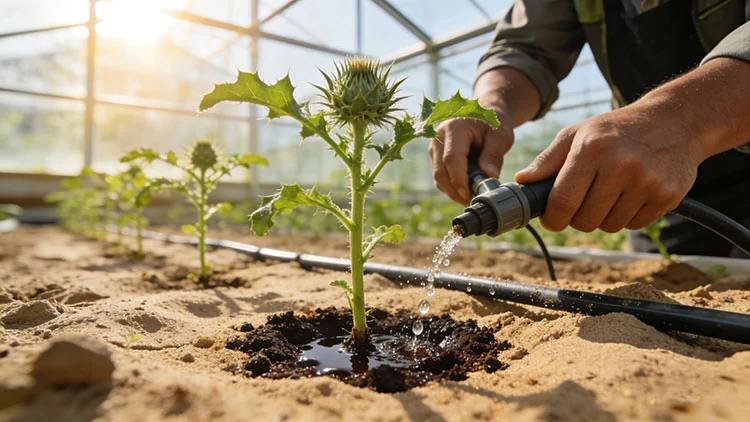
Application Strategies for Better Results
You need to use the right nutrients at the right time for manure to work.
Soil Preparation Before Planting
People who grow plants should check the dirt first to see how it's doing. These things are important:
-
The soil's pH, nitrogen, phosphorus, potassium, organic matter, salt, and elements are all important.
-
The soil's pH should be 6.5 to 7.5, and it should drain well.
Base soil can be used for these things:
-
By adding the right nutrients, organic matter, and phosphorus sources to the soil
-
As you plant, make the dirt better. This will help the roots grow and the plant take in more nutrients.
Fertilizer Timing During Different Growth Stages
At different times of growing, it's important to use nutrients in various ways.
Early Growth Stage
Nitrogen is good for roots and leaves because it helps them grow in a healthy way. The plants should get strong without getting too many leaves.
Flowering Stage
For potassium and phosphorus, it's more important. Food that is good for you helps flowers grow, get pollinated, and make more flowers during this time.
Seed Development Stage
Potassium and vitamins help the seeds stay healthy and make it easy for nutrients to get to where they need to go.
Micronutrients can also be put on plants' leaves when they temporarily lack them because of bad weather, poor soil, or being stressed out from being outside.

Organic vs. Synthetic Fertilizer Options
Using milk thistle-licensed fertilizer in different ways may be different. Different types of crops may require various applications of milk thistle-licensed fertilizer. for different types of crops.
Organic Fertilizer Options
Organic farming and programs for sustainable cultivation often use milk thistle and specialized and organic fertilizers.
Some common materials are
-
composting organic matter nutrition from plants fermented organic matter
-
Biological changes to the dirt
Some of the benefits of organic fertilizer are
-
better soil structure
-
slowly releasing nutrients
-
more activity from microbes
But organic nutrients might be released more slowly, so growers need to time their applications based on what their crops need to grow.
Synthetic Fertilizer Formulations
Synthetic milk thistle fertilizer products offer more accurate control over nutrients and faster availability of nutrients.
People often use them when:
-
bloom times, steps of filling seeds, and healing after external stress
-
Controlled-release fertilizer methods can also help improve fertilizer effectiveness and cut down on nutrient loss, especially in farming systems that use water.
To make sure their crops get the right amount of nutrients, many commercial growers use both organic methods to improve the soil and targeted fertilizer additions.
How to Choose a Reliable Milk Thistle Fertilizer Supplier
When wholesalers, farming businesses, and people who grow medical plants choose a fertilizer provider, they need to do more than just look at the mineral levels.
Some important rating factors are
Product Quality Control
Suppliers you can trust should offer:
-
food report analyses
-
Testing for batch consistency
-
Heavy metal test details and COA paperwork
These quality checks are especially important for crops that are used in nutraceutical and pharmaceutical products.
Custom Fertilizer Development
Soils and farming goals may be different in different parts of the world. A reputable provider should be able to change formulas based on:
-
local soil study,
-
watering methods,
-
farming scale,
-
yield goals
Technical Support and Supply Capability
Partners in agriculture for a long time should offer:
-
advice on how to use the product, how to store it, how to help with farming, and steady big supply options
-
Technical support and on-time supply are often just as important to business farmers as the type of fertilizer they use.
Sciground Milk Thistle Specialized Fertilizer Solutions
Sciground creates crop-specific fertilizer solutions for growing medical plants. Through focused recipes and expert support, they help farmers get better at managing nutrients.
The company specializes in making specialized fertilizers from certain raw materials, such as
-
Peat moss, a fermented plant matter
-
minerals that come from plants
Sciground gives you personalized advice on milk thistle-optimized fertilizer based on:
-
Results of the soil test
-
Conditions for growing
-
Ways to water plants
-
aims for production
Sciground helps commercial milk thistle growers with the whole fertiliser process, which includes:
-
How to choose a product, how to use it, how to grow it, and how to coordinate large supplies
-
Sciground helps farming companies come up with better fertilizer plans for growing medicinal plants by combining knowledge about how to feed crops with real-world requirements for growing them.
Conclusion
The milk thistle won't grow more if you add more fertilizer. It's important to feed plants the right amount of food at every stage of their growth. You should also think about the soil, the weather, and what you want to grow.
Set up the right milk thistle fertilizer program to help plants grow better, get more seeds, and keep the quality of the silymarin high for the medicine and health markets.
People who grow crops for business can be sure that their crops will do well and help them in the long run if they work with a fertilizer provider that has a lot of experience and uses nutrient management methods that are based on science.
FAQ
1. What makes milk thistle-licensed fertilizers different from other fertilizers?
Specifically made versions have specific nutrient ratios for milk thistle's special needs, such as higher phosphorus levels for seed growth and vitamins that boost the production of silymarin. Regular fertilizers don't have these specific parts, and they may encourage too much plant growth at the cost of seed quality.
2. Are certain types of fertilizers good for organic farming?
Milk Thistle Specialized Fertilizers come in organic formulas that meet the standards for organic approval and provide focused nutrients. Because these products are made with natural ingredients and approved processing methods, they can be used in organic farming systems and are positioned at the top of the market.
3. How quickly can farmers expect their crops to grow better after applying?
When the right time and methods are used for application, yield gains usually show up within the same growing season. The effects are at their highest during the seed growth phase. At harvest, both the seed weight and silymarin content start to rise in a way that can be measured.
Partner with Sciground for Superior Milk Thistle Cultivation Results
Sciground's specialized fertilizer solutions represent the pinnacle of agricultural innovation, combining scientific excellence with practical field performance. Our comprehensive approach includes personalized consultation services, customized nutrition programs, and ongoing technical support designed to maximize your milk thistle cultivation success. As a trusted milk thistle specialized fertilizer manufacturer, we offer competitive bulk pricing, reliable supply chain management, and quality assurance that meets the highest industry standards. Contact our expert team at [email protected] to discuss your specific requirements and discover how our proven fertilizer technologies can enhance your operation's profitability and sustainability.
References
1. Anderson, M.K. et al. "Nutrient Management Strategies for Silybum marianum: Impact on Silymarin Content and Seed Yield." Journal of Agricultural Sciences, 2023.
2. Thompson, R.J. "Specialized Fertilization Approaches for Medicinal Plant Cultivation: A Comprehensive Review." International Journal of Sustainable Agriculture, 2022.
3. Martinez, C.L. and Brown, D.S. "Phosphorus Requirements and Uptake Patterns in Milk Thistle Production Systems." Crop Science Research, 2023.
4. Wilson, A.P. "Organic vs. Synthetic Fertilizers in Medicinal Plant Agriculture: Performance and Economic Analysis." Agricultural Economics Review, 2022.
5. Chen, H.M. "Micronutrient Influence on Secondary Metabolite Production in Silybum marianum." Plant Nutrition Science, 2023.
6. Roberts, K.T. "Commercial Milk Thistle Cultivation: Best Practices and Yield Optimization Techniques." Modern Farming Technologies, 2022.

Sciground
Shanrangde, in collaboration with a team of experts from the former Academy of Agricultural Sciences, focuses on developing patented organic fertilizers, including those specifically formulated for Corydalis rhizome. Chief expert Professor Liang Dejun, with over 20 years of industry experience, provides one-stop technical guidance from site selection to field management, helping farmers increase production and income.
Formulated by the original expert team from the Academy of Agricultural Sciences · Focused on organic nutrients specifically for crops
Contact us now to customize a green nutrition solution for your farmland.
Recommended Blog

How Does Balanced Liquid Fertilizer Help Plants Resist Disease?

Why Should You Use Balanced Liquid Fertilizer for Your Plants?

How to Increase Gastrodia Root Quality with Specialized Fertilizer?


