Which Crops Benefit Most from Multi element Foliar Spraying Fertilizer?
Which Crops Benefit Most from Multi element Foliar Spraying Fertilizer?
Understanding Multi-Element Foliar Spraying Fertilizer
- Understanding Multi-Element Foliar Spraying Fertilizer
- Which Crops Benefit Most from Multi-Element Foliar Spraying Fertilizer?
- How to Effectively Apply Multi-Element Foliar Fertilizer?
- Comparing Multi-Element Foliar Fertilizer with Other Fertilization Methods
- Procurement Guide for Multi-Element Foliar Spraying Fertilizer
- Conclusion
- FAQ
- Partner with Sciground for Superior Foliar Nutrition Solutions
- References
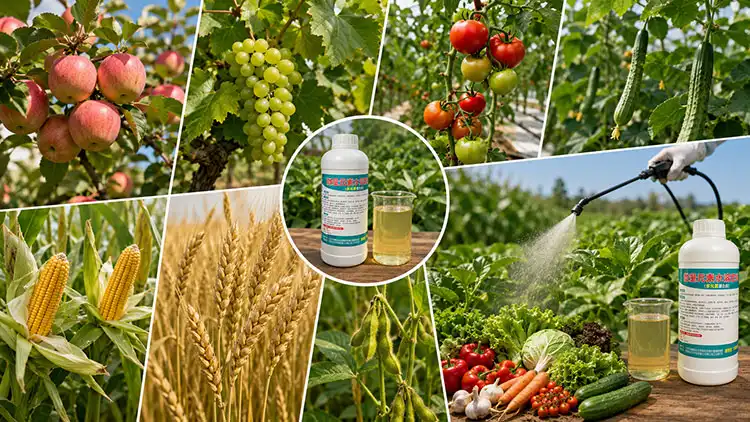
Multi-element foliar spraying fertilizer works best on grains, apples, citrus fruits, tomatoes, and grapes because they are high-value crops. These plants quickly take in nutrients through their leaves, especially when the dirt doesn't let their roots absorb them. Foliar nutrition is added to standard soil fertilization programs during key growth stages in orchards, vineyards, and veggie farms to improve fruit quality, make plants more resistant to disease, and get higher selling yields.
Understanding Multi-Element Foliar Spraying Fertilizer
Multi-element Foliar Spraying Fertilizers are made with carefully measured mixes of macronutrients (like nitrogen, phosphorus, and potassium), secondary nutrients (like calcium, magnesium, and sulfur), and important micronutrients (like iron, zinc, manganese, copper, boron, and molybdenum) that are designed to be applied to leaves. Unlike regular solid fertilizers that are mixed with soil, these liquid or water-soluble powder formulations provide nutrients directly to plants through their leaves. This method has special benefits in some farming situations.
The Science Behind Foliar Absorption
Different parts of plant leaves, like the surface layer and stomatal holes, take in nutrients in specific ways. Using EDTA, amino acids, or organic complexing agents in advanced chelation technologies keeps nutrients steady and accessible for plants to quickly move around in their tissues. This method of delivery is especially helpful when high soil pH, compaction, dry stress, or temperature limits restrict root nutrient uptake. Multi-element foliar spraying fertilizer can get to metabolic sites five to twenty times faster than soil-applied ones, which makes them very important during times of high demand for growth.
Key Technical Advantages for Commercial Agriculture
Fixing nutrient deficits quickly is one of the most important benefits for food production that needs to be done quickly. When visual deficiency signs show up or tissue tests show imbalances, foliar applications give the plant instant nutrient support that stops yield losses during the most important reproductive stages. These formulas also work for "hidden hunger" situations where plants don't show any clear signs of not getting enough food but respond very well to extra nutrition. The impact on the environment is still smaller than when too much fertilizer is put on the land. This is because targeted leaf feeding lowers the risk of nutrient runoff and groundwater pollution while also making farming operations more efficient at using nutrients.
Which Crops Benefit Most from Multi-Element Foliar Spraying Fertilizer?
Foliar nutrition programs have different effects on different types of crops because of their physiological traits, production methods, and nutrient demand patterns. By understanding these crop-specific benefits, you can make better choices about what to buy that are in line with your business focus.
High-Value Orchard Crops
Strategic foliar feeding plans are very helpful for citrus, apple, pear, and stone fruit farms. These perennial plants have special problems, like having deep roots in soils that could be troublesome, and they also have longer growing seasons with clear peaks in nutritional demand. Applying zinc and boron to the leaves of plants before they bloom increases the number of fruits that grow and stops physiological problems that lower usable yields.
Chelated vitamin foliar sprays work really well for citrus growers whose soils are alkaline and lock up iron and manganese. The straight leaf application gets around the limits of the soil's chemistry, stopping chlorosis and keeping the plant's ability to make food all through the growing season. Apple growers use multi-element foliar spraying fertilizer formulas to boost fruit size, color intensity, and sugar content during the fruit growth stages. These are all important quality factors that fetch high market prices. Post-harvest foliar treatments help trees heal by restoring nutrient stores that were used up during heavy crop loads. This sets the stage for future seasons with high yields.
Vegetable Production Systems
Extra feeding of the leaves of greenhouse tomatoes, field cucurbits (cucumbers, melons, and squash), peppers, and leafy greens has great results. These plants only produce for a short time, and they need a lot of food during the fast vegetative growth and flowering stages. The precise fuel these high-intensity systems need is provided by multi-element foliar spraying fertilizer.
Foliar treatments of calcium and boron are good for tomato farms because they lower the risk of blossom-end rot and keep fruit firm during shipping. Foliar nutrients are used by cucurbit growers during vine expansion and early fruit development to keep the plants growing quickly without having too much vegetative biomass, which gets in the way of fruit production. When soilless media or hydroponics are used for controlled environment farming, foliar nutrition is used as a safety net in case problems in the root zone, like too much salt, pathogens, or not enough air, temporarily stop plants from taking in nutrients. Providing balanced nutrition through leaves helps keep up with production plans and quality standards, which are important for keeping supply agreements.
Field Crops and Cereals
Wheat, corn, soybeans, and cotton cover a huge amount of land in American farmland, and even small increases in yield can bring in a lot of money. Foliar nutrition applications set to match peak nutritional demand times are good for these broadacre crops. At the flag leaf stage, when the number of kernels per head is known, wheat farmers use multi-element foliar spraying fertilizers. These products give nitrogen and micronutrients that improve protein content and test weight, which are both important selling factors.
When the land is dry, corn farms often run into cases where the topsoil loses too much water, making granular fertilizer useless during important reproduction stages. Applying nutrients to the leaves during tasseling and early grain fill helps keep kernel growth and end-of-bushel weight steady. The benefits of reducing stress are especially useful during dry years, when applying nutrients to the leaves helps the plant's body keep working even though root activity is lower. Foliar feeding works well for soybeans during pod fill, and adding molybdenum, iron, and manganese helps fix nitrogen and boost photosynthesis during the last few weeks before the yield is decided.
Specialty and High-Value Crops
Foliar nutrition gives accuracy, which is useful for vineyards that grow high-quality wine grapes, unique herb farms, and medicinal plant farming. These plants often fetch higher prices if they meet certain quality standards, like flavor profiles, essential oil concentrations, or active chemical levels, that can be controlled through focused nutrition.
During véraison, grape growers use plant nutrients to change the chemistry of the berries, how they turn color, and how sugar builds up in them. These changes affect how the wine is classified based on its quality. Premium viticulture operations are flexible because they can fine-tune vine nutrition without changing the land or how the watering is managed. Growers of specialty crops like Corydalis yanhusuo use multi-element Foliar Spraying Fertilizers that were specially made for these plants. These formulations meet the specific nutritional needs of these crops and help the bioactive compound synthesis that determines product value.
How to Effectively Apply Multi-Element Foliar Fertilizer?
Foliar feeding programs that work need to pay attention to how they are mixed, when they are applied, and safety rules. Knowing these practical details helps the product work better and give you the best return on your investment.
Proper Mixing and Tank Compatibility
Always start with clean, good-quality water—ideally water with a normal pH between 6.0 and 7.0 and a small amount of hardness. Before adding multi-element foliar spraying fertilizers, fill spray tanks halfway. Then, fill them all the way to the top while keeping the churning going. Premium formulations don't clog up nozzles in current precise spray equipment like drone applicators and ultra-low-volume systems because they dissolve completely in water.
Before making tank mixes that include spray fertilizers and pesticides, test them in jars to make sure they are compatible. Most buffered multi-element Foliar Spraying Fertilizers don't change when mixed with common pesticides and fungicides. But, don't mix them with highly alkaline copper products or calcium-sensitive herbicides because they might cause precipitation. Adding silicone-based lubricants helps droplets spread better on waxy leaf surfaces and makes it rain more reliably, which is especially important when the weather is uncertain. Choosing the right adjuvants helps the spray stay in place longer and gives nutrients more time to be absorbed before it might rain.
Optimal Timing and Environmental Conditions
When aerial feed is applied, it has a giant effect on how well it works. Choose early morning or late afternoon, when stomata are still open and relative humidity levels allow droplets to stay on leaf surfaces for longer. Avoid applying in the middle of the day, when temperatures are highest and the sun is shining the brightest, which can cause the water to evaporate quickly and the leaves to burn.
Align apps with important growing stages, like when plants need the most nutrients and are most sensitive. Applications made before blooming help the reproductive system grow, and applications made after fruit set improve size and quality. Late-season treatments before harvest help annual plants build up their nutrient reserves, which helps them survive the winter and grow quickly in the spring. Keep an eye on the weather prediction to make sure there is a rain-free window of at least four to six hours after application. This will give the product time to absorb before it might be washed off.
Safety and Environmental Stewardship
When mixing or applying something, you should always wear the right safety gear, like gloves, eye protection, and breathing protection. Keep items in their original cases, out of direct sunlight and extreme temperatures, and make sure that your collection is rotated regularly. To keep the environment clean, read the labels and follow the advice about safety zones near water and sensitive ecosystems.
Regularly calibrate spray tools to maintain accurate application rates that avoid phytotoxicity from too much application and ineffectiveness from too little application. Write down when, how much, and how the crop responded to the treatment so that you can learn more about the spot and make better decisions about future nutritional management. This care method fits with the ideas of sustainable agriculture and stays in line with changing government rules for agriculture.
Comparing Multi-Element Foliar Fertilizer with Other Fertilization Methods
When purchasing managers look at different types of fertilizer, they need to be able to easily compare foliar nutrition to other methods so they can make smart buying decisions.
Foliar Versus Traditional Soil Fertilization
Soil-applied fertilizers are still an important part of complete crop feeding plans because roots take in large amounts of nutrients. Soil treatments have a lot of problems, though. For example, they can't fix nutrients (especially phosphorus in alkaline soils), they lose nutrients when the soil is sandy, and they take a long time to work when the soil is cold or there is a drought. Multi-element foliar spraying fertilizer is a great addition to soil programs because it can fix problems quickly and help plants when they are stressed, and their roots stop working as well.
A study of prices shows that applying nutrients to leaves usually needs less of them overall because they are taken in more efficiently, but the cost per acre may seem higher than the cost of big soil fertilizers. The real economic comparison should take into account how well nutrients are used, how little damage is done to the environment, and how better food quality leads to higher market prices. Logistics also favor multi-element Foliar Spraying Fertilizers when field access issues make it impossible to apply the products to the soil at the right time or when established crops make absorption impossible.
Organic Versus Synthetic Formulations
There are both standard manufactured multi-element Foliar Spraying Fertilizers and organically approved products on the market. Each has its own benefits. Organic products made from plant oils, seaweed, or minerals that are found naturally are liked by approved organic businesses and customers who want products that are made in a way that doesn't harm the environment. In addition to minerals, these goods often contain helpful organic substances that boost plant defense systems and soil biological activity.
Synthetic formulas usually have higher amounts of nutrients and more accurate chemical ratios that are made to fit the needs of each crop. Synthetic goods are stable in a wider range of pH levels and tank mix situations thanks to their improved chelation chemistry. When choosing between organic and synthetic choices, procurement decisions should take into account the need for approval, the needs of the crop, and the company's market positioning strategy. Many forward-thinking businesses keep both kinds of products in their fertility plans and use them depending on the situation and the needs of the market.
Procurement Guide for Multi-Element Foliar Spraying Fertilizer
To make sure that the products you buy work well and are reliable, you need to look at more than just prices when you are strategically buying foliar nutrition products.
Evaluating Supplier Credentials and Product Quality
Manufacturers you can trust give you thorough certificates that show the promised amount of nutrients, chelation rates, and heavy metal testing results. Make sure that any possible suppliers follow quality control procedures that are up to international standards and have the right certifications for the places you want to reach. Companies like Sciground, started by agricultural researchers with over twenty years of experience in fertilizer production, possess the technical know-how to create effective multi-element foliar spraying fertilizer products for various crops.
Before making big purchases, ask for samples of the goods to try out in the field. Do side-by-side tests to see how well they dissolve, how stable the tank mix is, how the crops react, and if there are any phytotoxicity worries in your surroundings. This way of reducing risk keeps mistakes from being expensive and builds trust in relationships with suppliers. Check to see what kind of technical support the seller offers. Having access to agronomic knowledge can help you get the most out of application methods and fix problems that come up during the growing season.
Pricing Structures and Bulk Purchasing Strategies
In large-scale farming businesses, volume savings have a big effect on the cost per acre. You can get better prices and keep your inventory flexible by negotiating price levels based on annual purchase agreements instead of individual order numbers. To get better prices from makers, you might want to look into cooperative purchasing deals with nearby businesses or dealer networks that pool demand.
When you compare providers, you should look at the total landed costs, which include foreign shipping, customs taxes, and storage fees. When compared to foreign goods, items made in the United States often have better logistics, such as faster delivery times, lower shipping risks, and easier regulatory compliance. Responsive sellers offer flexible payment terms and seasonal stocking programs that help businesses manage their cash flow during busy buying times for inputs and make sure they have products on hand when they need them most.
Conclusion
Multi-element foliar spraying fertilizer provides targeted nutrition and works in conjunction with full crop fertility plans in a variety of farming settings. When foliar applications are used to fix nutritional problems during key growth stages, high-value orchards, dense veggie systems, and broadacre field crops all show measurable reactions. These items are useful for current agricultural management because they can quickly absorb, precisely supply, and reduce stress. To make implementation work, you need to know what each crop needs, how to apply it correctly, and how to build smart relationships with suppliers that ensure stable product quality. Farmers and ranchers can improve crop growth, make products of higher quality, and make more money even in tough growing conditions by adding plant nutrition to balanced fertility programs.
FAQ
How frequently should I apply multi-element foliar fertilizer during the growing season?
How often you apply it depends on the type of food and your nutritional goals. Two to four applications set around key growth stages are good for most businesses. When they are actively growing, high-value perennial crops may get applications more often, every fourteen to twenty-one days. On the other hand, yearly field crops only get applications one to three times during the reproductive stages, when they need the most nutrients.
Can foliar feeding completely replace soil fertilization programs?
Foliar nutrition is not the same as soil fertilizer; it is an addition to it. Soil applications provide large amounts of nutrients that crops need all season long, while multi-element foliar spraying fertilizer treatments allow for quick repair and support during times of stress. The best way to do things is to use both methods together, with soil chemicals as the base and multi-element foliar spraying fertilizer treatments for fine-tuning.
What safety precautions should applicators observe when handling these products?
When mixing strong goods, make sure you wear the right safety gear, like gloves that can handle chemicals, safety glasses, and respirators. Don't use multi-element foliar spraying fertilizer when it's windy because it will drift to places it's not supposed to be. Keep the storage area clean and away from food, feed, and living places. Always read and follow the directions on the label for mixing rates, limitations on use, and time between re-entry.
Partner with Sciground for Superior Foliar Nutrition Solutions
Our expert team from the Northwest Academy of Agricultural Sciences created research-backed multi-element foliar spraying fertilizer formulas for Sciground. Professor Liang Dejun, who is our top expert, has been researching organic fertilizers for more than twenty years and uses this knowledge in all of our products. Our 6,000-square-meter factory in Hanzhong makes high-quality multi-element foliar spraying fertilizer products that meet strict quality standards and support environmentally friendly farming methods.
We know the special problems that American farmers, ranchers, and agricultural dealers face when they try to find multi-element foliar spraying fertilizer providers they can trust. Our all-around method includes technical advice from choosing the right spot to managing the project after it's done, so you get the best results from our goods. When you buy in bulk from us, you can save a lot of money and get high-quality multi-element foliar spraying fertilizer. We also have helpful customer service that will make your business's food management program stronger. Email our team at [email protected] to talk about unique formulations, get samples of our products, and look into ways to work together to improve your crop nutrition plan.
References
1. Johnson, M.T., Agricultural Foliar Nutrition: Principles and Applications, University Press, 2023.
2. Stevens, R.K. and Williams, D.P., Micronutrient Management in Modern Crop Production Systems, International Agronomy Journal, Volume 45, 2024.
3. Chen, L., Martinez, J.F., and Thompson, B.A., Comparative Efficacy of Foliar Versus Soil-Applied Fertilizers in Orchard Systems, Horticultural Science Review, Volume 38, Issue 2, 2023.
4. Anderson, P.G., Practical Guide to Foliar Fertilization for Commercial Growers, Agricultural Extension Publication Series, 2024.
5. Roberts, S.M. and Chang, Y.H., Chelation Chemistry in Agricultural Foliar Nutrition Products, Journal of Plant Nutrition Technology, Volume 52, 2023.
6. Williams, K.E., Economic Analysis of Foliar Nutrition Programs in High-Value Crop Production, Agribusiness Economics Quarterly, Volume 29, Issue 4, 2024.

Sciground
Shanrangde, in collaboration with a team of experts from the former Academy of Agricultural Sciences, focuses on developing patented organic fertilizers, including those specifically formulated for Corydalis rhizome. Chief expert Professor Liang Dejun, with over 20 years of industry experience, provides one-stop technical guidance from site selection to field management, helping farmers increase production and income.
Formulated by the original expert team from the Academy of Agricultural Sciences · Focused on organic nutrients specifically for crops
Contact us now to customize a green nutrition solution for your farmland.
Recommended Blog

How Multi element Foliar Spraying Fertilizer Support Healthy Crops?

How Can Micronutrient Fertilizers Reduce Environmental Impact?

Can Cordydalis tuber Specialized Organic Fertilizer Increase Harvest Quality?


What Makes Organic Fertilizer a Smart Investment for Growers?
