How Can Micronutrient Fertilizers Reduce Environmental Impact?
Understanding Micronutrient Fertilizers and Their Environmental Role
- Understanding Micronutrient Fertilizers and Their Environmental Role
- How Micronutrient Fertilizers Reduce Environmental Impact?
- Comparing Micronutrient Fertilizer Types and Their Environmental Benefits
- Integrating Micronutrient Fertilizers into Sustainable Procurement Strategies
- Best Practices for Application to Maximize Environmental Benefits
- Conclusion
- FAQ
- Partner with Sciground for Environmentally Responsible Micronutrient Solutions
- References
Micronutrient fertilizers are better for the environment because they provide trace elements like zinc, iron, manganese, and boron to plants more accurately. This stops nutrients from running off and prevents soil from breaking down. Traditional uses of macronutrients often result in oversaturation and leaching. Targeted micronutrient delivery, on the other hand, improves plant uptake, lowers the total fertilizer load, and helps keep soil ecosystems balanced. This method keeps groundwater clean and stops the greenhouse gas emissions that come from using too much fertilizer. It encourages sustainable farming while keeping food quality and production high.
Understanding Micronutrient Fertilizers and Their Environmental Role
The Critical Difference Between Micronutrients and Macronutrients
I've worked with farmers and ranchers across the United States for 20 years, and I've seen a big change in how we think about food nutrition. Nitrogen, phosphorus, and potassium get all the attention when people talk about fertilizer, but trace elements do important biological work in the background. Zinc turns on more than 300 enzyme systems in plants, iron makes chlorophyll, manganese powers photosynthesis, and boron controls calcium uptake and cell wall formation. These micronutrient fertilizers do more than just feed plants; they also control complex biological processes that decide how well crops will grow and how much they will produce.
Our team at Sciground has noticed that when these trace elements are missing, they have effects that spread through farming systems. Insufficient zinc in corn lowers the yield by 20 to 30 percent and pushes farmers to add more macronutrients, worsening environmental problems. We looked at soil samples from hundreds of farms where too many macronutrients covered up a lack of micronutrients. This created a circle of decreasing benefits and rising environmental costs.
How Do Nutrient Imbalances Trigger Environmental Degradation?
Ignoring the balance of micronutrients has effects on the world that go far beyond individual areas. Plants can't use nitrogen and phosphorus properly if they don't have enough important trace elements. This wasteful behavior causes nutrients to build up in the soil, and when it rains heavily, these nutrients are flushed into rivers. According to research from the USDA Agricultural Research Service, fields that have proper micronutrient ratios use nutrients 25–40% more efficiently than fields that only receive NPK treatments.
The microorganisms in the dirt are also lacking in micronutrients. Beneficial fungi and bacteria need trace elements to make enzymes and keep their cells working. When we use the right micronutrient fertilizers, we help the communities of microbes that naturally recycle nutrients, kill pathogens, and make the soil stronger. Having more living things in the soil makes it less reliant on chemicals and better able to handle natural stresses like drought or too much rain.
How Micronutrient Fertilizers Reduce Environmental Impact?
Addressing Conventional Fertilization Challenges
Nutrient runoff is putting more and more stress on American agriculture. The Environmental Protection Agency says that waste from farms pollutes more than 60% of the water areas in the United States. The main cause of this problem is the use of too many macronutrients. Farmers often use nitrogen and phosphorus based on growth goals, but they don't always think about how well the plant can take these nutrients. If plants don't absorb enough micronutrients, they leave behind a lot of fertilizer in the soil.
People in rural areas are at serious risk of getting sick because nitrate leaching pollutes groundwater. Greenhouse gas releases from denitrification processes in soils that are too wet add a lot to agriculture's carbon footprint. These environmental problems come from a basic misunderstanding: we consider crop nutrition to be a simple NPK equation instead of understanding the complex balance needed for proper nutrient digestion.
The Precision Application Advantage
Soil testing changes the way we handle micronutrients in a big way. At Sciground, we tell all farmers, ranchers, and dealers that before they fertilize, they should do a full study of the soil. These tests show us exactly what micronutrients our bodies are missing, so we can come up with specific answers. When we worked with a vegetable farmer in California, they used 35% less fertilizer overall after using micronutrient-informed precision application. At the same time, their usable yield went up by 18%.
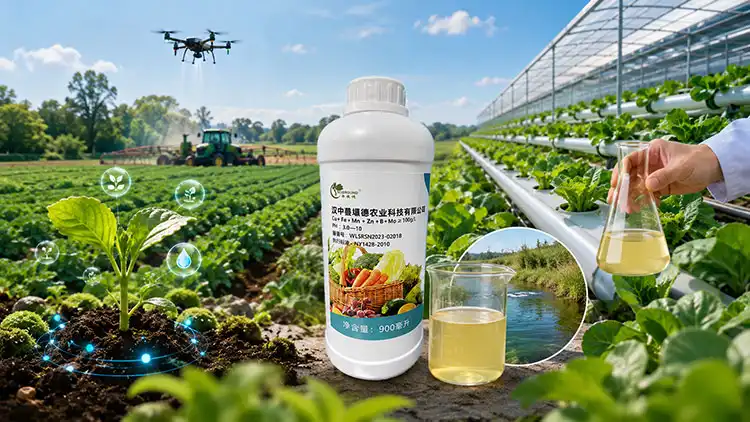
Our water-soluble micronutrient fertilizers have the exact trace elements that fill in these gaps without putting too much stress on the earth like bulk feeding does. The mixture makes plants healthier and more resistant by making it easier for them to absorb nutrients, which helps them use nutrients more efficiently. These goods make the leaves bigger and thicker, help the plants flower and bear fruit, improve the size and color of the fruit, and ensure that the quality of all the fruit stays the same over time.
Real-World Case Studies Demonstrating Ecological Benefits
Our team worked with a hydroponic cabbage farm in Arizona to improve their fertigation program. Targeted micronutrient fertilizers were added to their liquid feed method, which allowed the animals to take in all the nutrients without any running off. The closed-loop method they used showed that precise micronutrient supply stops environmental loss and grows the best crops. The operation cut water use by 22% and stopped all water from going into nearby water systems.
Another strong example is the fruit trees in Europe. Apple farmers in Washington State had problems with calcium and boron levels that wouldn't stay right, which caused problems with the fruit and led to too much nitrogen being used to try to fix the issue. By using aerial micronutrient sprays during important growth stages, these farms cut their nitrogen use by 28% while also improving the quality of their fruit. The lower nitrogen load directly led to lower nitrous oxide levels and less nitrate leaching into groundwater.
Strategic Procurement for Environmental Compliance
Choosing the right micronutrient provider is important for both the economy and the environment for dealers and procurement workers who run large-scale operations. The standard of products made by different companies changes a lot. Suppliers you can trust give you full certificates of analysis, show that the product is bioavailable over time, and offer technical help to make sure you use it correctly. We've seen businesses have trouble with low-quality micronutrient goods that settle in watering systems or have impurities that hurt the living things in the soil.
Environmental protection is becoming a bigger factor in buying things. Many states now have rules that require nutrition management plans to include all the inputs used. By working with suppliers who value sustainable manufacturing and clear ingredient sources, you can keep your business ahead of changing rules and show customers that you care about the environment by using sustainable farming methods.
Comparing Micronutrient Fertilizer Types and Their Environmental Benefits
Synthetic Versus Organic Formulations
To properly evaluate micronutrient fertilizers, you need to know the main differences between manufactured chelated chemicals and organic complexes. Synthetic chelates, such as EDTA-bound trace elements, are stable across a wide range of pH levels and can be used right away by plants. Their effect on the world depends on how people make them and how quickly they break down. Heavy metals can move around in some situations because EDTA stays in the soil, which is a problem for communities that are already vulnerable.
Organic sources of micronutrients that come from plant products or amino acid combinations have clear benefits. These mixtures break down naturally, feed the microbes in the soil, and lower the risk of heavy metals moving around. Our micronutrient fertilizers are made up of oligopeptides and trace elements that work as both biostimulants and carriers of nutrients. Plants take these complexes in directly, skipping metabolic routes that use a lot of energy and accelerating the healing process after stress. The organic matter part makes the soil stronger and better at holding water, which has many more natural benefits than just providing nutrients.
Which micronutrient product to use relies on the needs of the crop, the state of the soil, and the environment's top objectives. High-value specialty crops often justify the use of premium organic formulas that provide both nutritional and biostimulant benefits. In places where they are safe to use, broad-acre crop farming may use cost-effective synthetic chelates. When responsible procurement is used, both choices are based on site-specific factors instead of ideological views.
Foliar Application Versus Soil Incorporation
The way an application is made has a big effect on how the setting turns out. Foliar micronutrient sprays provide nutrients straight to the surfaces of leaves, fixing deficiencies quickly with little product use. This focused method gets rid of the interactions in the soil that can bind trace elements and make them less available. Foliar zinc applications might use only 0.5 pounds per acre, compared to 10-15 pounds for soil applications. This technique greatly reduces the amount of material used and the damage done to the environment.
Micronutrient fertilizers that are mixed into the soil help bacteria communities grow and store nutrients for the long run. When made correctly, goods don't leach and are available all through the growth season. Our water-soluble micronutrient mixes are designed for fertigation systems and combine the precision of applying nutrients directly to the leaves with the long-term benefits of applying nutrients to the soil. These liquid fertilizers work perfectly with drip watering systems, letting them be used often in low doses that match how plants take in nutrients and get rid of waste.
The environmental math favors application methods that get the most out of the crop while causing the least amount of waste. Foliar sprays work best during important growth stages or times of stress, when nutrients need to get to plants quickly to keep them from losing their output. Soil treatments give plants the basic nutrients they need to survive in various weather situations. Integrated programs that use both ways work best for the environment in a wide range of business situations.
Integrating Micronutrient Fertilizers into Sustainable Procurement Strategies
Evaluating Supplier Credentials and Product Efficacy
When purchasing nutritional fertilizers for farms or stores, procurement workers have to make tough choices. Supplier reputation includes more than just marketing claims. It also includes performance data that can be checked and clear production. At Sciground, we follow strict quality control rules during the whole production process. Before being released, each batch is tested in a lab to make sure that the amounts of trace elements, pH stability, and viscosity are correct.
Bioavailability, or the amount of nutrients that plants actually take in, affects how well a product works. A lot of the time, cheap micronutrient goods have chemicals that don't dissolve well or chelating agents that aren't right for the job, so they solidify in the field. These poor recipes lose money and don't fix plant problems, which causes more damage to the environment from too much fertilization. Instead of depending only on guaranteed analysis labels, we tell sellers to ask for independent trial data that shows how the crop really responded.
When you use soil testing in the decision-making process, buying micronutrients becomes more like precision gardening. Testing services find specific problems in different production zones, which lets you choose the right product. Our technical team is eager to help farmers, ranchers, and traders understand the results of soil tests and create personalized micronutrient plans that meet environmental goals and improve crop performance.
Logistics and Carbon Footprint Reduction
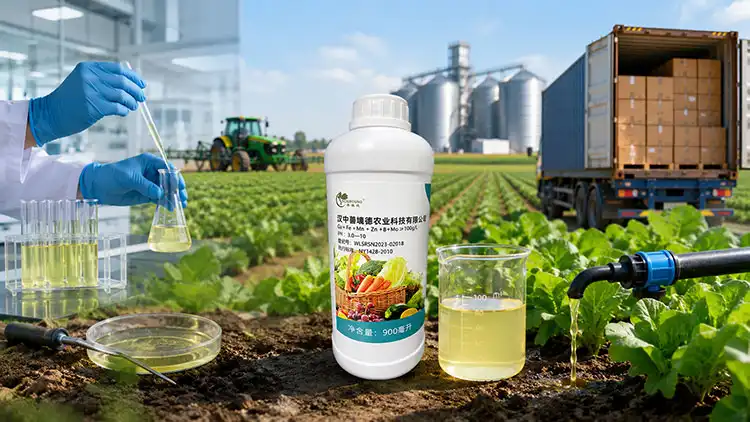
The environmental effect of micronutrient fertilizers depends greatly on how well they are distributed. When you buy in bulk, you save money on shipping costs and lower the amount of waste that comes from packing. In freight containers, concentrated liquid formulas take up less space than diluted solutions or granular goods. Our factory in Hanzhong uses energy-efficient tools to make things, which cuts down on pollution while still meeting high-quality standards.
By choosing local suppliers, you can cut down on supply lines and help local farming economies. But foreign sourcing might be better for the environment if providers practice better environmental practices and reduce transportation pollution by running their businesses more efficiently. When shipping, application tools, and product effectiveness are all taken into account, our water-soluble micronutrient concentrates leave a 40% smaller carbon footprint per treated acre than traditional granular options.
Sciground's Commitment to Sustainable Solutions
The idea behind our business is "virtue as the foundation, cultivating blessings far and wide." This is what drives our work with agricultural research institutions to create micronutrient fertilizers that solve real-world environmental problems. Our water-soluble products with multiple elements include trace elements in formulations that are best for a wide range of crop needs, from specialty veggies to fruit trees and field crops.
We've shown that our clients' activities have big environmental benefits. After our micronutrient program was put into place, a Midwest corn-soybean combination cut phosphorus applications by 30% while keeping yield trends and improving measures of soil health. The farm stopped about 1,200 pounds of phosphorus from running off each year, which improved the quality of water downstream. When micronutrient nutrition gets the attention it deserves, these measurable results indicate that environmental responsibility and farming output go hand in hand.
Our certifications and testing methods are in line with strict national standards. This gives businesses that are trying to get organic certification or taking part in environmental care programs peace of mind. We keep full records of where the raw materials come from and where the finished product is delivered. This helps you meet your environmental reporting requirements and customer openness goals.
Best Practices for Application to Maximize Environmental Benefits
Timing and Dosing Strategies
The best time to apply micronutrients is based on the natural needs of the crop, not on the schedule. During its early vegetative growth stages, a plant's basic structure and ability to handle stress develop. Using micronutrient fertilizers during this important time builds strong root systems and efficient photosynthetic machinery, which help the crop achieve resource-efficient output all season long. Our expert advice focuses on apps that are best for each growth stage and get the most from the product with the least use.
Accurate dosing stops both shortage and poisoning while reducing environmental damage. Too much of a micronutrient can cause interactions that make it harder for the body to absorb other important nutrients. Zinc that is too high can mess up the digestion of iron, and manganese that is too high can stop the intake of calcium and magnesium. To fix these problems, more fertilizer has to be used, which exposes the environment to more chemicals. Soil and tissue tests provide us with the information we need to adjust dosing that keeps the right amounts of nutrients.
With our water-soluble micronutrient fertilizers, you can use fertigation devices or sprayer adjustments to get the right amount of nutrients to each plant. The rapid absorption feature makes sure that plants respond quickly, so you can see for yourself that the application worked. Over the course of several growing seasons, this feedback loop helps farmers make their plans better and better, using resources more efficiently.
Integration with Comprehensive Nutrient Management
Micronutrient fertilizers work best when used as part of a well-balanced fertility plan that takes all the important factors into account. Trace elements are needed for macronutrient uses; high nitrogen rates make zinc and iron needs go up the most. Coordinating the supply of micronutrients with NPK applications stops deficits that make it harder for plants to use nutrients efficiently. We suggest split applications that give micronutrients before the peak times of macronutrient uptake. This way, there will be enough trace elements available when metabolic demand rises.
Production tools can also be compatible. Our formulas are perfect for organic certification programs because they meet the input needs and provide the functional benefits needed for competitive yields without using synthetic poisons. Our liquid micronutrient fertilizers work especially well in hydroponic and controlled environment farming because they can be easily integrated into automatic fertigation controls that make sure the right amount of nutrients is delivered at the right time for each crop.
Monitoring and Quantifying Environmental Improvements
The sustainability loop is closed by evaluations that are based on data. Tissue tests done after application show that the nutrients were properly absorbed and help us make changes for future crops. Testing the soil shows changes in the amounts of nutrients and organic matter that show the soil is getting healthier over time. Monitoring the environment goes beyond the field line. For example, keeping an eye on the water quality in nearby waterways or groundwater wells shows that nutrients are being lost less quickly.
We help our clients figure out how much good they do for the earth so they can report on their sustainability or join conservation projects. When you compare how efficiently nutrients were used before and after specific micronutrient programs were put in place, you can see that less fertilizer was used per unit of production. These measurements lead to lower risks of waste, fewer greenhouse gas emissions, and better environmental results that meet the needs of consumers and government agencies that are becoming more strict.
Conclusion
Getting farming to leave less of an impact on the environment needs a wide range of methods that take into account more than just simple NPK recipes for crop feeding. Micronutrient fertilizers are important for achieving sustainable development, which means keeping up production while protecting natural resources. Farmers and ranchers can greatly reduce the use of resources by carefully applying products based on soil tests, choosing products that are both effective and safe for the environment, and incorporating these products into comprehensive nutrient management plans. Less waste and better protection of groundwater are just a few of the environmental benefits. Other benefits include better soil biology and lower greenhouse gas emissions. As sustainability becomes more important to people in agriculture, working with educated sources who are committed to making products that are good for the environment sets businesses up for long-term success in markets that are always changing.
FAQ
What makes micronutrient fertilizers more environmentally friendly than traditional fertilizers?
Micronutrient fertilizers meet specific plant nutritional needs with a small amount of product. This lowers the overall amount of fertilizer used and the environmental risks that come with it. Plants that don't have enough trace elements can't use macronutrients properly. This leaves too much nitrogen and phosphorus in the soil, where it can leach into groundwater or run off into surface water. Targeted uses of micronutrients fix deficits that make it harder for plants to use nutrients efficiently, which lets them receive and use macronutrients properly. This improvement lowers the amount of fertilizer that needs to be used while keeping outputs the same. This directly lowers the amount of waste and greenhouse gas emissions caused by too much nitrogen.
Can organic operations use micronutrient fertilizers effectively?
Many micronutrient sources are allowed when something is certified organic, especially those that come from natural mineral reserves or plant-based combinations. Organic micronutrient fertilizers give your soil trace elements in a way that doesn't interfere with natural soil processes or with certification rules. Most of the time, these products give you extra benefits by adding organic matter to the soil, which makes it stronger and increases the activity of microbes. Our peptide-complexed micronutrient formulas meet the standards for organic inputs and are more bioavailable than simple mineral salts. This makes them perfect for businesses that want to meet certification requirements and get the best crop performance.
How often should soil testing occur to optimize micronutrient management?
For most production systems, checking the soil once a year is enough to keep an eye on things. Samples are taken at regular times during crop cycles so that comparisons are useful. Extra tissue testing during key growth stages is helpful for high-intensity operations like veggie production or trees because it lets them make changes in the middle of the season. When using new management techniques or seeing problems with crop performance that can't be explained, testing should happen more often. For most farmers and ranchers, the right amount of information is found between the costs and benefits of doing full testing every two to three years and focused tracking every year.
Partner with Sciground for Environmentally Responsible Micronutrient Solutions
Sciground can help you reach your output and environmental goals with micronutrient fertilizers that have been carefully designed and tested in the field. Our water-soluble goods deliver important trace elements in ways that are designed to be quickly absorbed and give crops the most benefit. As a reputable micronutrient fertilizer producer, we offer both high-quality products and full expert support. This means that we can help you set up precise nutrition plans that are better for the environment and make you more money. Our team, led by Professor Liang Dejun, has been making organic fertilizers for more than 20 years. They can give you personalized advice based on your soil conditions and crop needs. Get in touch with us at [email protected] to talk about how our long-lasting micronutrient solutions can help your business meet its environmental and efficiency goals.
References
1. Alloway, B.J. (2008). Micronutrient Deficiencies in Global Crop Production. Springer Science and Business Media, Netherlands.
2. Fageria, N.K., Baligar, V.C., and Clark, R.B. (2002). Micronutrients in Crop Production. Advances in Agronomy, Volume 77, Academic Press.
3. Shuman, L.M. (2006). Micronutrient Fertilizers: Sources, Evaluation, and Use. In: Managing Nutrients and Pathogens from Animal Agriculture, NRAES Publication.
4. Bell, R.W. and Dell, B. (2008). Micronutrients for Sustainable Food, Feed, Fibre and Bioenergy Production. International Fertilizer Industry Association, Paris.
5. Marschner, P. (2012). Marschner's Mineral Nutrition of Higher Plants, Third Edition. Academic Press, London.
6. Havlin, J.L., Tisdale, S.L., Nelson, W.L., and Beaton, J.D. (2014). Soil Fertility and Fertilizers: An Introduction to Nutrient Management, Eighth Edition. Pearson Education, Upper Saddle River.

Sciground
Shanrangde, in collaboration with a team of experts from the former Academy of Agricultural Sciences, focuses on developing patented organic fertilizers, including those specifically formulated for Corydalis rhizome. Chief expert Professor Liang Dejun, with over 20 years of industry experience, provides one-stop technical guidance from site selection to field management, helping farmers increase production and income.
Formulated by the original expert team from the Academy of Agricultural Sciences · Focused on organic nutrients specifically for crops
Contact us now to customize a green nutrition solution for your farmland.
Recommended Blog

How to Source Quality Wholesale Fruit Tree Organic Fertilizer?


How to Select the Right Organic fertilizer for thistle Supplier?

Can Micronutrients Water-soluble Fertilizers Prevent Nutrient Deficiencies?

Does Fruit Tree Organic Fertilizer Work for Citrus and Apple Trees?

