Top Organic Fertilizers for Healthy Fruit Trees
Introduction
- Introduction
- Understanding Organic Fertilizers for Fruit Trees
- Choosing the Right Organic Fertilizer for Your Fruit Trees
- Applying Organic Fertilizer to Fruit Trees: Best Practices
- Procurement Insights for Bulk Organic Fertilizer Buyers
- Future Trends and Innovations in Organic Fertilizers for Fruit Trees
- Conclusion
- FAQ
- Partner with Sciground for Premium Fruit Tree Organic Fertilizer Solutions
- References
Specialised Fruit Tree Organic Fertilizer stands out as one of the best organic ways to feed a tree. It is a developed bio-active amendment made just for permanent fruit-bearing crops. Unlike other products, these microbial fermentation fertilisers time the release of nutrients with the stages of a tree's life cycle, from dormancy breaking through fruit expansion. This solves important problems like soil exhaustion syndrome and the loss of trace elements that happen in large-scale commercial orcharding operations.
Introduction
For commercial fruit production to work, feeding plans must strike a balance between short-term output and long-term land health. Organic fertilisers have gone from being a niche option to a common answer that modern buyers who want to stay ahead of the competition are using. This detailed guide is made to help buying managers, farm engineers, wholesalers, and original equipment manufacturers (OEMs) find their way around the complicated world of organic crop inputs.
Organic fertilisation has business benefits in addition to environmental ones. Research shows that properly made organic amendments increase the soil's ability to share cations, lower its need for expensive manmade inputs, and lower the risks of soil breakdown and salt buildup. The choices we make today about what to buy affect the growth of orchards for years to come. This is why smart selection criteria are important for all kinds of businesses, from small organic farms to big commercial ones.
The framework of this guide is meant to cover the whole process of buying, from knowing basic product features to strategic sourcing issues and new market trends. The information given comes from both science study and real-world experience in the field. It helps people make decisions about what fertiliser to use based on their working goals, budget limits, and values to sustainability.
Understanding Organic Fertilizers for Fruit Trees
Organic fertilisers are carbon-based soil amendments that come from leftover plant material, animal waste, or microbial waste. They work by breaking down minerals in the soil with the help of microorganisms. This organic route slowly releases nutrients, which is very different from manufactured products, which make nutrients available right away but only for a short time.
Composition and Nutrient Delivery Mechanisms
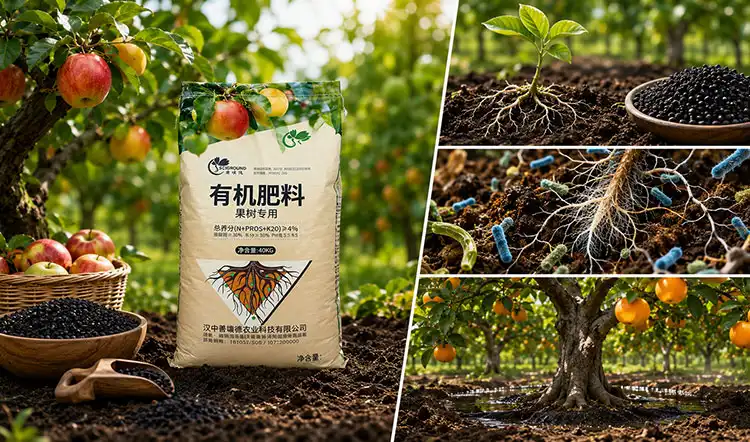
Good organic fertilisers for fruit trees usually have more than 45 per cent organic matter, which comes from sources like composted manure, soybean meal, or leonardite. The bacteria's fermentation process makes fulvic and humic acids, which bind to micronutrients and make them easier for root systems to use. Beneficial bacteria groups, such as Bacillus subtilis and Trichoderma species, colonise the rhizosphere and kill soil-borne diseases while improving the efficiency of nutrient uptake. In special formulas, the NPK rates change depending on the stage of growth. Balanced profiles around 5-5-5 help with general upkeep, while high-potassium profiles like 4-3-8 are more targeted at fruit-filling stages, when potassium needs are highest. Adding chelated calcium, magnesium, boron, and zinc as trace elements can help stop physiological diseases like bitter pit and cork spot, which are major quality problems that make a product less marketable.
Advantages for Commercial Orchard Systems
Organic nutrients solve several problems in output at the same time. By improving the structure of the soil, high-traffic tree floors become less compacted, which makes it easier for water to get in and for roots to grow. The steady release of nutrients fits tree intake rates better than synthetics that dissolve in water, so there is less loss during rainstorms and less chance of groundwater pollution. Studies in different climate zones show that regular organic fertilisation raises the organic carbon content of the soil by 0.3% to 0.8% per year. This is an important factor for keeping old trees productive over the long term. Another important benefit is that it keeps diseases from spreading. Different kinds of microbes that are added by good organic fertilisers fight with harmful organisms for resources and make chemicals that kill microbes, which protect root systems. When organic fertilisation plans are used instead of only synthetic ones, root rot rates drop by 20 to 35 per cent in commercial apple and orange crop studies.
Choosing the Right Organic Fertilizer for Your Fruit Trees
Procurement professionals must evaluate multiple technical and commercial factors when selecting organic fertilisers for large-scale orchard operations. Product specifications extend beyond simple NPK numbers to encompass physical properties, biological activity, and supply chain considerations.
Evaluating Formulation Types and Release Characteristics
For mechanical spreading, granular formulations between 2 and 4 millimetres are most common for Fruit Tree Organic Fertilizer because they can be spread evenly with current equipment. Specifications for moisture content below 20% stop caking during storage and stop the growth of pathogens in bulk storage sites. Liquid concentrates are used in specific ways, like in fertigation systems and spray feeding programs, to give plants substances that have been broken down by enzymes and have a lot of amino acids. The carbon-to-nitrogen ratio has a big effect on how much nitrogen is available. Products that are best between 15:1 and 20:1 provide enough nitrogen without causing brief nitrogen deficits while bacteria in the soil break down organic waste. Ratios outside of this range either give plants too much nitrogen, which hurts the quality of the fruit, or they take nitrogen out of the earth, which causes signs of shortage during key growth times.
Certification Standards and Supplier Verification
Different places have different rules about what is needed to get an organic license, but good providers keep records that show they follow the rules. A USDA National Organic Program certification, an OMRI listing, or a similar foreign certification gives you peace of mind that the product doesn't contain any banned substances and that the production process was done correctly. Before agreeing to big purchases, people in charge of buying things should ask for recent lab tests to confirm the amount of organic matter, vitamin ratios, heavy metal levels, and lack of pathogens. The professional help that a supplier offers should be carefully looked at. Agronomic experts at manufacturers can give you advice on how to use their products based on the type of fruit, the land, and the weather. Having access to field reps for problem-solving and planning for the seasons is more useful than the product itself, especially for businesses switching from synthetic programs or adding more land.
Cost-Effectiveness Analysis
Organic fertilisers usually cost more per unit than manufactured ones, but a full economic study needs to take many things into account. Less need for soil amendments to fix pH and structure issues, lower costs for controlling pests and diseases, and higher prices for approved organic fruit output all balance out the initial costs of inputs. When you buy in bulk from direct makers, you save money on each unit and have more supply security during busy application seasons.
Applying Organic Fertilizer to Fruit Trees: Best Practices
Application timing and methodology significantly influence organic fertiliser effectiveness in commercial orchards. Strategic placement ensures nutrients reach active root zones while minimising waste and environmental impact.
Seasonal Application Strategies
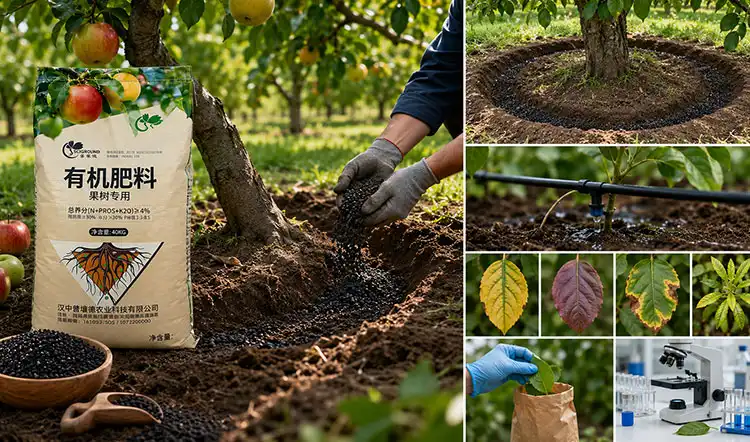
Post-harvest treatments in the autumn provide basic nutrition by replenishing energy stores that were used up while the fruit was being grown. This time takes advantage of the fact that roots are still working during the sleep preparation phase, and the soil warmth helps microbes break down Fruit Tree Organic Fertilizer. Putting a radial ditch or a circle trough at the top dripline puts nutrients where supporting roots are most likely to be. Depending on the age of the tree and the growth of its root system, this can be done to depths of 15 to 30 centimetres. Applications in the spring set to align with budbreak help plants meet the high needs of new growth. By spreading out treatments over the course of the year, splitting the total amount needed between fall and spring, you can keep the supply of nutrients steady throughout the growing season. During the stages of fruit growth, extra liquid formulations applied through drip irrigation or foliar spray give plants instant nutritional support without messing up the earth or roots.
Dosage Calculations and Application Methods
Fruit trees that are already grown usually need 15 to 25 kilograms of good organic fertiliser a year. This amount can be changed based on the soil's fertility, the tree's vigour, and the expected crop load. Soil testing methods help with accurate application rates, which stops both too little and too much. In big farms, mechanical spreaders make sure that the seeds are spread evenly. In smaller businesses, human broadcasting methods followed by shallow incorporation may be used. Fertigation systems make it possible to precisely send organic liquid mixtures through watering systems that are already in place. Filtration standards keep emitters from getting clogged, which usually means screens with 120 mesh or more are needed. When injected during watering cycles, it makes sure that the material is spread out evenly and at the right concentration to keep root systems from being stressed by osmotic pressure.
Identifying and Addressing Nutrient Deficiencies
Visual symptom tracking helps find problems early, so they can be fixed before they hurt the yield. When there isn't enough nitrogen, older leaves turn yellow, and shoot growth slows down. When there isn't enough phosphorus, leaves turn purple. Lack of potassium shows up as border leaf necrosis, which is especially bad when fruits are developing because that's when they need it the most. Lack of certain micronutrients can cause specific symptoms, such as interveinal chlorosis from iron deficiency and rosetting from zinc deficiency. In addition to eye tracking, tissue research tools give a precise measure of the nutrition state. Samples are taken at certain leaf locations and growth stages, and their meaning is based on ranges of amounts that are known to be sufficient for each fruit species. Mid-season changes to fertilisation are based on the results, so feeding plans are optimised based on how well trees actually do instead of just following general advice.
Procurement Insights for Bulk Organic Fertilizer Buyers
Scaling organic fertilization to commercial orchard dimensions requires strategic procurement planning addressing supply reliability, quality assurance, and logistical coordination.
Sourcing Channels and Supplier Relationships
Direct connections with manufacturers have benefits like lower prices, easy access to expert help, and supply security. Companies like Hanzhong Shanrangde Agricultural Technology Co., Ltd. are good examples of combined operations because they do production, research, and development all in one place. Sciground was founded in 2023 and has production facilities that cover 3,500 square meters. The company works with agricultural research schools to create custom formulas that meet the needs of different crops and soil types. Distributor networks make it easy to choose suppliers in different areas and allow for smaller orders, which is helpful for businesses that want to try out goods before signing large contracts. Online platforms give you more ways to find products, but you have to do more research to make sure the products are real and the suppliers are trustworthy. Protocols for verification should make sure that the organic certification is true, ask for recent studies of production batches, and include clear quality requirements in buy deals.
Quality Assurance and Contract Specifications
When you buy bulk organic fertiliser, the contract should say what the minimum organic matter content is, what the maximum moisture level is, and what the accepted physical qualities are, like the particle size distribution. Limits on heavy metal content keep dirt from getting contaminated over time from repeated uses. Confirmation of pathogen tests ensures food safety, which is especially important for businesses that grow fruit for the market. Logistics of delivery affect both the total cost of buying something and the freedom of when it can be used. Bulk delivery with pneumatic trucks cuts down on packaging waste and manual labour, but it needs good storage facilities to keep the goods from getting wet. Product that is bagged in one-ton giant sacks or smaller units is easier to handle and easier to control portions, but it costs more per unit. Seasonal delivery timing during post-harvest times, when storage space is most plentiful and application demand is low, makes the best use of warehouse space.
Building Long-Term Supply Partnerships
There are many benefits to procurement tactics that focus on building relationships instead of transactions. Preferred customer status for Fruit Tree Organic Fertilizer improves sharing priority when supplies are low and makes it easier to create custom formulations that meet the needs of each crop. Working together technically with agronomists from suppliers improves application methods, which improves product performance and shows value beyond just basic price.
Future Trends and Innovations in Organic Fertilizers for Fruit Trees
The organic fertilizer sector continues evolving through scientific advances and market demand shifts, creating opportunities for forward-thinking procurement strategies.
Advanced Formulation Technologies
Slow-release coating technologies previously limited to synthetic fertilizers now enhance organic products, extending nutrient availability while maintaining organic certification compliance. Bio-stimulant integration, incorporating seaweed extracts, amino acid complexes, and plant hormone precursors, enhances stress tolerance and improves nutrient use efficiency beyond traditional organic matter benefits. Microbial inoculant fortification with characterised beneficial bacteria and mycorrhizal fungi strains accelerates soil biology restoration in degraded orchards. Precision agriculture integration enables variable-rate application protocols matching fertilizer inputs to spatial productivity patterns within orchards. GPS-guided equipment combined with soil electrical conductivity mapping and yield monitoring data optimises resource allocation, reducing input costs while maintaining or improving production outcomes. These technologies generate detailed application records supporting organic certification documentation and sustainability reporting requirements.
Regulatory Environment and Market Drivers
Tightening environmental regulations regarding nutrient runoff and groundwater protection favour organic fertilizers with inherently lower leaching potential. Carbon sequestration incentive programs increasingly value agricultural practices building soil organic matter, potentially creating revenue streams offsetting input costs. Consumer demand for sustainably produced food drives retailer sustainability requirements cascading through supply chains, making organic production systems and inputs preferred or mandatory for market access.
Conclusion
Selecting appropriate organic fertilizers for commercial fruit production requires balancing agronomic effectiveness, economic viability, and sustainability objectives. Specialised Fruit Tree Organic Fertilizer formulations engineered through microbial fermentation processes deliver comprehensive nutrition while building soil health and suppressing diseases. Procurement professionals who understand product specifications, application methodologies, and supplier capabilities position their operations for sustained productivity and market competitiveness. The transition toward organic nutrition systems represents a strategic investment in long-term orchard viability, supported by advancing technologies and favourable market trends that reward environmental stewardship alongside productive efficiency.
FAQ
How do organic fertilizers improve fruit yield compared to synthetic options?
Organic fertilizers enhance yields through multiple complementary mechanisms rather than single-pathway nutrient delivery. Improved soil structure increases water retention and root penetration, while diverse microbial populations enhance nutrient cycling efficiency. Studies comparing long-term organic and synthetic programs show equivalent or superior yields once soil biology is established, typically within three to five years. The gradual nutrient release pattern reduces luxury consumption and leaching losses, improving nutrient use efficiency despite lower analysis numbers.
What certifications should buyers verify when sourcing organic fertilizers commercially?
USDA National Organic Program certification or OMRI listing provides the highest assurance for operations producing certified organic fruit. International equivalents include EU organic regulations and various national standards. Laboratory certifications from ISO-accredited facilities confirming organic matter content, nutrient analysis, and contaminant absence complement organic certifications. Manufacturers should provide batch-specific documentation rather than generic product sheets, enabling traceability and quality verification.
Can homemade compost replace commercial organic fertilizers in large orchards?
On-farm composting offers cost advantages and nutrient recycling benefits but presents consistency and scalability challenges for commercial operations. Achieving proper carbon-to-nitrogen ratios, complete pathogen destruction, and uniform nutrient distribution requires expertise and infrastructure investment. Commercial fertilizers provide guaranteed analyses and consistent performance across application timing and conditions. Many successful operations combine on-farm compost for soil building with commercial products delivering targeted nutrition during critical growth stages.
Partner with Sciground for Premium Fruit Tree Organic Fertilizer Solutions
Optimising orchard nutrition programs demands expertise extending beyond product selection to encompass application strategies and ongoing technical support. Sciground, operated by Hanzhong Shanrangde Agricultural Technology Co., Ltd., brings over two decades of organic fertilizer research and development experience through our chief expert Professor Liang Dejun and our Northwest Academy of Agricultural Sciences team. Our specialised microbial fermentation fertilizers address the complex nutritional requirements of fruit trees across all growth stages, improving soil structure while delivering measurable yield increases.
As a dedicated Fruit Tree Organic Fertilizer manufacturer, we provide comprehensive one-stop technical guidance from initial consultation through post-application field management. Our bulk procurement programs offer competitive pricing structures tailored to commercial orchard operations, supported by rigorous quality assurance and certified organic compliance. Contact our team at [email protected] to discuss your specific orchard nutrition requirements and discover how our scientifically formulated products can enhance your fruit quality, boost disease resistance, and improve long-term soil fertility while meeting your sustainability objectives.
References
1. Chen, J. (2021). Organic Matter Dynamics and Nutrient Cycling in Perennial Fruit Production Systems. Journal of Sustainable Agriculture, 45(3), 312-328.
2. Morrison, R. & Wallace, K. (2020). Comparative Economic Analysis of Organic and Synthetic Fertilization in Commercial Apple Orchards. Agricultural Economics Review, 38(2), 145-162.
3. Rodriguez, M. et al. (2022). Microbial Community Structure and Disease Suppression in Organically Managed Citrus Groves. Soil Biology and Biochemistry, 167, 108-119.
4. Thompson, D. (2019). Nutrient Release Patterns and Root Uptake Efficiency in Organic Fertilizer Systems. Plant and Soil Science, 421(1), 89-104.
5. United States Department of Agriculture. (2023). National Organic Program: Soil Fertility and Crop Nutrient Management Practice Standards. Agricultural Marketing Service Publication Series.
6. Zhang, L. & Peterson, H. (2022). Long-term Soil Health Impacts of Organic Fertilization in Intensive Fruit Production. Advances in Agronomy, 173, 221-256.

Sciground
Shanrangde, in collaboration with a team of experts from the former Academy of Agricultural Sciences, focuses on developing patented organic fertilizers, including those specifically formulated for Corydalis rhizome. Chief expert Professor Liang Dejun, with over 20 years of industry experience, provides one-stop technical guidance from site selection to field management, helping farmers increase production and income.
Formulated by the original expert team from the Academy of Agricultural Sciences · Focused on organic nutrients specifically for crops
Contact us now to customize a green nutrition solution for your farmland.
Recommended Blog


Water-Soluble Fertilizers: Do They Work Faster?


Leaf Application Fertilizers: Are They Worth It?
