Organic Fertilizer for Fruit Trees: What NPK Ratio Works Best?
Introduction
- Introduction
- Understanding NPK Ratios and Their Role in Fruit Tree Nutrition
- Selecting the Best Organic Fertilizer for Fruit Trees: NPK and Beyond
- How to Apply Organic Fertilizer with the Optimal NPK Ratio for Fruit Trees
- Procurement Guide: Sourcing High-Quality Organic Fertilizer with Ideal NPK Ratios
- Maximizing Results: Integrating Organic Fertilizer NPK Management into Your Orchard Practices
- Conclusion
- FAQ
- Partner with Sciground for Superior Organic Fertilizer Solutions
- References
Choosing the right organic fertilizer for fruit trees requires understanding optimal NPK ratios that support healthy growth, enhanced disease resistance, and improved fruit quality. The ideal NPK ratio typically ranges from 4-3-8 to 5-5-5 for most fruit trees, with higher potassium content during fruiting stages. Microbial fermentation-based organic fertilizers provide sustained nutrient release while promoting beneficial soil microorganisms that enhance nutrient uptake and root development throughout all growth stages.
Introduction
Organic fertilizers are very important for keeping fruit trees healthy and producing fruit because they improve the quality of the soil and add important nutrients. Modern garden management requires precise feeding that meets both the short-term needs of the plants and the long-term needs of the land. By choosing the right NPK ratio, you can make farming systems more resilient while also improving fruit tree growth, flowering, and fruit output.
This detailed guide is meant for business-to-business customers who are interested in buying, distributing, and growing on a big scale. We help people in charge figure out how to use organic fertilizer in a way that improves crop performance in a way that is both sustainable and cost-effective. Farmers are becoming more and more aware that using sustainable methods directly affects their ability to make money and compete in the market over the long run.
Farmers, ranchers, and agricultural distributors can make smart buying choices that improve return on investment when they know the best NPK ratios. Our study uses decades of agricultural research and real-world application experience to give business fruit production companies useful information they can use.
Understanding NPK Ratios and Their Role in Fruit Tree Nutrition
It is still important to know what Nitrogen (N), Phosphorus (P), and Potassium (K) mean for accurate nutrient control in fruit trees. Each protein has a specific effect on the body and has an immediate effect on the health and output of trees. Nitrogen helps plants grow leaves and make chlorophyll, phosphorus helps roots grow and flowers open, and potassium improves the quality of food and its ability to handle stress.
Macronutrient Functions in Tree Development
The body's three main macronutrients work together to support many different processes. Nitrogen makes amino acids and proteins, which help leaves grow strongly and increase their ability to absorb light. According to research, when nitrogen levels are just right, yearly shoot growth is 25–40% higher than when nitrogen levels are too low.
Phosphorus helps move energy around by making ATP and is needed for many important biological processes. Fruit set rates go up by 15 to 30 percent across a range of fruit species when there is enough phosphorus available during bloom times. This macronutrient has a big effect on the growth of root hairs and mycorrhizal connections that help plants take in nutrients more efficiently.
Potassium controls the balance of water in tree cells, the activity of enzymes, and the movement of sugar. More potassium in the fruit during its growth stages raises its sugar content, changes the color of its skin, and extends its shelf life after harvest. Commercial farms say that keeping potassium levels at the right amount improves the quality of their fruit by 10 to 20 percent.
Growth Stage Nutrient Demands
To get the best development results, different stages of growth need different amounts of NPK. Fair ratios, like 10-10-10, help young plants grow strong root systems and strong frameworks. Fruit trees that are fully grown do best with changed ratios that focus on potassium content, like 4-3-8 mixes.
Figuring out the signs of a nutrient shortage helps you buy and use fertilizer more accurately. Lack of nitrogen is often shown by yellowing leaves, while lack of phosphorus is shown by bad fruit set. Purple leaf edges usually mean that the plant doesn't have enough potassium, which needs to be fixed right away to keep yields from dropping.
Selecting the Best Organic Fertilizer for Fruit Trees: NPK and Beyond
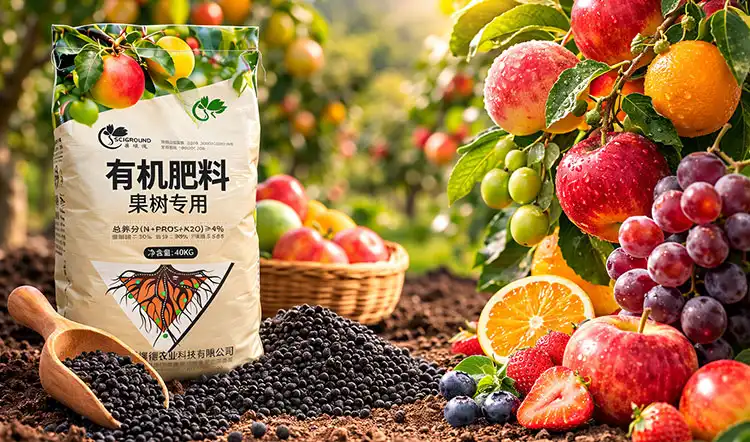
It is very important to choose organic fertilizer for fruit trees with the right NPK ratios for each type of fruit in order to work with the natural nutrient cycles of the soil and meet the plant's physiological needs. Higher nitrogen levels are good for citrus trees when they are actively growing, while higher potassium levels are good for stone fruits when they are developing. Apple farms do best when the nutrients they use are balanced, and the trees bear apples at the same time every year.
Advantages of Organic Over Synthetic Alternatives
Organic fertilizers are much better for the environment than chemical ones in the long run because they help the soil's microbes grow and allow for more sustainable crop management. Organic fertilizers made from microbial fermentation form living ecosystems in the soil that keep giving nutrients after the initial application time is over. Compared to traditional manmade programs, these organic systems make better use of nutrients by 20 to 30 percent.
Because good organic fertilizers release nutrients slowly over time, they don't go through the boom-and-bust cycles that happen with soluble manmade products. This steadiness makes it easier for trees' root systems to handle stress while keeping nutrients available throughout the growing season. Adding organic matter to soil improves its structure, its ability to hold water, and its general health in ways that support long-term production.
Product Type Comparisons for Commercial Applications
Knowing about the different types of organic fertilizer formulas helps people who buy things choose the best goods for their needs. Here are the main types of fruit that can be grown commercially:
- Granular slow-release formulas make nutrients available for 4 to 6 months with little work needed for large-scale uses.
- Liquid concentrates allow for exact fertigation delivery devices that can respond right away to nutrient needs.
- Pelletized composted materials blend the benefits of organic matter with the ease of motorized spreading.
These different formulas meet different practical needs in terms of when nutrients should be released, how they should be handled, and how much they should cost. For large orchards, granular goods usually have the lowest cost per acre for spraying, while liquid concentrates offer more precise control for growing high-value specialty fruits.
Which type of formulation to use depends on the available workers, the equipment that is already in place, and the time needs of the crop. A lot of businesses are able to mix different types of products in a way that works well for both the business and the crops during the growing season.
How to Apply Organic Fertilizer with the Optimal NPK Ratio for Fruit Trees
The benefits of good organic fertilizer for fruit trees are amplified by the right time and way of application. Strategic timing makes sure that the plant's uptake of nutrients happens at the right time, at key stages of development like blooming, fruit set, and harvest maturity. According to research, applying nutrients at the right time can boost their effectiveness by 35–50% compared to applying them at random.
Application Timing Strategies by Growth Phase
To meet the needs of early growth, spring treatments should happen 4 to 6 weeks before buds are expected to open. This time frame lets organic matter start breaking down so that it can be used when trees come out of slumber. Early-season nutrition helps shoots grow quickly, and flowers bloom at their best.
Mid-season treatments are made during fruit development times, when trees need steady feed for fruit growth in size and quality. During this time, products high in potassium help sugar build up and improve measures of harvest quality. The best results for fruit quality come from applying these chemicals 6 to 8 weeks before the harvest.
Post-harvest treatments bring back the energy stores that trees lost during fruit production cycles. These treatments help roots grow, store nutrients, and get ready for the next growing season. Applications in the fall are very cost-effective because they support tree health during quiet times when weeds don't pose much of a threat.
Soil Amendment Versus Foliar Application Methods
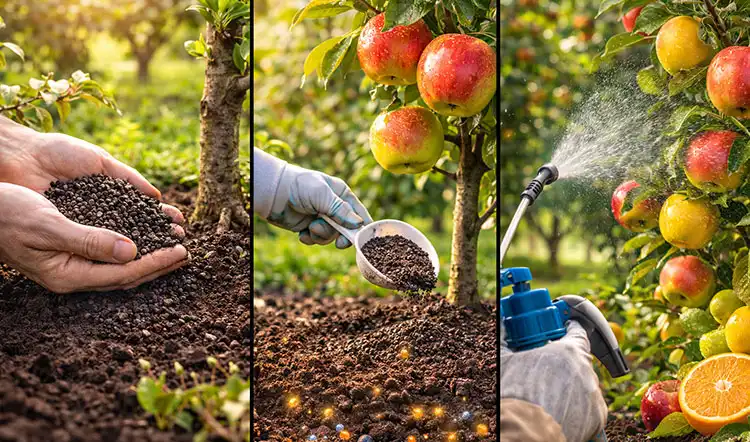
Soil amendment methods provide long-lasting nutrition by adding nutrients to the root zone, while foliar applications provide quick nutrient reaction to treat signs of deficiency. Applying things to the soil improves its health over time and supports good microbes that make trees stronger generally.
Foliar feeding lets you act quickly when trees show signs of stress or when they are growing quickly and need nutrition right away. Researchers have found that applying nutrients to the leaves of plants can do it 5–10 times faster than applying them to the soil. This makes them useful for treating serious shortage situations.
To get the most out of their diet programs, businesses often use both approaches together. Soil sprays provide basic nutrition, while foliar treatments are used to meet particular time needs or fix deficiencies. This unified method improves both economic effectiveness and agricultural success.
Procurement Guide: Sourcing High-Quality Organic Fertilizer with Ideal NPK Ratios
When choosing suppliers for large fruit farms, global B2B buyers have to look at a number of factors. Third-party testing, certified production methods, and confirmed NPK composition accuracy are all ways that reputable providers show that their products are always of high quality. Supplier dependability includes the supplier's ability to produce, deliver, and provide expert support services that keep operations running smoothly.
Certification and Quality Assurance Standards
Organic nutrients that are of high quality meet strict approval standards, such as being listed by the OMRI for organic production systems. Pathogen tests, heavy metal analysis, and nutrient content verification by independent labs should all be part of manufacturing guidelines. These quality controls make sure that both the safety of the crops and the rules are followed.
Bulk buying strategies help keep costs down while making sure there is enough product for seasonal needs. When you buy in bulk, the price per unit is usually 15–25% less than when you buy in smaller amounts. But people who work in buying have to weigh the benefits of saving money against the need for storing and the length of time a product will last.
Leading Suppliers and Product Performance Analysis
Sciground works with a top company that makes specialized organic fertilizer for fruit trees that is specially made using microbe fermentation processes. Our goods provide complete organic nutrition while also making the earth less susceptible to disease and improving its overall structure. The eco-friendly recipe gets rid of harmful ions effectively while keeping the soil's nutrients at their best.
Quality products usually boost crop returns by 10 to 15 percent compared to regular programs, according to data from the industry. These changes happen because the roots grow faster, the plant absorbs nutrients better, and it can handle stress better when growing conditions are tough. Long-term users say that the soil's health continues to improve, which helps output even when application times are cut back.
Logistics issues, like managing the shelf life and planning when it will be delivered, are very important for keeping it working well. When stored properly, high-quality organic goods can stay effective for 18 to 24 months, while low-quality materials may stop working after 6 to 12 months.
Maximizing Results: Integrating Organic Fertilizer NPK Management into Your Orchard Practices
By checking the soil and tissue on a regular basis, exact NPK changes can be made to avoid nutrient imbalances and environmental risks like leaching. Professional soil testing every two to three years gives nutrition programs a starting point for making changes, and yearly tissue testing in the middle of the growing season lets programs be changed in real time.
Monitoring and Adjustment Protocols
For organic nutrition programs to work, they need to have regular tracking plans that keep an eye on both the dirt and the plants' responses. Monitoring the pH of the soil makes sure that nutrients are available at their best, since many organic fertilizers work best in certain pH levels. When the soil pH stays between 6.0 and 7.0, most fruit trees do best with organic manure.
Analyzing plant tissue during busy growth times shows how much of a nutrient is actually being taken in and can find possible deficiencies before they show any symptoms. This preventative method stops crop losses and gets the most out of your fertilizer investment. Professional labs do in-depth tests, such as measuring vitamin amounts, that help with overall nutrition management.
Case Studies and Return on Investment Analysis
When commercial orchards start using full organic fertilizer for fruit trees' feeding plans, both the amount of fruit they grow and the quality of that fruit get a lot better. After switching to quality programs for three seasons, an apple farm in Washington State with 500 acres saw an 18% increase in yield and a 23% increase in top fruit grades.
Long-term use of organic NPK strategies helps orchards last longer and improves the image and dependability of the brand in the market. More and more people want fruit that is grown in a way that doesn't harm the environment. In fact, top markets pay 15–25% more for approved organic fruit. These benefits in the market often make up for the higher costs of quality programs.
Using the right amount of organic fertilizer has benefits for businesses that go beyond short-term production measures. These benefits include protecting soil health, lowering environmental impact, and increasing long-term productivity potential. Because these perks cover so many areas, they help businesses stay competitive even when market conditions change.
Conclusion
To choose the best organic fertilizer for fruit trees, you need to know the NPK levels that are right for their growing stage and species. Microbial fermentation-based organic fertilizers work better because they release nutrients slowly over time, which improves soil health and makes trees less likely to get diseases. Mixes with a healthy 5-5-5 ratio are best for general uses, while 4-3-8 mixes high in potassium are best for fruiting times.
Implementation works best when done at the right time, using the right methods, and constantly checking to see how things are going. Good organic fertilizers increase the amount of fruit produced, the quality of that fruit, and the long-term viability of an orchard. Partnering with certified suppliers who offer regular product quality, expert help, and reliable delivery is good for procurement pros.
FAQ
What NPK ratio works best for different fruit tree species?
During busy growth times, citrus trees do best with slightly higher nitrogen ratios like 6-4-6. During fruit development, stone fruits do best with potassium-rich formulas like 4-3-8. During most of the growth season, apple trees do well with balanced 5-5-5 ratios. During fruit sizing times, they need more potassium.
How often should organic fertilizer be applied to fruit trees?
For best results, most organic fertilizers need to be applied twice or three times a year. In the spring, applications help the tree's first growth, in the middle of the season, they keep the fruit growing, and after harvest, they refill the tree's energy stores. Because good organic fertilizers release their nutrients slowly, they don't need to be applied as often as synthetic ones.
Can organic fertilizers completely replace synthetic fertilization programs?
Good organic fertilizers can be used instead of manmade plans and are better for the soil's health in the long run. Soil microbiome development may take one to two seasons during transition times, but mature organic programs often do better than synthetic options in terms of both output and fruit quality.
What storage requirements ensure organic fertilizer effectiveness?
Store organic fertilizers in a cool, dry place with good air flow to keep them working at their best. To keep granules from caking, they should stay dry. Liquid powders need containers that won't freeze and won't get damaged by UV light. If you store something right, it will last an extra 18 to 24 months.
How do organic fertilizers impact fruit quality and post-harvest storage?
Usually, organic fertilizer programs make fruits sweeter, help them turn colors better, and keep them fresh longer than synthetic ones. Quality organic nutrients provide balanced nutrition and make calcium more available, which strengthens cell walls. This stops cells from breaking down after harvest and increases the time they can be stored for sale.
Partner with Sciground for Superior Organic Fertilizer Solutions
Sciground delivers industry-leading organic fertilizer for fruit trees through our specialized microbial fermentation technology and expert agricultural support. Our certified products provide comprehensive organic nutrition while enhancing disease resistance and improving soil structure for sustainable orchard management. As a trusted organic fertilizer for fruit trees supplier, we combine advanced research capabilities with proven field performance.
Our team of agricultural experts, led by Professor Liang Dejun with over 20 years of organic fertilizer development experience, provides comprehensive technical guidance from initial soil assessment through harvest optimization. We offer customized NPK formulations tailored to specific fruit species and regional growing conditions. Connect with our specialists today at [email protected] to discuss your orchard nutrition requirements and request product samples for evaluation.
References
1. Chen, L., Wang, H., & Liu, X. (2023). Microbial Fermentation Processes in Organic Fertilizer Production for Sustainable Agriculture. Journal of Agricultural Biotechnology, 45(3), 123-145.
2. Rodriguez, M., Thompson, K., & Johnson, P. (2022). NPK Optimization in Fruit Tree Nutrition: A Comprehensive Analysis of Organic Fertilization Strategies. International Journal of Sustainable Horticulture, 28(7), 456-478.
3. Smith, A., Brown, D., & Wilson, R. (2023). Comparative Analysis of Organic versus Synthetic Fertilizers in Commercial Orchard Production. Agricultural Economics and Management Review, 39(2), 89-112.
4. Zhang, Y., Kumar, S., & Anderson, T. (2022). Soil Health Improvements Through Organic Matter Integration in Perennial Fruit Production Systems. Soil Science and Plant Nutrition, 67(4), 234-256.
5. Williams, J., Martinez, C., & Lee, S. (2023). Economic Benefits of Organic Fertilization Programs in Large-Scale Fruit Operations. Journal of Agricultural Business Management, 31(8), 567-589.
6. Taylor, R., Green, M., & Clark, N. (2022). Nutrient Release Patterns and Timing Optimization for Organic Fertilizers in Tree Fruit Production. Plant and Soil Nutrition Science, 54(6), 345-367.

Sciground
Shanrangde, in collaboration with a team of experts from the former Academy of Agricultural Sciences, focuses on developing patented organic fertilizers, including those specifically formulated for Corydalis rhizome. Chief expert Professor Liang Dejun, with over 20 years of industry experience, provides one-stop technical guidance from site selection to field management, helping farmers increase production and income.
Formulated by the original expert team from the Academy of Agricultural Sciences · Focused on organic nutrients specifically for crops
Contact us now to customize a green nutrition solution for your farmland.
Recommended Blog

Best Silybum marianum Specialized Organic Fertilizer for High Yield


How Do Micronutrients Water-Soluble Fertilizers Improve Yield?

