Balanced Liquid Fertilizer Application Tips for Novices
Why More Growers Are Switching to Balanced Liquid Fertilizer
- Why More Growers Are Switching to Balanced Liquid Fertilizer
- How to Apply Balanced Liquid Fertilizer Correctly
- Selecting the Right Balanced Liquid Fertilizer
- Purchasing and Storage Considerations for Bulk Buyers
- Why Growers Choose Sciground
- Conclusion
- FAQ
- Partner with Sciground for Superior Balanced Liquid Fertilizer Solutions
- References
Balanced Liquid Fertiliser is an easy and effective way to give plants the nutrients they need. Unlike regular solid fertilisers, liquid versions give nutrients in a form that plants can easily use. This means that plants can take them more quickly through their roots and leaves. For beginners, it's important to know when to apply fertiliser, how much to use, and which product to choose so that crops grow well and fertiliser works as efficiently as possible. This guide shows you how to use Balanced Liquid Fertiliser correctly and avoid making common mistakes.
Why More Growers Are Switching to Balanced Liquid Fertilizer
Understanding the Nutrient Composition
Balanced liquid fertiliser has specific amounts of nitrogen (N), phosphorus (P), and potassium (K), and it often has extra secondary nutrients and micronutrients added to it. Since nutrients are dissolved in fluids, they can be spread out widely, and plants can use them faster than with many other types of fertiliser.Micronutrients like iron, zinc, manganese, and boron may also be chelated and added to modern recipes to help with photosynthesis, enzyme activity, and plant growth in general.
Advantages Over Conventional Fertilizers
Balanced Liquid Fertiliser is better in a number of ways than solid fertilisers:
- More quickly available nutrients
- Even spread of nutrients
- Application tools that are flexible
- Better synergy with fertigation
- Less waste of nutrients
Because of these benefits, liquid fertilisers can be used on field crops, garden crops, fruit trees, veggies, and decorative plants.
Suitable Crops and Growing Systems
This is what balanced liquid fertiliser can be used for:
- Growing crops in open fields
- Growing plants in greenhouses
- Systems for drip watering
- Growing plants in water
- Take care of orchards and vineyards
Small-scale and business growers can both use liquid fertiliser because it can be used to change nutrient plans based on the stage of growth of crops.
How to Apply Balanced Liquid Fertilizer Correctly
Choose the Right Growth Stage
Different growth stages of crops using Balanced Liquid Fertiliser require different nutrient priorities.
Early Growth Stage
Focus on root establishment and vegetative development.
Flowering and Fruit Set
Balanced nutrient ratios help support reproductive growth and improve crop quality.
Late-Season Development
Higher potassium levels may help improve fruit quality, storage performance, and crop maturity.Applying nutrients according to crop demand improves fertilizer efficiency and reduces unnecessary applications.
Select the Appropriate Application Method
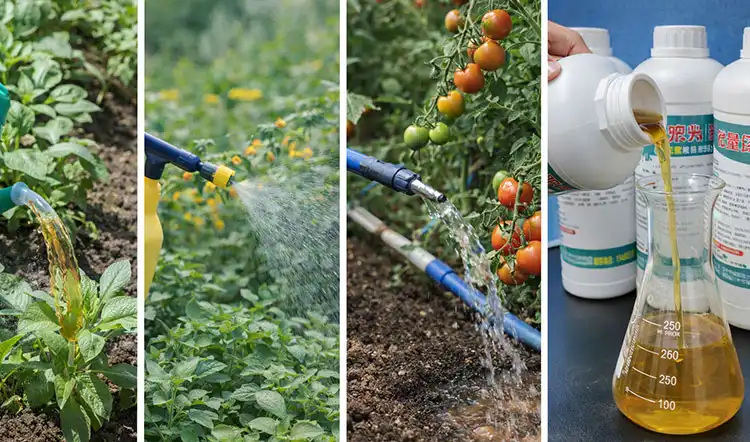
The most common application methods include:
Soil Drench Application
Nutrients are applied directly around the root zone, providing consistent nutrient availability over time.
Foliar Spray Application
Foliar feeding delivers nutrients directly to leaves and can be useful when rapid nutrient correction is needed.
Fertigation Systems
Combining irrigation and fertilization allows precise nutrient delivery and is widely used in commercial agriculture.
Avoid Common Beginner Mistakes
New users should avoid:
- Applying fertilizer during extreme heat
- Exceeding recommended dilution rates
- Mixing incompatible products
- Ignoring soil testing results
- Applying nutrients without considering crop growth stage
Proper management of Balanced Liquid Fertiliser helps maximize nutrient uptake while reducing crop stress.
Selecting the Right Balanced Liquid Fertilizer
Evaluate Nutrient Ratios
The first step in product selection is reviewing the nutrient analysis.
Growers should consider:
- NPK ratios
- Micronutrient content
- Crop-specific requirements
- Soil test recommendations
Matching fertilizer composition to crop needs improves performance and cost efficiency.
Assess Product Quality
High-quality products typically provide:
- Stable formulations
- Good solubility
- Consistent nutrient content
- Reliable shelf life
- Compatibility with irrigation equipment
Manufacturers that maintain strict quality control procedures generally provide more consistent results.
Consider Long-Term Value
Purchasing decisions should not be based solely on price.
Factors to evaluate include:
- Nutrient concentration
- Application frequency
- Labor requirements
- Yield improvement potential
- Product consistency
A higher-quality formulation may reduce overall production costs through improved nutrient efficiency.

Purchasing and Storage Considerations for Bulk Buyers
Build Relationships with Reliable Suppliers
A dependable supplier should provide:
- Consistent product quality
- Technical support
- Stable inventory availability
- Timely delivery
- Product documentation
Long-term supplier relationships for Balanced Liquid Fertiliser often improve purchasing efficiency and operational planning.
Optimize Inventory Management
Proper storage helps maintain fertilizer quality.
Recommended storage practices include:
- Keeping products in dry areas
- Avoiding direct sunlight
- Maintaining moderate temperatures
- Rotating inventory regularly
- Inspecting containers for damage
These practices help preserve product stability throughout storage periods.
Plan Procurement Strategically
Bulk buyers should evaluate:
- Seasonal demand trends
- Shipping costs
- Warehouse capacity
- Supplier lead times
- Contract pricing opportunities
Strategic purchasing can help reduce costs while ensuring product availability during critical growing periods.
Why Growers Choose Sciground
Research-Based Product Development
Sciground mixes study on farming with useful information about how to feed crops. The business collaborates with farming experts and researchers to create unique fertiliser mixtures for a range of food production methods.
Advanced Manufacturing Capabilities
Modern fermentation and processing technologies are used in the company's production plant to make liquid fertiliser products that meet high-quality standards. Strict quality control measures help make sure that the product is stable and that the nutrients are all the same.
Technical Support Beyond Products
Sciground does more than just make fertiliser. They also offer agricultural support services, such as:
Instructions for fertilisation
- Advice on crop nutrition
- Soil care tips
- Help with cultivation
- Advice for field management
These services make it easier for farmers to run nutrition plans.
Conclusion
Balanced Liquid Fertiliser is an effective and adaptable way for modern farming to control nutrients. Growers can get more out of their nutrients and help crops grow healthily by choosing the right formulations, applying nutrients at the right time in the growth cycle, and following the instructions for how to apply nutrients. Balanced Liquid Fertiliser is still a good way to get steady crop success whether it is used in open fields, greenhouses, or fertigation systems. Sciground provides a wide range of goods and expert services to meet the needs of farmers who want customised fertiliser solutions and skilled farming support.
FAQ
1. What makes liquid fertilizers more effective than granular options?
Liquid fertilizers provide immediate nutrient availability through enhanced solubility and rapid plant uptake. The uniform distribution possible with liquid applications eliminates nutrient hot spots while enabling precise dosage control. Plants can utilize liquid nutrients within hours of application, compared to weeks required for granular fertilizer breakdown.
2. How do I determine the correct application rate for my crops?
Application rates depend on soil nutrient levels, crop requirements, and fertilizer concentration. Soil testing provides baseline information while tissue analysis reveals real-time plant needs. Most liquid fertilizers require dilution ratios between 1:10 and 1:50 depending on application method and crop sensitivity.
3. What safety precautions should I follow when handling liquid fertilizers?
Always wear appropriate personal protective equipment including chemical-resistant gloves, eye protection, and protective clothing. Store products in temperature-controlled environments between 40-80°F to prevent degradation. Maintain spill containment procedures and emergency response plans to protect workers and the environment.
4. Can liquid fertilizers be mixed with other agricultural chemicals?
Compatibility varies significantly between products and requires testing before tank mixing. Some combinations can cause precipitation, chemical reactions, or reduced effectiveness. Always consult product labels and conduct small-scale compatibility tests before large-scale mixing operations.
Partner with Sciground for Superior Balanced Liquid Fertilizer Solutions
Sciground combines cutting-edge agricultural science with proven manufacturing excellence to deliver Balanced Liquid Fertiliser and liquid fertiliser solutions that exceed industry standards. Our specialized formulations and comprehensive technical support ensure optimal crop performance while maintaining environmental stewardship. As a leading balanced liquid fertilizer manufacturer, we provide customized solutions backed by over 20 years of research expertise and innovative production capabilities. Contact our agricultural specialists today at [email protected] to discuss your specific fertilizer requirements and explore how our premium liquid fertilizer products can enhance your agricultural operations. Experience the Sciground difference through personalized consultation, product samples, and tailored nutrition programs designed for your unique growing conditions.
References
1. Smith, J.A. "Nutrient Efficiency in Liquid Fertilizer Systems: A Comprehensive Analysis." Journal of Agricultural Science and Technology, vol. 45, no. 3, 2023, pp. 234-251.
2. Johnson, M.K. "Application Timing and Crop Response to Balanced Liquid Fertilizers." Agronomy Research International, vol. 12, no. 8, 2023, pp. 445-462.
3. Williams, R.T. "Economic Analysis of Liquid versus Granular Fertilizer Systems in Commercial Agriculture." Agricultural Economics Review, vol. 28, no. 4, 2023, pp. 178-195.
4. Davis, L.P. "Environmental Impact Assessment of Modern Liquid Fertilizer Applications." Environmental Agriculture Journal, vol. 33, no. 2, 2023, pp. 89-104.
5. Thompson, C.E. "Safety Protocols and Best Practices for Liquid Fertilizer Handling." Agricultural Safety and Health Quarterly, vol. 19, no. 1, 2023, pp. 56-73.
6. Martinez, S.R. "Micronutrient Delivery Systems in Advanced Liquid Fertilizer Formulations." Plant Nutrition Science, vol. 41, no. 6, 2023, pp. 312-329.

Sciground
Shanrangde, in collaboration with a team of experts from the former Academy of Agricultural Sciences, focuses on developing patented organic fertilizers, including those specifically formulated for Corydalis rhizome. Chief expert Professor Liang Dejun, with over 20 years of industry experience, provides one-stop technical guidance from site selection to field management, helping farmers increase production and income.
Formulated by the original expert team from the Academy of Agricultural Sciences · Focused on organic nutrients specifically for crops
Contact us now to customize a green nutrition solution for your farmland.
Recommended Blog


How Does Balanced Liquid Fertilizer Help Plants Resist Disease?
_1767870624598.webp)


