How to Source Quality Wholesale Fruit Tree Organic Fertilizer?
Understanding Wholesale Fruit Tree Organic Fertiliser
- Understanding Wholesale Fruit Tree Organic Fertiliser
- Key Criteria for Sourcing Quality Organic Fertiliser in Bulk
- Comparing Organic Fertiliser Options for Fruit Tree Orchards
- Practical Guidance on Using Wholesale Organic Fertilisers for Fruit Trees
- Navigating the Marketplace: Where and How to Buy Wholesale Organic Fertiliser
- Conclusion
- FAQ
- Partner with Sciground for Premium Organic Fertiliser Solutions
- References
Sourcing quality Wholesale Fruit Tree Organic Fertiliser demands a systematic approach focusing on supplier credentials, nutrient composition verification, and certification compliance. Successful procurement hinges on evaluating organic matter content (≥45%), balanced NPK ratios, and bio-stimulant inclusion such as humic and fulvic acids. Partnering with manufacturers demonstrating transparent testing protocols, proven logistics capabilities, and customised formulations ensures your orchard receives consistent, high-performance nutrition that sustains yield and soil vitality throughout seasonal cycles.
Understanding Wholesale Fruit Tree Organic Fertiliser
Wholesale fruit tree organic fertilisers represent a specialised category of soil amendments engineered specifically for perennial fruit-bearing species including citrus, stone fruits, pome fruits, and tropical varieties. Unlike generic garden fertilisers, these formulations synchronise nutrient release with the complex phenological stages of fruit trees—from dormancy breaking through flowering, fruit set, expansion, and post-harvest recovery.
Types and Formulations Available
There are three main types of formulations on the market, and each one meets a different set of practical needs. Granular organic fertilisers, which are usually between 2 and 4 mm in size, are made to be spread by hand and make nutrients available for longer. These are great for base treatments in the autumn, when trees need long-term nutrition to rebuild energy stores that were used up by flowering. Liquid concentrates can be used in fertigation systems and on the leaves of plants, and they quickly take in nutrients during important growth times. Slow-release products use covering technologies or naturally breaking down organic materials that release nutrients slowly over 60 to 90 days. This lowers the amount of work that needs to be done and the number of times they need to be applied.
Distinguishing Organic from Chemical Options
The main difference between manufactured and organic fertilisers goes beyond what the government says they are. Quality Wholesale Fruit Tree Organic Fertiliser from an organic fertiliser supplier helps soil biology by feeding good microbes, especially Bacillus subtilis and Trichoderma species that kill pathogens that cause root rot. Organic mixtures raise Cation Exchange Capacity (CEC), which helps soils hold on to nutrients that would normally wash away when it rains, or drainage is heavy. This biological method helps with "Soil Exhaustion Syndrome," a problem that happens a lot in intensive orcharding because constant cutting takes away trace elements like zinc, boron, and iron from the soil and damages its structure.
Nutrient Profiles and Common Deficiencies
Organic fertilisers that work well for fruit trees have at least 45% organic matter, which can come from processed dung, soybean meal, or leonardite. The NPK ratio changes depending on when it is applied. For general upkeep, 5-5-5 formulations work well, while 4-3-8 formulations with more potassium work best during the fruit-filling stages. Carbon-to-nitrogen ratios of 15:1 to 20:1 make sure that nitrogen is available without causing nitrogen theft, which is when bacteria compete for nitrogen and temporarily starve plants. Apples with a sour pit or pears with cork spot have low levels of calcium and boron. Good recipes contain chelated forms of these micronutrients to keep the body from getting sick.
Key Criteria for Sourcing Quality Organic Fertiliser in Bulk
Quality assessment begins with understanding the technical parameters that separate premium products from inferior alternatives. Procurement professionals must evaluate multiple dimensions simultaneously—nutrient composition, processing standards, certification validity, and supplier reliability.
Certification Standards and Compliance
USDA Organic and OMRI (Organic Materials Review Institute) approvals show that goods follow strict rules about what ingredients and ways of production are not allowed. When looking at Wholesale Fruit Tree Organic Fertiliser providers, make sure they have up-to-date certificates and batch testing records that show they follow heavy metal limits. To keep food safe all along the supply chain, cadmium levels must stay below 1.5 mg/kg, arsenic levels must stay below legal limits, and lead levels must stay within safe limits. Suppliers who follow ISO testing guidelines give you even more peace of mind about the quality of their products.
Nutrient Content and Bioavailability
Looking beyond the NPK numbers on the package, check out where these nutrients come from. When organic nitrogen is released, it is different when it comes from composted manure versus blood meal or feather meal. Bioavailability of phosphorus depends on the amount of organic acids present, especially humic acid (≥10%) and fulvic acid, which bind elements together and make it easier for roots to take them in. Ask for scientific data sheets that list the C/N ratios, the amount of moisture (≤20% to stop pathogens from spreading), and the percentages of bio-stimulants. Products that contain amino acids and peptides show that the people who make them are very good at formulating them.
Supplier Evaluation Dimensions
Check the supplier's skills across a wide range of working factors, not just the product specs. Minimum order amounts (MOQ) affect your cash flow and storage needs. When you discuss terms, make sure they fit with how your yearly demand changes. Variety in packaging is important; large bags ranging from 50-pound sacks to one-ton totes affect how quickly and easily things can be moved. The ability of providers to handle delivery and shipping determines whether they can keep up a steady supply during busy application times. To get accurate landing costs, check where your warehouses are located in relation to your activities.
Quality Control and Testing Protocols
Reputable organic fertiliser suppliers test their compost for full fermentation using the Germination Index (GI). GI scores above 85% mean that the compost is mature and doesn't contain any phytotoxic chemicals that could hurt roots. Through high-temperature aerobic fermentation processes that keep the temperature between 55°C and 70°C for 5 to 7 days, pathogen screens should prove the lack of faecal coliforms, Salmonella, and live weed seeds. Testing the granules for hardness (≥10N) makes sure that they will stay stable during shipping and spreading.
Transparency is what sets great providers apart from average ones. Manufacturers who are ready to give customer examples, batch analysis reports, and offers for facility inspections show that they are sure of their production standards. This openness is especially helpful when operations need to be scaled up or when problems arise in the field that were not expected.
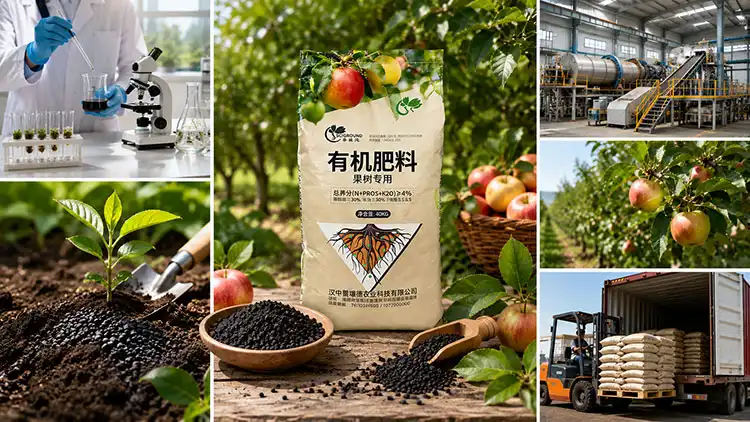
Comparing Organic Fertiliser Options for Fruit Tree Orchards
Selecting the optimal formulation requires matching product characteristics to your operational constraints and agronomic goals. Each format offers distinct advantages that become apparent when examined through the lens of application timing, labour availability, and equipment capabilities.
Granular Formulations: Versatility and Longevity
Granular organic fertilisers are very popular in trade markets because they can be stored properly for a long time (usually two years) and can be used with mechanical spreaders. The structure makes it possible to use exact amounts ranging from 200 to 800 pounds per acre, based on the tree's age and how fertile the soil is. Applying fertiliser in the autumn takes advantage of the slow breakdown of organic matter by microbes, making sure that nutrients are available when the roots flush in early spring. Granular goods work great in radial ditch applications at the tree dripline because they put nutrients where plant roots can take them.
Liquid Concentrates: Precision and Speed
Liquid versions work especially well during important times of the year when plants need nutrients right away. Adding liquids through drip watering or foliar spray is very helpful during the fruit growth stage, when trees need a lot of potassium and calcium to make the fruit as big and firm as possible. When enzymes break down liquid Wholesale Fruit Tree Organic Fertiliser, they release peptides right away without making the soil more salty, which is a big plus in dry areas where the soil naturally conducts electricity well. On the other hand, it costs more per unit and needs to be stored in a certain way to keep it from freezing or getting too hot.
Slow-Release Technologies: Labor Efficiency
Controlled-release organic fertilisers are the best of both worlds when it comes to comfort and accuracy in farming. By covering grains or adding naturally breaking-down structures, these products make nutrients available for an extra 60 to 90 days. This means that they only need to be applied once or twice a year instead of three times a year. When you're in charge of a lot of land, or there are regular shortages of workers, saving time on labour is very important. The trade-off is less flexibility—once it's in place, you can't change how nutrients are delivered in response to changes in the weather or pests that affect tree needs.
Pricing Dynamics and Value Assessment
Quality organic fertilisers cost between $400 and $800 per tonne at market right now, based on how complicated the recipe is, how dense the nutrients are, and whether the fertiliser is certified. Granular goods tend to be cheaper, liquid concentrates are more expensive because they cost more to make, and slow-release formulas are in the middle. To find the real value, you need to look at how often the treatment is made, how much the labour costs, how much the predicted yield gains are, and how much more organically approved fruit costs. A product that costs 20% more but cuts down on application trips by half usually gives a better return on investment.
Practical Guidance on Using Wholesale Organic Fertilisers for Fruit Trees
Effective utilisation transforms quality products into measurable orchard improvements. Timing, technique, and dosage optimisation require understanding tree physiology and matching nutritional inputs to specific growth stages.
Seasonal Application Strategies
Nutrition programs run all year long are based on post-harvest applications in the fall. Putting down 500 to 800 pounds per acre of granules of Wholesale Fruit Tree Organic Fertiliser right after harvest helps trees rebuild carbohydrate stores that were used up while making fruit. This method of "confinement fertiliser" puts organic matter and nutrients that release slowly in the ground so that roots can grow quickly in the spring without worrying about leaching during the winter. Use basic tilling or radial trenching to add fertiliser to the dripline, which is where supporting roots gather. Pre-bloom treatments made in late winter make nitrogen easily available, which helps shoots grow quickly and flower buds form. At 50 to 100 gallons per acre, liquid formulas give plants rapid nutrition without upsetting root systems that are dormant. During the fruit growth phase, which starts about 6 to 8 weeks after the petals fall off, the plant needs a lot of potassium to grow as big as possible and store sugar. During this important time, fertilising with liquid concentrates or foliar sprays of two to three gallons per acre every ten to fourteen days helps.
Dosage Calculations and Adjustments
Use rates based on the results of soil tests and the age of the trees. Young trees (1-3 years) only need small amounts of food (10–20 pounds per tree per year) to build strong root systems instead of pushing too much vegetative growth. Mature trees that bear fruit (10 years or more) need 30 to 50 pounds per tree, spread out over the course of the year. Soils with less than 3% organic matter need higher starting rates to get fertile again, while soils with more than 5% organic matter need inputs at a steady level. Change the recipes based on the type of fruit tree. For stone fruits like peaches and cherries, higher nitrogen ratios (6-3-4) help them grow quickly. On the other hand, pome fruits like apples and pears do better with balanced formulas that stop too much vegetative growth that gets in the way of fruiting. Citrus needs special mixes with high amounts of micronutrients, especially zinc, iron, and manganese.
Case Study: Orchard Performance Improvement
A commercial apple operation in Michigan transitioned from synthetic to organic fertilisation using a strategic procurement approach. By partnering with a certified Wholesale Fruit Tree Organic Fertiliser manufacturer, they implemented autumn basal applications of granular formulation (600 lbs/acre) combined with spring liquid fertigation (75 gallons/acre). Within two growing seasons, soil organic matter increased from 2.8% to 4.1%, earthworm populations tripled, and Brix readings in harvested fruit improved by 1.5 points. The organic certification premium increased revenue by 35%, easily offsetting the 15% increase in fertiliser costs.
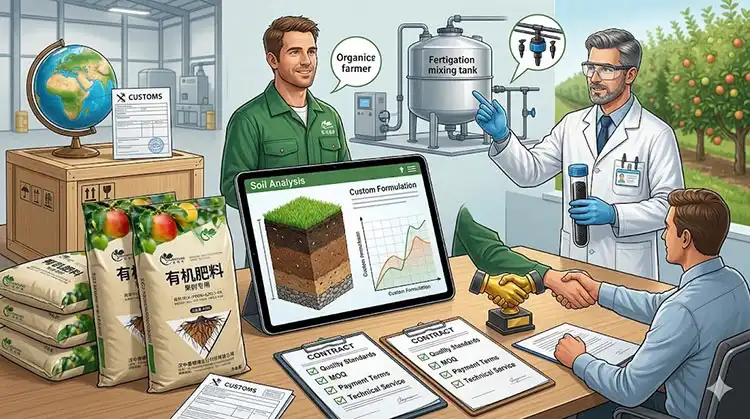
Navigating the Marketplace: Where and How to Buy Wholesale Organic Fertiliser
Strategic procurement requires understanding market structure, identifying reliable suppliers, and negotiating terms that align with operational realities. The marketplace spans regional distributors, national manufacturers, and emerging online platforms—each offering distinct advantages.
Identifying Reputable Manufacturers
Vertical merger and expert help are two things that set high-quality makers apart. Companies that have their own waste sites and labs show that they are dedicated to quality control. Sciground, which opened in 2023 and is in Hanzhong City, is a good example of this method. As an Organic fertilizer supplier, they make specialised organic fertilisers in a 6,000-square-meter building that was designed with help from agricultural research institutions and uses Professor Liang Dejun and his team's 20 years of experience in formulating fertilisers from the Northwest Academy of Agricultural Sciences.
Certification Verification Process
To prove that an organic certificate is real, the certificate numbers must be checked against official records. The National Organic Program website has unique identifiers on USDA Organic certificates, and OMRI lists can be found in their public product database. Ask for copies of the most recent certificates and make sure the product name fits the title perfectly. Name changes could mean that non-certified versions are being sold with certified goods.
Online Platforms Versus Direct Relationships
Online business-to-business (B2B) sites make it easy to compare prices and are popular with buyers who are running multiple businesses or looking for chances in the spot market. These platforms bring together sellers and make it easier to compare quotes, but they may add costs and make it harder to check the quality. When you work directly with makers, you can get benefits like unique formulas, priority placement during supply shortfalls, and expert help for farming. Manufacturers like Sciground offer advice on everything from preparing the soil to managing the application, which adds value beyond the product itself.
Negotiating MOQ and Payment Terms
The smallest amount of bulk fertiliser that you can buy is usually between one and five tonnes. Talk about terms that take into account your storage space and when you need to use the goods. For example, spreading orders out over different seasons can help you save money on storage while still getting price benefits. Payment terms range from net-30 for suppliers who have been working with you for a while to prepayment or a letter of credit for new suppliers. When you commit to a certain amount of volume over multiple growing seasons, you can often get tiered prices and sure allocation.
Conclusion
Finding good Wholesale Fruit Tree Organic Fertiliser means balancing technical requirements, seller dependability, and cost concerns while keeping long-term farm sustainability in mind. When negotiating terms that work for their business, good buying professionals look at things like the nutrients, the accuracy of the certification, and the manufacturer's skills. Making the switch to organic nutrition is more than just following the rules; it also improves soil biology, lowers the damage to the environment, and sets up farms for better access to top markets. By following the guide's evaluation criteria, application strategies, and seller assessment methods, you can be sure to find fertilisers that improve tree health, boost yields, and support profitable, long-term fruit production.
FAQ
1. Can organic fertilisers completely replace synthetic options in commercial orchards?
Certified organic orchards successfully operate using exclusively organic inputs, demonstrating that complete substitution is agronomically viable. Conventional operations often benefit from Integrated Nutrient Management approaches where organic fertilisers improve nutrient use efficiency of synthetic inputs by 20-30% through enhanced soil biology and reduced leaching. The transition period typically requires 2-3 years as soil microbial populations rebuild and organic matter accumulates.
2. How do I verify organic certification authenticity?
Verify certification by requesting current certificates showing product names, certificate numbers, and expiration dates. Cross-reference certificate numbers through official databases like the USDA National Organic Program or OMRI product listings. Legitimate suppliers provide this documentation readily and transparently. Be cautious of vague claims like "natural" or "eco-friendly" without accompanying certification documentation.
3. What storage practices maintain product efficacy?
Store bulk organic fertiliser in cool, dry, ventilated warehouses protected from direct moisture exposure. Granular products remain viable for two years when moisture content stays below 20%. Avoid ground contact by using pallets or elevated platforms. Liquid concentrates require temperature protection—freezing damages product integrity while excessive heat accelerates biological activity. Open bags should be resealed to prevent moisture absorption and caking.
Partner with Sciground for Premium Organic Fertiliser Solutions
Sciground delivers scientifically formulated Wholesale Fruit Tree Organic Fertiliser backed by two decades of research expertise from Professor Liang Dejun and the Northwest Academy of Agricultural Sciences team. Our Hanzhong facility produces certified organic formulations tailored for diverse fruit tree species, incorporating optimal organic matter content, balanced NPK ratios, and bio-stimulant complexes proven to enhance soil fertility and fruit quality.
As a specialised Wholesale Fruit Tree Organic Fertiliser manufacturer, we provide comprehensive technical support, including soil analysis interpretation, customised application schedules, and ongoing agronomic guidance. Our commitment extends beyond product delivery—we partner with growers throughout the cultivation cycle, from site selection through harvest optimisation. Contact our team at [email protected] to discuss your orchard's specific nutritional requirements and receive customised quotations reflecting volume pricing and flexible delivery schedules. Whether you're managing a family farm or sourcing for regional distribution, Sciground combines manufacturing excellence with agronomic expertise to support your success in sustainable fruit production.
References
1. Chen, J.H. (2019). "The Effects of Organic Fertilisers on Fruit Tree Nutrition and Soil Health." Journal of Sustainable Agriculture, 43(7), 722-741.
2. United States Department of Agriculture. (2021). "National Organic Program: Certification Standards and Compliance." USDA Agricultural Marketing Service Publication.
3. Rodriguez, M. & Thompson, K. (2020). "Comparative Analysis of Organic Fertiliser Formulations for Commercial Orchards." HortScience, 55(4), 456-465.
4. International Federation of Organic Agriculture Movements. (2022). "Best Practices for Organic Fertiliser Quality Control in Fruit Production Systems." IFOAM Technical Bulletin 18.
5. Patel, R.N., Liu, W., & Anderson, D.S. (2021). "Soil Microbial Response to Long-term Organic Fertilisation in Perennial Fruit Crops." Applied Soil Ecology, 167, 104-118.
6. Martinez, A.L. (2020). "Economic Assessment of Organic Fertiliser Procurement Strategies for Mid-scale Fruit Operations." Agricultural Finance Review, 80(3), 389-407.

Sciground
Shanrangde, in collaboration with a team of experts from the former Academy of Agricultural Sciences, focuses on developing patented organic fertilizers, including those specifically formulated for Corydalis rhizome. Chief expert Professor Liang Dejun, with over 20 years of industry experience, provides one-stop technical guidance from site selection to field management, helping farmers increase production and income.
Formulated by the original expert team from the Academy of Agricultural Sciences · Focused on organic nutrients specifically for crops
Contact us now to customize a green nutrition solution for your farmland.
Recommended Blog


Certified Organic Silybum marianum Specialized Fertilizer Solution

Best Silybum marianum Specialized Organic Fertilizer for High Yield


