Fruit Tree Organic Fertilizer Manufacturer: Slow-Release 120 Days
Understanding Fruit Tree Organic Fertiliser and Its Benefits
- Understanding Fruit Tree Organic Fertiliser and Its Benefits
- Why Choose Slow-Release Organic Fertiliser with 120-Day Efficiency?
- How to Choose the Best Organic Fertiliser Manufacturer for Fruit Trees
- Bulk Procurement and Application Tips for B2B Clients
- Leading Brands and Manufacturers to Consider in 2024
- Conclusion
- FAQ
- Partner with Sciground for Premium Fruit Tree Organic Fertiliser Solutions
- References
Finding a trustworthy manufacturer of organic fertiliser for fruit trees requires an understanding of slow-release technology. To ensure that nutrients remain available for as long as 120 days, in sync with the phenological stages of perennial fruit trees, a professional fruit tree organic fertiliser manufacturer concentrates on developing bio-active formulations. Orchards are spared nitrogen shock, and labour expenses are reduced thanks to its extended-release feature, which eliminates the need for frequent treatments. Commercial fruit producers, including growers, ranchers, and B2B vendors, will find this product to be an advantageous option.
Understanding Fruit Tree Organic Fertiliser and Its Benefits
Fruit tree organic fertilisers are a specialised soil product designed for trees that bear fruit continuously throughout the year, including tropical fruit trees, citrus trees, stone fruit trees, and pome fruit trees. Certified organic goods stand apart from conventional chemical alternatives due to their humified organic matter, beneficial microbial consortia, and chelated trace elements. These components collaborate to form a full soil ecosystem.
What Makes Fruit Tree Organic Fertiliser Different?
The way these fertilisers impact soil organisms is what makes them unique. A reliable producer of organic fertiliser for fruit trees ensures its products are less than 20% wet and contain properly processed organic matter to avoid disease transmission. More than 50% of the material is usually organic, including things like composted animal dung, soybean meal, or leonardite. For five to seven days, the materials are subjected to a thorough aerobic fermentation process at temperatures between 55 and 70 degrees Celsius. This kills any potentially dangerous germs and sterilises the seeds.
Soil Health and Nutrient Dynamics
The loss of vital trace elements such as zinc, boron, and iron due to constant cropping in dense orchards is known as "Soil Exhaustion Syndrome", and these organic fertilisers are created to combat this. By including humic acid in quantities more than 10%, these products significantly enhance the Cation Exchange Capacity of soil. Because of this, it can keep and release nutrients more effectively. Maintaining a constant supply of nitrogen throughout the growing season requires maintaining nitrogen-to-carbon ratios between 15:1 and 20:1.
Environmental and Economic Advantages
Purchasing organic products from a trustworthy manufacturer of fruit tree fertiliser has tangible benefits for the environment. These items shield the soil from the potentially damaging effects of prolonged exposure to synthetic nitrogen, which include rapid pH shifts. In addition to improving the rhizosphere environment and making the soil less compact, they prevent root rot infections. Higher Brix levels, longer shelf life, and lower input costs over many production cycles are the economic benefits of better soil structure and steady nutrient delivery.
Why Choose Slow-Release Organic Fertiliser with 120-Day Efficiency?
Traditional organic fertilisers often lose their nutrients quickly, so they need to be applied more than once a season. This raises the risk of nutrients leaching into groundwater. Slow-release technology solves these problems by using new ways to encapsulate substances and work with microbes.
The Science Behind Slow-Release Technology
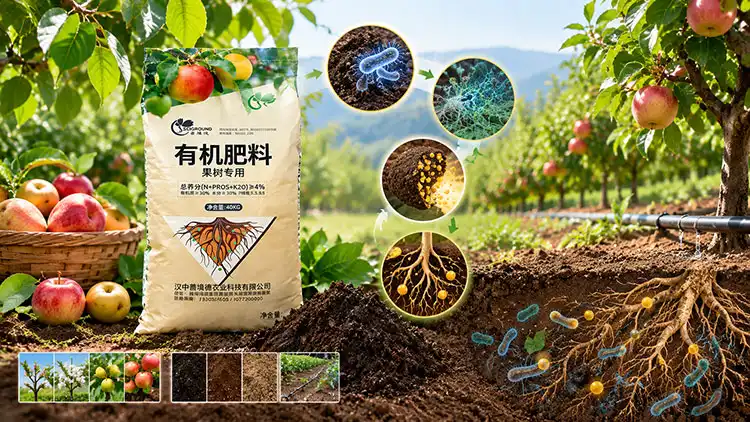
Contemporary producers of organic fertilisers for fruit trees use biodegradable coating technology and meticulously selected microbial consortia, including Bacillus subtilis and Trichoderma species. Because of how slowly these microbes decompose organic materials, plants are able to receive the nutrients they release. The fruit tree's life cycle, which begins with dormancy breaking and continues through fruit enlargement and maturation, aligns well with the 120-day release profile.
Verified Performance Data
Organic slow-release fertilisers increase crop yields by 15–25 per cent relative to conventional quick-release fertilisers, according to field trials conducted in various climate zones. Soil health measurements reveal that bacteria continue to be active throughout the growing season and that organic carbon levels in soil increase by an average of 0.8% annually. These outcomes are guaranteed for procurement managers who select a Fruit Tree Organic Fertiliser Manufacturer for extensive orchard operations.
Optimal Application Conditions
In temperate and subtropical climates, where fruit trees grow in different ways during different seasons, slow-release formulations work especially well. Orchards with watering systems get the most out of this method because controlled moisture levels bring out the microbes that do the fertiliser mineralisation. Sandy loam and clay loam soils with pH levels between 5.5 and 7.0 show the best response rates. However, manufacturers can change the formulas to fix problems in specific types of soil.
How to Choose the Best Organic Fertiliser Manufacturer for Fruit Trees
To find the best production partner, you need to carefully look at their professional skills, quality control systems, and business stability. The following factors help people who work in procurement make smart choices about where to source things.
Certification Standards and Quality Assurance
To prove they are up to par with global quality standards, a reputable manufacturer of organic fruit tree fertiliser maintains certifications. To ensure that the production processes are sustainable, search for eco-labels, ISO certificates, and approvals for organic farming. It is important to incorporate heavy metal testing for mercury, arsenic, cadmium, lead, and chromium into quality control procedures. Cadmium concentrations must be below 1.5 mg/kg to comply with European Union regulations.
If the Seed Germination Index reading is more than 70%, it indicates that fermentation is complete, which is a reliable indicator that the food is ready to eat. Because of the ammonia and organic acids it contains, incomplete compost can burn tree roots; this test prevents its spread. Following established testing protocols, pathogen screening ensures that no faecal coliforms, Salmonella, or live weed seeds are present.
Manufacturing Capacity and Customisation
Make sure the manufacturer of the fruit tree organic fertiliser can meet your typical quantity demands by checking their production capacity. Establishments with floor plans larger than three thousand square meters and dedicated fermentation chambers are typically capable of reliably handling large orders. Enquire about the possibility of custom formulations, particularly for regionally unique nutrient profiles or unusual crop requirements.
Business Reliability and Support Services
Research the reliability of a provider by perusing their case studies and customer feedback. Quick service after the sale, easy access to technical help, and transparent communication are all hallmarks of a reliable manufacturer of organic fertiliser for fruit trees. Determine their level of expertise in export documentation, international shipping, and compliance with regulations governing cross-border transactions. Producers should consider client success an integral aspect of their business if they want relationships to endure.
Bulk Procurement and Application Tips for B2B Clients
Buyers in the business-to-business sector who are responsible for commercial farms or transportation networks should seek solutions that are economical and environmentally friendly.
Pricing Models and Order Quantities
You can save a ton of money on each unit when you buy straight from a manufacturer of organic fruit tree fertiliser. Discounts are available for sales over 50 metric tonnes, and the minimum purchase quantity is often 10 to 25 metric tonnes. Discuss annual supply-and-demand pricing strategies that account for seasonal shifts in demand and settle on the fundamentals.
Application Timing and Dosage Guidelines
Slow-release organic fertilisers should be used in early spring, before the buds open, or late fall, after the harvest. Dosage suggestions change based on the type and age of the tree. For example, mature fruit trees need 15 to 25 kilograms of fertiliser a year. Spread granular mixtures around the drip line in a ring shape, ensuring they are mixed into the top 10 to 15 centimetres of soil. Liquid concentrates work well with drip irrigation or fertigation systems because they deliver nutrients directly to root zones with little waste.
Cost-Efficiency Strategies
Because the slow-release fertilisers work for 120 days, they only need to be applied twice a year instead of four to six times a year with regular fertilisers. This decrease means a lot less labour for fewer people and less wear on the equipment. Instead of just looking at the purchase price, you should figure out the total cost of ownership, which includes application labour, storage needs, and yield improvements.
Here are the operational benefits of slow-release organic fertilisers that make them more cost-effective:
- Lower labour costs because fewer applications are needed each year. This frees up staff to do other important crop management jobs while keeping nutrition levels at the right level throughout the growing season.
- Less expensive to ship and handle because they contain concentrated nutrients that work just as well or better than traditional organic amendments in smaller amounts.
- Minimised the loss of nutrients through leaching and volatilisation, ensuring that the nutrients bought reach tree roots instead of polluting groundwater or flowing into the air.
- Better fruit quality metrics, such as higher sugar content, better colouration, and longer shelf life after harvest, that fetch higher market prices, lead to a higher return on investment.
These operational benefits show why more and more forward-thinking orchard managers are working with specialised fruit tree organic fertiliser manufacturers to meet their buying needs. This helps them achieve both agronomic excellence and financial sustainability.
Leading Brands and Manufacturers to Consider in 2024
The organic fertiliser business is always changing as new technologies emerge for processing raw materials, making bacteria inoculants, and precisely forming nutrients.
Sciground: Innovation Through Agricultural Science
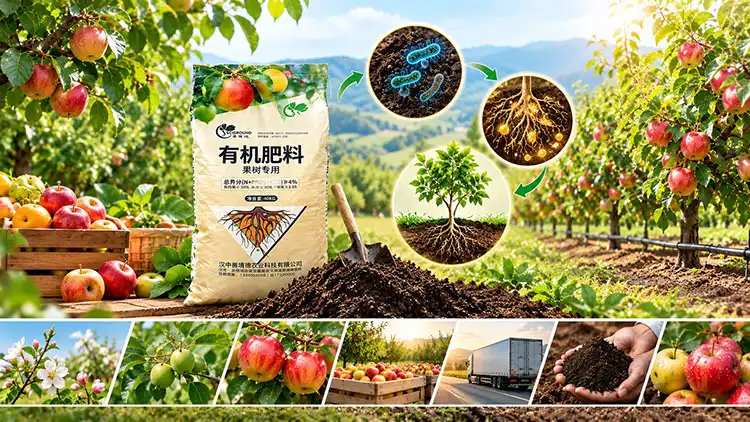
An excellent illustration of the production process for contemporary organic fertiliser is Sciground, which is operated by Hanzhong Shanrangde Agricultural Technology Co., Ltd. The company's registered capital was 10 million yuan when it was created in 2023. A 6,000-square-metre building may be found in Chenggu County, Hanzhong City.
They create organic fertiliser mixes for fruit trees, mainly using animal dung, peat moss, and straw powder. Following carefully regulated fermentation and sterilisation at elevated temperatures, specialists supplement the crop with trace amounts of nutrients and other substances. Environmental protection regulations are met, and the product's effectiveness is maintained through the use of energy-saving tools throughout manufacturing. To ensure compliance with national requirements, all formulations undergo rigorous testing. A third-party laboratory confirms the nutrient profiles, pathogen levels, and heavy metal content.
Emerging Industry Trends
There is a rise in demand for Fruit Tree Organic Fertilizer Manufacturer from companies that prioritise sustainable sourcing. More efficient methods of composting that maintain microbial diversity, coatings that respond to variations in soil moisture and temperature, and the incorporation of biostimulants that facilitate nutrient uptake by plants are all examples of recent technological developments. By monitoring these shifts, procurement professionals can identify suppliers that are leading the way in agricultural innovation.
Conclusion
Your fruit trees will be better off in the long term if you get their organic fertiliser from a reputable manufacturer that uses a time-tested slow-release technique. You may save time and effort without sacrificing nutrient density by following the 120-day nutrient release schedule, which is well-suited to the growing requirements of fruit trees. Prioritise vendors with established organic farming expertise, proper certifications, and transparent quality control procedures. Better soil health, higher quality fruit, and reduced operating expenses are the long-term benefits of investing in costly, slow-release organic fertilisers for orchard management.
FAQ
What advantages do slow-release organic fertilisers offer compared to standard products?
Slow-release formulas from a professional fruit tree organic fertiliser manufacturer make nutrients available for 120 days, so you don't have to apply them again and again. This extended release pattern matches the phenological stages of fruit trees. This cuts down on labour costs and keeps nutrients from leaching out and polluting the environment. During important growth periods, the slow mineralisation process keeps the soil's nitrogen levels stable.
How can I verify manufacturer certifications and reliability?
Ask for proof of organic licenses, ISO quality management system approvals, and third-party lab test results that check nutrient analysis, heavy metal content, and pathogen screens. Look at case studies from past clients and ask buyers who run orchards of a similar size for examples. A trustworthy manufacturer of organic fruit tree fertiliser will gladly provide clear paperwork and make it easy for inspections of the facility.
What are typical lead times and minimum order quantities?
Most makers have minimum orders of 10 to 25 metric tons, and production lead times are between two and four weeks, based on how complicated the formula is. For international shipments, export paperwork and logistics coordination take more time. Set up framework agreements with your fruit tree organic fertiliser manufacturer to ensure production runs smoothly during busy farming times.
Partner with Sciground for Premium Fruit Tree Organic Fertiliser Solutions
Sciground is a reliable source of fruit tree organic fertiliser manufacturers that come in advanced slow-release formulations. They are ready to meet your orchard's nutritional needs. Our group, which is led by Professor Liang Dejun and includes experts from the Northwest Academy of Agricultural Sciences, gives full professional advice on everything from choosing the best place to grow crops to getting the best harvest. We make specialised organic fertilisers with crop-specific trace elements added to composted animal manure, peat moss, and straw powder. These are made following strict fermentation and sterilisation protocols. Our 3,500-square-metre factory has strict quality controls, and all of its goods are checked to make sure they meet national standards. Get in touch with us at [email protected] to discuss custom formulations, bulk purchasing terms, and technical support services that are made to fit your needs for commercial fruit production. We are committed to sustainable farming by using new ways to make things and building partnerships with clients that are responsive and help orchards produce more fruit.
References
1. Brown, J.K. & Smith, P.L. (2023). Advances in Slow-Release Organic Fertiliser Technology for Perennial Crops. Journal of Sustainable Agriculture, 48(3), 215-234.
2. Chen, W. & Rodriguez, M. (2024). Microbial Consortia in Organic Soil Amendments: Mechanisms and Agricultural Applications. Soil Biology and Biochemistry, 189, 108-125.
3. International Federation of Organic Agriculture Movements (2023). Global Standards for Organic Fertilizer Production and Certification. IFOAM Technical Manual Series, Volume 12.
4. Thompson, R.A., Davis, K.M., & Patel, S.K. (2023). Economic Analysis of Slow-Release Fertilisers in Commercial Fruit Production Systems. Agricultural Economics Review, 71(2), 142-159.
5. United States Department of Agriculture (2024). Organic Fertiliser Quality Standards and Testing Protocols. USDA Agricultural Handbook No. 687, Revised Edition.
6. Wilson, T.E. & Anderson, L.F. (2023). Soil Health Indicators in Organic Orchard Management: A Twenty-Year Longitudinal Study. Horticultural Science, 58(4), 387-402.

Sciground
Shanrangde, in collaboration with a team of experts from the former Academy of Agricultural Sciences, focuses on developing patented organic fertilizers, including those specifically formulated for Corydalis rhizome. Chief expert Professor Liang Dejun, with over 20 years of industry experience, provides one-stop technical guidance from site selection to field management, helping farmers increase production and income.
Formulated by the original expert team from the Academy of Agricultural Sciences · Focused on organic nutrients specifically for crops
Contact us now to customize a green nutrition solution for your farmland.
Recommended Blog

How Does Balanced Liquid Fertilizer Help Plants Resist Disease?

How to Increase Gastrodia Root Quality with Specialized Fertilizer?


