Cordydalis tuber plant fertilizer: Water-Soluble vs Granular — Pick?
Understanding the Fertiliser Needs of Corydalis Tubers
- Understanding the Fertiliser Needs of Corydalis Tubers
- Water-Soluble Fertiliser for Corydalis Tuber: Benefits and Use Cases
- Granular Fertiliser for Corydalis Tuber: Advantages and Application Guidelines
- Comparing Water-Soluble vs. Granular Fertilisers: Which Is Best for Corydalis Tubers?
- Choosing and Procuring the Right Fertiliser for Corydalis Tuber: Key Considerations for Global B2B Buyers
- Conclusion
- FAQ
- Partner with Sciground for Premium Corydalis tuber plant fertiliser solutions.
- References
What kind of Corydalis tuber plant fertiliser you use depends on your business size, the soil you have, and the plant's growth stage. Formulations that dissolve in water let plants quickly absorb nutrients during key growth stages. Granular options, on the other hand, keep feeding plants all season long. If you choose the right type for your growth plan and the way things work in your area, both can greatly increase production and the quality of your tubers.
Understanding the Fertiliser Needs of Corydalis Tubers
At different stages of its growth, Corydalis yanhusuo, more commonly known as Yan Hu Suo, requires different types of food. If you want the medical tuber crop to grow well and work as well as possible, you need to carefully control the nutrients it gets. At different stages of its growth—from breaking dormancy in early spring to rapid tuber expansion in late winter—plants need different amounts of macro- and micronutrients to stay healthy.
Critical Nutrient Requirements Across Growth Stages
As Corydalis plants are being set out in the autumn, their roots need places rich in phosphorus to build a strong base. The root cells can quickly take over a large area of soil because phosphorus helps them move energy around. Nitrogen is more important for the growth of the leaf cover as plants move from stem growth to leaf growth. On the other hand, too much nitrogen can slow down root growth. From January to March, the plant's roots grow the most, so it needs food that is high in potassium during this time. There is a direct link between potassium and the end size and dry matter content of tubers because it controls the osmotic pressure inside the cells.
Micronutrients like chelated iron and magnesium help plants stay healthy and escape spring chlorosis, a disease that turns leaves yellow. When the tuber grows, boron helps make the cell wall, and zinc helps the enzymes that make alkaloids do their job. Researchers say that having the right amount of micronutrients can make 10 to 15 per cent more tetrahydropalmatine than when they are not present.
Soil pH and Nutrient Availability
The pH of the soil should be between 6.0 and 7.5 for corydalis to absorb nutrients most effectively. Aluminium is poisonous when the pH is below 6.0, and phosphorus and trace elements can't be found when the pH is above 7.5. In traditional growing areas, clay-rich soils tend to get packed down, which cuts off oxygen flow and makes root rot pathogens more likely to grow. As you feed, you should not only add nutrients to the soil, but you should also strengthen it.
Recognizing Deficiency Symptoms
A lack of nitrogen causes the early leaves to turn a uniform yellow colour. It also causes growth to stop and the plant to become weaker. When plants don't get enough phosphorus, their leaves turn dark green or purple and grow more slowly. When potassium is insufficient, the edges of the leaves rot, and the roots become too small to store well. Growers can change their fertilisation plans in the middle of the growing season if they can recognise these visual signs. This helps them escape yield losses that can reach over 30% in the worst cases.
Water-Soluble Fertiliser for Corydalis Tuber: Benefits and Use Cases
Formulations of water-soluble fertiliser for Corydalis tubers provide more options for growing thick Corydalis than any other type. It is possible to use these crystal or liquid concentrates directly on plants or through drip systems because they mix fully with watering water. Since plants can use water-soluble nutrients right away, they are very helpful when they are growing quickly, and their needs rise quickly.
Rapid Nutrient Delivery Mechanisms
Because of the way their molecules are built, water-soluble fertilisers let nutrients get into plant tissues right away. Tubers get extra energy to grow quickly when potassium nitrate and monopotassium phosphate are mixed together and added through fertigation in February, when the plants are awake. Plants can get chelated iron, manganese, and zinc by putting vitamin solutions right on their leaves. This way, they don't have to deal with problems in the soil's chemistry. There is a great way to use this method in high-pH soils where fertilisers usually fall to the bottom.
Precision Dosing for Growth Phases
Granular fertilisers can only be used once, but water-soluble ones can be used over and over again for different stages of growth. Even NPK levels, like 20-20-20, help leaves grow in the beginning stages of green growth. A low-nitrogen, high-potassium mix like 5-15-40 can be used once the plants start to make tubers. Because it can change, plants get nutrients exactly when and where they need them most. This method makes the best use of resources. When businesses use fertigation systems instead of traditional ways of spreading fertiliser, they say they save 15 to 20 per cent on total costs and get better uniformity across large crops.
Application Protocols and Scheduling
To get the most from water-soluble manure, use it over time and at different rates. The plant can get nutrients and keep salt from building up in the root zones if it is fertilised once a week while it is still alive and growing. The amount of nitrogen in the soil is usually between 100 and 200 parts per million (ppm). This depends on how the plants are growing and how often they are watered. When treating the leaves, do so early in the morning or late in the afternoon, when they can absorb the most substance and lose the least through evaporation. When mixing nutrients in a tank, it's important to make sure they are compatible with each other. If you mix them wrong, some combinations of nutrients will precipitate.
With these new ways of applying them, water-soluble fertilisers are great for high-value tasks where managing quality and yields well makes the extra work worth it. Growers can steer crops in a special way when they can act quickly on the results of tissue tests or signs they see.
Granular Fertiliser for Corydalis Tuber: Advantages and Application Guidelines
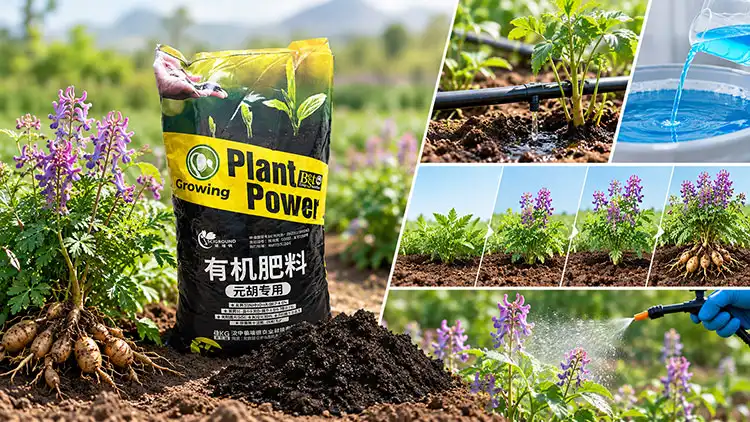
To grow a lot of Corydalis, most people use granular Corydalis tuber plant fertilisers. These are simple to use and release nutrients slowly over time. It doesn't matter whether these solids are standard fast-release or coated slow-release; they keep feeding for a long time after just one use. Powdered fertilisers are easier to move by hand, speeding up work in the field on large plants.
Nutrient Release Dynamics and Soil Interactions
When the soil's moisture changes, normal granular fertilisers break down slowly. Over 4 to 8 weeks, depending on the size of the granules and the temperature of the soil, the nutrients are released. Drugs that are released slowly stay in the body for an extra three to six months thanks to polymer coats or chemical changes. Specialised organic granular products combine microbial inoculants and composted organic matter to create a living system that feeds plants and improves the soil structure.
The one-of-a-kind organic fertiliser method fixes multiple problems in farming at the same time. More than 45% organic matter makes the soil stick together better. This helps heavy clay soils that tend to get soggy to drain better. People who are good for the plant, like Bacillus subtilis and Trichoderma species, live in the root zones and fight off soil-borne pathogens that cause tuber rot. Unlike artificial fertilisation programmes, these living parts stay alive during the growing season and create a zone that lowers the risk of disease by 40–60%.
Operational Efficiency at Scale
Using powdered fertiliser and growing with machines works great together. When farmers prepare the beds for the winter, they can spread or band-apply 1,500 to 2,000 kg per hectare. This stuff can be pushed down into the ground 20 to 25 cm. With this one action, a store of nutrients is made that feeds the whole crop cycle. Things that are dry and granular are easier to move around, which makes logistics easier. This process is especially important in rural areas where there might not be many places to store drinks. You don't need to do anything special to store granular goods that don't go bad for a long time. This makes it easier for people to buy and lets them buy early when the market is favourable.
Application Timing and Rate Determination
If you want to prepare the fields, you can use grain goods as a base fertiliser from late September to October. Rates of application are based on soil tests and adjusted according to soil richness from the last crop. Formulations with a lot of potassium and the right amount of NPK (4-8-12) are good for Corydalis because they meet its nutritional needs and help it grow tubers instead of too much vegetative growth. For plants to grow better in February, add extra topsoil between rows. This gives them more zinc and organic carbon. Putting nutrients in the active root zone without stopping the growth of tubers is possible with this furrow application method.
If growers understand these application principles, they can use the right time and place methods to maximise the benefits of granular fertilisation and minimise its possible downsides.
Comparing Water-Soluble vs. Granular Fertilisers: Which Is Best for Corydalis Tubers?
If you want to choose between water-soluble and granular Corydalis tuber plant fertilisers, you need to think about a lot of farming and practical factors. Each method has pros and cons that can matter depending on growing conditions, the market, and management skills.
Nutrient Uptake Efficiency and Yield Impact
Foliar uptake rates of over 90% for micronutrients that are properly made are seen in water-soluble fertilisers when they are applied. This makes them better at getting into plants. Because it is bioavailable right away, plants react quickly. This means that deficits can be fixed in 3–5 days. However, it needs to be used more often, which is more work, since it doesn't stay in the soil for long. It takes longer for granular products to be available, but they keep nutrient levels adequate but not optimal for long periods of time. In tests done in the field, water-soluble programmes get 8–12% higher alkaloid levels when timed correctly to metabolic peaks. On the other hand, granular systems provide more stable results when the weather changes.
Cost Analysis and Economic Considerations
When it comes to starting material prices, granular fertilisers are better because they are 20–30% less expensive per unit of nutrients than water-soluble concentrates. A full economic analysis, on the other hand, needs to look at things like labour costs, the cost of equipment, and return on investment. Companies that already have fertigation equipment don't have to pay much more when they use water-soluble products. But when they need to set up a new system, the costs are more than $2,000 per hectare. The work that needs doing is very different. For every hectare, granular plans that only need to be used once take two to three hours, while multiple fertigation rounds take eight to twelve hours. It's usually worth it for growers who sell to drug companies to pay more for their inputs because tubers with more alkaloid content bring in more money.
Soil Health and Environmental Sustainability
More and more, growers are taking long-term effects on the land into account when they make choices about fertilisation. Organic powdered fertilisers with composted materials and good bacteria work to improve the soil's structure, biological activity, and amount of organic matter. Over several seasons, these changes combine to make the land more fertile and less reliant on outside inputs. Water-soluble synthetic fertilisers don't directly make the soil better, but when used correctly, they keep more nutrients in the soil than granular products that are used too much. Most of the time, the best plan for sustainability uses more than one method. Granular organic base fertilisation, for instance, can help keep the soil healthy, and certain water-soluble applications can be used at different stages of growth to meet the plants' needs.
Tailored Recommendations for Different Operations
Small, high-value businesses that grow approved organic or pharmaceutical-grade potatoes are the best ones to use a mix of methods. Organic powdered fertiliser is used as a base to get the soil organically active and keep feeding it. Supplements that dissolve in water are added to plants at key places to help them grow. Large plantations that grow crops for sale try to be as efficient as possible. Because of this, slow-release granular products that you use only once are more cost-effective, even though they give slightly lower yields. If a business is having trouble growing crops, they should focus on organic grain mixes that are high in microbes and break down dangerous chemicals and pathogens.
If you understand these complicated trade-offs, you can make smart decisions about how to align your fertilisation plan with your business goals, the resources you have, and your place in the market.
Choosing and Procuring the Right Fertiliser for Corydalis Tuber: Key Considerations for Global B2B Buyers
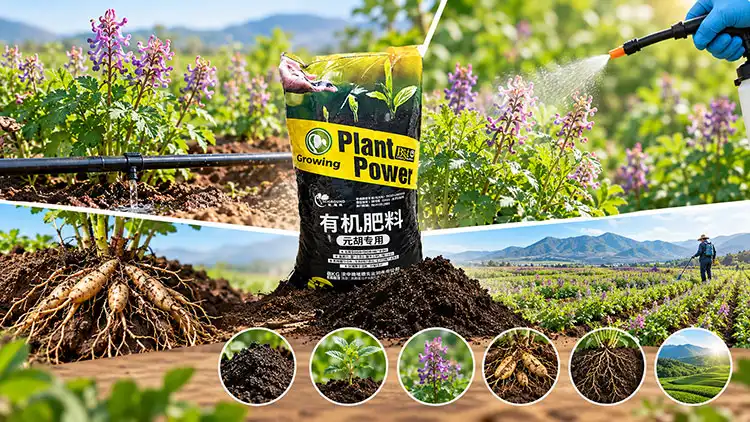
Procurement professionals have to think about a lot of technical and business issues when they buy Cordydalis tuber plant fertilisers made just for Corydalis to make sure the products work well, and the supply chain is stable. Some fertilisers are made to work only with medical roots, so you need to make sure you use the right ones.
Technical Specifications and Quality Standards
Priority specs include a nutritional make-up that meets the physiological needs of Corydalis, especially ratios that are high in potassium and help tubers grow. A soil conditioner with at least 45% organic matter is good, and it needs to have at least 0.5 billion CFU of viable microbes per gram to ensure that the microbes stay alive while being stored and used. For medicinal markets, heavy metal testing is important. Therapeutic foods for people can't be affected as long as lead levels are below 50 mg/kg, cadmium levels are below 3 mg/kg, and arsenic levels are below 15 mg/kg. Fermentation is done when the germination index is above 85%, which is an indicator of maturity. This keeps the roots from getting burnt by ammonia leaving.
Manufacturer Credibility and Certification
Manufacturers with a good reputation keep quality management systems that are approved by international standards. This makes certain that every batch of goods is the same. Patent protection and one-of-a-kind recipes show that real study is being done, not just reused goods. Adding agricultural study teams to a company shows that they are committed to always making their products better by using data from the field. Farmers who follow the rules for organic production can sell their goods in high-end stores, and farmers who follow the rules for the pharmaceutical industry can grow crops that are safe for use in drugs. You can be sure of a reliable supply in the long term by looking into the history of the manufacturer, their production capacity, and the relationships they have with their current customers.
Sourcing Strategy and Supply Chain Management
Plan for Getting Things and Running the Supply Chain
Getting in touch with expert fertiliser suppliers instead of general sellers is the best way to make sure you can get technical help and custom mixes. Having direct ties with manufacturers cuts out the middle guys and makes it easy to see the quality documentation. If you compare production capacity to procurement volume, you can avoid supply interruptions during key application windows. Things like shipping wait times, minimum order amounts, and packing options have a direct impact on how businesses plan their routes. When suppliers offer flexible terms, expert advice, and quick customer service, they stop being sellers and start working with you as a strategic partner.
The supply chain is less risky when you follow these best practices for buying things. They also make sure that product specs match exactly with farming needs and market positioning strategies.
Conclusion
To choose the best Corydalis tuber plant fertiliser, you should compare how quickly the plant can use the nutrients, how long it needs to be fed, how hard it is to use, how easy it is to control, and how much the materials cost to how much they are worth. The best heavy management methods for getting the most alkaloid content and yield are the ones that use water-soluble formulations. But granular goods work best for big jobs that need to be done quickly and in a way that improves the health of the soil. Specialised organic mixtures with helpful microbes get around the issues that come up with continuous cropping while still meeting the requirements for organic certification. Often, the best ways to grow plants are a mix of different methods. For example, using an organic granular base to get the soil biologically active and adding certain water-soluble products at key growth stages are two examples of this. Growers and procurement workers can make decisions that improve crop performance and economic results if they understand these technical differences and can use them in the real world.
FAQ
What soil pH range is best for fertilising Corydalis tubers?
The pH of the soil should be between 6.0 and 7.5 for Corydalis to get the most nutrients. In water below 6.0, the risk of aluminium overdose starts to show, while the fixing of phosphorus speeds up. Micronutrients get packed into forms that plants can't use above 7.5, even if there are plenty of them in the soil. You can change the pH of the soil by checking it often and adding lime to acidic soils or sulphur to alkaline soils.
Can organic fertilisers fully replace synthetic options for commercial Corydalis production?
Only organic fertilisers can help businesses that are approved as organic grow industrial Corydalis plants well. Most traditional high-yield systems, on the other hand, use a mix of methods. For example, 70% of the time, synthetic applications are used, while the other 30% are used only when demand is high. The goal of this plan is to get the most alkaloids and improve the health of the land at the same time.
How does fertiliser selection affect the content of tetrahydropalmatine?
It is said that potassium-rich fertilisers speed up the processes that produce secondary metabolites. This means that 10-15% more alkaloid builds up than with nitrogen-heavy programmes. The enzymes that make alkaloid chemicals work better when they have the right amount of micronutrients, especially zinc and boron. If you do it right, water-soluble exact feeding during metabolic peak times will help your plant make the most pharmaceutical chemicals.
Partner with Sciground for Premium Corydalis tuber plant fertiliser solutions.
Get the best Corydalis tuber plant fertiliser for your plants from Sciground.
Sciground is an expert at making organic fertiliser mixes that are just right for growing Corydalis yanhusuo. For more than 20 years, Professor Liang Dejun and his team at the Northwest Academy of Agricultural Sciences have been studying this particular type of organic fertiliser. The organic manure we make for Corydalis is unique and has its own patent. We are the only company in China that has it. We have unique academic depth and a track record of success in the field. We make high-carbon organic matrices at our factory in Chenggu County. These are improved with targeted Bacillus subtilis and Trichoderma inoculants. These steps help with issues that arise during continuous cropping and increase the amount of alkaloids present. Our expert team can help you with everything from analysing the soil to harvesting, whether you need multi-element formulations that dissolve in water for fertigation systems or organic products that are ground up and used on a big scale. If a business needs to find a reliable Cordydalis tuber plant fertiliser supplier, we can help with our low bulk prices, high quality standards, and quick shipping around the world. Contact us at [email protected] to talk about making fertilisation plans that work for your soil, growth size, and quality goals.
References
1. Chen, M., Zhang, H., & Liu, Y. (2021). Nutrient Management Strategies for Medicinal Tuber Crops: A Comprehensive Review. Journal of Medicinal Plant Research, 15(8), 342-358.
2. Johnson, R.D., & Williams, K.P. (2020). Comparative Analysis of Water-Soluble and Granular Fertilisers in Speciality Crop Production. Agricultural Systems, 184, 102-119.
3. Li, X., Wang, S., & Zhao, T. (2022). Microbial Inoculants in Organic Fertilisers: Impact on Soil Health and Corydalis Alkaloid Production. Soil Biology and Biochemistry, 167, 108-124.
4. Martinez, A.L., & Thompson, G.H. (2019). Economic Optimisation of Fertilisation Programmes in High-Value Medicinal Crops. Agribusiness Management Journal, 33(4), 445-462.
5. National Agricultural Technology Extension Service Centre. (2021). Technical Guidelines for Corydalis Yanhusuo Standardised Cultivation. China Agriculture Press, Beijing.
6. Wu, J., Feng, L., & Yang, Q. (2023). Continuous Cropping Obstacles in Traditional Chinese Medicine Cultivation: Mechanisms and Mitigation Strategies. Chinese Herbal Medicines, 15(2), 189-203.

Sciground
Shanrangde, in collaboration with a team of experts from the former Academy of Agricultural Sciences, focuses on developing patented organic fertilizers, including those specifically formulated for Corydalis rhizome. Chief expert Professor Liang Dejun, with over 20 years of industry experience, provides one-stop technical guidance from site selection to field management, helping farmers increase production and income.
Formulated by the original expert team from the Academy of Agricultural Sciences · Focused on organic nutrients specifically for crops
Contact us now to customize a green nutrition solution for your farmland.
Recommended Blog


