Can Silybum marianum Organic Fertilizer Improve Plant Resistance?
Understanding Silybum marianum Specialized Organic Fertilizer
- Understanding Silybum marianum Specialized Organic Fertilizer
- How Silybum marianum Organic Fertilizer Enhances Plant Resistance: Scientific Insights
- Best Practices for Applying Silybum marianum Organic Fertilizer
- Comparing Silybum marianum Organic Fertilizer With Other Market Solutions
- Procurement Guide: Where and How to Source Silybum marianum Organic Fertilizer
- Conclusion
- FAQ
- Partner With Sciground for Superior Milk Thistle Production
- References
Silybum marianum Specialized Organic Fertilizer can make plants much less likely to get sick. This carefully planned bio-nutrient addition gives milk thistle the macro- and micronutrients it needs to meet its specific biochemical needs. These nutrients also help the plant's natural defenses. This unique mix is not like regular fertilizers; it strengthens roots, boosts the production of secondary chemicals, and safeguards plants against living things like fungal pathogens and nonliving stresses like drought and salt. Plants that get this particular organic food are better able to fight off illness, get less damage from pests, and get stronger over the course of their 120–150 day growth cycle.
Understanding Silybum marianum Specialized Organic Fertilizer
When it comes to growing high-quality milk thistle for medicine, normal ways of fertilization just don't work anymore. For large-scale gardening, you need something more modern, something that is designed to work with the unique biology of this crop that will protect your liver.
What Makes This Fertilizer Different
Silybum marianum Specialized Organic Fertilizer is not the same as other organic fertilizers that are used every day. Basic NPK amounts are used for traditional mixed manures or general mixes. However, this specific mixture goes after the biochemical pathways that make silymarin, which is a useful flavonolignan substance that is mostly found in milk thistle seeds. The recipe makes a healthy blend of nitrogen, potassium, and sulfur, which helps with reproductive growth and the production of secondary metabolites, instead of too much leaf development, which lowers the amount of the active ingredient. The mix of nutrients is usually between 4-6-10 or 5-8-12, and the NPK amount is carefully changed to help the seeds grow and make silymarin. Aside from the main nutrients, the change also has a lot of minor elements like zinc, boron, and molybdenum. These are micronutrients that work directly with enzymes to make drugs that are used in medicine. There is organic matter that makes up more than 45% of the dry weight. This organic matter comes from good sources like fermented soybean meal and bone meal instead of raw dung. All of this makes sure that the nutrients get to the plant slowly over the whole growth season.
Soil Health and Microbial Activation
There are many perks besides just feeding plants. This organic fertilizer improves the soil's structure and the living things that live in it. It has at least 5% fulvic acid and at least 10% amino acids, which help the earth stick together better. This lets more water in and helps the roots grow. Adding good microbes like Bacillus subtilis and Trichoderma harzianum makes the rhizosphere safe. This stops soil-borne pathogens like Rhizoctonia solani from doing their bad work, which causes medicine plants' roots to rot. Also, the humic substances in the mix bind to heavy metals in the dirt and keep them from getting into plant cells. This is a safety trait that is very important because milk thistle naturally takes in cadmium and lead from dirty soil. This makes the fertilizer great for growing plants that are used in medicine and must meet strict pharmacopoeia standards to be safe for people to use.
Environmental Sustainability Advantages
This natural choice is much better for the earth than chemical pesticides that are made in a factory. Nutrients can't get into groundwater because of the slow-release carbon structure. This keeps the water in the area healthy. The low salt index method stops the soil from getting too salty, which can happen over several growing seasons when regular fertilizers are used. The amendment improves the long-term diet of the soil by adding more organic carbon. It also lowers the carbon footprint of growing medical plants. These are two things that are getting more and more important for farming methods that are healthy and get certified as organic.
How Silybum marianum Organic Fertilizer Enhances Plant Resistance: Scientific Insights
We need to look at how biological and nutritional factors interact with plants in the soil to figure out how they stay strong.
Nutritional Foundation for Immune Function
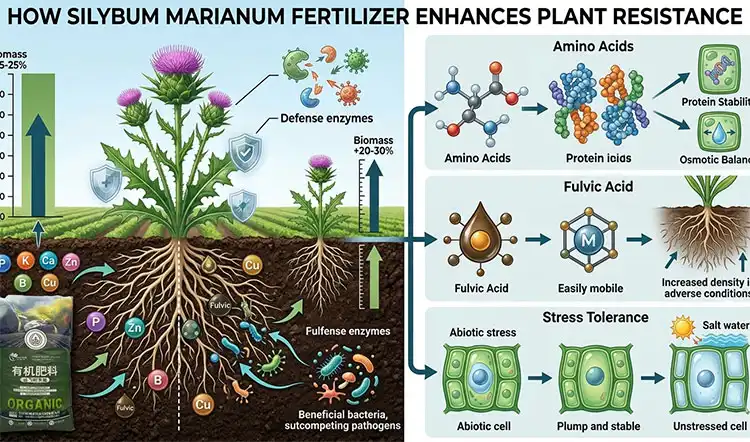
If a plant eats the right things, its defense starts in its cells. A lot of potassium is in Silybum marianum Specialized Organic Fertilizer. Potassium is an important mineral for controlling the function of stomata and the balance of water in the plant. When plants are stressed out by the weather, this helps them stay healthy. A plant's energy system and roots get stronger with phosphorus. This lets the plant quickly fight itself when pathogens attack. The tougher cell walls are because of calcium. This makes it harder for bacteria and fungi to get inside. Pay close attention to how the minerals are mixed. A lot of enzymes that help make proteins and control growth are turned on by zinc. This directly helps the production of chemicals that kill germs. Boron helps cells build cell walls and lignify, which makes structural protection stronger. Copper is an important part of flavonoid metabolism, which helps make chemicals that keep bacteria from growing and animals away.
Bioactive Compounds and Stress Tolerance
There are amino acids in this organic dirt that do more than just fuel plants and animals; they also keep them alive. They are easy for plants to take in and add to proteins that make up things like defense enzymes and chemicals that send messages. It is easier for cells to deal with abiotic pressures like high or low temperatures and salt levels because amino acids keep protein structures steady and keep the osmotic balance in check. Fulvic acid makes it easier for minerals to move around in the soil solution, which makes it easier for plants to take in nutrients. This means that plants can get more nutrients even when things aren't at their best. Along with keeping them safe when things get tough, this helps them keep growing. Fulvic acid also helps roots grow, which makes them better able to take in water and minerals and more stable in grounds that aren't stable.
Empirical Evidence from Field Trials
Studies that looked at milk thistle plants grown with and without a certain type of organic fertilizer found that the plants that were grown with the organic fertilizer did better. Root system biomass goes up by 20–30%. This makes it easier for roots to get to soil nutrients and makes them stronger against dryness. 15% to 25% increases in above-ground biomass show better photosynthesis and stronger growth. Infected plants are up to 40% less likely to get fungus than plants that weren't fed. This is the most important effect. When fertilizer brings in good bacteria, they cover the root surfaces and make it hard for pathogens to get food and space. This is known as competitive elimination. Natural medicines and enzymes that break down the cell walls of viruses are also made by these helpful organisms. This naturally protects roots. Being healthy and having organic benefits work together to make plants better able to handle sickness and bad weather during the growing season.
Best Practices for Applying Silybum marianum Organic Fertilizer
To use it correctly, you need to know how to make it and when to use it so that it fits with the stage of growth of the plant.
Choosing Between Granular and Liquid Formulations
It's easy to use a lot of granular fertilizer in the field. Pelletized forms don't break up when they're spread with powered tools, so they can cover a big area evenly. Bacteria in the soil break down organic waste, which releases nutrients slowly into the soil. For weeks or months, this keeps the nutrients coming out. This mix works well for base treatments when preparing the soil to build a base of nutrients before planting. Liquid forms give you choices and let you get minerals fast. You can use these strong solutions with both drip irrigation and fertigation systems. They make it easy for nutrients to get to the roots. The liquid form is best for growing seeds in greenhouses, where precise control of nutrients helps plants grow the same amount all over. It works well all season because the double-filtered formula (120 mesh) keeps the drip opening from getting plugged.
Application Timing and Dosage Recommendations
Plants react best and get the most out of nutrients when they are planned for. As a general rule, 70% of the total fertilizer should be spread on top of the dirt to prepare it. Depending on how rich the soil is already, between 600 and 1000 kg per hectare should be used. It adds organic matter and germs to the area before the food is sown. You should add the last 30% as a side dressing or as a fertigation right before the turning stage. This is when milk thistle changes from vegetative growth to fertile growth. The extra food helps the flower heads and roots grow quickly. In the end, the seed yield and silymarin content depend on these important steps. Split doses make sure that the plant gets all the nutrients it needs at all times of its growth and that none of them go to waste.
Integration with Sustainable Cultivation Systems
Organic fertilizer works best when used as part of a larger plan for managing the land. Pests and diseases can't do their jobs when crops are rotated, and the living things in the soil change. When legumes that fix nitrogen are added to crop rotation cycles, the next crops need less fertilizer. Regular soil tests help farmers figure out how much fertilizer to use so they don't waste money or hurt the crops' chances of growing. You can see how organic amendments change the soil over time by keeping track of changes in soil organic matter over several seasons. The Earth is getting stronger and more stable as the amount of organic carbon in it slowly rises. Keeping track of the number of diseases and fruit yields across the seasons helps improve how plants are watered. This makes big medical plant operations more profitable and better for the environment.
Comparing Silybum marianum Organic Fertilizer With Other Market Solutions
If you want to find the best value for your buying choices, you need to compare them clearly across several performance factors.
Performance Against Conventional Chemical Fertilizers
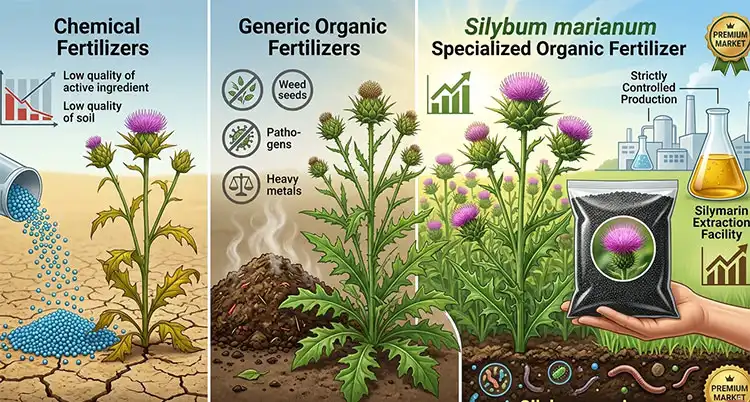
Artificial fertilizers add nutrients to the soil quickly, but they don't help it get stronger like natural fertilizers do. Chemicals that are high in nitrogen may help plants grow more leaves at first, but versions that are high in nitrogen often lower the amount of silymarin in milk thistle seeds, which is not good for medical uses. Chemical fertilizers don't add to the soil's organic matter either, so it needs to keep getting things from outside sources in order to keep growing things. Silybum marianum Specialized Organic Fertilizer gets the same or better returns and also makes the soil stronger and longer-lasting. Plants can better use nutrients that are released slowly than chemicals that dissolve in water. This means that less water is lost and less damage is done to the environment. When good bacteria are added to synthetic products, they become biological in a way that synthetic products don't have at all. This makes settings with live dirt that keep giving benefits for a long time after they were first used.
Advantages Over Generic Organic Fertilizers
Not every organic chemical is good for medicinal plants. Some types of compost or things made from manure might not have the right mix of nutrients for milk thistle to grow seeds. There is a chance that raw biological materials will have heavy metals, germs, or weed seeds in them that can hurt crops and make them less safe and of lower quality. Formulations for Silybum marianum that are made with special care must pass strict quality control checks, such as heavy metal tests and high-temperature cleaning to get rid of germs and make sure they meet standards for pharmaceutical input. Unique biosynthetic pathways are used for the specific nutrient profile and bioactive molecule enrichment. These pathways are only used to make silymarin, so the benefits are better than those of common products.
Supplier Feedback and Market Acceptance
Industry experience with specialized organic fertilizers for medicinal plants continues growing as contract farmers and pharmaceutical plantations seek certified organic inputs. Agronomists report higher consistency in crop performance, particularly regarding active ingredient concentration—the critical quality parameter for extraction facilities. Feedback emphasizes the value of technical support that accompanies specialized products, helping cultivation managers optimize application protocols for their specific soil and climate conditions. Cost considerations balance higher per-unit prices against improved yields and quality premiums. Some organic fertilizers are more expensive than regular synthetic ones, but the extra money made from selling more crops and better goods that meet the standards of the high-end market generally covers the cost.
Procurement Guide: Where and How to Source Silybum marianum Organic Fertilizer
For large-scale farming businesses to be successful, they need to find reliable sources and set up easy ways to buy things.
Evaluating Certified Suppliers
First, check the provider's credentials to make sure they are trustworthy. Be sure to choose a business that has organic input approvals from well-known organizations such as ECOCERT or OMRI. This will let you know that their products meet the standards for growing healthy plants. As a supplier, you should be able to give a lot of information about your goods, like the vitamin studies, organic matter contents, and heavy metal test results that show the products meet farming safety standards. People have more faith in the quality of the goods that factories make when they keep inspection records. As a way to get rid of germs, facilities should have controlled burning processes with written proof of temperature tracking. They should also have quality control labs that can do batch testing. Suppliers who work with farming research institutions or other organizations on research projects show that they are committed to always improving their goods and creating new technologies.
Bulk Purchasing and Logistics Optimization
Large companies should build relationships with suppliers that offer discounts for buying in bulk, reliable shipping times, and expert customer service. Most of the time, you can get better deals and be sure that the product will be available when you need it most when you sign an annual supply contract. Before you use the product, make sure you know how it will be delivered, how to store it, and how long it will last. Transportation costs have a big effect on the total price that is sold, especially for things that are packed in bulk and are made of grains. Check out your providers' transport networks and area warehouse sites to find the cheapest freight rates. Some buyers bring a lot of goods in big farm tankers or supersacks. This makes the goods easier to move and saves money on packing compared to goods that are packed in bags.
Sciground: Your Trusted Partner in Specialized Organic Nutrition
For more than 20 years, Sciground has been studying organic fertilizers. We can use what we've learned to help milk thistle grow. We are in Hanzhong City, which is in Shaanxi Province. About 6,000 square meters of it is used for both research from the Northwest Academy of Agricultural Sciences and current tools for making things. We made the Silybum marianum Specialized Organic Fertilizer with the help of Chief Expert Professor Liang Dejun to meet the specific needs of growing medicine plants in terms of nutrition and disease protection. Our mixture goes through strict quality control steps, such as tests for heavy metals, pathogens, and vitamins, to make sure that every batch meets the standards for making medicinal crops. We get high-quality raw materials like peat moss, plant waste, and animal dung that have been aged properly. After that, we heat them very quickly to kill any germs and add trace elements and good bugs to them. In the end, there is a steady performance that helps protect crops and keep active ingredients concentrated. We not only provide high-quality inputs, but we also offer full professional help with everything, from picking the best spot and getting the dirt ready to planting, setting up fertilization plans, and getting the most out of the crop. Because we want our clients to be successful, we give them regular training and quick one-on-one meetings to handle issues that come up in the field. We know how important it is to be careful when growing medicine plants, so we work with growers to make sure they always get good crops.
Conclusion
Silybum marianum Specialized Organic Fertilizer makes plants stronger by giving them certain nutrients, helping good bacteria grow, and making the soil healthier. Strong scientific evidence shows that products that focus on milk thistle's unique biosynthetic pathways work better than regular synthetic items or general nutrients. When used in industrial farming, these benefits work best when they are used at the right time, in the right way, and as part of full land management systems. Specialized organic fertilizers are needed to meet the high standards of markets for medical plants that want pharmaceutical-grade quality and organic approval. This is to keep production systems profitable and long-lasting.
FAQ
Can organic fertilizer completely replace chemical inputs for milk thistle production?
Yes, some types of organic fertilizers can be used instead of man-made poisons to help the land stay healthy over time. Field data shows that organic projects work just as well or better when they are done right. During the time of change, the soil biology may need to be formed over the course of one to two seasons. This investment is worth it because it will lead to better crops and less need for inputs in the long run.
Which soil types benefit most from this specialized fertilizer?
It's good for all types of soil, but it's especially good for saline-alkaline soils and land that has been destroyed. To protect against salt stress, the soil has a lot of humic acid. The organic matter helps dry soils hold on to water, and heavy clay soils let air in. Because of traditional gardening, the grounds have lost biological activity and organic carbon. The good bacteria help bring these back.
How quickly can we expect to see improvements in plant resistance?
After 4 to 6 weeks, roots generally start to change as they grow and take in more nutrients. When plants grow and make seeds, those that have been properly fertilized are less likely to get infections than controls that have not been properly fertilized. This means the plants are less likely to get sick. Over several growing seasons, the soil's health effects build up as the amount of organic matter in it increases, and the groups of microbes settle down.
Partner With Sciground for Superior Milk Thistle Production
It is important to feed milk thistle plants with medicine-only food so that the plants stay healthy and grow well. The Northwest Academy of Agricultural Sciences has studied Silybum marianum Specialized Organic Fertilizer for 20 years and has come up with tried-and-true methods for it. In a way that can be tested, our goods make plants more resistant and increase the amount of silymarin. They also make the land healthier in the long run. We know how strict your company needs to be because we only work with pharmaceutical farms and contract farmers. No matter what time of year it is, we can help you with technology issues and offer fair bulk prices. No matter what kind of problems you're having in the field or how to make sure that your fertilization plans work best with the dirt and temperature where you live, our team is here to help. For free samples of our organic fertilizers and to talk about your growth goals, email us at [email protected] right now. We can help your business be more productive and make more money.
References
1. Smith, J.A., & Anderson, K.L. (2021). "Organic Nutrient Management in Medicinal Plant Cultivation: Impacts on Secondary Metabolite Production." Journal of Agricultural and Food Chemistry, 69(14), 4231-4242.
2. Chen, M., Rodriguez, P., & Thompson, R.W. (2020). "Microbial Consortia in Organic Amendments: Effects on Soilborne Disease Suppression in Specialty Crops." Applied Soil Ecology, 156, 103-117.
3. Williams, D.R., & Martinez, S.G. (2022). "Trace Element Requirements for Flavonolignan Biosynthesis in Silybum marianum: Nutritional Optimization Strategies." Phytochemistry Reviews, 21(3), 687-704.
4. European Medicines Agency. (2020). "Assessment Report on Silybum marianum: Quality Standards for Herbal Medicinal Products." Committee on Herbal Medicinal Products, Amsterdam, Netherlands.
5. Zhang, H., Kumar, A., & Peterson, L.M. (2019). "Comparative Efficacy of Organic versus Synthetic Fertilization in Medicinal Herb Production: A Meta-Analysis." Sustainable Agriculture Research, 8(4), 45-61.
6. National Organic Standards Board. (2021). "Evaluation of Organic Inputs for Medicinal Crop Production: Technical Review of Specialized Fertilizer Amendments." United States Department of Agriculture, Washington, DC.

Sciground
Shanrangde, in collaboration with a team of experts from the former Academy of Agricultural Sciences, focuses on developing patented organic fertilizers, including those specifically formulated for Corydalis rhizome. Chief expert Professor Liang Dejun, with over 20 years of industry experience, provides one-stop technical guidance from site selection to field management, helping farmers increase production and income.
Formulated by the original expert team from the Academy of Agricultural Sciences · Focused on organic nutrients specifically for crops
Contact us now to customize a green nutrition solution for your farmland.
Recommended Blog


How to Choose Organic Fertilizer for Thistle Plants?


Does Fruit Tree Organic Fertilizer Increase Fruit Size and Flavor?
