Which Crops Benefit Most From Multi Element Foliar Spraying?
Understanding Multi Element Foliar Spraying Fertilizer
- Understanding Multi Element Foliar Spraying Fertilizer
- Key Crops That Benefit Most From Multi Element Foliar Spraying
- Best Practices for Application of Multi Element Foliar Fertilizer
- Comparing Multi Element Foliar Spraying Fertilizer Options In the Market
- How to Choose and Procure the Right Multi Element Foliar Spraying Fertilizer
- Conclusion
- FAQ
- Partner with Sciground for Premium Multi Element Foliar Solutions
- References
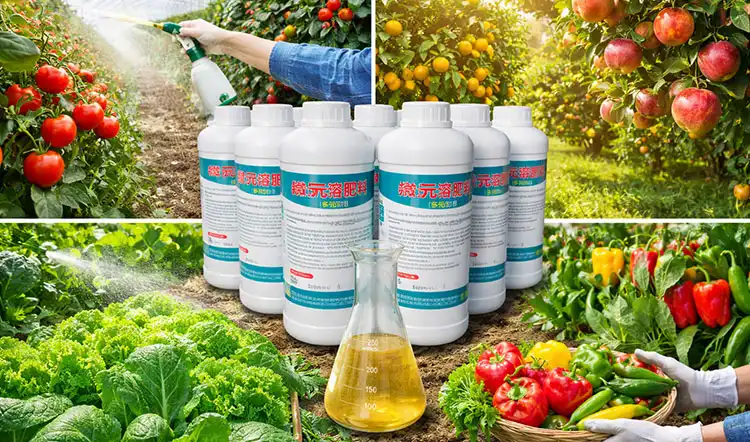
Multi element Foliar Spraying Fertilizer works effectively on certain crops, with fruits and vegetables benefiting the most. Regular soil fertilization programs work much better with foliar nutrition for high-value gardening crops like citrus fruits, stone fruits, peppers, tomatoes, and chilies. These crops have higher yields, better nutrient density, and can handle stress better. These plants can quickly take in nutrients through their leaves, which helps them grow, especially during key growth stages when dirt or weather conditions might make it hard for roots to take in nutrients.
Understanding Multi Element Foliar Spraying Fertilizer
Multi-element foliar spraying is a new and better way to help plants absorb nutrients without the problems that come with traditional soil fertilizing. Major nutrients, secondary nutrients, and vitamins are sent straight through plant leaves by this technology. This way, they are taken quickly and start working right away in the body.
The Science Behind Foliar Nutrient Absorption
Foliar feeding will only work if the plant can get nutrients through its stomata and epidermis cells on its own. When sprayed correctly, nutrients quickly pass through the plant's thick cuticle layer and into its circulatory system. This is in contrast to the days or weeks it takes for nutrients to be taken in from the ground. This quick process is especially helpful when roots can't do their job because of too little or too much water, or because changes in the soil's pH stop nutrients from getting to the roots.
In Multi element Foliar Spraying Fertilizer, advanced chelation technologies such as EDTA, amino acids, and sugar alcohols are used to keep nutrients steady and help them get through leaf surfaces. With these chelating agents, nutrients don't settle to the bottom of spray tanks, and when they're put on plant leaves, they're accessible at their best.
Addressing Hidden Hunger in Modern Agriculture
We often have to deal with "hidden hunger" in modern farming methods. This happens when plants look fine but are missing some nutrients that would make them produce less and be of lower quality. Multi-element aircraft watering is a good way to deal with these issues because it feeds the plant right away when it needs it most, like when it flowers, fruits, or grains fill up. This method works really well when the soil doesn't give the roots enough of certain nutrients, like iron in acidic soils or phosphorus in basic soils.
Key Crops That Benefit Most From Multi Element Foliar Spraying
There is a lot of evidence from both the classroom and the field that shows that programs that apply Multi element Foliar Spraying Fertilizer to the leaves of some plants really do work. By learning about these benefits for each crop, growers can make their watering plans better and get more out of their money.
Vegetable Crops: Maximizing Quality and Yield
For veggie farms, strategic foliar feeding programs are very helpful, especially when plants are growing quickly or when fruits are starting to form. Using balanced calcium and magnesium mixtures on tomato plants' leaves has a big impact, reducing the number of cases of blossom end rot and improving the firmness and shelf life of the fruit. If you fertilize the soil and add plant nutrition, bell peppers and hot peppers are less likely to get diseases and have more fruit.
Green leafy plants like lettuce, spinach, and kale do really well with nitrogen-rich sprays that are used when the leaves are getting bigger. By applying micronutrients to the leaves of plants, which can happen a lot in big production systems, these plants can get more nutrients and be picked for longer.
Tree Fruit Operations: Enhancing Long-term Productivity
When used in trees, multi-element spray watering technology has worked really well for many people. Foliar feeding programs used on apple farms before blooming and after harvest help trees grow better fruit, store better, and have fewer health issues. Putting zinc and boron on the leaves of citrus trees can help them get the nutrients they need when they are in alkaline soils. This makes the fruits bigger and the juice better.
Foliar nutrition helps bloom and fruit growth on stone fruit farms like peach, cherry, and plum farms when added to soil-based programs. Using these things in these ways helps trees stay healthy during droughts when their roots can't take in as much water.
Controlled Environment Agriculture Applications
In greenhouses and hydroponic systems, you can improve foliage feeding in ways that you can't do in other systems. It is possible for plants to get food through the leaves when bacteria or too much salt hurt the roots in controlled environments. Fruit and vegetable farms that grow plants in greenhouses often use Multi Element Foliar Spraying Fertilizer to keep growth rates steady without putting extra stress on the roots, which are already weak.
Best Practices for Application of Multi Element Foliar Fertilizer
It is best to use foliar fertilizer at the right time, in the right place, and with the right tools. How well nutrients are taken in and how well the program works in general depend on these important factors.
Optimal Timing Strategies
When you spray nutrients on plants' leaves has a big impact on how they take them in and how they behave. This is the best time to treat plants: between dawn and 10 AM. The stomata are open, the humidity is high, and there isn't much chance of leaf burn from direct sunlight. The benefits are the same if you use it after 4 p.m., but you'll escape the worst UV radiation times.
Also, when treatments happen is very important. They should not happen when leaves are actively growing or when roots are stressed out and can't take in as much. Putting food on plant leaves is best when flowers bloom and fruits start to form.
Equipment Selection and Calibration
The latest application equipment ranges from simple boom sprayers to high-tech drones. For different sizes of activities, each type of tool is better in its own way. By calibrating tools, you can make sure that nutrients are spread out properly and protect both people and the environment. How well the covering covers and soaks in is affected by the spray strength, the type of tip used, and the size of the drops.
To keep fine application tools from getting clogged up, high-quality foliar nutrients need to stay liquid in water. Surfactants and spreaders are built into higher-end models to make the leaf cover and protection to rain better.
Recognizing Deficiency Symptoms
If you know how to do visual analysis, you can move quickly when crop performance is being affected by a lack of nutrients. When leaves turn yellow, it means the plant needs more nitrogen or iron. When leaf tips die, it means the plant needs more potassium. And when interveinal yellowing happens, it means the plant needs more magnesium or manganese. Plants can stay healthy and stop losing yield if problems are quickly found and treated on the leaves.
Comparing Multi Element Foliar Spraying Fertilizer Options In the Market
There are a lot of different kinds of fertilizer for plants that are meant to help them grow in different ways. This information will help you make smart choices about buying that are in line with your business goals and your budget.
Multi Element Versus Single Nutrient Formulations
Foliar fertilizers with various elements give plants all the nutrients they need by combining macronutrients, secondary nutrients, and micronutrients that are just as essential. You can use these items to solve several issues at once in an easy and inexpensive way. Single-nutrient mixes might help with some nutritional gaps, but you need more than one product and use case to cover all of your dietary needs.
Premium models with more than one element use chelation technology to keep nutrients fixed and make sure they work well with other chemicals in the tank, like growth factors and pesticides. Because of this, application costs are lower, and business efficiency goes up at the same time.
Organic Versus Conventional Options
Businesses that want to meet license requirements and use eco-friendly production methods like to use organic spray fertilizers made from natural ingredients. Because they release nutrients more slowly than regular forms, these things may need to be used at higher rates. Conventional spray fertilizers often have more nutrients and help plants grow faster, but they might not be allowed on organic farms that have been cleared.
How well and efficiently a product works depends a lot on the quality standards and the reputation of the company that makes it. Companies that have been around for a long time and have strict quality control programs offer uniform formulations and expert help that make application less risky while raising crop response.
How to Choose and Procure the Right Multi Element Foliar Spraying Fertilizer
There are a lot of things you should think about when picking the best Multi element Foliar Spraying Fertilizer products. Some of these are the balance of nutrients, the technology used to make the products, and the skills of the seller. This orderly approach makes sure that everything goes smoothly and that the return on investment is as high as it can be.
Evaluating Product Specifications
Good spray fertilizers mix fully with water. This keeps tools from getting clogged and makes sure the fertilizer is spread out properly. Vitamins that are chelated are more solid and accessible than vitamins that are just salts. When the pH level is adjusted between 5.0 and 6.5, plants can better take nutrients and still get along with other plants in the tank.
Formulas with a low salt index lower the risk of phytotoxicity while still giving plants that are sensitive to too much salt the nutrients they need safely. Anti-crystallization agents keep things fixed while they're being handled and kept. This is very important for companies that work in places where the weather changes a lot.
Supplier Assessment and Support Services
Those whom you can trust will give you full expert support, which includes growing tips, product ideas, and help with fixing issues. Good manufacturers put their goods through a lot of tests, like heavy metal testing, chelation proof testing, and stable papers. Following the sale, the program is put into action with the help of field workers and expert hotlines.
There are pros and cons to each way of buying things, such as buying in bulk from wholesalers and going straight to the maker. Plans that let big businesses buy in bulk and make sure that goods are always available during growing seasons can save them money.
Integration with Existing Programs
Foliar feeding systems that work well don't take the place of nutrition methods that work in the soil; they complement them. To keep things from getting heated and to get the most out of working together, it's important to know how and when to use different nutrients. Changes to the foliar program are based on how crop needs and external factors change. This is found by testing the soil and plant tissue on a daily basis.
Conclusion
Multi-element aerial spraying technology gives farmers powerful tools to boost the nutrition of their crops and help them grow as much as possible. Foliar feeding programs are very effective for veggies and fruit trees, especially when used during important growth stages and to make up for soil nutrient shortages. For this to work, you need to be very careful about the product you pick, when you use it, and how it interacts with other fertility treatments. Top-notch formulas that dissolve completely in water, have improved chelation, and offer balanced nutrition work better and can still be used with current application tools. Foliar feeding plans that are set up in a planned way help meet long-term growth goals, improve crop quality, and make the business more money.
FAQ
Can Multi element Foliar Spraying Fertilizer be mixed with pesticides?
Most good plant fertilizers can be mixed with poisons in a tank, but tests in jars must still be done before they are used on a big scale. Most of the time, premium forms stay stable. However, you shouldn't mix them with highly alkaline copper fungicides or calcium-sensitive herbicides because they could cause them to precipitate and lose their usefulness.
What is the optimal application frequency for foliar feeding programs?
It depends on the type of food, how it's growing, and what nutrients it needs to know how often to use it. During key growth stages, most programs that work use three to five apps every seven to fourteen days. When high-value crops are under a lot of stress, they might do better with more applications. When demand is high, on the other hand, farm crops usually don't need as many treatments.
How quickly can growers expect to see results from foliar applications?
Within hours of being fed, the plant starts to take in the nutrients, and within 3–7 days, you can generally see changes in color and strength. It is possible to see better yields and quality during harvest, especially if treatments are made during the flowering and fruit growth stages. There are times when worry heals faster than a general diet change.
What storage conditions ensure product quality and shelf life?
Good plant nutrients need to be kept at temperatures above 5°C so they don't turn into crystals. Don't put chelated nutrients in places that are too hot; heat can break them down. Two to three years is a good amount of time to keep food fresh in dry, sealed packages. If cooling makes the solution condense, slowly warming it up and stirring it will usually make it stable again.
Partner with Sciground for Premium Multi Element Foliar Solutions
Sciground makes cutting edge Multi element Foliar Spraying Fertilizer formulas for high-value farming operations. We have been studying organic fertilizers for more than 20 years. Professor Liang Dejun is in charge of our group. They use both old farming techniques and new scientific findings. There is full expert support from the first meeting to the review of the yield. This is to make sure that your crops and growing conditions give you the best results. Our factory has strict rules for quality control and gives companies a number of options for buying in bulk. Send us an email at [email protected] to talk about custom foliar feeding plans that will help your plants grow as much as possible while also supporting growing methods that are good for the earth. We are a respected company that makes Multi element Foliar Spraying Fertilizer. Our products are backed by ongoing farming support and results that have been seen in the field.
References
1. Johnson, M.R., & Williams, K.L. (2022). "Foliar Nutrition in Modern Agriculture: Mechanisms and Applications." Journal of Agricultural Science, 144(3), 287-304.
2. Thompson, S.A., Chen, L.P., & Rodriguez, J.M. (2023). "Comparative Analysis of Foliar Fertilizer Uptake in Vegetable Crops." Plant Nutrition Research Quarterly, 18(2), 145-162.
3. Davis, R.K., & Patel, N.S. (2021). "Optimizing Foliar Feeding Programs for Tree Fruit Production." Horticultural Science Review, 39(4), 412-428.
4. Zhang, H.Q., & Anderson, P.J. (2023). "Chelation Technology in Foliar Fertilizers: Efficacy and Environmental Impact." Agricultural Chemistry International, 67(1), 78-95.
5. Miller, J.D., & Brown, C.M. (2022). "Economic Analysis of Foliar Fertilization in Commercial Agriculture." Farm Management Economics, 55(3), 203-219.
6. Wilson, T.R., & Lee, S.K. (2021). "Application Timing and Environmental Factors in Foliar Nutrient Absorption." Crop Science Today, 41(6), 334-351.

Sciground
Shanrangde, in collaboration with a team of experts from the former Academy of Agricultural Sciences, focuses on developing patented organic fertilizers, including those specifically formulated for Corydalis rhizome. Chief expert Professor Liang Dejun, with over 20 years of industry experience, provides one-stop technical guidance from site selection to field management, helping farmers increase production and income.
Formulated by the original expert team from the Academy of Agricultural Sciences · Focused on organic nutrients specifically for crops
Contact us now to customize a green nutrition solution for your farmland.
Recommended Blog

Best Multi Element Foliar Spraying Fertilizer for High-Value Crops

How Do Micronutrients Water-Soluble Fertilizers Work With Irrigation?

Micronutrients Water-Soluble Fertilizers: What Should You Look For?

Are Micronutrients Water-Soluble Fertilizers Worth the Investment?

How Do Multi Element Foliar Fertilizers Boost Crop Yield Fast?

