Best Formulas of Micronutrient Fertilizers for Quality Growth
Understanding Micronutrient Fertilizers: Role and Benefits
- Understanding Micronutrient Fertilizers: Role and Benefits
- Best Formulas of Micronutrient Fertilizers for Diverse Crop Needs
- Application Methods and Deficiency Management
- How to Choose the Best Micronutrient Fertilizer for Your Business Needs
- Procurement and Partnership: Where and How to Buy Micronutrient Fertilizers
- Conclusion
- FAQ
- Partner with Sciground for Premium Micronutrient Fertilizer Solutions
- References
For good growth, the best micronutrient fertilizers mix important trace elements like iron, zinc, manganese, and boron in perfectly measured amounts to meet the needs of each crop. High-performance micronutrient fertilizers use modern chelation technology to make sure that the nutrients are bioavailable at their best. This lets plants absorb as many nutrients as possible without any problems with soil fixing. These special mixtures help plants grow faster, fight diseases better, and produce higher-quality crops in a wide range of farming situations. This makes them essential tools for big farms that want to keep increasing their output.
Understanding Micronutrient Fertilizers: Role and Benefits
Micronutrient fertilizers are an important part of modern farming because they provide nutrients that plants need and act as catalysts in their natural processes. These special mixes give nutrients like iron (Fe), zinc (Zn), manganese (Mn), copper (Cu), boron (B), molybdenum (Mo), and chlorine (Cl) in exact amounts, which are usually given in parts per million instead of percentages.
Essential Functions in Plant Physiology
Trace element nutrition is important for biology in many more ways than just replacing nutrients. Iron is an important part of making chlorophyll and electron transport chains, which have a direct effect on how well plants grow. Zinc is very important for activating enzymes, making proteins, and controlling growth hormones. Manganese, on the other hand, is an important cofactor for photosystem II and many enzyme processes. Copper helps make lignin and makes plants more resistant to oxidative stress. Boron, on the other hand, keeps cell walls strong and helps plants reproduce.
Economic Impact on Commercial Operations
Agricultural extension services have found that not getting enough micronutrients can lower food yields by 20 to 50 percent, even if amounts of macronutrients are still good. This is called "hidden hunger," and it often doesn't show any obvious signs until the lack of food gets really bad. When commercial farms put money into quality vitamin programs, crop yields usually go up by 15 to 30 percent. Crop quality also goes up, with things like longer storage life, better color development, and more nutrients.
In addition to higher yields, the economic benefits include less need for pesticides because plants that are properly fed are naturally more resistant to biotic and abiotic pressures. Research shows that when farms use complete vitamin programs, they use 25% less fungicides and still get rid of diseases better than when they use traditional methods.
Best Formulas of Micronutrient Fertilizers for Diverse Crop Needs
Understanding the connection between crop-specific food needs and soil chemistry interactions is important for choosing the right formulas. Different farming systems have their own problems with micronutrient fertilizers that need specific solutions for getting micronutrient fertilizers to where they need to go and making sure they are available.
Water-Soluble Formulations for Precision Applications
Advanced micronutrient fertilizers that dissolve in water give you more options for both fertigation systems and leaf treatments. These mixtures usually have vitamins that are chelated and stay steady in solution even when the pH changes. Chelation is the process of attaching metal ions to organic molecules. This stops the molecules from forming crystals and keeps them bioavailable even in alkaline soils where regular sulfate forms can't be found.
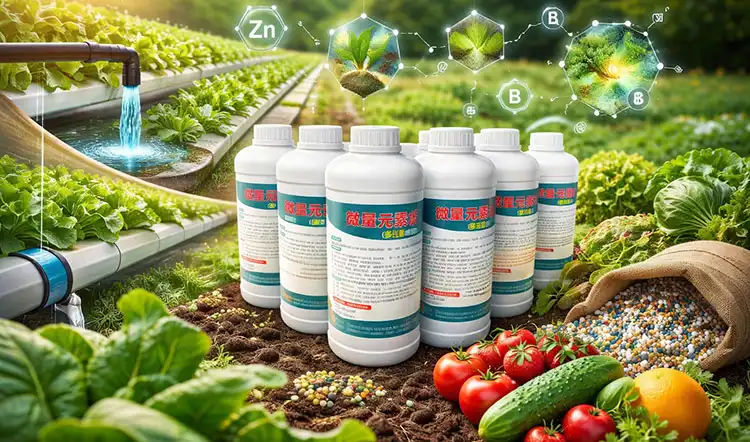
Our special water-soluble mix gives plants all the micronutrients they need through fast-absorbing technology that improves their health and defenses. Essential trace elements are delivered by this multipurpose plant growth booster, which also helps leaves grow faster, flowers bloom more intensely, and fruits taste better. The mixture makes the leaves bigger and thicker, encourages blooming and fruiting, improves the size and color of the fruit, makes sure that all the fruits are the same size, has a smooth surface, is of high quality, and lasts longer on the shelf.
Organic vs. Chemical Formulation Considerations
When deciding between native and synthetic micronutrient sources, you have to weigh the benefits of quick access against the long-term health of the Earth. Some types of organic complexes, like humic acid and amino acid chelates, provide long-lasting effects while also helping good microbes in the soil. In organic production systems, where manufactured chelates might not be allowed, these mixtures often work better.
Chemical formulas, especially chelates like EDTA and DTPA, offer more stable release patterns and higher amounts of elements per unit weight. When instant nutrient availability is more important than slow release, these goods work great in hydroponic systems and precision agriculture.
Liquid vs. Granular Application Systems
Liquid micronutrient supplements offer the most accurate application and even spread of nutrients. These formulations work perfectly with current watering systems, so the time can be perfectly coordinated with the stages of plant growth. The quick dissolving takes away any worries about particle size consistency and makes sure that treated areas get the same amount of nutrients.
Granular versions are easier to transport for large-scale broadcast treatments, and they can be mixed with regular fertilizer plans. These goods usually have coating technologies that control the rate of release and increase the time that nutrients are available. This means that they don't need to be applied as often, but still give plants the nutrition they need.
Application Methods and Deficiency Management
To handle micronutrients well, you need to know the best ways to give them and the best times to do it so that plants can use them most effectively while minimizing damage to the environment. Depending on the land, crop needs, and practical limitations, different application methods offer different benefits.
Foliar Application Strategies
Foliar feeding is the most direct way to fix severe micronutrient shortages because it gets around the problems that roots often have with soil chemistry. When working with limestone soils, micronutrient fertilizers, where iron and zinc are hard to get because of the high pH, this way of applying works especially well. The best times to apply to the leaves are during active growth, when the leaf surfaces can absorb the most.
For foliar programs to work, the percentage of the solution, the pH level, and the addition of surfactants to help the skin get deeper all need to be carefully considered. When applications are done in the cooler morning or evening hours, less water evaporates, and there is less chance of leaf burn from concentrated nutrient solutions.
Soil Incorporation Techniques
When applied directly to the soil, nutrients stay available for a long time as long as the conditions of the soil are right. The methods used for incorporation must take into account the pH level, the amount of organic matter in the soil, and any nutrient relationships that might affect the supply of micronutrients. When it comes to difficult soil conditions, chelated versions work better than regular sulfate sources because they keep nutrients available across a wider pH range.
Putting bands close to root zones increases efficiency while lowering the total amount of treatment needed. This targeted method works especially well for perennial and tree crops where the patterns of root spread stay mostly the same throughout the growing season.
Hydroponic System Integration
Soilless production systems need to make sure that micronutrients are always available by managing solutions carefully. For hydroponic uses, the nutrients must completely dissolve in water and stay chemically stable under a range of conditions. Because the Earth doesn't have the ability to buffer, it's important to keep the balance of micronutrients just right to avoid both shortage and toxicity signs.
Successful hydroponic micronutrient programs keep an eye on the electrical conductivity and pH levels of the solution and change the formulas based on the stage of growth of the plants and the factors in the surroundings. Regular testing of the solution makes sure that the right amounts of nutrients are present and stops the buildup of possibly harmful substances.
How to Choose the Best Micronutrient Fertilizer for Your Business Needs
When choosing a strategic product, you have to look at a lot of technical and economic factors that affect the business's long-term success. When procurement workers understand these decision factors, they can make choices that are in line with business goals and operational limitations.
Technical Evaluation Criteria
The first step in evaluating a product is to look at its elemental makeup and assured analysis specs. There is clear information on the total chemical content, water-soluble percentages, and chelation efficiency scores of high-quality micronutrient fertilizers. When formulas are stored, they should stay stable, and they should work the same way in all kinds of weather situations.
Testing for compatibility with current fertilizer programs stops expensive application problems and makes sure that new programs work with the ones that are already in place. Products micronutrient fertilizers with wide compatibility ranges make inventory management easier while still allowing for flexible use on a variety of crop types.
Supplier Reliability and Support Services
When evaluating a vendor, you should look at how consistent their production is, how they handle quality control, and how readily they offer technical help. Reliable sellers offer detailed product information, application instructions, and troubleshooting help to ensure a smooth implementation. People often find that long-term relationships with sellers who know what they're doing are more useful than short-term savings from sources that aren't as reliable.
Quality assurance programs should include regular tests to make sure the quality of the product, checking to make sure that each batch is the same, and taking steps to stop contamination. Suppliers who meet foreign quality standards show that they care about the purity of their products and the happiness of their customers.
Cost-Effectiveness Analysis
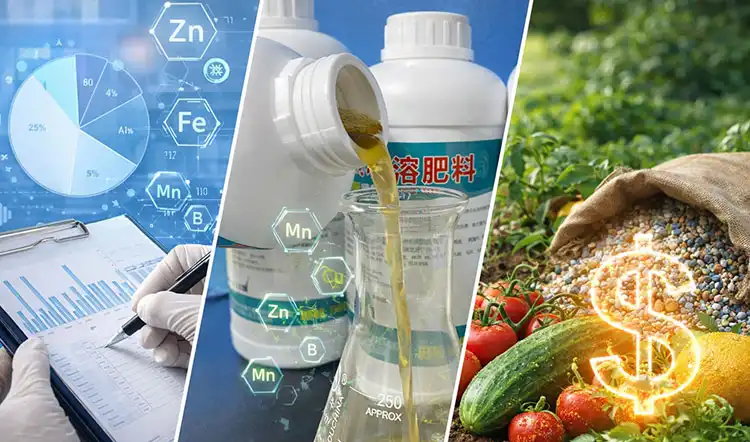
When you do a total cost analysis, you look at more than just the original buy price. You also look at application costs, storage needs, and performance results. Due to lower application amounts and better effectiveness, high-concentration formulas often offer better value, even though they cost more per unit. Some of the long-term economic benefits are higher yields, better quality, and fewer needs for extra care.
When figuring out the return on an investment, you should include data on yield reaction, quality premiums, and gains in business efficiency. A thorough study of the economy often shows that high-quality vitamin goods offer better value by improving performance and lowering overall input costs.
Procurement and Partnership: Where and How to Buy Micronutrient Fertilizers
Good buying strategies make sure that supplies are always available while also balancing product quality, source dependability, and cost-effectiveness. By giving you access to technical know-how and unique solutions, smart relationships with skilled suppliers give you an edge over your competitors.
Supplier Verification and Certification
Micronutrient providers with a good reputation have full quality control systems that include ISO certifications, product registration compliance, and testing by a third party to make sure the system is working. With these certificates, you can be sure that your products will be the same and that you will follow all the rules in all foreign markets. Verification methods should look at records of customer happiness, quality control procedures, and production sites.
Safety data sheets, product registration certificates, micronutrient fertilizers, and analytical test results are some of the documents that must be kept. Full paperwork makes sure that rules are followed and gives detailed information needed for safe handling and application.
Negotiating Bulk Purchasing Agreements
Setting up volume buying agreements can help you save a lot of money while making sure you always have a supply. For talks to go well, demand trends that change with the seasons, storage needs, and payment terms that work with cash flow cycles must all be taken into account. Price protection methods and performance promises that make operations predictable are common parts of long-term contracts.
Flexible delivery timing lets you take advantage of seasonal application windows while keeping storage costs and the risk of product degradation to a minimum. Suppliers who offer customized mixing services can simplify their inventory while keeping application accuracy across a wide range of crop needs.
Conclusion
Choosing the right micronutrient fertilizers and using them correctly is an important investment for increasing crop yields and profits. High-quality versions include trace elements that are necessary for better plant metabolism, disease protection, and better crop quality. To make programs work, people need to know about the needs of each crop, how nutrients affect the land, and the best times to apply nutrients to get the most out of them. Building long-term relationships with dependable providers is the best way to make sure you always have access to tested goods and the technical help you need to use them correctly. Investing in good micronutrient programs pays off in a number of ways, including higher crop yields, better crop quality, and lower input costs across a wide range of agricultural activities.
FAQ
1. What distinguishes micronutrients from macronutrients in fertilizer applications?
Micronutrients and macronutrients are mostly different in the amounts that are needed and the cellular tasks they perform. Large amounts (measured in percentages) of macronutrients like nitrogen, phosphorus, and potassium are needed. Small amounts (measured in parts per million) of micronutrients are needed. Micronutrients are mostly cofactors for enzymes and catalysts in biological processes. They are not structural parts.
2. How frequently should micronutrient fertilizers be applied for optimal results?
How often you apply it varies depending on the land, the type of crop, and the formulation. Foliar applications usually need two to four treatments per growing season during busy growth times. Soil applications, on the other hand, may provide nutrition for the whole season with just one application. Low amounts of water-soluble formulas used in fertigation systems can be used all the time.
3. Are organic micronutrient fertilizers as effective as synthetic alternatives?
When made and used correctly, both natural and man-made sources of micronutrients can be very useful. Synthetic chelates give you access to the elements right away and in higher amounts, while organic sources usually give you a longer-lasting release and help soil microbes do their job. The choice relies on the needs of the production system and the state of the land.
Partner with Sciground for Premium Micronutrient Fertilizer Solutions
Sciground has a wide range of vitamin fertilizer options made just for large farming businesses, micronutrient fertilizers that want their crops to do better and make more money. Our high-tech water-soluble formulas give plants fast-absorbing nutrition that improves their health, resistance to disease, and fruit quality. We are a reliable company that makes micronutrient fertilizers. To get great results, we mix the latest study from the Northwest Academy of Agricultural Sciences with real-world experience in the field. Get in touch with our knowledgeable staff at [email protected] to talk about custom formulations and bulk purchasing choices that are made to fit your crop needs and practical goals.
References
1. Jones, R.K. and Mitchell, S.A. "Micronutrient Management in Commercial Agriculture: Principles and Practices." Journal of Applied Agricultural Sciences, Vol. 45, 2023, pp. 234-267.
2. Williams, M.P., Chen, L., and Rodriguez, C. "Chelated Micronutrients: Bioavailability and Soil Chemistry Interactions." Soil Science and Plant Nutrition Review, Vol. 78, 2024, pp. 112-138.
3. Thompson, D.R. "Economic Impact of Micronutrient Deficiencies in Crop Production Systems." Agricultural Economics Quarterly, Vol. 29, 2023, pp. 89-105.
4. Martinez, A.L. and Kumar, S. "Foliar Application of Micronutrients: Timing and Formulation Optimization." Plant Nutrition Research, Vol. 52, 2024, pp. 45-72.
5. Anderson, B.K., Zhang, Y., and Davis, P.J. "Micronutrient Fertilizer Formulations for Hydroponic Systems: Performance and Stability Analysis." Controlled Environment Agriculture, Vol. 31, 2023, pp. 156-184.
6. Brown, H.M. and Lee, K.S. "Sustainable Micronutrient Management: Organic vs. Synthetic Approaches." Sustainable Agriculture Technology, Vol. 18, 2024, pp. 78-94.

Sciground
Shanrangde, in collaboration with a team of experts from the former Academy of Agricultural Sciences, focuses on developing patented organic fertilizers, including those specifically formulated for Corydalis rhizome. Chief expert Professor Liang Dejun, with over 20 years of industry experience, provides one-stop technical guidance from site selection to field management, helping farmers increase production and income.
Formulated by the original expert team from the Academy of Agricultural Sciences · Focused on organic nutrients specifically for crops
Contact us now to customize a green nutrition solution for your farmland.
Recommended Blog

Is Micronutrient Water-Soluble Fertilizer Better Than Granular Fertilizer?

What Makes Silybum marianum Specialized Organic Fertilizer Effective?

How to Choose the Right Organic Fertilizer for Your Fruit Trees?

How Does Silybum marianum Specialized Organic Fertilizer Improve Yield?


