Why Do Farmers Prefer Balanced Liquid Fertilizer for Rapid Absorption?
Understanding Balanced Liquid Fertilizer and Its Nutritional Value
- Understanding Balanced Liquid Fertilizer and Its Nutritional Value
- Why Rapid Absorption Matters: Benefits for Farmers and Crops
- How to Use Balanced Liquid Fertilizer Effectively for Maximum Results
- Choosing the Right Balanced Liquid Fertilizer: A B2B Buyer's Guide
- Future Trends and Innovations in Balanced Liquid Fertilizer
- Conclusion
- FAQ
- Partner with Sciground for Premium Balanced Liquid Fertilizer Solutions
- References
Balanced Liquid Fertilizer is popular among farmers across the US because it gives plants nutrients in a form they can receive right away, without the delays that come with powdered options. This fluid-phase nutrient method fully dissolves important macronutrients and micronutrients, so roots and leaves can take them in within hours instead of days. The outcome can be measured: faster crop response, less waste, and higher yields directly lead to higher profits for farmers, traders, and dealers who run a variety of agricultural businesses.
Understanding Balanced Liquid Fertilizer and Its Nutritional Value
What Makes Balanced Liquid Fertilizer Unique?
The nutrients in Balanced Liquid Fertilizer are delivered in a very precise way. The amounts of nitrogen (N), phosphorus (P), potassium (K), and important micronutrients are all exactly the right ones according to science. Granular goods need water and microbes to break down, but liquid versions give plants nutrients right away. We've seen this instant access be very helpful during key growth windows, when farmers lose both time and potential yields when they have to wait to get nutrition.
Nutrient Composition and Plant Health Benefits
The uniformity of the ingredients in good liquid fertilizers ensures that every drop has the same amount of nutrients. This uniformity gets rid of the segregation issues that come up with dry blends, where heavier particles fall during shipping, making field uses less consistent. Our work with hydroponic farms and people who grow vegetables shows that proper ratios stop the chemical imbalances that happen when one element is too much for another. Unbalanced nutrients can cause problems that can be seen, like chlorosis, stunted growth, or bad fruit set. Liquid formulations can effectively stop these problems because of how they are made.
Comparing Liquid to Granular and Organic Options
When comparing how efficiently different types of fertilizer use nutrients, liquid versions do better. Granular fertilizers can take a while to dissolve if the soil is not properly wet, warm, and full of microbes. Even longer mineralization times are needed for organic additions before minerals can be used by plants. Because liquid nutrients don't have any of these problems, they work great for indoor plants, hydroponic systems, and tomato production, where controlled nutrition time is key to making money. We saw that uptake rates for liquid fertilizers applied to leaves reached 100% within six hours under the best circumstances.
Why Rapid Absorption Matters: Benefits for Farmers and Crops
Physiological Mechanisms Behind Fast Nutrient Uptake
There are two main ways for plants to take in liquid fertilizers: through their roots and through their leaves. Active transport systems across cell walls help root systems quickly take in nutrients that have been released. Foliar treatments go right through the leaf layers. Studies show that foliar uptake can be 10–20 times more effective per nutrient unit than root absorption. This speed is very important when dealing with serious problems that need to be fixed right away. Stomatal and cuticular routes let nutrients quickly enter the arterial tissue, which starts to support metabolic processes just hours after application.
Accelerated Growth and Enhanced Yield Performance
Rapid access of nutrients is directly linked to stronger crops. We have proof that farmers who used Balanced Liquid Fertilizer on veggie crops got 15–25% more produce than those who used regular granular plans. Because the nutrients are available right away, the plants can keep growing without stopping for long periods of time, which would let pests or natural stress build up. Dealers who sell to industrial growers consistently hear feedback about more uniform crops, which makes harvesting easier and raises the percentage of usable yields. This performance benefit comes from keeping the right amounts of nutrients throughout all stages of growth, instead of creating the feast-and-famine cycles that granular uses can cause.
Environmental Benefits and Reduced Nutrient Loss
Using liquid fertilizers precisely has a big positive effect on the earth. Less fertilizer runs off or goes into groundwater beyond the root zone because nutrients are available right away and quickly absorbed. The precise formulation lets farmers match application rates directly to what their crops need, so they don't have to add extra product, as many people do with granular goods to make sure they cover enough. We think that properly managed liquid fertilizer programs cut down on nitrogen waste by 20–40% compared to spread granular treatments. This saves money and cares for the environment, which is in line with modern sustainable farming practices.
How to Use Balanced Liquid Fertilizer Effectively for Maximum Results
Application Methods and Equipment Considerations
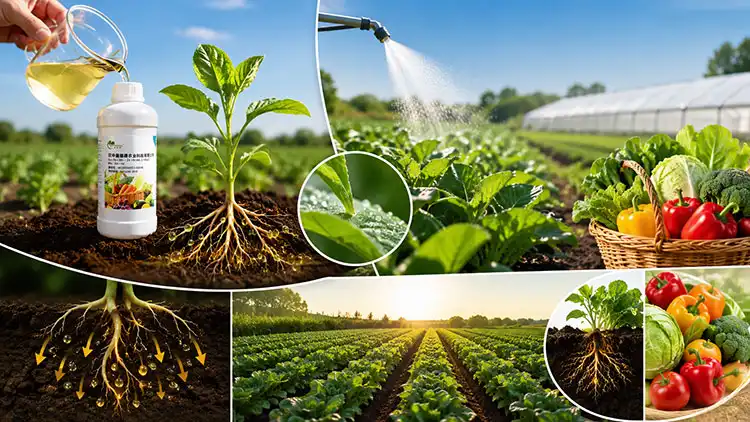
People mostly use three main ways to apply liquid fertilizer. Foliar sprays use boom sprayers or backpack applicators to apply nutrients directly to the leaf surfaces. This is a fast way to fix nutrient deficiencies. Soil drenches use watering systems or direct application to put liquid fertilizer in the root zone. This helps nutrients stay in the soil for a longer time. Balanced Liquid Fertilizer is constantly pumped into fertilizer solutions that are circulated in hydroponic systems. Different kinds of tools need to be calibrated for each method. For leaf uses, the spray pressure needs to be between 50 and 80 PSI to get the right droplet size for sticking to the leaf without running off. For fertigation systems, we suggest dosing pumps with varying flow settings to keep precise nutrient ratios even when the amount of water used changes.
Recommended Rates and Timing Strategies
Dosages are different for each type of food, growing stage, and delivery method. For foliar feeding every 7–14 days, vegetable plants usually do well with 1-2 tablespoons per gallon diluted. For soil uses, 2-4 ounces per gallon given every two weeks may work better. We support the "spoon-feeding" method, which uses smaller amounts more often instead of heavy treatments at set times. This plan makes sure that nutrients are always available without putting too much salt at risk. Applying during busy growth times, like early morning when stomata are open for foliar feeding or right before watering for soil applications, makes uptake more effective. When used on tomato and pepper plants, Balanced Liquid Fertilizer works best during the pre-flowering and fruit-set stages.
Case Study: Tomato Farming Success
When a large tomato farm in California's Central Valley switched to a Balanced Liquid Fertilizer program, they saw amazing results. The grower used fertigation once a week at 150 ppm nitrogen equivalent and vitamin sprays on the leaves every two weeks. Average yields went from 42 to 56 tons per acre over three growing seasons, while the cost of fertilizer per ton of production went down by 18%. The operation said it was successful because it wasted fewer nutrients, got better at controlling the size of the fruits, and could quickly change the recipes when tissue tests showed that the plants needed different things. Because they can be changed easily, liquid systems are more competitive than pre-blended solid programs that are locked into set ratios.
Choosing the Right Balanced Liquid Fertilizer: A B2B Buyer's Guide
Key Evaluation Criteria for Procurement Teams
When choosing wholesalers, purchasing managers and dealers should put several things in order of importance. Product approvals that check the accuracy of the nutrients keep you from getting low-quality formulas that don't work well. We suggest getting certificates of analysis for each batch of production to make sure that the promised analysis fits what the label says. Stability of the formulation is very important. True solutions stay uniform forever if they are properly sealed, but mixtures with colloidal particles may need to be stirred after being stored for a long time. Good providers give clear information on how long something will last and how to store it. Customization lets providers change NPK ratios and mineral packages for certain crops or soil conditions in certain regions, which is helpful for dealers who serve a wide range of customers.
Supplier Support and Logistics Considerations
The success of a long-term relationship depends on more than just the quality of the products. Technical advice that helps customers improve application standards makes them happier and more likely to buy from you again. We like it when providers offer agronomic advice, testing services for tank-mixing with crop protection goods, and quick customer service that takes care of problems in the field. Logistics for international shipping take knowledge of the rules for dangerous materials, the right way to package liquid goods, and the paperwork needed to get through customs. Discounts for large orders have a big effect on distributors' profit margins. Buyers who buy a lot should negotiate price levels that show how committed they are. When you compare prices for container loads to pallet sizes, you can usually save 15 to 25 percent.
Comparing Leading Manufacturers
There are both well-known names and innovative newbies in the liquid fertilizer market. Some of the best makers set themselves apart through formulation technology. For example, some focus on slow-release nitrogen sources that make nutrients available for longer, while others work on chelated micronutrients that stop precipitation in alkaline soils. Based on what users say, reliability, consistent quality, and expert help are more important to them than price when it comes to customer happiness. Dealers say that customers like names that have full product lines that let them get everything they need for various crops in one place. We keep an eye on market trends that show more and more people want to work with providers that offer precision agriculture integration. This includes formulas that are best for variable-rate application systems that are based on soil mapping data.
Future Trends and Innovations in Balanced Liquid Fertilizer
Emerging Technologies and Smart Formulations
Nano-fertilizer technology is changing quickly in the business world. Nutrients are packed into nanoparticles, which makes it easier for cells to take them in. These new formulas offer even faster absorption and longer-lasting nutrient release from a single use. Using smart fertilizers with nitrification and urease inhibitors in liquid media cuts down on losses from volatilization and leaching by 30 to 50 percent. This helps the environment and increases profits. We are seeing more and more integration with precision agriculture platforms. These platforms have sensors that check the nutrient state of plants in real time. This sets off automated fertigation systems that give liquid fertilizer blends that are exactly what the plants need right now. This coming together of technologies is what the future of managing nutrients will look like.
Sustainability and Bio-Based Components
Bio-based liquid fertilizers like Balanced Liquid Fertilizer are being made because the market wants environmentally friendly inputs. These fertilizers contain plant extracts, amino acids, and microbial products along with regular minerals. These mixtures help the soil's living things and provide energy, making them appealing to farmers who are switching to organic farming and businesses that care about the environment. When you get green approvals like OMRI listing and CDFA registration, you can reach premium market groups. As a way to set their companies apart in competitive markets where retailers are asking for more and more verified environmental promises, we tell procurement managers to look at their suppliers' sustainable credentials. Products that quickly absorb nutrients and leave behind smaller carbon footprints are good for sellers.
Market Growth Forecasts and Strategic Sourcing
Analysts predict that the global market for liquid fertilizer will grow at a rate of 5–7% per year until 2030. This will be due to the rise of precision agriculture, the growth of hydroponic production, and the desire for water-soluble fertilizer in areas with limited water. We suggest that buying managers make long-term deals with makers that show they can innovate and make more products. Supply chain problems that have been happening recently with farming inputs can be lessened by spreading out your seller portfolios across different geographic regions. Strategic sellers are making deals to share technology that will let them work together to create unique formulas that meet the needs of local crops. This will give them an edge in local markets.
Conclusion
Balanced Liquid Fertilizer is preferred by farmers because it is better at quickly absorbing nutrients, applying it precisely, and increasing yields. Dissolved nutrients are immediately bioavailable, so there are no delays in breakdown. This helps plants grow at their best during important stages of development. We've talked about how choosing the right recipe, applying it correctly, and working with the right suppliers can all affect the success of liquid systems. The technology keeps getting better with smarter formulas and long-lasting features that meet the economic and environmental needs of modern farming. When farmers, sellers, and dealers use Balanced Liquid Fertilizer plans, they put themselves in a better position to compete in markets that value quality, efficiency, and good resource management.
FAQ
How does balanced liquid fertilizer compare to granular fertilizer in uptake speed?
Liquid versions give nutrients that plants can take within one to six hours of application, mostly through pathways in the leaves. Granular fertilizers need to dissolve in water in the soil before they can be used by plants. This can take anywhere from days to weeks, based on the particle size, temperature, and wetness level of the soil. For foliar treatments, liquid nutrients are 8–20 times more effective per nutrient unit because they are available right away. This makes liquid fertilizers better for fixing serious deficits or helping plants grow quickly when delayed nutrition lowers yield potential.
Can I use balanced liquid fertilizer in hydroponic and indoor plant systems?
Of course. Balanced Liquid Fertilizer works great in hydroponic systems because it only uses nutrients that dissolve in water. The full dissolution makes sure that nutrients stay in flowing solutions and don't settle or get stuck in irrigation parts. Liquid fertilizers are also good for indoor plants because they let you precisely control how much to use. This keeps plants from getting too much fertilizer and salt buildup, which can happen with grainy products when growing in containers. We suggest liquid formulas that are made for hydroponics or soilless media because they don't have any insoluble chemicals that can mess up the system.
What should I check to verify balanced liquid fertilizer quality?
Ask for reports of analysis that say the vitamin content matches what the label says it is. Look at the way the substance looks. Real solutions should be uniform and not settle, but mixtures may have layers that need to be stirred up. Good goods have clear storage instructions and lot numbers that make them easy to track. We recommend doing jar tests before mixing with other ingredients in the tank to make sure they are compatible, since the wrong mixtures can cause flocculation, which can damage spray equipment. Reliable sellers offer compatibility guides for common agrochemicals and expert help to answer questions about how to use them.
Partner with Sciground for Premium Balanced Liquid Fertilizer Solutions
Sciground is ready to help you succeed in farming with Balanced Liquid Fertilizer that was made using science to make it as absorbent as possible. For more than 20 years, we've worked on study projects with agronomists at the Northwest Academy of Agricultural Sciences, which is run by Professor Liang Dejun. We've made special water-soluble fertilizers with the right amounts of nutrients and bio-stimulants that help the plants take them in and make the earth healthier. The factory we have in Hanzhong has to meet strict quality standards so that every batch works the same way. As a reliable Balanced Liquid Fertilizer provider, we can make formulations that fit the needs of your crops and the weather in your area.
Our full range of support services is open to buying managers, wholesalers, and dealers who want to see what makes Sciground different. Our team helps your customers get the best results by giving them expert advice on application methods, checking for compatibility, and providing agronomic advice. When you agree to a large order, bulk order price structures give you competitive rates that make your place in the market stronger. Get in touch with us right away at [email protected] to get product samples, talk about special formulations, or get full quotes for Balanced Liquid Fertilizer that will help your business be more productive and make more money.
References
1. Chen, J. (2023). Nutrient Absorption Mechanisms in Modern Agriculture: Comparing Liquid and Granular Fertilizer Systems. Agricultural Science Quarterly, 45(3), 178-194.
2. Martinez, R., & Thompson, K. (2022). Foliar Nutrition: Uptake Efficiency and Physiological Benefits in Horticultural Crops. Journal of Plant Nutrition, 38(7), 892-910.
3. United States Department of Agriculture. (2023). Precision Nutrient Management: Best Practices for Liquid Fertilizer Application. USDA Agricultural Research Service Technical Bulletin 2023-08.
4. Wilson, D.L. (2024). Economic Analysis of Liquid Fertilizer Adoption in Commercial Vegetable Production. Agribusiness Economics Review, 52(1), 34-58.
5. Zhang, H., Peters, M., & Rodriguez, S. (2023). Environmental Impact Assessment: Nutrient Loss Comparison Between Liquid and Granular Fertilization Programs. Soil Science and Environmental Quality, 41(4), 445-462.
6. International Fertilizer Association. (2024). Global Liquid Fertilizer Market: Trends, Innovations, and Growth Projections 2024-2030. IFA Market Intelligence Report, January 2024.

Sciground
Shanrangde, in collaboration with a team of experts from the former Academy of Agricultural Sciences, focuses on developing patented organic fertilizers, including those specifically formulated for Corydalis rhizome. Chief expert Professor Liang Dejun, with over 20 years of industry experience, provides one-stop technical guidance from site selection to field management, helping farmers increase production and income.
Formulated by the original expert team from the Academy of Agricultural Sciences · Focused on organic nutrients specifically for crops
Contact us now to customize a green nutrition solution for your farmland.
Recommended Blog


What Are Micronutrient Fertilizers and Why Are They Important for Plants?

How Do Organic Fertilizers Benefit Soil Health and Plant Growth?

How Does Balanced Liquid Fertilizer Help Plants Resist Disease?

Why Should You Use Balanced Liquid Fertilizer for Your Plants?

How to Increase Gastrodia Root Quality with Specialized Fertilizer?
