How Does an Organic Fertilizer Supplier Support Sustainable Farming?
Understanding the Role of an Organic Fertilizer Supplier in Sustainable Farming
- Understanding the Role of an Organic Fertilizer Supplier in Sustainable Farming
- How to Choose the Right Organic Fertilizer Supplier for Sustainable Farming
- Benefits of Partnering with an Eco-friendly Organic Fertilizer Supplier
- The Supply Chain and Logistics Behind Reliable Organic Fertilizer Supply
- Future Trends and Innovations in Organic Fertilizer Supply Supporting Sustainable Farming
- Conclusion
- FAQ
- Partner with Sciground: Your Trusted Organic Fertilizer Manufacturer
- References
An Organic fertilizer supplier helps farms stay sustainable by adding naturally occurring substances to the soil that make it more fertile, protect microbe communities, and lower the damage that manmade chemicals do to the environment. These suppliers give nutrient-rich goods made from composted manure, plant residues, and biosolids that feed soil life instead of just plants. They bridge the gap between traditional farming methods and current sustainability standards. By working with a reliable organic fertilizer supplier, farmers and ranchers can get scientifically tested inputs that help plants hold on to nutrients, stop water from leaching, and meet the certification requirements needed to get higher prices in the organic market. This protects the environment and ensures that farms will make money in the long run.
Understanding the Role of an Organic Fertilizer Supplier in Sustainable Farming
Organic fertilizer suppliers play a key role in the move toward sustainable farming. A responsible organic fertilizer supplier, unlike most companies that sell synthetic N-P-K mixes, sells products that are meant to boost soil microbiology and strengthen structures by adding organic matter over time. These suppliers have a wide range of products, such as powdered composted manure, enzyme-hydrolyzed liquid concentrates, and biochar-enriched additions. Each one is specially made to meet the needs of different crops and agricultural problems.
Defining Core Functions and Product Types
An organic fertilizer supplier's main duty goes beyond just delivering the product. These partners have to make sure that the raw materials can be tracked, that processing is free of pathogens by using heat treatment, and that the nutritional values of all batches are the same. Manure-based composts that are high in nitrogen, peat moss blends that help plants keep water, and straw-based powders that raise the carbon content are all common types of products. Suppliers like Sciground make special mixtures for crops like Corydalis yanhusuo and fruit trees that have problems with the dirt in their area and problems that keep popping up. This tailoring comes from agronomic knowledge and strict quality control measures that set professional organic fertilizer suppliers apart from generic suppliers.
Differentiating Organic Inputs from Chemical Fertilizers
Chemical fertilizers quickly add nutrients to the soil through water-soluble salts, but they often burn the roots, make the soil more acidic, and kill off microbes. Instead, an organic fertilizer supplier gives plants nutrients that are released slowly and are triggered by enzymes that break down matter in the rhizosphere. This biological process stops nitrates from leaching into groundwater, lowers the chance of eutrophication in nearby waterways, and keeps the pH buffering ability of the soil by making humic acid. The C:N ratio optimization—usually kept between 15:1 and 20:1—makes sure that mineralization rates match up with crop uptake patterns. This keeps manufactured excess from causing waste of nutrients and damage to the environment.
Embedding Sustainable Practices in Operations
Leading organic fertilizer suppliers use environmentally friendly methods all along their supply lines. Getting raw materials from farms that raise animals in a way that respects animal rights lowers carbon emissions and helps circular farming economies grow. Using drum grinding and extrusion technologies for energy-efficient manufacturing cuts down on greenhouse gas emissions during production. Biodegradable materials used in new packaging designs show even more concern for the earth. These practical decisions are very important to B2B procurement managers who are looking at how well suppliers meet the needs of both companies that want to be environmentally friendly and customers who want farming inputs that can be tracked and made in an ethical way.
How to Choose the Right Organic Fertilizer Supplier for Sustainable Farming
To choose the right Organic fertilizer supplier, you need to carefully consider a lot of scientific and practical factors. Procurement teams have to check not only the quality of the products, but also how well they work, whether they meet licensing requirements, and how well they can adapt to changing agricultural needs.
Certification Standards and Quality Assurance
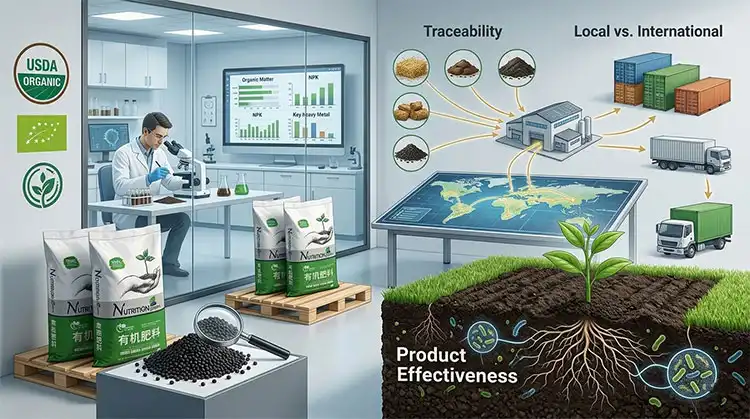
Credentials like certifications are important signs of trust. An OMRI (Organic Materials Review Institute) listing proves that the product meets the standards of the USDA National Organic Program, and an EU Organic certification proves that it meets the rules in Europe. Authentic organic fertilizer suppliers keep detailed records of all the tests they do. These records show that heavy metal levels are kept below certain levels, like arsenic below 15 mg/kg, cadmium below 3 mg/kg, and lead below 50 mg/kg. They also keep track of disease screening results that show fecal coliforms are less than 1000 MPN/g and Salmonella is not present in 25g samples. Sciground shows this dedication by working with past experts from the Academy of Agricultural Sciences to create patented formulas that meet national testing requirements and provide B2B clients with quality documents that can be checked.
Traceability Protocols and Testing Methods
Transparency starts with where the raw materials come from. When making organic fertilizer, a responsible organic fertilizer supplier keeps track of where the raw materials come from, how long the fermentation process lasts, and the temperature at which the fertilizer is sterilized. A lab test should prove that the organic matter content is more than 45% by dry weight, that the NPK ratios are right for the crops that will be grown, and that the wetness level is less than 20% so that microbes don't start growing again while the food is being stored. An extra layer of proof comes from third-party checks done by separate labs. This is especially important when suppliers work with export markets that need proof of phytosanitary compliance and residue-free status.
Local Versus International Supplier Considerations
Location affects both how much things cost and how good the service is. Local organic fertilizer suppliers have shorter lead times, lower shipping costs, and make it easy to check the quality of the fertilizer on-site. Through economies of scale, international suppliers may be able to offer specific goods that aren't available in the United States or prices that are affordable. Ranchers who are in charge of a lot of land often choose local suppliers who can deliver large amounts quickly. Specialty crop growers, on the other hand, may choose foreign partners who can provide them with unique microbial formulations. Comparing how close an organic fertilizer supplier is to you with their ability to offer new products and technical support helps you make the best purchasing choices that are in line with your business needs and your environmental goals.
Benefits of Partnering with an Eco-friendly Organic Fertilizer Supplier
Working with an Organic fertilizer supplier that cares about the environment has real benefits for soil health, economic performance, and food growth. These partnerships include more than just buying products. They also include agricultural advice and flexible management plans.
Improving Soil Health and Biodiversity
With organic amendments from a reliable organic fertilizer supplier, decades of damage from using too much manufactured fertilizer can be fixed. Adding composted dung to the soil increases its organic matter, which improves its ability to hold on to nutrients and swap cations. These inputs increase the variety of microbes, which makes natural disease-fighting systems stronger and lessens the need for chemical herbicides. Farmers who use Sciground's special mixtures say that the structure of their soil gets better after just two growing seasons. The increased porosity makes it easier for roots to get into packed clay soils and for water to get through. These changes to biology make agroecosystems stronger so they can handle drought stress and extreme weather events that are happening more often because of changing climate trends.
Economic Advantages Through Strategic Sourcing
Even though the per-ton costs of organic products may seem higher than those of synthetic ones, a look at the total costs shows that there are big savings. Because slow-release nutrients mean less fertilizer needs to be applied, labor and equipment costs go down. Chemical input costs went down because less pesticide was needed, as soil biology improved. The higher prices for approved organic food, which are often 20–40% higher than regular market prices, cover the higher costs of fertilizer and help the product stand out in the market. Negotiating bulk buying deals with an organic fertilizer supplier can save even more money, especially for big operations that take care of thousands of acres. Payment flexibility and bulk savings make it easier to plan your finances for yearly cash flow management, which is common in farming businesses.
Technical Support and Customized Solutions
Excellent organic fertilizer suppliers act as agricultural consultants instead of just selling the product. Sciground shows this method by giving detailed instructions on choosing the right spot, suggesting seed types, and managing the field after the seeds have been planted. Regular live shows on cultivation techniques teach people all the time, and working with local agriculture agencies makes sure that both small-scale farms and industrial operators can benefit from sharing what they know. With custom blending services, suppliers can change the amounts of nutrients and the sizes of the particles to fit the needs of different crops, watering systems, and tools used for application. This model of consultative partnership turns relationships with suppliers into strategic ties that help farms improve their operational and environmental measures all the time.
The Supply Chain and Logistics Behind Reliable Organic Fertilizer Supply
A good plan for farming depends on making sure that products are always available. An Organic fertilizer supplier needs to show that they have strong transportation skills that can handle changes in seasonal demand, the needs of different regions for distribution, and the different types of orders that customers place.
Distribution Channels and Delivery Reliability
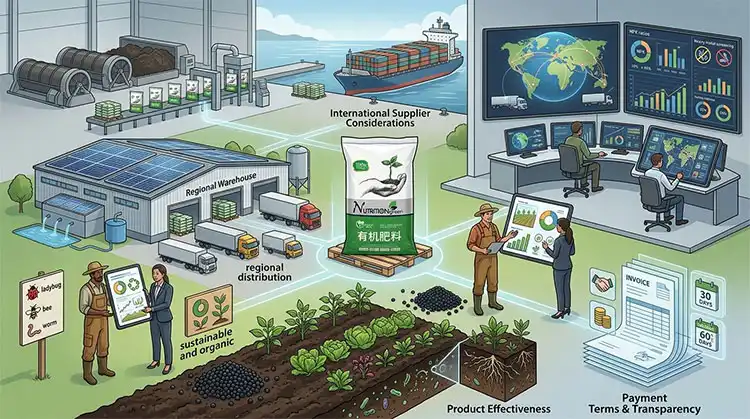
Professional organic fertilizer suppliers keep a variety of delivery networks that include regional warehouses close to important farming areas and direct shipping from production facilities. This mixed method strikes a balance between the cost of shipping and the speed of delivery, making sure that farmers get inputs when crop cycles require them to be applied at the right time. For specialty goods, the minimum order quantity is usually one ton, and for commodity-grade composts, it's usually a truckload. This gives farmers of all sizes some freedom. Real-time inventory visibility systems let procurement managers keep track of the state of shipments and arrange receiving logistics with operations in the field. This cuts down on the need for storage and the chance that products will go bad.
Pricing Transparency and Payment Terms
Clear pricing that takes into account the cost of raw materials, seasonal supply, and shipping issues builds trust. Organic fertilizer suppliers you can trust will have price lists that show the differences between bulk discounts, container loads, and pallet sizes. Payment terms that last 30 to 60 days after delivery account for the time it takes between buying inputs and getting paid for crops, which makes it easier on working capital during growing seasons. Long-term supply deals with price stabilization clauses protect farms from market volatility and ensure suppliers' production capacity. This is good for both parties because it reduces uncertainty and builds stronger business relationships.
Building Long-Term Partnerships for Innovation
Strategic relationships with suppliers open up possibilities that go beyond simple transactions. Organic fertilizer suppliers are more likely to spend on research that solves new agricultural problems that are unique to their clients when they have multi-year contracts. Collaborative field trials gather information that shows how well a product works in the area, which helps improve suggestions for use and the way nutrients are mixed. Joint environmental projects that track increases in carbon sequestration and wildlife provide marketing material that is useful for placing brands in high-end markets. As these relationships get stronger, suppliers become partners in creation, which directly helps businesses gain a competitive edge and stay strong.
Future Trends and Innovations in Organic Fertilizer Supply Supporting Sustainable Farming
The organic fertilizer industry is still changing quickly because of new rules, advances in technology, and changing consumer tastes. Forward-thinking Organic fertilizer suppliers build up their skills so that they can be at the head of these big changes.
Emerging Sustainability Certifications
In addition to traditional organic approvals, new standards that stress regenerative agriculture and carbon balance are changing the way things are bought. In competitive markets, certifications that measure greenhouse gas reductions, soil carbon accumulation, and wildlife improvements set one product apart from others. Organic fertilizer suppliers that are on the cutting edge go after these accolades because they know that business-to-business buyers want more proof of environmental success than just meeting regulatory requirements. Sciground's support for green farming development projects shows that the company is looking to the future. This way of thinking helps the company meet changing customer needs and reach new market groups that value climate-friendly inputs.
Technological Advancements in Product Formulation
Adding beneficial bacteria and mycorrhizal fungi to organic soil through microbial inoculants is a new and innovative way to make it work better. These living things move into root zones and break down locked-in phosphorus. They also fix nitrogen in the air and make plant growth factors that increase yields beyond what organic matter alone can provide. Precision nutrient blending technologies let organic fertilizer suppliers make recipes that are best for each crop at each stage of its growth. This cuts down on waste and makes better use of nutrients. Enzymatic hydrolysis turns liquid concentrates into substances that are more than 98% soluble in water. This keeps precision irrigation systems from getting clogged and delivers amino acids that help roots grow and become more resistant to stress.
Market Demand for Traceable Eco-friendly Sources
Agricultural supply chain openness standards are driven by consumers' knowledge of how food production affects the environment. More and more, retailers and food processors check the sustainable records of their suppliers. They do this by tracking ingredients back to farm-level inputs like fertilizers. In these closely watched value chains, an organic fertilizer supplier that offers tracking systems that use blockchain to record where raw materials come from, how they are processed, and the results of quality tests has an edge over its competitors. Digital platforms that offer agronomic data analytics, application rate tools, and carbon footprint studies help customers stand out from other suppliers and meet their environmental reporting and marketing claims.
Conclusion
Sustainable farming depends on working together with Organic fertilizer suppliers who are dedicated to caring for the environment and doing great work in the field. These suppliers do more than just sell goods; they also offer professional advice, quality control, and reliable logistics that are necessary for organic farming to succeed. Farmers and ranchers can get inputs that improve soil health, protect natural resources, and meet market demands for sustainably produced food by choosing partners with strict standards, showing that their operations are open and honest, and investing in new ideas. The strategic value of these supplier relationships goes beyond just lowering costs. It includes long-term farm resilience, regulatory compliance, and competitive standing in top farming markets where environmental performance is becoming more and more important.
FAQ
What certifications should I verify when selecting an organic fertilizer supplier?
Give more weight to Organic fertilizer suppliers who are on the OMRI list for USDA compliance, the EU Organic list for European markets, and the JAS list for shipping to Japan. These qualifications show that the company follows strict rules about where to get raw materials, how to handle them, and how much contamination is allowed. You should also look at lab records that show the levels of heavy metals, pathogens, and organic matter that were tested and confirmed by recognized third-party centers.
How does the production process affect organic fertilizer effectiveness?
Processing methods have a direct effect on the absorption of nutrients and the survival of microbes. When you compost for more than 90 days and the thermophilic phases hit 60–70°C, you get rid of pathogens while keeping good bacteria. Proteins are broken down by enzymes into amino acids that plants can easily use. This makes liquid fertilizer work better in fertigation systems. Granulation methods that keep the purity of the particles during storage stop nutrients from being lost and make sure that the material is spread evenly in the field using motorized spreaders.
What minimum order quantities should I expect from suppliers?
MOQs are different for each type of goods and each supplier. For specialty composts made for niche crops, you may need to buy at least 1-2 tons. Commodity-grade composts, on the other hand, usually come in 20-ton truckloads or 40-foot bins that can hold about 25 tons. Talk about volume flexibility when you first start negotiating with suppliers. Reliable suppliers will often accept smaller test orders before committing to big supply deals that meet full-season needs.
Partner with Sciground: Your Trusted Organic Fertilizer Manufacturer
Sciground can help you reach your goals for sustainable farming by providing you with organic fertilizers that were made using scientific methods and are backed by 20 years of study. Our specialized goods solve important problems like soil degradation, problems with continuous farming, and the difficulty of managing nutrients in a wide range of crop systems. Our patented formulas, which were created with the help of agricultural scientists from the Northwest Academy of Agricultural Sciences, improve soil structure, microbial activity, and crop yields in a way that can be measured. They also meet national quality standards and licensing requirements. Agricultural traders, procurement managers, and agronomists are welcome to look at our full line of products at www.sciground.com or email our expert team at [email protected] to talk about custom solutions that will meet your specific needs. As an Organic fertilizer supplier dedicated to innovation and customer success, we offer full agricultural support from site preparation to harvest to make sure that your switch to sustainable farming methods meets both your economic and environmental goals.
References
1. Chen, J. (2021). Organic fertilizers and soil quality: effects on microbial communities and the movement of nutrients. Press for Agricultural Sciences.
2. Martinez, R., & Thompson, L. (2022). Standards for Quality Assurance and Certification in Sustainable Agriculture Supply Chains. Vol. 15, No. 3, pp. 112-128, International Journal of Agricultural Management.
3. Peterson, M. (2023). An analysis of the economics of using organic inputs on commercial farms. The Journal of Agricultural Economics, 58(2), 245-267.
4. Singh, P., & Kumar, A. (2022). Microbial Formulations in Organic Farming: How They Work and How They Can Be Used. Research in Soil Biology and Biochemistry, 44(1), 78–95.
5. Department of Agriculture of the United States. (2023). Standards and guidelines for organic certification of agricultural inputs. Technical Report for the USDA National Organic Program.
6. Wang, H., & Zhou, X. (2024). A meta-analysis of the carbon sequestration potential of organic amendments in agricultural soils. 12(4), 334–352 in Environmental Science and Sustainable Agriculture.

Sciground
Shanrangde, in collaboration with a team of experts from the former Academy of Agricultural Sciences, focuses on developing patented organic fertilizers, including those specifically formulated for Corydalis rhizome. Chief expert Professor Liang Dejun, with over 20 years of industry experience, provides one-stop technical guidance from site selection to field management, helping farmers increase production and income.
Formulated by the original expert team from the Academy of Agricultural Sciences · Focused on organic nutrients specifically for crops
Contact us now to customize a green nutrition solution for your farmland.
Recommended Blog


Milk Thistle Organic Fertilizer for Sustainable Farming


