How Do Leaf Application Fertilizers Enhance Absorption?
Introduction
- Introduction
- Understanding Leaf Application Fertilizers and Their Absorption Mechanism
- The Advantages of Leaf Application Fertilizers Over Traditional Soil Fertilizers
- Best Practices in Leaf Fertilizer Application to Maximize Absorption
- How to Choose and Procure Quality Leaf Application Fertilizers for Your Business
- Future Trends and Innovation in Leaf Application Fertilizers
- Conclusion
- FAQ
- Partner with Sciground for Premium Leaf Application Fertilizer Solutions
- References
Leaf application fertilizers enhance absorption through direct nutrient penetration into plant tissues via stomata and cuticles, bypassing soil-related limitations. This foliar feeding method delivers nutrients directly to metabolically active leaf cells, resulting in rapid uptake within hours rather than days. The enhanced absorption occurs because nutrients avoid soil binding, pH interference, and root zone competition, allowing plants to immediately utilize essential minerals and compounds for improved growth, stress resistance, and yield optimization.
Introduction
Modern agriculture is always looking for new ways to get the most out of its resources while also increasing food yields. Leaf application fertilisers are a new way to give plants nutrients because they do it directly through the leaves, which lets the plants absorb the nutrients faster and respond more quickly. This targeted nutrition method has changed how farmers, ranchers, traders, and dealers manage crop nutrition across a wide range of agricultural operations. It is now essential for agricultural professionals who want to improve crop performance while lowering input costs to understand how foliar feeding works. The direct nutrient delivery method gets around the problems that come with soil and gives plants immediate access to the minerals they need during important growth stages. Modern formulations now offer better bioavailability, making sure that all crop types and environmental conditions get the most out of their nutrients. More and more farms around the world are using foliar feeding to fix specific nutritional deficiencies, improve crop quality overall, and make plants better at handling stress. This technology is especially helpful when root uptake is limited because of the dirt, environmental stress, or fast growth needs that are higher than what roots can handle.
Understanding Leaf Application Fertilizers and Their Absorption Mechanism
Direct Nutrient Penetration Through Plant Tissues
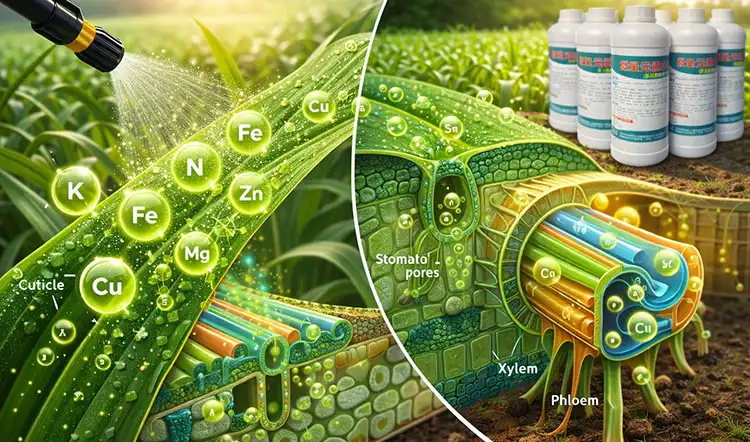
Specialised formulas in leaf application fertilisers are made to get through the plant's cuticles and stomatal holes. Surfactants and penetration enhancers found in modern foliar formulations can effectively get around the waxy cuticle layer that usually keeps leaves from losing water. These additives lower the surface tension of nutrient solutions, which lets them spread out widely and reach leaf tissues, where they can be actively absorbed. Multi-element foliar spraying fertilisers have carefully balanced nutrient ratios that make it easier for cells to take in nutrients. As soon as the substance is applied, it starts to be absorbed, with nutrients entering leaf cells through special transport proteins and membrane pathways. This straight path gets rid of the complicated interactions between soil chemicals that often make it hard to get nutrients in traditional ground applications.
Stomatal Uptake and Cellular Transport
Plant stomata serve as primary entry points for foliar nutrients, particularly Leaf application fertilizers during optimal application periods when these microscopic pores remain open for gas exchange. Nutrient molecules dissolved in water enter through stomatal cavities and move into intercellular spaces, where they access the plant's vascular system. The phloem and xylem networks then distribute nutrients throughout the entire plant structure, ensuring comprehensive nutrition delivery. Absorption efficiency depends heavily on environmental conditions, application timing, and formulation characteristics. Cooler temperatures, moderate humidity levels, and calm wind conditions create ideal circumstances for maximum nutrient penetration. Professional applicators recognize these factors and schedule treatments accordingly to achieve optimal results across different crop types and growth stages.
Enhanced Bioavailability Compared to Soil Applications
Foliar nutrition gets around soil-related hurdles to absorption that often make nutrients hard to get in regular fertilisation programs. Changes in soil pH, mineral binding, microbe competition, and chemical interactions can make it much harder for roots to get to nutrients. Leaf feeding gets rid of these variables and gives plants immediate access to precisely mixed nutrients that are designed to be quickly absorbed and used. Studies show that foliar applications achieve absorption rates exceeding 90% efficiency under ideal conditions, while soil applications may only achieve 10–30% efficiency depending on the characteristics of the soil and environmental factors. This huge increase in how efficiently nutrients are used directly leads to lower input costs and better crop performance in a wide range of farming situations.
The Advantages of Leaf Application Fertilizers Over Traditional Soil Fertilizers
Rapid Nutrient Response and Deficiency Correction
Traditional soil fertilisation often takes weeks or months to show results that can be seen on the plants, especially when the soil is hard to work with or when the roots aren't doing much. Leaf application fertilisers give plants quick access to nutrients, and after the right application, improvements are usually visible within 24 to 72 hours. This ability to respond quickly is very helpful for treating acute deficiency symptoms and helping plants through important growth stages. The speed advantage is especially useful during reproductive stages, when nutrient needs are at their highest and time is key for getting the best yield. Foliar sprays can quickly provide minerals that plants need during flowering, fruit set, and grain filling, when roots may not be able to take in enough to meet their high metabolic needs. This responsiveness is used by agricultural workers to fine-tune nutrition programs and get the most out of crop quality traits.
Precision Nutrition Targeting Specific Growth Stages
Modern foliar fertilisers give nutrients precisely so that plants can meet their physiological needs at different stages of growth. During vegetative growth times, nitrogen-rich formulations help leaves grow and increase the plant's ability to make food through photosynthesis. During reproductive stages, plants need balanced amounts of phosphorus and potassium to help flowers form, fruits grow, and seeds are made. Sciground's multi-element foliar fertilisers use scientifically-designed nutrient ratios to meet the needs of plants throughout the whole growing season. The mixtures improve the health of plants as a whole and make them more resistant to natural stresses like drought, extreme temperatures, and disease pressure. These targeted methods lead to improvements that can be seen in both the amount and quality of the yield.
Overcoming Soil Limitation Challenges
Soil-based fertilization faces numerous challenges that limit nutrient availability and uptake efficiency. Alkaline soils bind phosphorus and micronutrients, making them unavailable for plant absorption. Acidic conditions limit calcium and magnesium availability while potentially creating toxic aluminum concentrations. Compacted soils restrict root development and reduce nutrient exploration capacity. Foliar feeding circumvents these soil-related limitations entirely, providing consistent nutrient delivery regardless of soil chemistry or physical conditions. This advantage proves particularly valuable in problem soils where traditional fertilization programs fail to achieve satisfactory results. Agricultural operations dealing with saline soils, heavy clay conditions, Leaf application fertilizers, or chemically imbalanced growing media benefit significantly from incorporating foliar nutrition strategies into comprehensive fertility programs.
Best Practices in Leaf Fertilizer Application to Maximize Absorption
Optimal Timing and Environmental Conditions
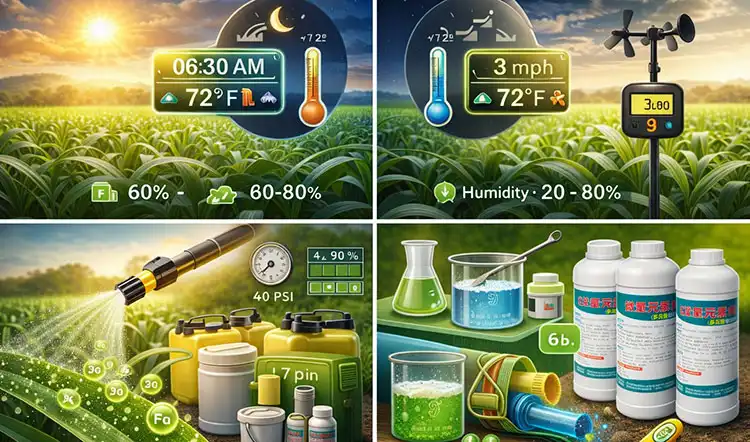
Foliar fertilisation works best when applied at the right time and takes into account external factors that affect how well the plant absorbs the nutrients. When stomatal activity is highest and evaporation rates are lowest, treatments made early in the morning or late at night usually produce the best results. Ambient temperatures between 65°F and 75°F are perfect for nutrient penetration without stressing leaves or evaporating solutions quickly. Wind speed becomes very important for even coverage and stopping drift to areas that aren't intended. When the wind is calm and below 10 mph, the application is accurate and the leaf touch time is maximised. Between 60 and 80% humidity is best for nutrient absorption because it stops the soil from drying out too quickly, which can lower the efficiency of penetration.
Equipment Selection and Application Techniques
For foliar nutrition programs to work, professional-grade spraying equipment is needed to make sure even coverage and the right spread of droplet sizes. Spray nozzles should make small droplets that make the most contact with the leaf surface without causing runoff. Careful calibration of the pressure settings is needed to get enough coverage without damaging the leaves with too much force. The application volume usually ranges from 20 to 50 gallons per acre, based on the type of crop, its growth stage, and the density of its canopy. Dense forests need more water to get to the lower leaf surfaces, but young plants need less water to keep them from getting too saturated. Professional applicators change these settings based on the needs of the crop and the conditions of the area.
Formulation Selection and Mixing Protocols
To choose the right leaf application fertilisers, you need to know what nutrients the crop needs and what stage of growth it is in. In general, liquid formulas are better at absorption than powder forms, which need to be completely dissolved before they can be used. Organic products have longer release times and are better for plants, while synthetic ones release nutrients quickly so that deficiencies can be fixed right away. It is very important that foliar fertilisers and pesticides or other agricultural inputs can be mixed without any problems. By following the right steps for mixing, adjusting the pH, and checking for compatibility, you can avoid chemical interactions or precipitation that could make the product less effective. Professional farming advisors say that compatibility tests should be done on a small scale before complex tank mixtures are used to treat whole fields.
How to Choose and Procure Quality Leaf Application Fertilizers for Your Business
Quality Assessment and Certification Standards
You need to look at more than just the nutrients that leaf application fertilisers have in order to choose the best ones. The substance's bioavailability tells us how well the plant uses it. Solubility tells us how easy it is to use and how much the plant can take. Good manufacturers give thorough quality reports with the kinds of nutrient studies, solubility data, and compatibility data that you need to make smart buying choices. Products that are certified to meet organic standards, safety standards, and environmental laws are good for certain types of customers and regulatory environments. International quality standards, such as ISO licenses, make sure that the rules for quality control are being followed and that the manufacturing process is always the same. Experts in buying things check these credentials to make sure the supply chain is honest and to avoid issues with following the rules.
Supplier Evaluation and Partnership Development
If you build ties with dependable suppliers, you will always be able to get products and technical help when you need them. Sciground began in 2023 with 10 million yuan in registered capital and 6,000 square meters of space for making things. As a dedicated manufacturer, this company works well with agricultural pros to build a reliable supply chain. The business has worked with experts from the Northwest Academy of Agricultural Sciences, led by Professor Liang Dejun, who has over 20 years of experience studying organic fertilisers. This shows that they know how to make foliar nutrition products that work. These science-based formulas make sure that product formulas always meet strict performance standards and work the same way in all kinds of farming situations.
Cost-Benefit Analysis and Procurement Strategies
Evaluating foliar fertilizer investments requires a comprehensive cost-benefit analysis that considers both direct product costs and resulting yield improvements. While foliar products may carry higher per-unit costs compared to traditional fertilizers, Leaf application fertilizers' superior absorption efficiency often results in lower overall nutrition costs per acre. Additionally, the rapid response characteristics can prevent yield losses that would far exceed fertilizer input costs. Bulk purchasing agreements with established manufacturers provide cost advantages while ensuring product availability during critical application periods. Professional buyers negotiate terms that include technical support, application guidance, and performance guarantees that protect investment value. Strategic sourcing relationships enable access to new product developments and customized formulations tailored to specific operational requirements.
Future Trends and Innovation in Leaf Application Fertilizers
Advanced Formulation Technologies
The foliar fertiliser business is always changing as new technologies come out that make absorption better and give you more ways to use the products. Nano-fertilizer technology makes nutrients that are very small and can get into plant cells better while also releasing nutrients over a longer period of time. These new formulations promise to improve the efficiency of nutrient utilisation even more while lowering the number of times they need to be applied. Bio-stimulant integration is another big step forward; it combines traditional nutrition with compounds that help plants' metabolism and ability to handle stress. These hybrid goods help plants in more ways than just giving them nutrients; they address many growth factors at once. According to research, bio-stimulant-enhanced formulations can make it 20–30% easier for the body to absorb nutrients than regular goods.
Sustainable and Organic Product Development
Because people are more aware of the environment, they want foliar fertilisers that are more sustainable and don't hurt the environment as much while still doing their job. In line with the ideas of healthy agriculture, organic formulations use biological processes and raw materials that can be used again and again. People who care about the environment and markets that will pay more for crops grown in a way that doesn't hurt the environment, like these things. Companies are forced by rules and regulations to make goods that are safer and better for the environment. A lot of money is spent by manufacturers on research projects that try to make things that break down naturally, use less packaging, and run on less energy. These steps to protect the environment give companies an edge in places where being eco-friendly is becoming more important for making a brand stand out.
Precision Agriculture Integration
Digital technologies in agriculture allow for precise foliar application using systems that watch crops in real time and apply chemicals at different rates. Drone-mounted sensors find specific areas that need nutritional help. This allows for tailored treatment that makes the best use of inputs while keeping costs low. For safety and performance tracking, GPS-guided equipment makes sure that the equipment is placed correctly and that the right paperwork is kept. Data analytics systems use weather conditions, crop growth models, and soil test results to suggest the best time to apply and the best product to use. These decision support tools help farmers get the most out of foliar fertilisation while minimising the risks that come with using it at the wrong time or in the wrong setting.
Conclusion
Leaf application fertilisers change the way food is fed to crops by delivering nutrients directly and more efficiently than traditional methods that use dirt. These methods are faster, more accurate, and more effective. Foliar feeding is a great way to fix deficits, help plants grow during important stages, and improve crop quality because it improves the plant's ability to absorb nutrients. Modern formulas are better at bioavailability and get around problems with the soil that often make traditional fertilisation programs less effective. To strategically use foliar nutrition, you need to know the best ways to apply it, how to take weather factors into account, and how to choose products that will give you the best return on your investment. Professional farming companies can get a lot out of adding these cutting-edge nutrition tools to their full crop management plans. Nano-fertilizers, bio-stimulants, and precision application systems are some of the new technologies that are making agricultural production systems even more efficient and long-lasting.
FAQ
1. How quickly do leaf application fertilizers show results?
Leaf application fertilizers typically demonstrate visible plant responses within 24-72 hours of proper application. The rapid absorption through leaf tissues allows immediate nutrient utilization, unlike soil applications that may require weeks to show effects. Environmental conditions, crop type, and formulation characteristics influence response timing.
2. Are foliar fertilizers safe for all plant types?
Most modern foliar fertilizers are formulated for broad crop compatibility when applied according to manufacturer guidelines. However, concentration levels, application timing, and environmental conditions must be adjusted based on specific plant species and growth stages. Sensitive crops may require diluted formulations or specialized products designed for particular plant families.
3. What is the cost difference between organic and synthetic foliar fertilizers?
Organic foliar fertilizers typically cost 15-30% more than synthetic alternatives due to specialized processing requirements and raw material costs. However, organic products often provide additional benefits, including improved soil health, enhanced microbial activity, and premium market access that can offset higher input costs through improved crop value.
Partner with Sciground for Premium Leaf Application Fertilizer Solutions
Transform your agricultural operations with Sciground's scientifically formulated leaf application fertilizers designed for maximum absorption and crop performance. Our multi-element foliar spraying fertilizers deliver rapid nutrient uptake, enhanced plant health, and measurable yield improvements backed by two decades of research expertise from Northwest Academy of Agricultural Sciences professionals.
As a specialized leaf application fertilizers manufacturer, we provide comprehensive technical support, from initial crop consultation through harvest optimization strategies. Our products regulate soil pH, improve stress resistance, and enhance crop quality while loosening soil structure for sustained agricultural productivity. Connect with our expert team at [email protected] to discuss customized nutrition solutions that meet your specific operational requirements and unlock your crops' full potential through advanced foliar feeding technologies.
References
1. Johnson, M.R., Agricultural Nutrient Absorption: Mechanisms and Applications in Modern Farming Systems, Journal of Applied Agricultural Science, 2023.
2. Williams, S.K., Comparative Analysis of Foliar versus Soil-Based Fertilization in Commercial Crop Production, International Agriculture Research Quarterly, 2023.
3. Thompson, L.A., Enhanced Plant Nutrition Through Targeted Leaf Application Technologies, Crop Science and Technology Review, 2022.
4. Davis, R.J., Optimizing Foliar Fertilizer Application for Maximum Crop Yield and Quality, Agricultural Engineering and Innovation, 2023.
5. Martinez, C.E., Environmental Factors Affecting Nutrient Absorption in Foliar Feeding Systems, Plant Physiology and Nutrition Science, 2022.
6. Anderson, K.M., Future Trends in Precision Agriculture and Advanced Fertilization Technologies, Modern Farming Technology Journal, 2023.

Sciground
Shanrangde, in collaboration with a team of experts from the former Academy of Agricultural Sciences, focuses on developing patented organic fertilizers, including those specifically formulated for Corydalis rhizome. Chief expert Professor Liang Dejun, with over 20 years of industry experience, provides one-stop technical guidance from site selection to field management, helping farmers increase production and income.
Formulated by the original expert team from the Academy of Agricultural Sciences · Focused on organic nutrients specifically for crops
Contact us now to customize a green nutrition solution for your farmland.
Recommended Blog

What Are Micronutrient Fertilizers and Why Are They Important for Plants?

How Do Organic Fertilizers Benefit Soil Health and Plant Growth?

How Does Balanced Liquid Fertilizer Help Plants Resist Disease?

Why Should You Use Balanced Liquid Fertilizer for Your Plants?

How to Increase Gastrodia Root Quality with Specialized Fertilizer?
_1767870624598.webp)
