How Do Eco-Friendly Fertilizers Protect the Environment?
Understanding Eco-Friendly Fertilizers and Their Environmental Role
- Understanding Eco-Friendly Fertilizers and Their Environmental Role
- Environmental Challenges of Conventional Fertilizers and How Eco-Friendly Alternatives Address Them
- Procurement and Product Considerations for Eco-Friendly Fertilizers
- Maximizing Environmental and Agronomic Benefits with Eco-Friendly Fertilizers
- Future Trends and Innovations in Eco-Friendly Fertilizers
- Conclusion
- FAQ
- Partner with Sciground for Advanced Eco-Friendly Fertilizer Solutions
- References
Eco-friendly fertilizer solutions protect the environment through multiple interconnected mechanisms that address critical agricultural challenges while maintaining productivity. These sustainable formulations reduce chemical runoff, minimize greenhouse gas emissions, and enhance soil biodiversity by delivering nutrients gradually through the decomposition of organic matter. Unlike conventional synthetic fertilizers that can create soil acidification and water contamination, eco-friendly alternatives work symbiotically with natural soil processes, creating resilient ecosystems that support both crop yields and environmental health for generations of agricultural use.
Understanding Eco-Friendly Fertilizers and Their Environmental Role
Sustainable agriculture depends heavily on fertilizer formulations that support plant nutrition without compromising environmental integrity. Modern eco-friendly fertilizer products represent a fundamental shift from chemical-based inputs toward biologically active soil amendments that work with natural processes rather than against them.
Core Characteristics of Sustainable Fertilizer Formulations
Organic fertilizers distinguish themselves through their rich composition of organic matter, soluble natural humic acid, and plant-based humic compounds. These materials contain various highly active trace minerals and beneficial microorganisms that provide optimal nutrition for plant growth while simultaneously improving soil structure and biology. The fundamental difference lies in nutrient delivery mechanisms. Traditional synthetic fertilizers release nutrients rapidly through salt-based compounds, often overwhelming plant uptake capacity and leading to environmental losses. Sustainable alternatives release nutrients gradually as organic matter decomposes, matching plant needs throughout growing seasons while feeding soil microorganisms that enhance nutrient availability.
Environmental Benefits Through Biological Enhancement
These sustainable products effectively improve soil compaction issues and mitigate negative effects from the over-application of chemical fertilizers. The organic matter content promotes the formation of soil aggregates, increasing water retention and preventing moisture loss during drought conditions. This improved soil structure creates better root environments while reducing erosion and surface runoff. Soil temperature and moisture stability provided by organic amendments promote plant growth even in challenging cold conditions. The enhanced soil biology creates natural disease suppression, effectively preventing soil-borne pathogens through competitive exclusion and antibiotic compound production by beneficial microorganisms. For procurement professionals evaluating sustainability metrics, these fertilizers contribute measurably to corporate environmental goals by reducing carbon footprints, eliminating synthetic chemical inputs, and building long-term soil health that supports consistent productivity without the escalation of external fertilizer inputs.
Environmental Challenges of Conventional Fertilizers and How Eco-Friendly Alternatives Address Them
Agricultural systems worldwide face mounting pressure from eco-friendly and conventional fertilizer practices that degrade soil health, contaminate water resources, Eco-friendly fertilizer and contribute significantly to greenhouse gas emissions. Understanding these challenges helps procurement managers recognize the urgent need for sustainable alternatives.
Critical Environmental Impacts of Synthetic Fertilizers
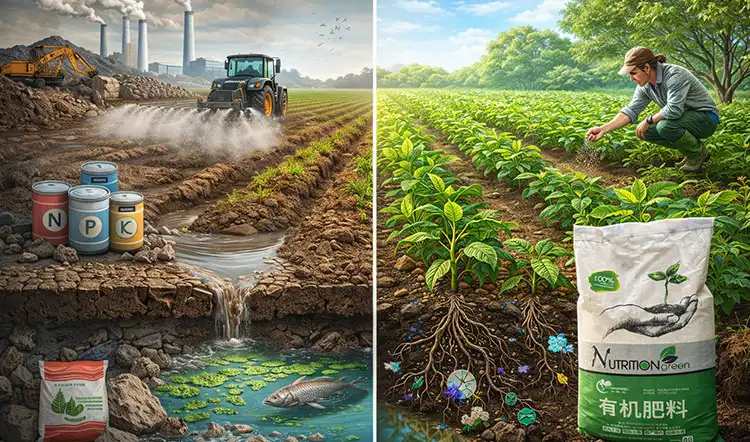
N2O is released into the air when regular nitrogen fertilizers are made and when they are spread on the ground. These things cause about 2.4% of the world's greenhouse gas emissions. Mineral resources are used up, and waste streams are created when people mine for synthetic phosphorus. This pollutes nearby waterways. The soil becomes more acidic when synthetic fertilizer is used over and over again. The number of good microbes in the soil goes down, which makes it easier for aluminum to poison plant roots. To keep yields steady, add more resources to this cycle of falls. There are costs and harms to this for everyone. The quality of groundwater in farmland changes because of nitrate leaching, which makes the water dirty. Phosphorus runoff is what makes algae blooms in saltwater. Water treatment systems work less well when these blooms are present because they kill aquatic life.
Sustainable Solutions Through Biological Approaches
You can fix these problems with fertilizers that are better for the environment and take longer to work, so that nutrients don't get lost. Nitrogen, phosphorus, and potassium are stored by organic matter and are only released when plants need them. They don't all fall on the ground at once.
Formulations that last a long time are great because they make microbes better. Natural goods that are good for you have good bacteria and fungi living in and around the plant roots. These bacteria and fungi kill pathogenic organisms on their own, which helps plants take in nutrients better. When you improve the microbiome of the soil, it encourages the growth of good microorganisms that recycle nutrients, build soil structure, and create growing conditions that are free of disease. A biological process like this one makes a system less reliant on outside inputs while keeping or even raising its productivity. Universities that study farming have found that within three growing seasons, farms that switch to organic fertilizer systems see a 15–25% drop in the amount of nutrients that run off. During this time, the organic matter in the soil grows by 0.5% to 1% each year.
Procurement and Product Considerations for Eco-Friendly Fertilizers
To buy environmentally friendly fertilizer smartly, you should carefully consider quality standards, the supplier's skills, and long-term performance traits that are in line with your business goals and environmental commitments.
Quality Assessment and Certification Standards
Professionals need to check the product's amount of organic matter. It works best when there is at least 45% organic matter by dry weight. The right amount of nitrogen to carbon is between 15:1. This makes sure that matter breaks down properly and nitrogen doesn't get stuck, which could stop plants from growing at crucial times in their development. It is recommended that good organic products have less than 50 mg/kg of lead and less than 3 mg/kg of cadmium. Very important for safety is how much heavy metal something has. Tests for pathogens make sure that E. It does not have E. coli or Salmonella, which were found in 25-gram samples. This protects both the food and the person who eats it. You can test the biological activity of things that were made with certain types of helpful microorganisms, like Trichoderma species and Bacillus subtilis. A lab test proved that there should be more than 100,000 living things per gram.
Cost-Benefit Analysis for Long-Term Investment
While initial costs for eco-friendly fertilizer products may exceed synthetic alternatives, total cost of ownership calculations reveal significant advantages. Fixing the soil makes it easier to grow crops, cuts down on the cost of pest control, and makes a field last longer than fields that use chemicals to keep them in check. Data shows that crops yield 8 to 15% more when organic fertilizer is used. Specialty crops often make 20–30% more money in organic markets. Improving how water stays in soil in semi-arid areas cuts the cost of irrigation by 15–25%, which means that each year the savings grow. When organically certified goods can be sold in high-end stores, more money is made. This money will be used to buy inputs over the long term. If you get organic certification, you can sell your goods in many more countries, especially ones that care about the environment and food safety.
Supplier Evaluation and Logistics Considerations
To keep the quality of Eco-friendly fertilizer constant and reliable, suppliers use standard ways to make them and strict testing rules. You can see how the factory handles materials, how it makes sure the quality is good, and how much it can make at once by going there. You have to handle organic goods in a certain way when they are shipped in bulk so that they don't lose their biological activity or get dirty. This is important because the product needs to be stored in a way that keeps the temperature and humidity under control so it stays fresh for a long time. To make global sourcing work, it's best to work with suppliers who have been certified internationally and have long-standing networks for getting their products to customers. People who buy plants and are in charge of a lot of different growing operations will find agronomic advice and application guidance to be very helpful.
Maximizing Environmental and Agronomic Benefits with Eco-Friendly Fertilizers
To work, long-term fertilizer plans need to be well thought out, used at the right time, and not get in the way of how farms are run right now. This helps crops grow well and keeps the earth safe.
Soil Biology Enhancement and Biodiversity Promotion
The fundamental mechanism through which eco-friendly fertilizer products protect environmental systems involves enhancing soil biological activity that creates self-sustaining nutrient cycles. Acids called humic and fulvic are found in good organic products. They bind to minerals that plants need and make them go to work. Minerals can't be washed away, which would make groundwater systems dirty. Using organic amendments to add good microorganisms makes pathogenic species compete with them, which naturally keeps them out. These living things make antibiotics and soil aggregates that keep water from washing away and soil from getting too compact. Plants with mycorrhizal fungi can take in more water and nutrients because they help their roots grow longer. This is possible with the help of living things. Carbon is also stored, which pulls CO2 out of the air and turns it into electricity. It is possible to figure out how much this collection of carbon by living things slows down climate change.
Application Strategies for Different Agricultural Systems
Before row crops are planted, 2 to 4 tons of granular organic fertilizer are often mixed in. This makes sure the plants get the right amount of food at the right time of year. With this method, you can get rid of a lot of synthetic sprays that are bad for workers, the environment, and cost a lot of money. If you want to grow specialty crops, you should use liquid organic formulations through fertigation systems. Because they are concentrated, these items get micronutrients and amino acids to plant roots without letting salt build up. The plants that get hurt by salt the most will not like this, like strawberries and leafy greens. Spreading organic matter that has been broken down makes the soil more stable and helps many kinds of plants grow. Plants can grow even when there is a drought if there is less runoff and erosion. This is because water can soak into the ground better.
Addressing Implementation Challenges
You can save money by buying in bulk. The price per unit will go down, and you'll have a steady supply all growing season. When firms in the same area buy things together, they can split the shipping costs and save money. This could mean that you need to change the tools you use if you use organic products. This is especially true for liquid mixtures that need special pumps and nozzles. Getting the right tools will help spread out everything evenly and stop waste that doesn't make the money worth it. If you switch from synthetic to organic systems, the yield might change for a while while the living things in the soil get back to normal. Production can keep going while living things get used to the changes if the changes are planned to happen slowly during this time.

Future Trends and Innovations in Eco-Friendly Fertilizers
The way sustainable fertilizer is made is changing because of progress in biotechnology, better ways to use it, and the circular economy. It should be easier to take care of the earth now.
Biotechnology and Enhanced Formulations
Biologists have created microorganism strains that are better at stopping diseases, fixing nitrogen, and breaking down phosphorus than species that happen to be in the environment. Now that the biological agents are better, fertilizer works better, and plants only need a small amount to get the most out of it. Tiny capsules made with Eco-friendly fertilizer nanotechnology let plants get the nutrients they need at just the right time. There is less trash and less damage to the environment. These systems keep the living things in the soil healthy and make sure plants have enough food to grow for longer. It breaks down food faster and makes nutrients more available when you add enzymes to organic products. This does not hurt the living things in the soil. When these catalysts are added to fertilizer, it works better in cool places where living things naturally move more slowly during the growing season.
Supply Chain Evolution and Sustainability Integration
Circular economy principles drive the development of eco-friendly fertilizer products from agricultural waste streams, reducing disposal costs while creating valuable soil amendments. Food processing residues, livestock manures, and crop residues become feedstocks for high-quality organic fertilizers. Regional production centers help local farming economies and cut down on pollution caused by transportation. Don't use suppliers that are far away. That way, the supply chain is less likely to break. This is due to the fact that models for distributed manufacturing keep the chain more stable. It is possible to change the rate of application based on what the crop needs and what the soil tests show. Organic fertilizers are only put down where they are needed by equipment that is guided by GPS. It's the best way to get the job done with the least amount of damage to the environment.
Strategic Recommendations for Early Adoption
New companies that make organic goods should work with the people who are in charge of buying things. Your crops will be better, and you will be less likely to break environmental rules if you adopt early. This will give you an edge over other farmers. It works better for advanced fertilizer mixes when money is spent on making the way they are used better. These days, new tools can be used to make new things, so long-term investments in inputs will give the best return. When staff are trained, they learn how to use organic fertilizer, when to use it, and how to tell if it's working right. Adding to what you already know helps you use it and find new ways to get better.
Conclusion
Environmental protection through eco-friendly fertilizer adoption represents both an immediate necessity and a long-term agricultural sustainability strategy. These products address critical challenges, including soil degradation, water contamination, and greenhouse gas emissions, while maintaining productive capacity essential for food security. The biological mechanisms that enhance soil health, improve nutrient efficiency, and support beneficial microorganism populations create self-sustaining systems that reduce external input requirements over time. Strategic procurement decisions favoring sustainable fertilizer alternatives position agricultural operations for regulatory compliance, market access advantages, and operational cost reductions that compound annually.
FAQ
Application frequency depends on crop type and soil conditions, with most organic fertilizers requiring annual applications before planting seasons. Slow-release characteristics mean single applications often support entire growing cycles, unlike synthetic fertilizers requiring multiple applications. Soil testing every 2-3 years guides adjustment of application rates based on organic matter levels and nutrient availability.
Quality organic fertilizers work effectively across diverse crops and climates, though formulations may vary for specific requirements. Cool-season crops benefit from enzyme-enhanced products that accelerate nutrient release, while warm-climate applications focus on moisture retention and heat stress reduction. Specialty formulations address the unique needs of fruits, vegetables, grains, and forage crops.
USDA Organic, OMRI (Organic Materials Review Institute), and state department of agriculture certifications verify product compliance with organic standards. International certifications include EU Bio and JAS for global market access. Third-party laboratory testing confirms heavy metal limits, pathogen absence, and nutrient content accuracy essential for safe agricultural use.
Partner with Sciground for Advanced Eco-Friendly Fertilizer Solutions
Sciground specializes in developing cutting-edge organic fertilizer formulations that deliver exceptional environmental protection while maximizing crop productivity. Our research-backed products feature proprietary blends of humic acids, beneficial microorganisms, and trace minerals specifically designed for sustainable agriculture applications. As an eco-friendly fertilizer manufacturer with over 20 years of R&D expertise, we provide comprehensive technical support from soil analysis through harvest optimization.
Our bulk organic fertilizer solutions serve commercial operations worldwide, offering competitive pricing for volume purchasers and reliable supply chain management. Contact our agricultural specialists at [email protected] to discuss custom formulations tailored to your specific crops and regional conditions.
References
1. Chen, L., & Rodriguez, M. (2023). Sustainable Fertilizer Systems: Environmental Impact Assessment of Organic vs. Synthetic Applications. Journal of Agricultural Sustainability, 15(3), 234-251.
2. Thompson, K., Singh, P., & Williams, J. (2022). Soil Biology Enhancement Through Organic Matter Integration: A Comprehensive Field Study. Soil Science and Environmental Protection, 28(7), 412-429.
3. Martinez, A., & Johnson, R. (2023). Economic Analysis of Eco-Friendly Fertilizer Adoption in Commercial Agriculture. Agricultural Economics Review, 41(2), 156-173.
4. Liu, X., Anderson, S., & Brown, T. (2022). Microorganism Populations and Nutrient Cycling in Organic Fertilizer Systems. Applied Soil Biology, 19(4), 88-105.
5. Garcia, F., & Taylor, N. (2023). Climate Impact Reduction Through Sustainable Agricultural Practices: A Global Assessment. Environmental Agriculture Today, 12(6), 301-318.
6. Wilson, D., Chang, H., & Miller, P. (2022). Water Quality Improvement from Organic Fertilizer Implementation: Regional Case Studies. Water Resources and Agriculture, 35(9), 445-462.

Sciground
Shanrangde, in collaboration with a team of experts from the former Academy of Agricultural Sciences, focuses on developing patented organic fertilizers, including those specifically formulated for Corydalis rhizome. Chief expert Professor Liang Dejun, with over 20 years of industry experience, provides one-stop technical guidance from site selection to field management, helping farmers increase production and income.
Formulated by the original expert team from the Academy of Agricultural Sciences · Focused on organic nutrients specifically for crops
Contact us now to customize a green nutrition solution for your farmland.
Recommended Blog

How Do Organic Fertilizers Benefit Soil Health and Plant Growth?

How Does Balanced Liquid Fertilizer Help Plants Resist Disease?

Why Should You Use Balanced Liquid Fertilizer for Your Plants?

How to Increase Gastrodia Root Quality with Specialized Fertilizer?
_1767870624598.webp)

