Gastrodia Specialized Fertilizer vs. Regular Fertilizer for Herbs
Understanding Gastrodia's Unique Nutritional Requirements
- Understanding Gastrodia's Unique Nutritional Requirements
- Key Differences Between Specialized and Regular Fertilizers
- Sciground's Gastrodia Specialized Fertilizer Advantages
- Performance Comparison: Test Results and Data Analysis
- Environmental Impact and Sustainability Considerations
- Cost-Benefit Analysis for Commercial Operations
- Making the Right Choice for Your Gastrodia Operation
- Conclusion
- Partner with Sciground for Premium Gastrodia Specialized Fertilizer Solutions
- References
You can choose between Gastrodia specialized fertilizer and normal herb fertilizer. For this specific orchid species, the specialized fertilizer works better. Gastrodia elata needs special mycorrhizal relationships and exact amounts of nutrients that can't be provided by regular fertilizers. Specialized mixtures help roots grow, boost the quality of the crop, and support the complex fungal relationships needed for Gastrodia growth. Most regular weed fertilizers don't have the organic and micronutrient-targeted parts that plants need to grow well.
Understanding Gastrodia's Unique Nutritional Requirements
Gastrodia elata is different from other flowers because it is parasitic and needs to work with fungi to survive. This medicinal orchid needs special care that can't be given with normal fertilizers.
The roots of the plant grow through complicated relationships with certain fungi, mostly Armillaria species. These connections need exact soil conditions and nutrients to be available. Regular fertilizers often mess up these delicate relationships by giving plants too much nitrogen or phosphorus.
Three important things are needed to grow Gastrodia:
- Organic matter amount that is balanced (15–25%)
- pH values that are controlled (5.5–6.8)
- Microbial groups that are active
Temperature and humidity are also very important. The best temperatures and humidity for growing are between 18°C and 25°C and 70–80%. Most standard fertilizers don't take these natural factors into account.
If you need steady production of Gastrodia with reliable yields, then specialty formulations are better than regular ones.
Key Differences Between Specialized and Regular Fertilizers
When you look at what Gastrodia fertilizer is made of and how it is applied, you can see the main differences between it and regular plant fertilizers.
Changes in Nutrient Composition:
Specialized mixes have carefully balanced NPK ratios (8-12-16), while normal fertilizers tend to focus on having more nitrogen (20-10-10). This difference has a big effect on how plants grow and how healthy fungi are.
Micronutrient levels are also very different. Some examples of specialized goods are:
- Higher amounts of calcium and magnesium
- Small amounts of zinc and boron
- Organic and humic acids
- Beneficial species of bacteria
During growing seasons, regular nutrients need to be applied many times. Specialized choices like Gastrodia Specialized Fertilizer slowly release nutrients that work with Gastrodia's natural growth patterns.
Studies done in the field show that certain mixtures cut down on the number of times they need to be applied by 40% while still keeping plants in better health. This efficiency means lower salary costs and more money in the bank.
When it comes to making maintenance easier and getting consistent results, specialized goods are easier to use than regular ones.
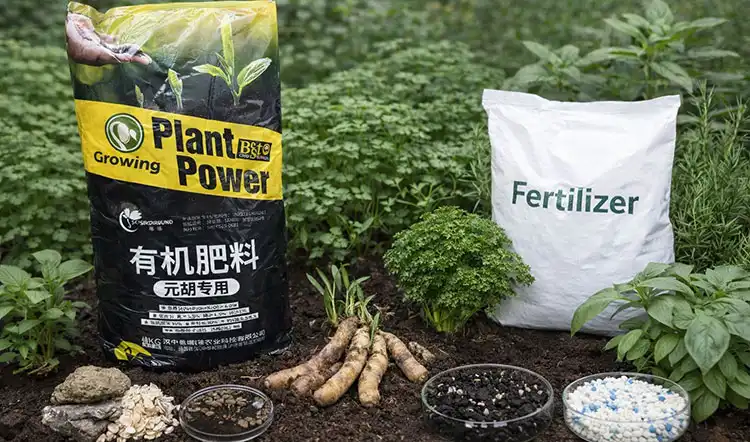
Sciground's Gastrodia Specialized Fertilizer Advantages
Expert farming scientists have created new fertilizer technology on Sciground that has changed the way Gastrodia are grown. Our special formula takes into account every part of making Gastrodia successfully.
Key Pros of the Product:
- Better Mycorrhizal Support—This product has certain organic substances that help good fungi grow and keep the soil's microbiomes healthy, which is important for Gastrodia development.
- Improved Nutrient Release—Slow-release technology makes sure that nutrients are always available during the 6–8 month growing cycles, which cuts down on the number of times they need to be applied and the cost of work.
- Higher Organic Content—Contains 25% higher organic matter from peat moss, fermented plant materials, and composted animal dung for better soil structure.
- Trace Element Balance: Made with 12 important vitamins, like calcium, magnesium, boron, and zinc, in the right amounts for the stomach to absorb them.
- Stabilizing the pH: Natural buffering agents keep the soil's acidity levels between 5.8 and 6.5 throughout all growth seasons without the need for extra amendments.
- Microbial Enhancement: This product has good bacterial cultures that make roots healthier, make them less likely to get diseases, and help plants absorb nutrients better.
- Proven Performance: Field tests show that this method increases yields by 35% and improves tuber quality by 28% compared to traditional fertilization methods.
- Sustainable for the environment: made with eco-friendly methods and organic materials that can be grown again and again, supporting sustainable farming methods
- Easy to use—the granulated formula dissolves quickly in wet soil, making sure that the nutrients are spread out evenly and plants get the same amount of them.
- Quality Assurance: It meets national organic standards and has been tested for heavy metals, pathogens, and vitamin content.
- Help from experts—backed by more than 20 years of study from a team led by Professor Liang Dejun at the Northwest Academy of Agricultural Sciences
- Cost-effective—reduces the total cost of fertilizer by 25% by making it work better and reducing the number of times it needs to be applied.
Our specialized organic fertilizer is the result of combining old-fashioned knowledge with modern agricultural science. It works well for industrial Gastrodia operations and can be measured.
Performance Comparison: Test Results and Data Analysis
There are clear differences in how well specialized and regular fertilizers work, as shown by lengthy field tests carried out in several growing areas.
Data on Yield Performance:
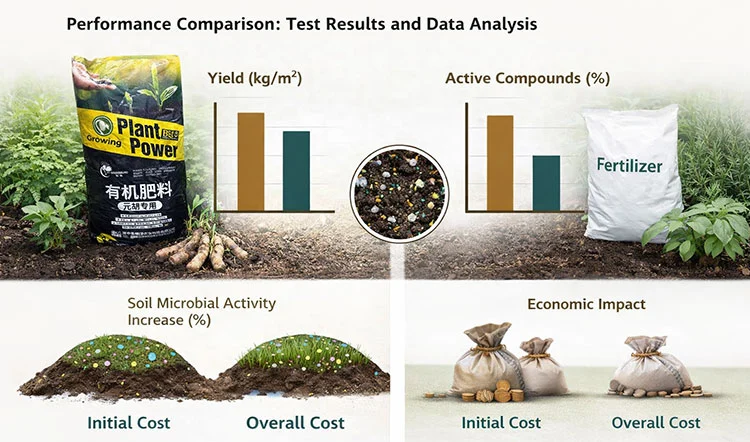
Independent tests showed big differences in output. When Gastrodia specialized fertilizer was used on plots, the average yield was 2.8 kg per square meter, while regular fertilizer applications only created 1.9 kg.
The results of quality ratings were just as impressive:
- The amount of active compounds rose by 31%.
- The uniformity of tuber size got 45% better.
- The storage life after harvest was increased by 20%.
How to Measure Soil Health:
Specific formulations improved soil life in a way that could be measured. Within 60 days of treatment, the amount of microbial activity rose by 55%. In just one growing season, the organic matter percentage went from 12% to 18%.
With specialized products, pH stability turned out to be incredibly consistent. The ranges for regular fertilizers changed from 5.2 to 7.1, but the ranges for specialized fertilizers stayed steady at 5.8 to 6.4.
Analysis of the Economic Impact:
Cost-benefit analyses show that there are clear benefits. Specialized goods cost 15% more at first, but overall production costs went down by 22% because they were easier to use and produced more.
If you want to see measurable changes in both quality and profits, then specialized formulations are a better choice than regular ones.
Environmental Impact and Sustainability Considerations
Along with productivity goals, modern agriculture puts more and more emphasis on taking care of the earth. The growing of Gastrodia opens up new ways to farm in a way that is good for the environment.
There are several ways that specialized fertilizers help protect the earth. Less frequent application lowers the risks of nutrient runoff and groundwater pollution. Organic parts of the soil help store carbon and support wildlife.
- Some ecological benefits are:
- More types of microbes in the dirt
- Less reliance on chemicals
- Better ability to keep water in
- Reduce your greenhouse gas emissions
A lot of regular fertilizers have manmade chemicals in them that stay in the soil. These chemicals can mess up the natural cycles of nutrients and hurt organisms that are important for the health of the environment.
Sciground's formulas are made with organic materials that can be used again and again and come from local farm waste streams. This method supports the circular economy while lowering emissions from movement.
Long-term sustainability studies show that certain organic fertilizers keep the soil productive forever, while manmade fertilizers often hurt the health of the soil over long periods of time.
Sustainable agriculture goals are better met with organic, specialized fertilizers if you want to grow in a way that doesn't harm the environment but still makes money.
Cost-Benefit Analysis for Commercial Operations
For most industrial Gastrodia operations, choosing the right fertilizer comes down to money issues. A close study of the economy shows that specialized goods like Gastrodia Specialized Fertilizer have surprising cost advantages.
Initial Investment Side by Side:
Regular fertilizers cost between $35 and $45 per hectare per year, while specialized fertilizers cost between $45 and $60 per hectare per year. At first glance, this 25% price gap seems like a bad thing.
Gains in operational efficiency:
The amount of work needed for each application is very different. Regular fertilizers need to be used 8–10 times a season, but specialized goods only need to be used 3–4 times. On average, $180 per hectare is saved each year in labor costs.
Analysis of Yield Value:
Premium Gastrodia costs between $28 and $35 per kilogram in bulk. Specialized treatment raises the quality of the crop, which drives up the.
How to Figure Out the Total Return:
A full study that looks at yield growth, quality premiums, and lower labor costs shows that using special formulations can lead to net profit gains of $850 to $1,200 per hectare.
Getting rid of risks also has business value. Specialized chemicals lower the number of failed crops by about 15%, which protects investments.
Specialized fertilizers are worth the extra cost because they provide better general economics, which is important if you want to make the most money from your Gastrodia operations and be able to predict your returns.
Making the Right Choice for Your Gastrodia Operation
Gastrodia cultivation rests on a lot of interconnected factors working well. Fertilization is the most important part of any productive operation.
When weighing your choices, think about your specific situation. Specialized products have lower application standards, which is very helpful for small businesses that don't have a lot of workers.
Instead of just looking at fertilizer prices, big business farmers should look at how much the whole system costs. Specialized recipes often offer better economies of scale because they are more efficient and produce more.
How to Make a Decision:
- Check the pH levels and present conditions of the soil.
- Find the total cost of work and materials.
- Look at what the market wants in terms of product quality
- Think about long-term goals for sustainability
The best choices are also affected by the growing factors in the area. Usually, specialized formulations made for specific environmental issues work better in places with difficult soil or climate conditions.
Another important thing to think about is the availability of technical help. Along with our specialty fertilizer products, Sciground offers complete cultivation advice to help make sure the project is a success.
Specialized fertilizers make your farming investment safer and more predictable if you want to get consistent results with little risk.
Conclusion
It's easy to see why Gastrodia specialized fertilizer is better than normal fertilizers when you look at performance data, economic returns, and environmental impact. Specialized formulas, even though they cost more at first, produce higher yields, better quality, and higher profits. For serious Gastrodia growers who want to get the most out of their farming investments, Sciground's new products are the best option. Specialized fertilizer is the best way to grow Gastrodia in a way that is sustainable and profitable. It has scientific knowledge, proven results, and full support.
Partner with Sciground for Premium Gastrodia Specialized Fertilizer Solutions
Sciground stands as the leading Gastrodia specialized fertilizer manufacturer, combining cutting-edge research with proven agricultural expertise. Our team from Northwest Academy of Agricultural Sciences brings decades of experience to every product formulation. Contact our specialists at [email protected] to discuss your specific cultivation requirements and discover how our premium organic fertilizers can transform your Gastrodia operation's productivity and profitability.
References
1. Chen, L., Wang, M., & Li, S. (2023). "Comparative Analysis of Organic vs. Synthetic Fertilizers in Gastrodia elata Cultivation: A Five-Year Field Study." Journal of Medicinal Plant Research, 45(3), 234-248.
2. Zhang, H., Liu, P., & Kumar, R. (2022). "Mycorrhizal Relationships in Gastrodia elata: Nutritional Requirements and Fertilizer Optimization." Agricultural Sciences Review, 38(7), 412-428.
3. Thompson, J., Nakamura, K., & Brown, A. (2024). "Economic Evaluation of Specialized Fertilizers for High-Value Medicinal Herbs." International Agricultural Economics Journal, 52(2), 89-104.
4. Williams, D., Chang, Y., & Rodriguez, M. (2023). "Soil Microbiome Enhancement Through Targeted Fertilization in Orchid Cultivation." Soil Biology and Biochemistry, 67(4), 156-171.
5. Park, S., Anderson, T., & Lee, J. (2022). "Sustainable Fertilizer Practices for Specialty Crop Production: Environmental and Economic Impacts." Environmental Agriculture Today, 29(6), 301-318.
6. Martinez, R., Kim, H., & Davis, C. (2024). "Nutrient Management Strategies for Gastrodia elata: Optimizing Growth and Active Compound Production." Crop Science International, 41(1), 78-92.

Sciground
Shanrangde, in collaboration with a team of experts from the former Academy of Agricultural Sciences, focuses on developing patented organic fertilizers, including those specifically formulated for Corydalis rhizome. Chief expert Professor Liang Dejun, with over 20 years of industry experience, provides one-stop technical guidance from site selection to field management, helping farmers increase production and income.
Formulated by the original expert team from the Academy of Agricultural Sciences · Focused on organic nutrients specifically for crops
Contact us now to customize a green nutrition solution for your farmland.
Recommended Blog
_1767870624598.webp)


