What Are Certified Organic Fertilizers Worth Buying?
Understanding Certified Organic Fertilizers
- Understanding Certified Organic Fertilizers
- How to Choose the Best Certified Organic Fertilizer for Your Business
- Application Methods and Best Practices for Certified Organic Fertilizers
- Procurement Strategies for Certified Organic Fertilizers in Bulk
- Company Introduction and Our Certified Organic Fertilizer Solutions
- Conclusion
- FAQ
- Contact Sciground for Your Organic Fertilizer Supplier Needs
- References
The best way to decide if certified organic fertilizers are a good investment for farming is to understand all of their benefits. Certified organic fertilizer products are very valuable because they have a lot of organic matter, natural humic acid, and good bacteria that improve the health of the soil and feed plants for a long time. For farmers, ranchers, and agriculture traders who want to increase output over the long run and protect the environment, these fertilizers are worth the money because they are better at resisting drought, disease, and low yields.
Understanding Certified Organic Fertilizers
Certified organic fertilizers go through strict checks to make sure they are different from regular soil amendments. These checks are based on strict chemical standards and production routines. These goods have to follow set rules for approval, like USDA Organic and EU Organic laws, which say that they can only contain natural ingredients and can't have any manufactured chemicals added during the making process.
Certification Standards and Regulatory Compliance
As part of the licensing process, the sources of raw materials, production sites, and quality control methods are all carefully checked. Businesses that sell agricultural products in global markets should know about these standards because they make sure that the products are real and that they are accepted by regulators in different places. Certified organic fertilizers have organic matter that comes from plants and animals and hasn't been treated with any chemicals that aren't allowed and could hurt the soil or the quality of the crops.
Environmental Benefits and Soil Health Enhancement
Organic fertilizers help the earth in a big way by preventing chemical waste and supporting natural soil ecosystems. These items improve the structure of the soil by adding good bacteria and organic matter that keep water in the soil longer and help nutrients move around in it. The natural benefits go beyond growing crops right away. They also include protecting ecosystems and keeping the land fertile over time.
Nutrient Profile Characteristics
Certified organic fertilizers usually have appropriate amounts of N, P, and K nutrients, along with important vitamins like calcium, magnesium, and sulfur. Different types of products have different amounts of nutrients. Compost-based fertilizers have nutrients that release slowly over time, which is great for feeding crops over time. Manure-based products have concentrated organic matter that improves the soil, and seaweed extracts have trace minerals and compounds that help plants grow, that make them healthier.
How to Choose the Best Certified Organic Fertilizer for Your Business
To choose the right organic fertilizer products, you need to carefully consider your farming goals and working needs. There are many things that go into the decision-making process that affect both the short-term success of the application and the long-term viability of the business.
Crop-Specific Requirements and Soil Conditions
To get the most growth and output, different crops need different amounts of nutrients at different times. Root veggies grow best in products that are high in phosphorus and help the roots grow. Leafy greens need products that are high in nitrogen and help the leaves grow. Soil testing shows the current amounts of nutrients and pH, which help with choosing the right fertilizer.
Application Context and Scale Considerations
Different types of fertilizer are needed for greenhouse activities compared to open-field farming or grass care. Precision nutrient release patterns and low odor production are good for controlled environment agriculture, but cost-effectiveness and mechanical compatibility are more important for large-scale outdoor uses. How you choose to package and store things depends on how much you need, which in turn affects how efficiently your business runs.
Performance Metrics and Cost-Effectiveness Analysis
To judge how well a fertilizer works, you have to look at how fast the nutrients are released, how evenly it is applied, and how the plants react. Not only should the purchase price be included in the cost analysis, but so should the work needed for application, the space needed for keeping, and the expected increases in yield. Standardized measures, like nutrition value per dollar spent and field performance results from independent tests, are needed to compare different brands.
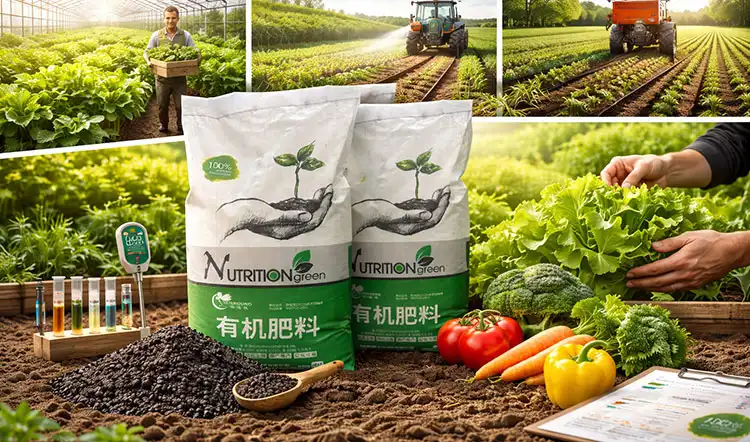
Application Methods and Best Practices for Certified Organic Fertilizers
When used correctly, organic fertilizers work best and cause the least amount of waste and damage to the environment. Understanding the best time and methods will ensure uniform results across a wide range of farming activities.
Timing and Dosage Optimization
To get the most out of the nutrients, the time of the application must match the growth stages of the plants and the weather. Before planting, treatments help the soil mix and activate microbes, and side-dressing during busy growth times gives plants extra nutrition when they need it the most. When it comes to weather, you should avoid applying things before it rains a lot, because that could lead to nutrient loss.
Integrated Soil Management Strategies
When you mix organic fertilizers with other soil amendments, they work together to make the soil healthier overall. Adding compost increases the amount of organic matter and helps the soil hold on to water. Cover crops add more organic matter and stop nutrients from being lost between growing seasons. Strategically adding a small amount of manufactured sources may help with certain nutrition deficits while still following the rules for organic certification.
Troubleshooting Common Application Issues
Recognizing the signs of a vitamin shortage lets you act quickly and make changes to your application. If leaves turn yellow, it could mean that the plant isn't getting enough nitrogen and needs a quick organic nitrogen addition. If roots don't grow well, it could mean that it's not getting enough phosphorus, which can be fixed with targeted organic amendments. Checking the pH level of the soil keeps nutrients from being locked up and makes sure that fertilizer works as well as it can.
Procurement Strategies for Certified Organic Fertilizers in Bulk
To buy in bulk successfully, you need to carefully evaluate each seller and plan to make sure that the quality of the goods always stays high and that deliveries happen on time. Long-term ties with suppliers that provide operating security and cost certainty are good for agricultural companies.
Supplier Verification and Quality Assurance
Reliable sellers keep their organic certifications up to date and provide clear proof of what their products are made of and how they were made. Facility checks, licensing reviews, and product tests should all be part of the verification process to make sure that the product meets the stated standards. Having ties with more than one authorized source gives you choices for reasonable prices and a backup plan for your supply chain.
Geographic Sourcing and Logistics Management
Transportation costs are a big part of buying things, and they change depending on where the seller is located and how the goods need to be delivered. Regional buying supports local farming economies and cuts down on shipping costs and damage to the environment. Coordinating delivery schedules makes sure that products are available during key application times without making it too expensive to keep supplies on hand.
Pricing Dynamics and Cost Optimization
Knowing how the prices of organic fertilizer are set helps you negotiate and plan your budget. Volume deals usually apply to sales of a lot of something, and yearly price changes affect when to buy something. To find the true economic value, you have to compare the total ownership costs, which include the price of the product, the cost of shipping it, the cost of application work, and the expected yield gains.

Company Introduction and Our Certified Organic Fertilizer Solutions
Sciground is at the cutting edge of agricultural innovation with our full range of organic fertilizer options made just for industrial farms. Our products show the great qualities that make certified organic fertilizers good investments for farms that want to make their crops more productive in the long term.
Product Portfolio and Technical Specifications
Our organic fertilizers have a lot of organic matter in them, like naturally available humic acid and plant-based humic substances that make the soil more fertile and the plants healthier. These mixtures contain highly active trace minerals and helpful microorganisms that make the soil better for growing plants while also fixing problems that happen when too much chemical fertilizer is used.The improved features of our goods give farmers a lot of benefits that make their purchase worth it. Better soil aggregate formation keeps more water in the soil and stops it from evaporating during dry times, making it more drought-resistant. Properties that make the soil resistant to cold keep the temperature and moisture fixed, which helps plants grow even when the weather is bad. The disease defense and protection features work well to fight soil-borne bacteria and improve the general microbiome so that good organisms can grow.
Yield Improvement and Performance Results
Our approved organic fertilizers always show increases in crop yields, no matter what kind of food it is or how it is grown. It is usually possible to measure gains in production rate and quality data for general crops. On the other hand, specialty crops benefit from higher nutrient content and market value. Our goods make big changes to the health of the soil, which leads to long-lasting production gains that add up over many growth seasons.
Technical Support and Customer Partnership
We offer in-depth technical consulting services that help our clients get the most out of their fertilizer investments by making the best use of their methods for applying it. Our team of agricultural experts provides ongoing support, such as interpreting soil tests, suggesting the best time to apply products, and helping with problems, to make sure that products are used successfully in a wide range of farming activities.
Conclusion
Certified organic fertilizers are good purchases for farming companies that care about long-term growth and being good to the environment. Their many benefits, such as improving soil health, crop yields, and compliance with regulations, make the costs of buying them worth it for farmers, ranchers, and agricultural traders who want to be successful in the long run. By learning about licensing standards, best practices for application, and buying strategies, you can make smart choices that get the most out of your investments in organic fertilizer while also supporting environmentally friendly farming methods.
FAQ
What makes certified organic fertilizers different from regular organic products?
Certified organic fertilizers undergo third-party verification processes that confirm their compliance with established organic standards, including USDA Organic or EU Organic regulations. This certification ensures that products contain only approved natural ingredients processed without prohibited synthetic chemicals or additives.
How do certified organic fertilizers compare to synthetic alternatives in terms of cost and effectiveness?
While certified organic fertilizers may have higher upfront costs compared to synthetic options, they provide long-term value through soil health improvements and sustained nutrient release. The total cost of ownership often favors organic products when considering reduced soil remediation needs and improved crop quality premiums.
Are organic fertilizers effective for large-scale commercial farming operations?
Certified organic fertilizers demonstrate proven effectiveness in commercial agriculture settings. Large-scale operations benefit from improved soil structure, enhanced water retention, and reduced input costs over time. Many commercial farms report consistent yield improvements and reduced pest pressure when transitioning to organic fertilizer programs.
Contact Sciground for Your Organic Fertilizer Supplier Needs
Agricultural businesses seeking reliable certified organic fertilizer solutions can benefit from our comprehensive product portfolio and technical expertise. Sciground offers customized formulations designed to meet specific crop requirements and operational scales. Our team provides personalized consultation services that help optimize fertilizer selection and application strategies for maximum return on investment. Contact us at [email protected] to discuss your organic fertilizer procurement needs and receive detailed product specifications and bulk pricing information. We welcome the opportunity to demonstrate how our certified organic fertilizer solutions can enhance your agricultural operations while supporting sustainable farming practices.
References
1. United States Department of Agriculture. "National Organic Program Regulations and Standards for Organic Fertilizers." Agricultural Marketing Service, 2023.
2. Gaskell, M. and R. Smith. "Nitrogen Sources for Organic Vegetable Crops." University of California Cooperative Extension Publication, 2022.
3. Horneck, D.A. and R.O. Miller. "Determination of Total Nitrogen in Plant Tissue by Combustion." Western States Laboratory Proficiency Testing Program, 2023.
4. International Federation of Organic Agriculture Movements. "Global Organic Fertilizer Standards and Certification Guidelines." IFOAM Technical Report, 2022.
5. Soil Science Society of America. "Organic Matter and Soil Health in Agricultural Systems." Journal of Soil and Water Conservation, Vol. 78, 2023.
6. Zhang, H. and N. Raun. "Oklahoma Soil Fertility Handbook for Organic Crop Production." Oklahoma State University Extension Service, 2022.

Sciground
Shanrangde, in collaboration with a team of experts from the former Academy of Agricultural Sciences, focuses on developing patented organic fertilizers, including those specifically formulated for Corydalis rhizome. Chief expert Professor Liang Dejun, with over 20 years of industry experience, provides one-stop technical guidance from site selection to field management, helping farmers increase production and income.
Formulated by the original expert team from the Academy of Agricultural Sciences · Focused on organic nutrients specifically for crops
Contact us now to customize a green nutrition solution for your farmland.
Recommended Blog

Why Should You Use Balanced Liquid Fertilizer for Your Plants?

How to Increase Gastrodia Root Quality with Specialized Fertilizer?
_1767870624598.webp)


