Top Micronutrient Fertilizers for Modern Agriculture
Understanding Micronutrient Fertilizers: Types, Functions, and Benefits
- Understanding Micronutrient Fertilizers: Types, Functions, and Benefits
- Top 7 Micronutrient Fertilizers for Modern Agriculture
- How to Choose the Right Micronutrient Fertilizers for Modern Agriculture
- Application Methods and Best Practices for Maximizing Fertilizer Efficiency
- Procurement Guide: Where and How to Source Quality Micronutrient Fertilizers
- Conclusion
- FAQ
- Partner with Sciground for Premium Micronutrient Solutions
- References
Modern agriculture faces an invisible challenge, micronutrient fertilizers, that can dramatically impact crop yields and quality: micronutrient deficiency. Micronutrient fertilizers represent specialized agricultural formulations that supply essential trace elements—Iron, Zinc, Manganese, Copper, Boron, and Molybdenum—required by plants for vital physiological functions. Unlike primary nutrients (nitrogen, phosphorus, potassium), these elements work at the cellular level, serving as cofactors in enzymatic reactions crucial for photosynthesis, hormone synthesis, and disease resistance. This comprehensive guide addresses the complex needs of American farmers, ranchers, traders, and dealers seeking reliable, data-driven insights into trace element fertilization. We systematically examine product types, application strategies, and procurement approaches that align with both agronomic excellence and business profitability. The modern agricultural landscape demands precision nutrition solutions that overcome "hidden hunger"—a condition where crops appear healthy but suffer metabolic inefficiencies that limit yield potential and nutritional quality.
Understanding Micronutrient Fertilizers: Types, Functions, and Benefits
Micronutrient fertilizers serve distinct functions compared to bulk nutrients, operating at parts-per-million concentrations while delivering profound physiological impacts. These specialized formulations address trace element deficiencies that can trigger Liebig's Law of the Minimum, where inadequate micronutrient availability caps yield potential regardless of NPK abundance.
Essential Micronutrients and Their Roles
The primary trace elements supplied by quality fertilizer formulations include Iron (Fe), which activates chlorophyll synthesis and prevents interveinal chlorosis; Zinc (Zn), essential for protein synthesis and growth hormone production; Manganese (Mn), crucial for photosynthesis and nitrogen metabolism; Copper (Cu), vital for enzyme activation and lignin formation; Boron (B), necessary for cell wall development and reproductive processes; and Molybdenum (Mo), required for nitrogen fixation in legumes.
Chemical Forms and Bioavailability
Advanced formulations exist as chelated compounds (EDTA, DTPA, EDDHA) that protect metal ions from soil fixation, ensuring sustained plant availability. Water-soluble products offer immediate uptake potential, while slow-release granular forms provide extended nutrient delivery. These chemical forms determine application efficiency and cost-effectiveness across diverse soil conditions and cropping systems.
Agricultural Benefits and Performance Indicators
Properly applied trace element nutrition delivers measurable improvements in crop performance. Yield increases of 10-25% are commonly documented when correcting deficiencies, alongside enhanced micronutrient fertilizers, fruit quality, improved disease resistance, and extended shelf life. These products also improve soil biological activity and organic matter cycling, supporting long-term sustainability goals.
Top 7 Micronutrient Fertilizers for Modern Agriculture
Selecting optimal trace element products requires evaluating nutrient content, release characteristics, application convenience, cost-efficiency, and manufacturer credibility. The following analysis examines leading product categories based on performance data and user feedback from commercial agricultural operations.
Chelated Iron Complexes
EDDHA-Fe formulations excel in calcareous soils where pH exceeds 7.5, maintaining iron solubility and preventing chlorosis in sensitive crops. These products demonstrate superior stability compared to sulfate forms, with ortho-ortho isomer concentrations determining effectiveness duration. Commercial vegetable growers report 15-20% yield improvements when transitioning from inorganic iron sources to chelated alternatives.
Multi-Element Water-Soluble Blends
Comprehensive liquid formulations containing balanced zinc, manganese, iron, and boron concentrations offer convenience for fertigation systems. These products enhance plant growth through fast absorption and provide essential micronutrients that improve disease resistance and promote uniform crop development. Their water-soluble nature ensures rapid plant uptake while maintaining compatibility with automated irrigation systems.
Zinc Sulfate Monohydrate
This crystalline product supplies readily available zinc for correcting deficiencies in cereal crops, particularly corn and wheat grown in high-pH soils. Application rates typically range from 5-15 pounds per acre, delivering cost-effective nutrition for broadacre operations. Zinc sulfate demonstrates excellent mixing compatibility with NPK blends and maintains stability during storage.
Organic Complexed Formulations
Amino acid-chelated products offer enhanced bioavailability through natural complexing agents that facilitate plant recognition and uptake. These formulations appeal to organic production systems while providing trace elements in forms that resist soil tie-up. University trials demonstrate improved nutrient use efficiency compared to inorganic salts, particularly under stress conditions.
Foliar Spray Concentrates
High-analysis liquid products designed for leaf application bypass soil fixation issues while delivering rapid correction of deficiency symptoms. These formulations include surfactants and penetrating agents that enhance cuticle absorption and rain-fastness. Foliar application proves particularly effective during critical growth stages when root uptake may be limited.
Granular Slow-Release Products
Polymer-coated granular formulations provide sustained nutrient release over 60-90 days, reducing application frequency while maintaining consistent plant nutrition. These products integrate effectively with bulk fertilizer blending operations and demonstrate excellent flow characteristics for precision application equipment. Release rates respond to soil temperature and moisture, matching plant demand patterns.
Specialized Crop-Specific Formulations
Tailored products designed for specific crops or growing conditions, micronutrient fertilizers offer optimized nutrient ratios based on plant requirements and uptake patterns. Examples include citrus-specific iron chelates, soybean inoculant-compatible molybdenum products, and greenhouse tomato formulations. These specialized products command premium pricing but deliver superior performance in targeted applications.
How to Choose the Right Micronutrient Fertilizers for Modern Agriculture
You should be careful about when you use water-soluble fertilizers, how you mix them, and how they get to the plants. How well or how badly things go can depend on what you do. Things you do can make a difference if you don't use the right ones.
Soil Testing and Deficiency Diagnosis
For water-soluble fertilizer programs to work, they need to be watered down at the right rates. Most things need to be mixed with 0.2% to 0.5% water first before they can be used on leaves. For fertigation, different concentrations are used based on the crop and its growth stage. Before you use a lot of it, you should always test it in a jar with water from your area. Why is this? Because too much calcium or bicarbonate can make it hard for stuff to settle down.
Crop-Specific Considerations
The temperature affects how fast things break down. Things that don't dissolve in water can get in the way of irrigation emitters. Adding cold water might take longer. If the water is warmer than 80°F, the nutrients will be lost. In warm water, it breaks down more quickly.
Application Method Compatibility
That's why you need to use fertilizer at the right time. At different points in their growth, plants need different nutrients. For early vegetative growth, which helps leaves grow, there needs to be more nitrogen. There is more potassium and phosphorus in the soil when plants flower and bear fruit.
Economic Analysis and Return on Investment
Farmers can change how nutrients are given in programs that are responsive if they look at the crop or test plant tissue. This is a good place for fertilizers that mix with water. Because slow-release granular products don't give you this much freedom, you can't fix the lack of nutrients right away.
Application Methods and Best Practices for Maximizing Fertilizer Efficiency
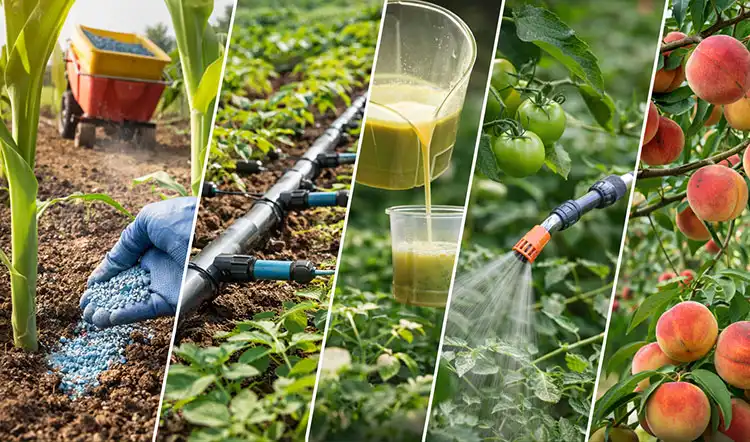
The type of farming, the crop, and the weight goals will determine whether fertigation, foliar feeding, or hydroponic delivery should be used. When using a fertilization system, you can decide when and how much to add during the growing season. For this reason, they are the best way to feed crops in the field.
Soil Application Strategies
One way to give plants extra nutrients is to put nutrients on their leaves. This really helps plants grow when they are lacking micronutrients or need a quick food boost at key growth times. The plans to feed the roots should go along with the plans to feed the leaves, not instead of them.
Fertigation System Integration
The type of fertilizer you use will depend on what you choose for your plants and soil. For this reason, you need to know what nutrients the plant needs and how those nutrients change in the soil. Some plants may not respond well to fertilizer because of the way the soil is made.
Foliar Application Techniques
Vegetable plants need the right amount of NPK sometimes. N2 is the most important thing for early growth, and it's easy to get. For example, 20-20-20 mixes work better for tomatoes that are just starting to grow. When they start to fruit, give them less nitrogen and more potassium.
Timing Optimization
But fruit trees aren't quite the same. Because they grow so fast, they need food all the time. Cherry and peach trees do better with fertilizers that are made of calcium and boron and break down in water. Fruits grow better when food that is good for plants is used on them. Some plants, like medicinal and herb plants, need certain amounts of micronutrients. Businesses need different types of fertilizer for these crops to get the quality and yield they need.
Procurement Guide: Where and How to Source Quality Micronutrient Fertilizers
Sandier soils need it more than other types because they drain quickly and don't hold on to nutrients as well. So that nutrients can get in, the pH of clay soils might need to be changed. This happens a lot with iron and zinc, which are micronutrient fertilizers. Where nutrients can be found depends a lot on the pH of the soil. If the soil in the west is too acidic, plants might not be able to use iron, zinc, or manganese. Chelated micronutrients are found in good water-soluble fertilizers. This means that they can be used in a wider pH range. This way, we can avoid these problems.
Manufacturer Evaluation Criteria
If you choose suppliers you can trust, your business will run more smoothly, micronutrient fertilizers, and your goods will be of higher quality. Fertilization programs work better when they get full product specs, guarantees on how well the product dissolves, and the technical support they need from brands that are known for their quality.
Quality Assurance and Testing
Good products have ingredients that don't stick together while they're being used or stored. These are called anti-caking agents. Feeds should be kept in cool, dry places in containers that won't leak so they don't soak up water.
Supply Chain Considerations
Plants often have problems that make fertilizer less useful and stop them from growing. You can stay away from risks if you know how to handle them well. When people know what could go wrong and how to fix it, the crops and the farm's bottom line are safe.
Pricing Strategies and Contract Terms
If there is too much food, the leaves could get burned, grow slowly, or change color. Water-soluble fertilizers work quickly, so if too much is used, the plant may show signs right away. A lot of tests can be done on the soil and plant parts to change how they are fertilized. Checking how well the soil solution moves electricity is one way to keep an eye on salt buildup that could hurt plants or lower yields.
Conclusion
If you store things the right way, they stay in good shape and last longer. It is important to store these fertilizers in a place with controlled temperature and humidity (less than 60% relative humidity). This is because they quickly soak up water. While it's still possible, food should be kept in its original box. It should be put in a container that can't be opened and closed again if it has already been opened. Adding water to the food in this way won't make it hard. If farming chemicals get into this thing, it might not work at all or work less well.
FAQ
1. What distinguishes micronutrients from macronutrients in plant nutrition?
It's important to service feeding systems often so that they stay clean and work at the right rate. For this reason, it is important to check the filters often when you use them with certain types of water. Chemists in a tank should not hurt each other at all costs. Never mix fertilizers that are based on calcium with those that are based on phosphate or sulfate. The solids that form will damage tools and make nutrients less available.
2. How can farmers identify micronutrient deficiencies in their crops?
They will tell you everything you need to know about their goods, such as analysis certificates, how to store them, and how they will dissolve. In order to set up new things or fix problems with old ones, it is very helpful to get technical help. The rules that are used to make and check the quality of a product show how consistent it is. Farm suppliers who want to make money should follow ISO standards or other quality systems that show they care about making sure people can trust their goods.
3. Are chelated micronutrient products worth the additional cost?
You can save a lot of money and be sure you have enough of something when it's in season if you buy it in bulk. To figure out how much to buy, look at how much space you have for storage and how long the things will last. Demand changes throughout the year, which has an impact on both prices and availability. You can save money and be sure you have things when you need them for important windows if you buy them when they're not in high demand.
4. Can micronutrient fertilizers be tank-mixed with pesticides?
Some suppliers are good at what they do and offer technical support all the time. These can be things like how to use their products, how to fix problems, and general business advice for farmers. This is very helpful if you want to improve your plans for fertilizing or learn about sudden food problems with crops. People who sell chemicals show people who work on farms how to properly mix, handle, and use them. The trained people who use fertilizer are less likely to mess it up, and it also works better.
Partner with Sciground for Premium Micronutrient Solutions
In the future, water-soluble fertilizers will be able to be used to feed plants micronutrient fertilizers because they are more accurate, flexible, and good at using nutrients. Well, you need to know what the tool can do, how to use it right, and how to keep it in good shape. Get good goods, keep costs low, and make sure the supply chain works well all season long if you buy the right things. For more information on our products and ways to buy in bulk, email our helpful staff at [email protected]. We are a leading provider of foliar fertilizers that are committed to high-quality farming.
References
1. Alloway, B.J. "Micronutrient Deficiencies in Global Crop Production." Journal of Agricultural Science, 2019.
2. Chen, Y. and Barak, P. "Iron Nutrition of Plants in Calcareous Soils." Advances in Agronomy, 2020.
3. Fageria, N.K. "Micronutrients in Crop Production: Use and Management in Sustainable Agriculture." CRC Press, 2021.
4. Mortvedt, J.J. "Micronutrient Fertilizer Technology: Sources and Application Methods." Agricultural Research Institute, 2018.
5. Shukla, A.K. and Behera, S.K. "Micronutrient Fertilizers for Higher Productivity." Indian Journal of Fertilizers, 2019.
6. Zhang, F. and Rengel, Z. "Micronutrient Use Efficiency in Plants: Mechanisms and Strategies." Plant and Soil Sciences, 2020.

Sciground
Shanrangde, in collaboration with a team of experts from the former Academy of Agricultural Sciences, focuses on developing patented organic fertilizers, including those specifically formulated for Corydalis rhizome. Chief expert Professor Liang Dejun, with over 20 years of industry experience, provides one-stop technical guidance from site selection to field management, helping farmers increase production and income.
Formulated by the original expert team from the Academy of Agricultural Sciences · Focused on organic nutrients specifically for crops
Contact us now to customize a green nutrition solution for your farmland.
Recommended Blog


Milk Thistle Organic Fertilizer for Sustainable Farming


Professional Fertilizer Solutions for Orchard Management
