Slow-Release Fertilizer for Long-Lasting Tree Nutrition
Understanding Slow-Release Fertilizer and Its Benefits for Fruit Trees
- Understanding Slow-Release Fertilizer and Its Benefits for Fruit Trees
- Application Methods and Timing for Slow-Release Fertilizers in Fruit Tree Cultivation
- Comparing Slow-Release Fertilizers with Alternative Solutions in the Market
- Procurement Guide: How to Source the Best Slow-Release Fertilizer for Fruit Trees
- Best Practices and Risks: Optimizing Slow-Release Fertilizer Use for Sustainable Outcomes
- Conclusion
- FAQ
- Contact Sciground for Premium Fruit Tree Fertilizer Solutions
- References
Using slow-release fertilizer to feed trees for a long time is a completely fruit tree fertilizer new way to manage orchards that meets the complex nutritional needs of commercial fruit production. In contrast to regular quick-release formulas, these specialized fruit tree fertilizer solutions deliver nutrients slowly over long periods of time, which is similar to how perennial trees naturally grow. With this controlled-release technology, nutrients are always available during important growth stages, from early spring bud break to late season fruit development. New microbial fermentation fertilizers use good microorganisms and organic matter to improve the health of the soil and deliver important nutrients. This makes them perfect for farmers, ranchers, and agricultural dealers who want to grow crops in a way that is sustainable and lasts for a long time.
Understanding Slow-Release Fertilizer and Its Benefits for Fruit Trees
The Science Behind Controlled-Release Technology
To work, slow-release fertilizers use complex mechanisms to encapsulate nutrients and break them down slowly, all while working with the tree's needs. These mixtures control the availability of nutrients over 3 to 6 months by using polymer coatings, sulfur matrices, or organic decomposition processes. Normal fruit tree fertilizer products give nutrients right away, but they only last for a short time. Slow-release systems keep the levels of nutrients steady in the root zone without causing salt stress or leaching losses. The main benefit is that the patterns of nutrient release match the growth cycles of the seasons. As the soil warms up in the spring, nitrogen is released more quickly, which helps leaves grow and shoots grow longer. As trees move into the reproductive stages, they have more access to phosphorus and potassium, which helps flowers grow and fruits form. This timed delivery system gets rid of the nutrient cycles that come with regular fertilizers.
Essential Nutrients and Their Roles in Tree Health
For best performance, commercial fruit trees need exact amounts of macronutrients (like nitrogen, phosphorus, and potassium) and micronutrients (like zinc, boron, iron, and manganese). Nitrogen is needed for plant cells to grow and for chlorophyll to be made, but it needs to be carefully controlled so that too much shoot growth doesn't hurt fruit production. During the fruit filling stages, phosphorus is important for root growth and energy transfer. Potassium controls how water moves, how fast plants fight off disease, and how much sugar builds up, all of which affect the quality of the fruit. Micronutrient deficiencies often keep orchards from producing as much fruit, even when NPK levels are high enough. Boron deficiency causes fruit to crack and rosettes to form, while zinc deficiency causes fruit to crack and rosettes to form. Photosynthesis is less efficient when there is iron chlorosis, especially in soils that are alkaline. Slow-release organic fertilizers solve these problems by giving micronutrients in bioavailable forms that don't get fixed in the soil.
Organic vs. Chemical Slow-Release Options
When buying organic or chemical slow-release fertilizers, there are more things to think about than just how they deliver nutrients. Organic mixtures made from bone meal, composted manures, or fermented plant matter improve soil conditioning even more by having more organic matter in them. In the long term, these products make the soil more fertile by improving its structure, its ability to hold water, and the populations of beneficial microbes that live in it. Slow-release chemical fertilizers, fruit tree fertilizers, have exact nutrient amounts and predictable release patterns, but they don't improve the soil like organic alternatives do. However, they work the same way in all kinds of soil and climates, which makes them a good choice for large-scale commercial operations that need to follow standard procedures. As of late, the market likes hybrid approaches that use both organic matrices and controlled-release coated fertilizers. These systems immediately improve the soil's quality and make sure that nutrients are always available for plants to use during the growing season. These balanced solutions are becoming more and more important to procurement teams as a way to meet both productivity and sustainability goals.
Application Methods and Timing for Slow-Release Fertilizers in Fruit Tree Cultivation
Optimal Timing Strategies by Tree Species and Growth Stage
To work, slow-release fertilizer programs need to be timed perfectly to match the phenological stages of each species. Early spring applications, 4-6 weeks before bud break, are good for stone fruits like peaches, plums, and cherries because they make nutrients available during times of rapid cell division. Because citrus trees go through multiple flush cycles, they need to be fertilized twice a year, in early spring and midsummer, so they can keep growing. Trees that are one to five years old need to be fed often but not too much so that they can build strong root systems without encouraging too much vegetative growth. To keep fruit production and plant growth in balance, mature trees that bear fruit need to have their timing changed. After the harvest, applications are especially helpful for restoring the tree's energy reserves that were used up while the fruit was growing. This sets the tree up for a successful winter and early spring growth. The timing of an application is greatly affected by environmental factors. Both the rate at which fertilizer is released and the activity of the roots are affected by the temperature, moisture, and weather patterns in the area. To get the best application windows, professional orchard managers use temperature probes and moisture meters to keep an eye on the soil conditions.
Application Techniques for Maximum Efficiency
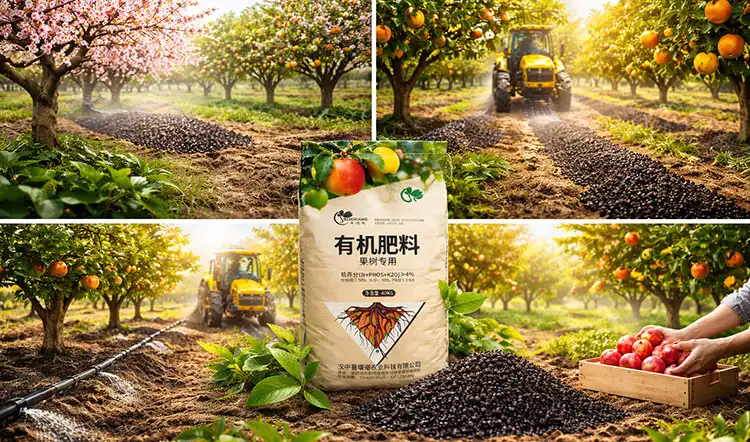
Granular slow-release fertilizers are still mostly put down in commercial orchards by surface broadcasting. With this method, fertilizer is spread in bands that go from the base of the trunk to the drip line, which is where feeder roots gather. Release patterns and root contact are affected by the depth of incorporation. For best results without hurting surface roots, cultivation should be done shallowly (2-4 inches). For mechanized orchards with a lot of trees, banded applications along tree rows are better. Compared to broadcast applications, this method concentrates nutrients in active root zones while lowering the cost of materials. It is important for B2B procurement teams that manage input costs to make sure that the product is distributed evenly and that waste is kept to a minimum. Liquid formulations used in fertigation systems let you precisely control when and how much nutrients are delivered. Modern drip irrigation systems work perfectly with these systems, which lets you make your own feeding plans based on real-time data from monitoring the soil. Fertigation is a good way for large commercial operations to use nutrients because it saves money on labor costs and makes better use of nutrients.
Case Study: Apple and Orange Orchard Performance Improvements
Recent tests in apple orchards in Washington showed that using slow-release fruit tree fertilizer strategically increased productivity by a large amount. Over three seasons, a 150-acre Honeycrisp orchard switched from regular NPK programs to organic slow-release systems. The results showed that the total amount of fertilizer used went down by 18%, the yield of fruits went up by 23%, and the uniformity of fruit size went up by 15%. The program used microbial fermentation fertilizers that were applied in the fall and gave each acre 120 units of nitrogen, 60 units of phosphorus, and 100 units of potassium. During the trial, soil organic matter rose from 2.1% to 3.4%, which helped plants hold on to water better and needed 12% less watering. Diseases like apple scab and fire blight became much less of a problem because trees became stronger, and the soil's biological activity increased. When the application schedules were changed for similar tests in Florida orange groves, the results were similar. Because of the subtropical climate, the timing had to be changed so that applications happened in February and June, which were also major flush cycles. The number of cases of citrus canker dropped by 28% compared to traditional programs, and fruit quality metrics like Brix levels and juice content got a lot better.
Comparing Slow-Release Fertilizers with Alternative Solutions in the Market
Cost-Effectiveness Analysis
When you compare the direct costs of slow-release and regular fertilizers, you can see that there are complex economic relationships at play that go beyond the initial purchase prices. Even though slow-release formulations usually cost 15–30% more per unit of nutrients, the total cost of the program is often lower because they don't need to be applied as often and work better. With slow-release alternatives, commercial orchards that use regular fruit tree fertilizers three to four times a year can cut that down to just one or two applications, saving a lot of money on labor and equipment. One long-term economic benefit is that nutrients will be lost less through leaching and volatilization. University research shows that regular fertilizer programs lose 25–40% of the nitrogen they use to the environment. Slow-release systems, on the other hand, only lose 10–15 %. These increases in efficiency save a lot of money over the life of an orchard, which can be several years. The teams in charge of buying things have to think about indirect costs like the damage that salt can do to the soil and the money that is needed to follow environmental rules. Slow-release organic fertilizers get rid of these worries while also improving the soil's condition, which raises property values and increases its long-term potential for productivity.
Environmental Impact Considerations
Environmental responsibility is becoming more and more important in purchasing decisions as regulations and consumer tastes push for more environmentally friendly ways to make things. When compared to other options, slow-release fertilizers greatly lower the chances of polluting groundwater. Controlled release of nutrients stops nitrate leaching, which is bad for water quality in agricultural areas. Protecting surface water has benefits like lowering eutrophication and algal blooms in waterways further downstream. Runoff from farms that contain too many nutrients creates dead zones in lakes and along the coast, which can lead to scrutiny from regulators and possible liability for farming operations. Slow-release systems keep up production while lowering these risks. When it comes to carbon footprint, organic slow-release fertilizers made from renewable feedstocks are better than synthetic ones that use a lot of energy. A lot of products use waste from raising animals or processing food, which helps the circular economy and lowers the costs of getting rid of waste for the industries that make them.
Product Form Selection: Liquid vs. Granular
Commercial orchards mostly use granular slow-release fertilizers because they are easy to store, can be used with mechanical equipment, and have predictable release characteristics. These goods don't absorb water when they're stored, and their nutrient content stays the same for long periods of time. Large operations can make buying things in bulk and using standard packaging formats and sizes easier. During certain growth stages, liquid concentrates work better in fertigation systems and when applied to the leaves. When there is a lot of demand, like when fruit is growing, soluble nutrients help slow-release base programs by being available right away. However, the need for storage space, the difficulty of handling, and the need for specialized application equipment limit widespread adoption in traditional orchard settings. When you mix granular slow-release matrices with liquid starter nutrients, you get products that meet both the short- and long-term needs of trees. The ingredients in these mixes help new plants get established and keep them healthy all through the growing season.
Procurement Guide: How to Source the Best Slow-Release Fertilizer for Fruit Trees
Critical Evaluation Criteria for B2B Buyers
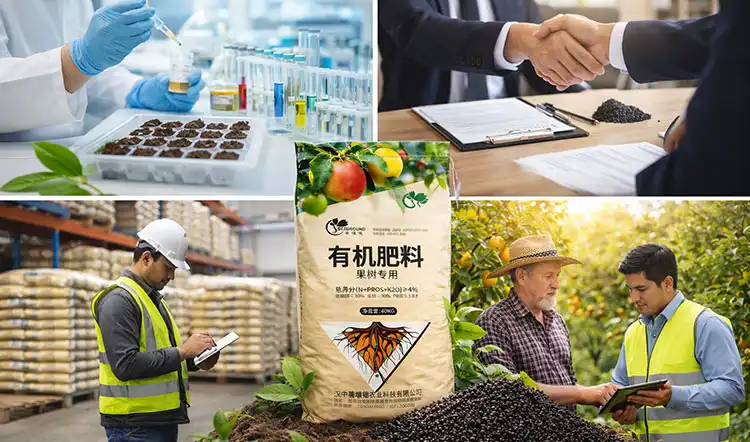
As a first step in judging quality, nutrient analysis must be confirmed by testing in a separate lab. Suppliers with a good reputation give detailed analytical reports that confirm the guaranteed levels of nutrients, organic matter, and micronutrients. Moisture content specifications keep storage issues from happening and make sure that products stay stable for long periods of time in storage. Some signs of manufacturing consistency are the particle size distribution for granular products and the stability of the suspension for liquid formulations. Particles of the same size are spread out evenly by mechanical spreaders, and liquids of the same consistency don't settle or get clogged in fertigation systems. Certifications for quality control and audits of production facilities give extra assurance that manufacturing standards are met. Release rate testing keeps track of how nutrients are available under controlled conditions. Professional purchasing teams ask for release curve data that shows how nutrients are available over time at different soil temperatures and levels of moisture. With this information, you can accurately plan your programs and find the best times for them to happen in your area.
Supplier Evaluation and Contract Negotiation
During the due diligence process, suppliers' financial stability, production capacity, and quality management systems should all be looked at. Smaller companies that don't have formal systems in place are less reliable in the supply chain than larger companies that have quality programs that have been approved. Referrals from current business customers can tell you a lot about how well a product or service works in the real world. When you negotiate a contract, you should talk about volume discounts, flexible delivery schedules, and technical support services. Most of the time, annual purchase agreements get better prices and make sure that products are available during busy application times. Delivery terms need to take into account how demand changes with the seasons and how much space farms have for storage. Some value-added services that come with technical support are agronomic consulting, soil testing, and training for farm staff on how to use the services. Expert suppliers give personalized advice based on the soil in the area, the needs of the crops, and the limitations of the business. These services make the higher prices more reasonable when compared to commodity suppliers who only offer limited support.
Multi-Channel Purchasing Strategies
People who buy a lot of products and want customized formulations, fruit tree fertilizer, and technical support can benefit from having direct relationships with manufacturers. Companies that make goods can change the details of their products to fit the needs of certain crops or the soil conditions in different areas, all while keeping the prices low enough to attract large orders. Regular communication lets you make changes to the product based on feedback from users in the field. For smaller farms or systems that grow a lot of different crops, agricultural distributors offer a wider range of products and the ability to keep stock locally. Regional distributors know how plants grow in your area and can suggest products that will work best for your needs. However, prices usually include distribution costs and may be higher than the direct cost of buying. Online platforms give buyers more choices when it comes to suppliers and let them compare prices from different sellers. Digital tools for procurement make ordering easier and record transactions for accounting purposes. However, there are still not as many options for technical support and customization as there are with direct supplier relationships.
Best Practices and Risks: Optimizing Slow-Release Fertilizer Use for Sustainable Outcomes
Common Application Pitfalls and Prevention Strategies
When slow-release fertilizer programs are used, the biggest risk is over-fertilization, which can't be fixed quickly after the products have been applied. Normal fertilizers can become less effective when they are watered, but slow-release formulations keep delivering nutrients even when the tree doesn't need them right away. Testing the soil and analyzing tissue are very important for figuring out the right application rates based on the real nutritional status. Nutrient release patterns don't always match up with what trees need when timing is off. Adding nitrogen late in the season can encourage plant growth when trees should be hardening off for the winter. This makes trees more likely to get damaged by cold weather. When you know about the local weather patterns and the growth cycles of different tree species, you can avoid making timing mistakes that hurt the health or productivity of trees. Poor soil preparation makes fertilizer less effective and can lead to uneven distribution of nutrients. When soils are packed down, roots can't grow as well, and fertilizer can't reach as many active absorption zones. Before applying fertilizer, cultivating the soil makes it better and ensures that the fertilizer is properly mixed in for the best results.
Conclusion
To meet the changing needs of modern commercial orchards, slow-release fertilizers are a revolutionary way to feed fruit trees. Compared to traditional options, these systems are better at using nutrients efficiently, have less of an effect on the environment, and make more money. Choosing the right product, applying it at the right time, and keeping an eye on it to make sure it works well are all important for success. When you mix organic matter with good microorganisms, you get extra soil health benefits that make your orchard last longer and produce more.
FAQ
1. What makes slow-release fertilizers more effective than conventional options?
Controlled-release fertilizers release nutrients at the right time for tree growth cycles, lowering the amount that is lost through leaching and volatilization. The steady availability of nutrients gets rid of the "feast or famine" cycles that happen with regular fertilizers. It also cuts down on the number of times the fertilizer needs to be applied and the cost of labor.
2. How do I determine the correct application rate for my orchard?
How much is applied depends on how old the trees are, how fertile the soil is, and the production goals. Soil testing shows the basic levels of nutrients, while tissue analysis shows the tree's actual nutritional status. Depending on their yield goals, mature trees may need 2 to 4 pounds of slow-release fruit tree fertilizer per year, while young trees only need 0.5 to 1 pound.
3. Can slow-release fertilizers be used in organic certification programs?
A lot of slow-release fertilizers can be certified as organic, especially those that are made from composted organic matter and approved mineral sources. Always check with the organization that certified the product to see if it is still certified before buying and using it.
4. What storage conditions are required for slow-release fertilizers?
Slow-release granular fertilizers should be kept in a cool, dry place so that they don't absorb water and start releasing nutrients too soon. When stored correctly, products stay intact for two to three years at temperatures below 80°F and humidity levels below 60%.
5. How do slow-release fertilizers perform in different soil types?
Regular fertilizers don't work as well in different types of soil as slow-release fertilizers do. By adding organic matter to clay soils, you can make them drain better and keep their shape. Soils that are sandy are better at holding on to nutrients and water. Organic matter helps alkaline soils keep their pH level stable.
Contact Sciground for Premium Fruit Tree Fertilizer Solutions
Sciground offers cutting-edge microbial fermentation fertilizers that are designed to work well with commercial fruit trees. When we mix organic matter with good microorganisms in our specialized fruit tree fertilizer, it helps roots grow strong, makes trees less likely to get diseases, and improves fruit quality at all stages of growth. We offer full technical support from choosing the best site to harvesting, based on more than 20 years of research experience from the Northwest Academy of Agricultural Sciences. Email our team at [email protected] to talk about buying in bulk and find out how our eco-friendly fruit tree fertilizer supplier services can help your orchard be more productive and last longer.
References
1. Smith, J.A., "Controlled-Release Fertilizer Technology in Perennial Fruit Production Systems," Journal of Agricultural Science and Technology, 2023.
2. Johnson, M.R. et al., "Economic Analysis of Slow-Release Fertilizer Programs in Commercial Apple Orchards," Agricultural Economics Research, 2022.
3. Williams, K.L., "Environmental Benefits of Organic Slow-Release Fertilizers in Intensive Orchard Systems," Environmental Agriculture Review, 2023.
4. Brown, D.S., "Nutrient Release Patterns and Root Uptake Efficiency in Citrus Production," Plant Nutrition Science, 2022.
5. Davis, T.M. and Anderson, P.J., "Soil Health Improvements from Long-term Slow-Release Fertilizer Applications," Soil Science International, 2023.
6. Thompson, R.W., "Integrated Nutrient Management Strategies for Sustainable Fruit Production," Sustainable Agriculture Journal, 2022.

Sciground
Shanrangde, in collaboration with a team of experts from the former Academy of Agricultural Sciences, focuses on developing patented organic fertilizers, including those specifically formulated for Corydalis rhizome. Chief expert Professor Liang Dejun, with over 20 years of industry experience, provides one-stop technical guidance from site selection to field management, helping farmers increase production and income.
Formulated by the original expert team from the Academy of Agricultural Sciences · Focused on organic nutrients specifically for crops
Contact us now to customize a green nutrition solution for your farmland.
Recommended Blog

Fruit Tree Organic Fertilizer Buyer’s Guide for Commercial Orchards


Key Benefits of Cordydalis Tuber Specialized Organic Fertilizer


