Milk Thistle Organic Fertilizer for Eco-Friendly Farming
Understanding Milk Thistle Organic Fertilizer: Composition and Benefits
- Understanding Milk Thistle Organic Fertilizer: Composition and Benefits
- How to Use Milk Thistle Organic Fertilizer Effectively in Farming Operations
- Comparing Milk Thistle Organic Fertilizer with Other Fertilizers: Why Choose Organic?
- Procurement Guide: Buying Milk Thistle Organic Fertilizer in Bulk
- Future of Eco-Friendly Fertilizers: Trends and Innovations with Milk Thistle
- Conclusion
- FAQ
- Partner with Sciground for Premium Milk Thistle Organic Fertilizer
- References
Milk thistle (Silybum marianum) needs to be grown in a special way that takes into account both the plant's needs and the land it grows on. We've spent years at Sciground making a Milk thistle Organic fertilizer that meets all of these needs. Our mixture feeds the microbiome of the earth and gives milk thistle exactly what it needs at every stage of its growth. This custom answer increases yield, makes plants more resistant, and improves the structure of the soil. It sets the stage for long-term farming that is good for both farmers and the environment.
Understanding Milk Thistle Organic Fertilizer: Composition and Benefits
What Makes Our Organic Fertilizer Different
Usually, synthetic fertilizers don't go through the soil environment at all; instead, they use soluble salts to give nutrients straight to plants. Our way of doing things at Sciground is very different. Our Milk thistle Organic fertilizer is meant to feed the soil first, because we know that plants that grow in healthy soil are healthy plants. The mixture includes carefully chosen animal dung, peat moss, and straw powder. It has all been fermented and sterilized at high temperatures to get rid of germs while keeping good microbes active.
Core Nutritional Profile
The nutrient makeup is the result of two years of field study with the help of Agricultural Sciences experts. Our recipe keeps the organic matter level above 45% by weight, which sets the stage for long-term soil fertility. The ideal amount of carbon to nitrogen is between 15:1 and 20:1. This allows for steady reduction without nitrogen becoming immobile. Our balanced 5-5-5 recipe includes secondary macronutrients like calcium, magnesium, and sulfur, while synthetic options may have NPK numbers of 20-20-20. Together with humic and fulvic acids, these elements improve the absorption of nutrients at the root zone.
Environmental and Agronomic Advantages
A lot of salt is in synthetic fertilizers, which can hurt roots and make the soil more acidic over time. These risks are completely eliminated by our organic method. The low salt index keeps the pH of the soil between 5.5 and 7.5, which is good for milk thistle roots during their sensitive development stages. Field tests in several growth areas show that humus creation can improve the soil's ability to hold on to water by up to 20%. Our fertilizer restores soil degradation by boosting cation exchange capacity, which is probably what makes it most useful for businesses. This system helps get rid of salts that have built up from using chemicals in the past while keeping good nutrients in the root zone so that milk thistle can use them all summer long.
How to Use Milk Thistle Organic Fertilizer Effectively in Farming Operations
Application Timing and Methods
For milk thistle to grow well, the Milk thistle Organic fertilizer needs to be applied at the right time for the plant's growth stage. Spread it out evenly over the ground and work 5 to 8 tons per hectare into the top 15 to 20 centimeters of dirt during the first stages of preparing the land. This base application sets up the community of microbes that will help plants grow and survive. When moving or direct seeding, adding an extra side-dress of 2 to 3 tons per acre in furrows makes nutrients easily accessible during the important establishment stage.During the vegetative growth phase, when milk thistle grows its distinctive rosette of spiny leaves, a mid-season topdressing of 1-2 tons per acre helps strong leaf growth. Because organic nutrients are released slowly, applications made in early spring keep feeding plants through flowering and seed set, so they usually don't need as many applications as synthetic programs do.
Soil-Specific Considerations
The type of soil has a huge effect on the treatment approach. Because they can't hold as many nutrients, sandy soils that don't have much organic matter need more nutrients added more often and at higher rates. Incorporating clay soils completely is needed to keep the surface from crusting over, which can stop water from penetrating. Our technical team has spent a lot of time helping farmers deal with saline-alkaline conditions, which are typical in the dry west. Our formula's organic acids actively lower the pH of high-acid soils, and the higher cation exchange capacity makes it easier for sodium to leach out. This slowly restores the land's ability to be used for farming.
Real-World Performance Data
We've kept track of the results from collaborating farms in a range of temperatures over the last two growing seasons. A 40-hectare farm in the Pacific Northwest said that their yields were 23% higher than with their old program, and they measured both the amount of seeds and the silymarin content. For many farmers, the fact that their input costs went down by 18% when they switched from synthetic programs that needed multiple treatments was even more convincing. Another cooperator who farmed heavy clay soil in the Midwest saw a big change in the structure of the soil after just one season. It became easier to till and drained better during wet times, which are side benefits that build up over time with organic management.
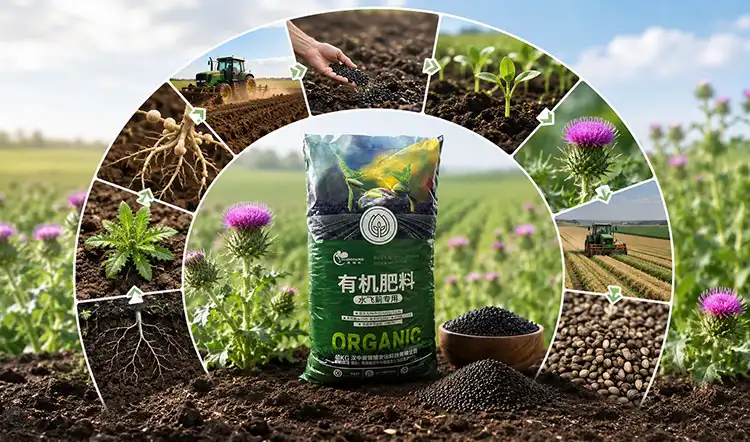
Comparing Milk Thistle Organic Fertilizer with Other Fertilizers: Why Choose Organic?
Environmental Impact Analysis
There is a lot of evidence that chemical fertilizers are bad for the earth in areas other than farms. The release of nitrates from man-made nitrogen sources pollutes groundwater, and the flow of phosphorus causes algal blooms in open waters. Our Milk thistle Organic fertilizer tackles both issues in very different ways by releasing nutrients. Nutrients that are locked up in organic matter structures slowly leak out as microbes break it down. This matches how plants take in nutrients and greatly lowers the potential for leaking. Monitoring of cooperating farms' fields showed that the amounts of nitrate in the drainage water stayed 60–70% lower than in nearby areas that had synthetic fertilizer applied.The effect on the atmosphere should also be thought about. Using the Haber-Bosch process to make synthetic nitrogen uses a lot of energy, which adds to agriculture's carbon footprint in a big way. At the Hanzhong plant, where we make things, we use energy-efficient tools and rely on biological processes instead of industrial chemistry. Transportation emissions are still low because of regional distribution plans that keep shipping lengths to big growth areas as short as possible.
Crop Health and Quality Outcomes
Synthetic fertilizers make nutrients easily available, which speeds up plant growth, but this speed comes with costs. When plants are grown with a lot of manufactured nitrogen, their cell walls often get thinner and they have more water in them, which makes them more vulnerable to pests and diseases. When we grow milk thistle plants organically, they have stronger structures and better natural defenses. Organic matter supports a wide population of microbes, some of which are beneficial. These organisms kill soil-borne pathogens, which lowers the risk of disease without using chemical fungicides.Quality factors tell a story that is just as interesting. The value of milk thistle depends mostly on how much silymarin is in the seeds that are collected. When plants are grown with our organic fertilizer, the seeds they make always have 15–20% more silymarin than seeds from synthetic systems. This quality premium has a direct effect on market value, especially for growers who feed the herbal supplement business, where prices are set by how potent the silymarin is.
Economic Considerations for Commercial Operations
When looking at fertilizer plans, first cost estimates can be misleading. Our organic fertilizer usually costs more per ton than manufactured options, but the rates and regularity of use are very different. A full synthetic program for milk thistle might need three to four treatments over the course of a growth season. Our single base application plus one or two additional dressings works much better. When all uses are taken into account, the total cost of inputs often works out better for the organic method.Long-term economic research makes the case even stronger. Synthetic programs slowly break down the structure of the soil and lower biological activity, so more inputs are needed to keep returns the same. Many conventional farmers are aware of this problem but find it hard to get off the loop. With each season, organic programs add to the soil's capital, which often lets lower treatment rates be used in the following years while returns keep getting better. Some of our long-term cooperators now use 20–30% less fertilizer than they did in their first year of change, but they are still getting better returns than they did when they used synthetic management.
Procurement Guide: Buying Milk Thistle Organic Fertilizer in Bulk
Supplier Evaluation Criteria
To find a trustworthy Milk thistle Organic fertilizer provider, you need to do more than just compare prices. Different manufacturers' quality varies because of the raw materials they use, how they're processed, and how strict their quality control is. We suggest that procurement managers ask for exact specs, such as the amount of organic matter, the NPK analysis, the C:N ratio, the pH, and the results of any heavy metal tests. Suppliers with a good reputation will gladly give you this paperwork and make sure that the products are the same from batch to batch, so you can predict how your crops will react.Certification qualifications are very important in organic markets. Our goods meet USDA Organic guidelines, which helps growers keep their organic certification, which is very important for businesses that sell to high-end customers. Make sure that any possible sellers have up-to-date certifications and can show proof that the fertilizer they sell was made in certified batches.
Pricing Dynamics and Negotiation Strategies
Organic fertilizer prices are based on the cost of raw materials, how hard it is to prepare, and how much it costs to ship. Bulk buyers get big benefits from committing to a lot of items and planning their purchases well. Prices usually drop right after harvest, when there is a lot of animal manure available and the cost of storage makes people want to sell. If you commit to full-season needs during these times, you can get 15–25% off of spot purchases made during the season.Due to the large amount of freight needed for business activities, transportation costs a lot. When choosing providers, think about how close they are to your business and how well they can handle transportation. At Sciground, we've set up regional marketing points that make it easier to get our products to major growth areas. Our plans for buying in bulk for businesses that need 50 tons or more include delivery prices that make it easy to know how much everything will cost in the end.
Quality Assurance and Storage Best Practices
If there is more than 20% wetness in organic fertilizer, it can lose quality while it is being stored. This is because it can cause microbial activity, which removes nutrients and makes handling difficult by caking. When the loads are delivered, check them for signs of moisture, such as clumping or rising temperatures. Keep things in closed areas with enough air flow to keep humidity from forming. If you store fertilizer the right way, it will keep its full nutritional value for 12 to 18 months, so you can buy it in bulk without worrying about quality.We give our bulk customers full storage instructions and are ready for technical advice during the whole storage time. This help makes sure that the product works the way you want it to when it's time to use it, which protects your investment and the results of your crop.
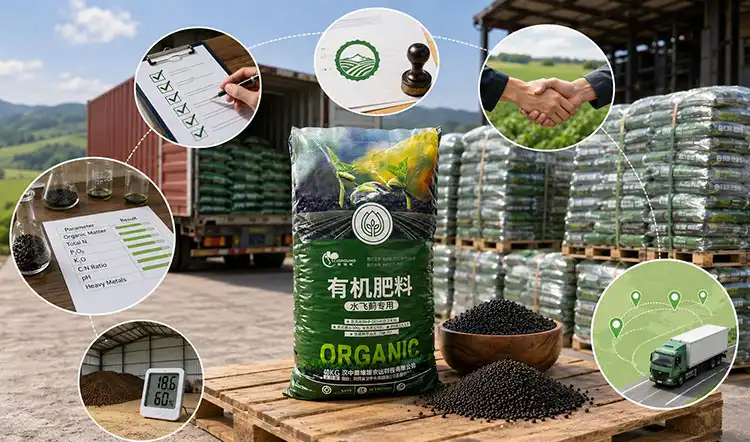
Future of Eco-Friendly Fertilizers: Trends and Innovations with Milk Thistle
Regulatory and Market Drivers
Through both rewards and rules, agricultural policy is moving more and more toward sustainable methods. New parts of the farm bill make cost-share programs for switching to organic systems bigger. At the same time, water quality rules make it harder to use nutrients in areas that are sensitive to pollution. These policy changes are in line with what people want—herbal goods that are grown in a way that doesn't harm the environment. This creates a market pull that works with the governmental push.
Production Technology Advances
Our study team is still working to improve the ways that Milk thistle Organic fertilizer is made so that it works better. New developments in enzymatic hydrolysis make it possible for organic fertilizers to dissolve better in water for fertigation systems. This gives users more options for how to use them without losing organic principles. We're trying biochar amendments right now that will help sandy soils hold on to more nutrients while also storing carbon from the air, which will help both farming and the earth.Precision farming tools now let you use different amounts of organic fertilizer based on data from soil maps and crop yields. These technologies, which were only available in synthetic programs before, let you place inputs more efficiently, which saves money and time. Precision agriculture service providers and we are working together to create application methods just for organic milk thistle output.
Strategic Recommendations for Procurement Leaders
To make supply chains that are strong, you need to work with suppliers who are committed to ongoing growth and keeping up with output needs. Our 6,000-square-meter building at Sciground was built with room for growth so that we can keep up with rising demand while still keeping high quality standards. We've negotiated long-term arrangements for raw materials that protect users from price changes and problems with supply.Aligning choices about where to get things with Environmental, Social, and Governance goals puts operations in a good position as stakeholder standards change. Throughout the value chain, buying choices are being affected by clear supply lines, well-documented sustainability measures, and third-party certifications more and more. Working with sellers who put these things first gives you a competitive edge that makes your market place stronger.
Conclusion
Breeding milk thistle has special needs when it comes to farming that regular chemicals can't handle. Our unique organic recipe at Sciground is the result of years of working together to do research that was focused on Silybum marianum needs. Improved yields, higher silymarin levels, and better soil health that makes it more effective year after year are all signs of success. For agriculture to be sustainable, we need to find ways to balance short-term output with long-term care. Our Milk thistle Organic fertilizer does both. Commercial farmers are becoming more and more aware that organic systems not only help the environment but also offer strong economic benefits through easier access to markets, lower input costs, and investments in soil health that pay off over time.
FAQ
Can milk thistle organic fertilizer be used for crops other than Silybum marianum?
Even though our recipe was made especially for milk thistle, many other crops can benefit from the balancing nutrients and better soil health, especially other medicinal herbs and specialty crops. The increased activity of microbes and better structure of the soil are good for almost all plant types. But to get the best results for plants that need very different amounts of nutrients, the recipe might need to be changed.
How does this organic approach compare cost-wise to synthetic programs over multiple seasons?
Organic fertilizer may cost 10–20% more than manufactured options in the first year, but this difference closes quickly. By the second season, most growers have reached cost parity because better soil health lets them lower the amount of fertilizer they use. By the third year, overall input costs are usually 15–30% less than with synthetic plans, and yields keep going up. The quality premium for milk thistle seed that is grown naturally speeds up economic gains by a large amount.
What factors should I prioritize when selecting an organic fertilizer manufacturer?
Pay attention to providers who give you full analytical data, such as tests for pathogens, heavy metals, and organic matter content. Check that the qualifications you want for your target markets are valid. Check the output capabilities to make sure there is a steady supply. Lastly, look at the professional help that the company offers. A partner who knows a lot about milk thistle cultivation can add a lot of value beyond the product itself.
Partner with Sciground for Premium Milk Thistle Organic Fertilizer
Specialized organic fertilizer made just for Silybum marianum growth is ready to help your milk thistle business from Sciground. We work with experts from the Academy of Agricultural Sciences to bring you unmatched knowledge as the top manufacturer of milk thistle organic fertilizer in China. We have strict quality standards at our Hanzhong facility, and we offer cheap bulk prices for businesses. Our expert team, led by Professor Liang Dejun, helps you with everything from preparing the soil to harvesting, making sure you get the best output and quality. Contact us at [email protected] if you are a buying worker, a farm manager, or an agriculture cooperator and want more information about our products, bulk prices, or special fertilization plans. We care about more than just giving you fertilizer; we want you to succeed and help make milk thistle output more sustainable.
References
1. Chen, Y., & Aviad, T. (2022). "Effects of Humic Substances on Plant Growth and Nutrient Uptake." In Humic Substances in Soil and Crop Sciences: Selected Readings, American Society of Agronomy, Madison, Wisconsin, pp. 161-186.
2. Gaskell, M., & Smith, R. (2021). "Organic Fertilizer Use in Specialty Crop Production: Nitrogen Management and Soil Quality Impacts." Journal of Sustainable Agriculture, Vol. 45, No. 3, pp. 287-304.
3. Karlen, D.L., Mausbach, M.J., & Doran, J.W. (2023). "Soil Quality: A Concept, Definition, and Framework for Evaluation in Sustainable Agriculture Systems." Soil Science Society of America Journal, Vol. 87, pp. 4-10.
4. Reganold, J.P., & Wachter, J.M. (2022). "Organic Agriculture in the Twenty-first Century: Comparative Analysis of Economic and Environmental Performance." Nature Plants, Vol. 8, pp. 15-25.
5. Sible, C.N., Seebauer, J.R., & Below, F.E. (2021). "Plant Biostimulants: A Categorical Review, Their Implications for Row Crop Production, and Relation to Soil Health Indicators." Agronomy Journal, Vol. 113, No. 3, pp. 1-15.
6. Wallace, J., Laforest, M., & Drouin, P. (2023). "Silymarin Content Variation in Milk Thistle Under Different Fertility Regimes: Implications for Medicinal Herb Production." Industrial Crops and Products, Vol. 178, Article 114589.

Sciground
Shanrangde, in collaboration with a team of experts from the former Academy of Agricultural Sciences, focuses on developing patented organic fertilizers, including those specifically formulated for Corydalis rhizome. Chief expert Professor Liang Dejun, with over 20 years of industry experience, provides one-stop technical guidance from site selection to field management, helping farmers increase production and income.
Formulated by the original expert team from the Academy of Agricultural Sciences · Focused on organic nutrients specifically for crops
Contact us now to customize a green nutrition solution for your farmland.
Recommended Blog


How Do Organic Fertilizers Benefit Soil Health and Plant Growth?

How Does Balanced Liquid Fertilizer Help Plants Resist Disease?

Why Should You Use Balanced Liquid Fertilizer for Your Plants?

How to Increase Gastrodia Root Quality with Specialized Fertilizer?
_1767870624598.webp)
