How Often Should You Apply Foliar Fertilizers?
Understanding Foliar Fertilizers and Their Role in Crop Nutrition
- Understanding Foliar Fertilizers and Their Role in Crop Nutrition
- Determining the Optimal Frequency for Foliar Fertilizer Application
- Application Techniques and Best Practices to Maximize Efficiency
- Procurement Insights: Choosing the Best Foliar Fertilizers for Your Needs
- Long-Term Strategy: Monitoring, Adjustment, and Optimization
- Conclusion
- FAQ
- Contact Sciground for Professional Foliar Fertilizer Solutions
- References
The application frequency of foliar fertilizers typically ranges from 7-21 days throughout the growing season, depending on crop type, growth stage, and environmental conditions. Most commercial crops benefit from bi-weekly applications during peak growth periods, while stress conditions or nutrient deficiencies may require more frequent treatments. Foliar fertilizers provide rapid nutrient absorption through leaf surfaces, making them ideal for addressing immediate plant needs when soil uptake proves insufficient or delayed.
Understanding Foliar Fertilizers and Their Role in Crop Nutrition
Foliar fertilizers are a unique method of feeding plants because they are applied straight to the leaves. These products are different from traditional soil amendments because they don't limit root uptake. Instead, they give plants instant access to macro and micronutrients through their stomatal openings and leaf cuticle.
The Science Behind Foliar Feeding
The ability of plants to naturally take in nutrients through their leaves makes foliar feeding work. Agricultural experts have found that nutrients applied to the leaves can be absorbed 80–95% of the time, while nutrients applied to the dirt can only be absorbed 10–15% of the time. This big difference happens because foliar treatments get around problems in the soil chemistry, like fixing nutrients, fixing pH imbalances, and bacteria competing for space in the soil. Currently available spray fertilizers carefully mix nitrogen, phosphorus, potassium, and important micronutrients such as iron, zinc, and manganese. It is common for these nutrients to be chelated or complexed with organic substances to make it easier for them to move through plant tissues and make them more bioavailable generally.
Advantages Over Traditional Soil Fertilization
There are a number of clear benefits to foliage feeding that make it very useful in industrial farming. Foliar sprays are an important backup way to get nutrients to roots that are under stress from things like drought, flooding, or soil-borne diseases. This method works especially well in alkaline soils, where micronutrients are chemically bound and can't be used by plant roots. Foliar fertilizers are often used in agriculture during key growth stages, when plants need a lot of nutrients quickly, and the soil can't provide them. When foliar feeding can have the biggest effect on end yield and crop quality is during fruit set, grain filling, and vegetative growth spurts.
Determining the Optimal Frequency for Foliar Fertilizer Application
To set the right treatment schedule, you need to carefully think about a lot of things that affect how much nutrients a plant needs and how well it can absorb them.
Crop-Specific Application Guidelines
Different plants take in nutrients in different ways, which affects when they should be fed through the leaves. Annual crops like corn and soybeans usually do better with three to four applications spread out over the course of their growing season. The applications should be set to align with the stages of green growth, reproductive development, and grain filling. Because they have longer growing seasons and more complicated nutrient cycle patterns, perennial crops like fruit trees and farms need to be fertilized more often. From the time the buds open until the harvest, these plants usually get treatments once a month. They may get extra treatments during times of stress or when tissue analysis shows specific deficiencies. Intensive production methods may need to be applied to vegetable crops once a week during their peak growth periods. Foliar feeds that are applied often and at a low concentration are especially helpful for high-value greenhouse crops because they keep the plants' nutrients at the right level without burning the leaves or encouraging too much plant growth.
Environmental Factors Affecting Application Timing
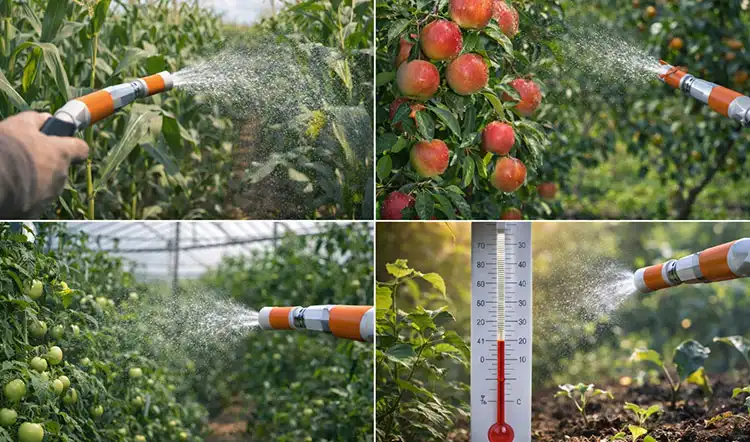
The weather is a very important factor in determining both how often and how well something works. Foliar sprays can quickly evaporate at temperatures above 85°F, which can stop plants from absorbing nutrients and possibly cause leaf burn. On the other hand, the best conditions for absorption are cool, wet, and between 65°F and 75°F. Patterns of rainfall have a big effect on when to apply foliar fertilizers. For proper nitrogen absorption, applications should be spaced out so that the soil is dry for at least four to six hours. Arid areas may need less frequent but more intense treatments, while areas that get a lot of rain may need to be treated more often to make up for the water that is washed away. Droplet spread and drift are affected by wind speed, which has an impact on both the safety of the surroundings and the efficiency of the application. The best conditions for application are calm weather with wind speeds below 10 mph. This ensures even coverage and little moving off-target.
Growth Stage Considerations
There are times during a plant's growth when foliar food will have the most impact. During the early stages of plant growth, nitrogen-rich mixtures need to be sprayed every 10 to 14 days to help leaves and stems grow quickly. Different stages of reproduction need different amounts of nutrients. For example, during blooming and fruit growth, plants need more phosphorus and potassium. During these important times, applications may need to happen once a week to keep up with the high metabolic needs of seed and fruit output. Late-season treatments are mostly used to improve crop yield and keep plants healthy. When a crop is fully grown, applications that happen every two to three weeks are usually enough. During this time, the focus shifts to vitamins that affect the quality of storage and the length of the shelf life.
Application Techniques and Best Practices to Maximize Efficiency
Foliar fertilizer plans that work depend a lot on how they are applied. The right way to do it makes sure that the plants get even coverage while reducing waste and damage to the environment.
Equipment Selection and Calibration
There are different ways to apply foliar fertilizer with modern spray tools, and each one works best for a different-sized business or type of crop. Ground-based boom sprayers cover row crops very well and let you precisely control the time of the release. Most of the time, these systems use flat fan or hollow cone nozzles that make fine drops that cover leaves well at pressures between 20 and 40 PSI. Using helicopters or fixed-wing aircraft for aerial application lets you treat big areas quickly, but you have to be very careful about drift control and application accuracy. For aerial uses, the weather is even more important, with tight limits on wind speed and temperature inversions to stop movement off-target. Drone technology is a new choice that blends the accuracy of equipment used on the ground with the speed of equipment used in the air. These systems work great for specific crops and places that are hard to get to with regular tools because they are precise and use GPS to make sure that coverage is even.
Optimal Application Timing Windows
When spray fertilizers are applied has a big effect on how well they work and how safe the plants are. Applying in the early morning, between 6 and 10 AM, is best because there is a lot of humidity, not much wind, and mild temperatures that help plants absorb nutrients. During this time, stomatal holes stay fully open, which lets the plant take in as many nutrients as possible. Another good time for applications is in the late afternoon and early evening, usually between 4 and 7 PM, when temperatures start to drop, and humidity starts to rise. This time lets nutrients stay on leaf surfaces longer without evaporating quickly, which extends the time they can be absorbed into the evening, when plants are still metabolically active. Applications should not be done in the middle of the day because of the high temperatures and strong sunlight that can evaporate spray droplets quickly and burn leaves. During peak sunlight hours, UV rays can also break down some nutrient molecules before they can be used by plants properly.
Integration with Comprehensive Fertilization Strategies
Effective methods for applying fertilizer to plants' leaves work with soil nitrogen control, not instead of it. Soil testing is the first step in figuring out what nutrients are available at a base level and what deficits can be effectively fixed with foliar fertilizers. By analyzing plant tissues on a regular basis, you can keep an eye on their nutrient levels and make changes to both their soil and spray fertilizer programs. Mixing spray fertilizers and crop protection products in a tank saves time and money, but it needs to be carefully tested to make sure they don't respond chemically in ways that hurt plants or make the fertilizers less effective. Professional agronomists say that suitability and stability tests should be done in small jars before they are done in big tanks.
Procurement Insights: Choosing the Best Foliar Fertilizers for Your Needs
To choose the right foliar fertilizer providers, you need to look at a number of factors that affect both the performance of the products and the success of the business.
Quality Certification and Product Standards
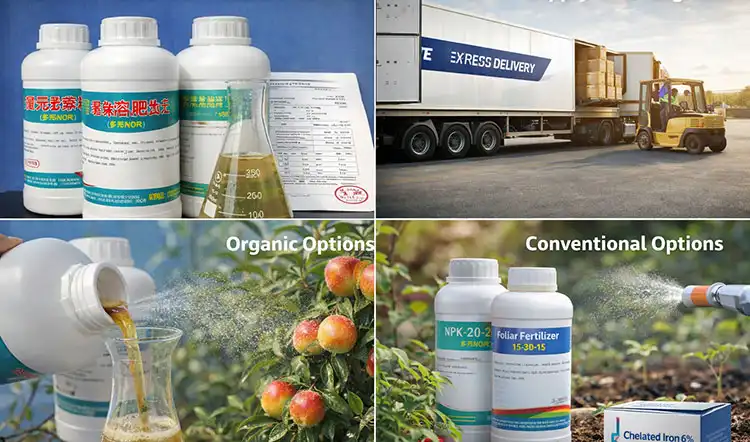
Foliar fertilizer producers with a good reputation keep strict standards for quality control and offer full promises on product analysis. Look for sellers who include certificates of analysis with every shipment. These certificates should list the nutrients, pH levels, and results of any contamination tests that were done. These quality guarantees help make sure that the product always works right and follows the rules. Facilities that make things should keep their Good Manufacturing Practice certifications up to date and show that they follow safety and environmental rules. Most of the time, suppliers with ISO approval or similar quality management systems offer more reliable goods and better customer service. Different companies use very different technologies to make their products. More modern companies offer better types of nutrients, like amino acid chelates or slow-release formulations. These high-end goods usually explain their higher prices by being better at being absorbed better by plants and needing to be applied less often.
Supply Chain Reliability and Logistics
Foliar fertilizer treatments need to be done quickly and can't wait for supply problems to happen during key growth times. Look at a possible supplier's delivery network, inventory management systems, and history of making supplies on time during busy times. Regional distribution hubs and local dealer networks are helpful because they cut down on shipping costs and shorten wait times. Suppliers with more than one building can better serve customers in a wider range of areas and have extra stock on hand for times when demand is high. When you buy in bulk, you can often save a lot of money and make sure you have enough goods for the whole season. Many sellers offer bulk discounts and flexible payment terms to customers who buy a lot. This makes it a good deal to lock in yearly contracts for seasonal needs.
Comparing Organic and Conventional Options
Organic foliar fertilizers made from natural ingredients are especially helpful in approved organic farming systems and places that care about the environment. In addition to basic nutrition, these goods usually have extra bio-stimulant compounds that make plants better at dealing with stress and improving their general health. Most of the time, conventional synthetic formulas offer more accurate nutrient ratios and higher nutrient concentrations. This means that smaller amounts of product can be used, which could lead to lower labor costs. In general, these goods stay fresh longer and are more stable when stored in different ways. Aside from the initial product price, other costs to think about are the number of applications, the coverage rates, and the expected return replies. A full economic study should look at the total cost per acre, which should include the costs of labor, tools, and missed opportunities that come with different application schedules.
Long-Term Strategy: Monitoring, Adjustment, and Optimization
Foliar fertilizer plans that last need to be constantly checked and improved based on data to get the best results for both the crops and the inputs.
Plant Response Assessment Methods
Regular study of plant tissue is the most accurate way to see how well foliar fertilizer is working and figure out what changes to make to the program. To set an accurate standard and keep track of changes over time, take samples from leaves that are just starting to turn color at regular growth stages. Tissue testing every three to four weeks during busy growth times is good for most plants. Checking the health and growth rates of plants visually gives you instant feedback on how well the spray fertilizer program is working. Trained staff can spot early signs of nutrition shortages or excesses that mean the program needs to be changed right away. Digital cameras and record-keeping tools help us see how things have changed over time and help us make choices based on facts. Monitoring yields and analyzing quality are the best ways to tell if a foliar fertilizer program is working or not. To figure out yield reactions and economic returns, compare treated and untreated parts within fields. Quality factors like protein content, sugar levels, or storage qualities often get better even when yields only go up a little.
Technology Integration and Precision Agriculture
Modern, precise farming tools make it easier to handle foliar fertilizer programs by letting you apply the fertilizer at different rates and keep an eye on each spot individually. GPS-guided tools make it possible to keep accurate records of applications and create personalized treatment zones based on soil type, terrain, or past performance data. Stress patterns and nutrition deficits can be found before they can be seen from the ground by using sensors on drones and satellite images. With these early detection systems, problems can be fixed with focused treatments that go on the leaves before they hurt the quality or yield. Data management systems bring together data from many sources to help people make better decisions. Weather information, soil test results, tissue analysis, and application records are all put together to make thorough performance reports that will be used to make future changes to the program.
Future Trends and Innovation
Using nanotechnology in spray fertilizer preparation could help plants absorb nutrients better and have less of an effect on the environment. These new formulas use tiny particles that get deeper into plants and keep nutrients from leaving the environment as little as possible. Another new trend in foliar fertilizer creation is biological improvement through helpful microorganisms. These goods mix normal nutrients with bugs or fungi that help plants grow and make it easier for them to take in nutrients and handle stress. Precision application technology keeps moving toward automatic systems that change the rate of application based on sensor feedback in real time. These new developments should make the best use of nutrients while also lowering the amount of work needed and the damage they do to the environment.
Conclusion
The best time to apply foliar fertilizer depends on the type of crop, the weather, and the output goals. For commercial operations, it's best to do it every 10 to 14 days during active growth periods. To be successful, you need to pay close attention to time, weather, and how it fits in with larger plans for improving soil fertility. Regular tracking through tissue research and yield rating lets the program keep getting better and better. It is possible to meet specific nutrient needs and support sustainable farm production systems with modern foliar fertilizer plans.
FAQ
1. How does foliar fertilizer application frequency compare to soil fertilization schedules?
Foliar fertilizer applications typically occur more frequently than soil fertilization due to their temporary nature and rapid plant uptake. While soil fertilizers may be applied 1-3 times per season, foliar treatments often require bi-weekly applications during active growth periods to maintain optimal nutrient levels.
2. Can I apply foliar fertilizers too frequently and damage my crops?
Excessive foliar fertilizer application can cause leaf burn, salt accumulation, and nutrient imbalances. Most crops should not receive foliar treatments more than once per week, and application rates should be reduced if frequency increases beyond recommended schedules to prevent plant injury.
3. What factors should I consider when adjusting application frequency for different crops?
Crop growth rate, leaf surface area, nutrient demand patterns, and stress tolerance levels all influence optimal application frequency. Fast-growing crops with large leaf areas typically require more frequent applications than slow-growing or drought-tolerant species.
4. How do weather conditions affect foliar fertilizer application timing?
Temperature, humidity, wind speed, and rainfall all impact application effectiveness. Avoid applications during extreme temperatures, high winds, or when rainfall is expected within 6 hours. Optimal conditions include temperatures between 65-75°F with minimal wind and high humidity.
5. Should I reduce foliar fertilizer frequency if my soil fertility program is comprehensive?
Well-managed soil fertility programs may reduce but rarely eliminate the need for foliar applications. Foliar fertilizers address immediate needs and stress conditions that soil fertility cannot always satisfy, making them complementary rather than redundant tools.
Contact Sciground for Professional Foliar Fertilizer Solutions
Sciground stands as a leading foliar fertilizer supplier of foliar fertilizers with specialized expertise in multi-element formulations designed for efficient nutrient delivery through leaf application. Our research-backed products enhance plant health, improve stress resistance, and increase crop yields while optimizing soil pH balance across diverse agricultural operations. With over 20 years of research experience from the Northwest Academy of Agricultural Sciences, our team provides comprehensive technical guidance from application scheduling to field management optimization. Contact our agricultural specialists at [email protected] to discuss customized foliar nutrition programs tailored to your specific crop requirements and operational goals. Experience the difference that scientific innovation and professional support can make in your agricultural productivity.
References
1. Fernández, V., & Eichert, T. (2009). Uptake of hydrophilic solutes through plant leaves: Current state of knowledge and perspectives of foliar fertilization. Critical Reviews in Plant Sciences, 28(1-2), 36-68.
2. Kannan, S. (2010). Foliar fertilization for sustainable crop production. Sustainable Agriculture Reviews, 4, 371-402.
3. Oosterhuis, D. M., & Weir, B. L. (2010). Foliar fertilization of cotton. University of Arkansas Division of Agriculture Cooperative Extension Service Publication.
4. Restrepo-Díaz, H., Benlloch, M., & Fernández-Escobar, R. (2008). Plant water stress and K+ starvation reduce absorption of foliar-applied K+ in olive trees. Scientia Horticulturae, 116(4), 409-413.
5. Wojcik, P. (2004). Uptake of mineral nutrients from foliar fertilization. Journal of Fruit and Ornamental Plant Research, 12(1), 201-218.
6. Zhang, Q., & Brown, P. H. (1999). The mechanism of foliar zinc absorption in pistachio and walnut. Journal of the American Society for Horticultural Science, 124(3), 312-317.

Sciground
Shanrangde, in collaboration with a team of experts from the former Academy of Agricultural Sciences, focuses on developing patented organic fertilizers, including those specifically formulated for Corydalis rhizome. Chief expert Professor Liang Dejun, with over 20 years of industry experience, provides one-stop technical guidance from site selection to field management, helping farmers increase production and income.
Formulated by the original expert team from the Academy of Agricultural Sciences · Focused on organic nutrients specifically for crops
Contact us now to customize a green nutrition solution for your farmland.
Recommended Blog

What Are Micronutrient Fertilizers and Why Are They Important for Plants?

How Does Balanced Liquid Fertilizer Help Plants Resist Disease?

Why Should You Use Balanced Liquid Fertilizer for Your Plants?
_1767870624598.webp)


